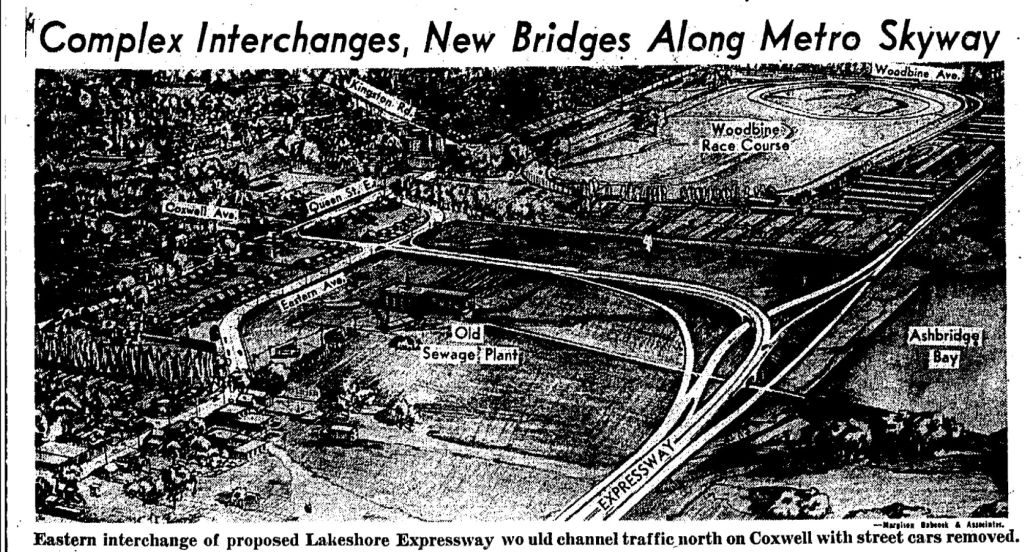
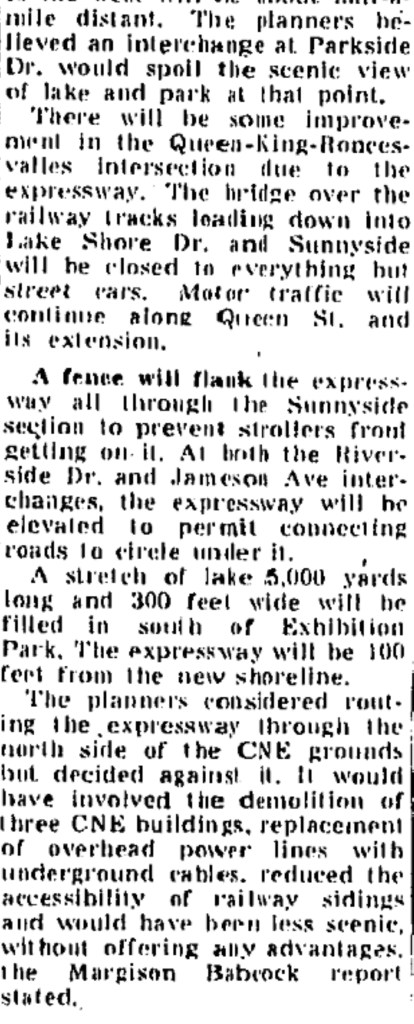

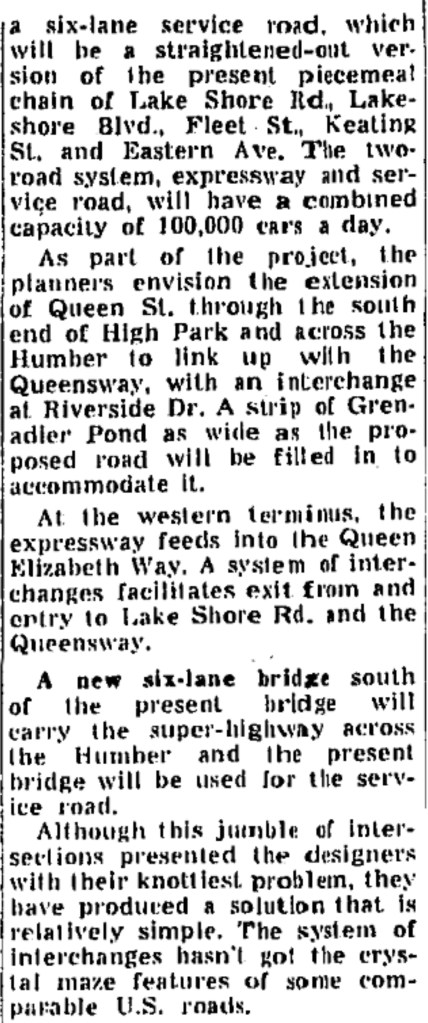
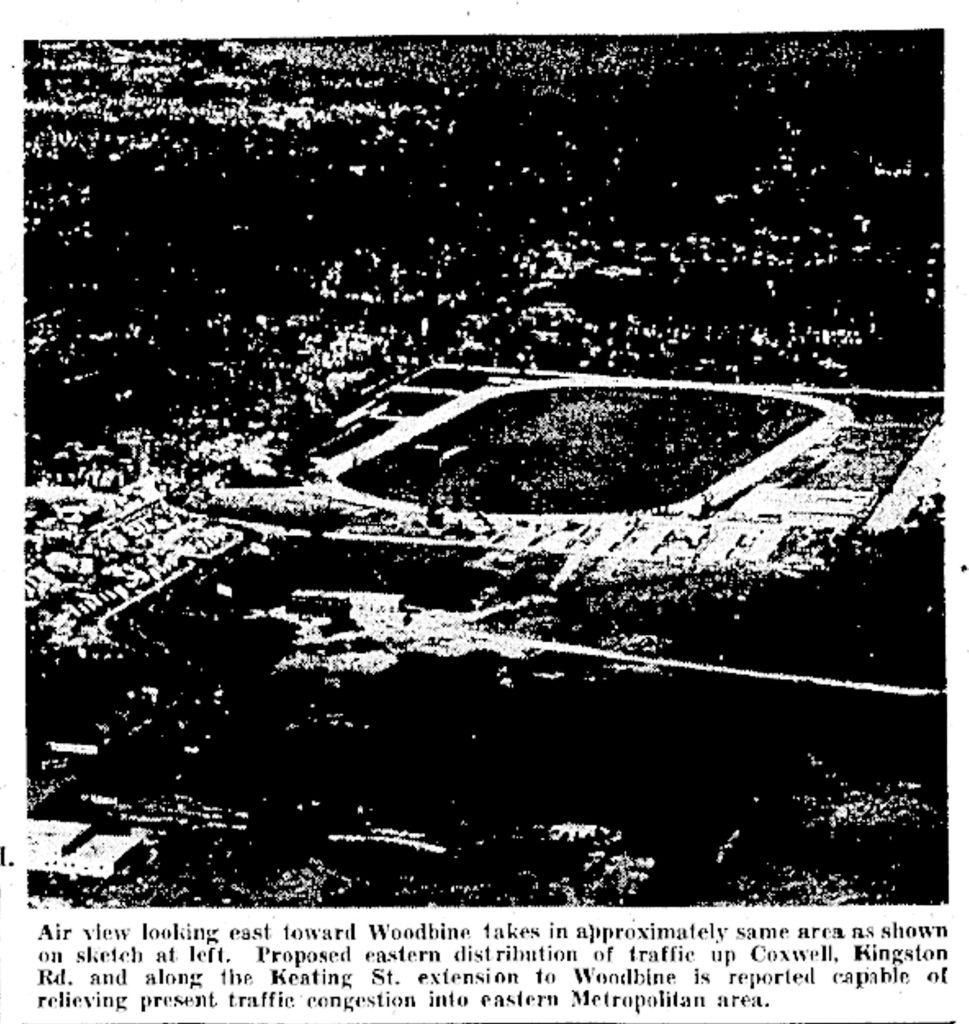
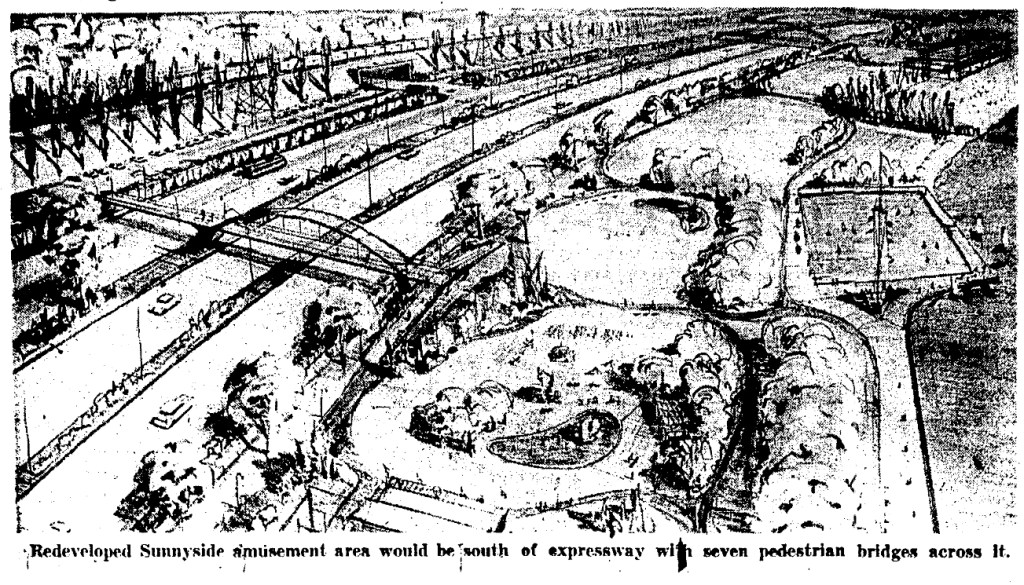
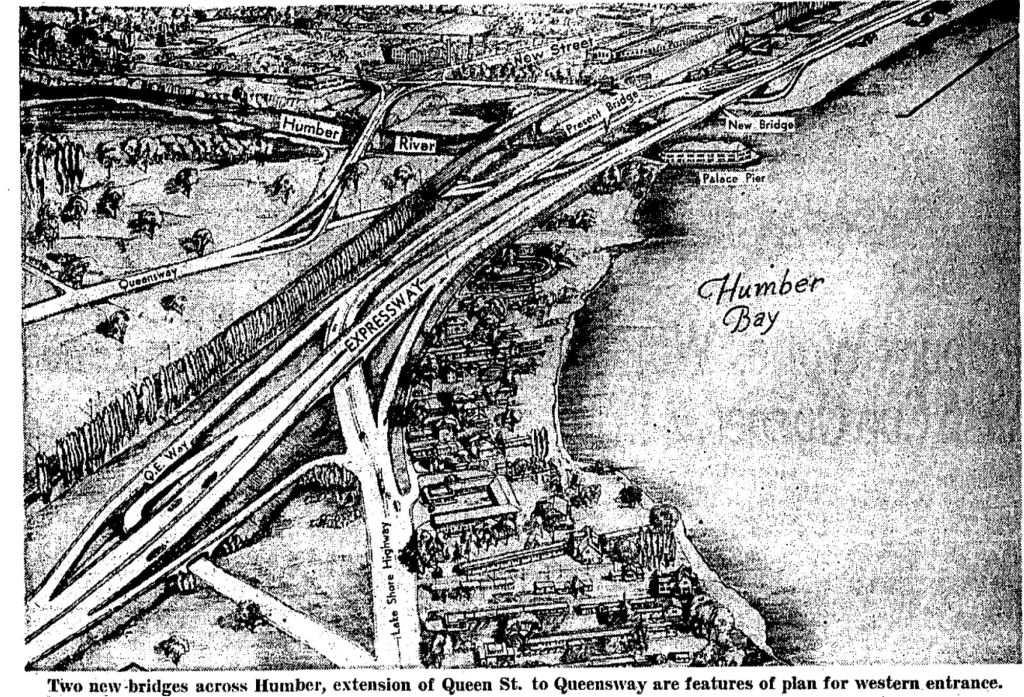
Six Laner to Soar, Globe and Mail, May 4, 1954

Looking for the Ghost of Leslie Creek

a creek … also started near the sandpit and ran through the gardens of Cooper’s, Bests and Hunters, crossed the road by the Leslie Postoffice. Here it joined a small creek that drained the nursery, and both crossed Leslie street under a bridge that has since been filled up by intersecting sewers.  
The Globe, January 18, 1918

Not much left to see of the creek and most of us don’t know it was there. But like all ghosts, it still can haunt us even many years later.

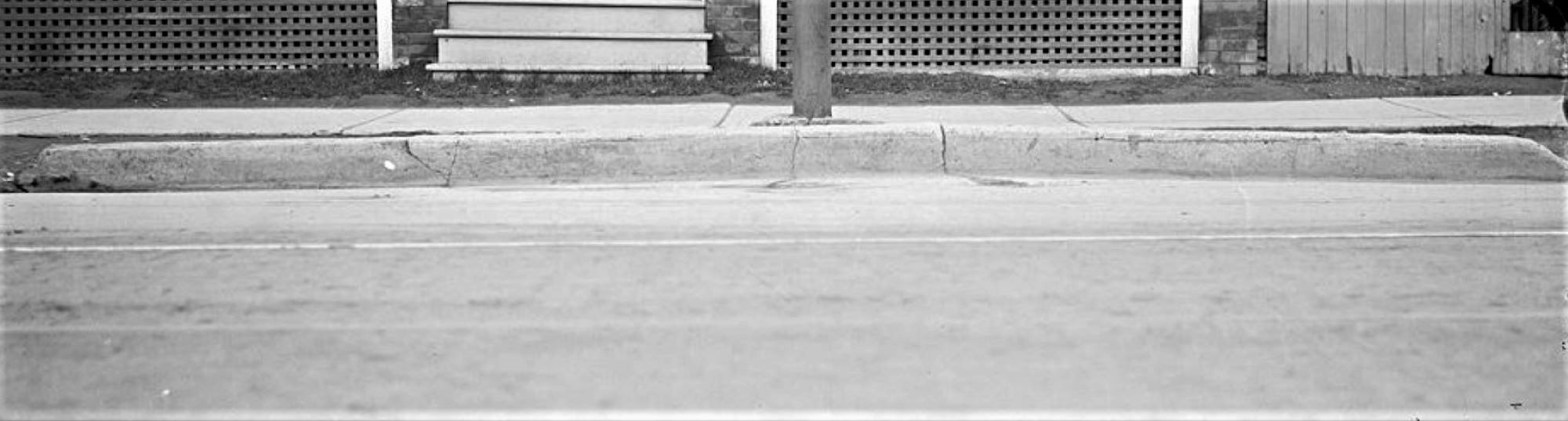
1211 Queen St. East – curb heaved up by frost and T.S.R. pole – May 4, 1915

This photo of 1211 Queen Street East shows a ghost of Leslie Creek.

Leslie Creek (now underground) crossed Queen Street and this curb was once a bridge, May 4, 1915

Leslie Creek originated in springs on the slope of the hill in the area of Strathcona Avenue and Eastview Park.

Goad’s Fire Plan, 1884, Plate 31 This was the year Riverside and Leslieville became part of the City of Toronto.
Leslie Creek, 1884. Leslie Creek is on the left, Hastings Creek is on the right. Sometimes they joined before entering Ashbridges Bay and sometimes they stayed separate. Both ran into Ashbridge’s Bay where the Loblaw’s Superstore parking lot is today. It was a cove called “The Gut” where fisher folk moored their boats.

It crossed the railway tracks where Gerrard Square’s parking garage is now.

Leslieville creeks 1909, labelled

According to Elsie Hays, an old East Ender that I interviewed, it was a small brook that ran through an orchard west of Galt Avenue. She caught minnows in it when she was a child (before World War One).  It crossed Gerrard where there is a shallow dip in the road to mark it. 

Two branches of the creek came together and crossed the GO Train tracks (GTR) east of Marjory Avenue where it took a turn left.  One branch of Leslie Creek was dammed in the late nineteenth century to form Maple Leaf Skating Rink at Pape and Gerrard, behind the Maple Leaf Tavern. There are remnants of a ravine west of Marjory Avenue south of Gerrard. Then the creek swung diagonally southeast to cross Dundas at Dagmar.
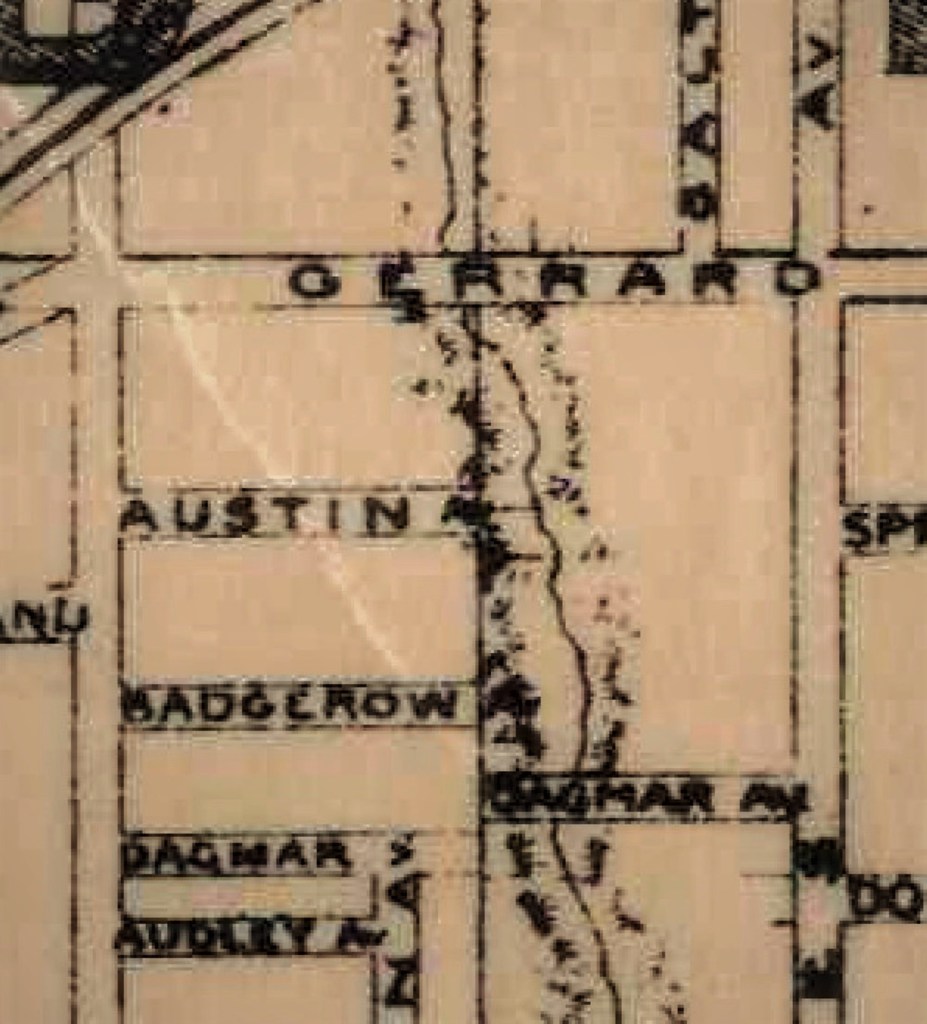
1902 map showing Leslie Creek

It continued south to cross Jones Avenue at #61 Jones Avenue where there was heavy basement flooding.
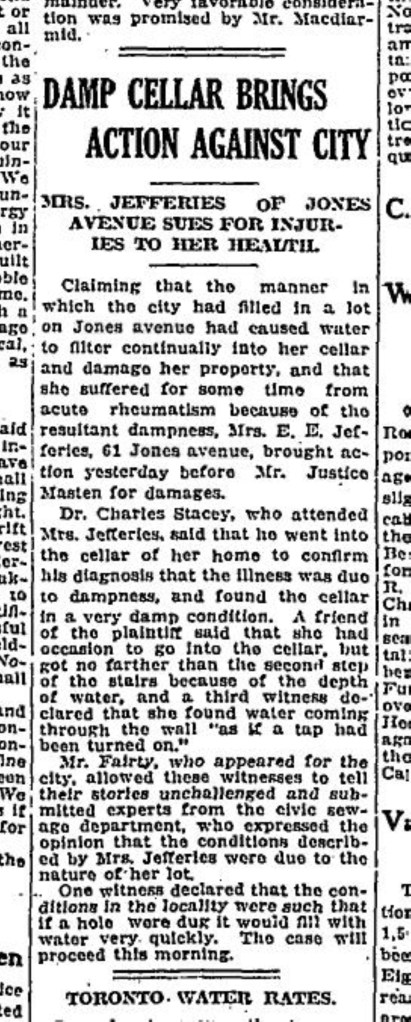
Flooded cellars on Jones Avenue were nothing new, but this must have been exceptional. Globe, April 26, 1918

It ran behind the stores on the north side of Queen Street (George Leslie’s house and selling grounds) and crossed at 1211 Queen Street East.
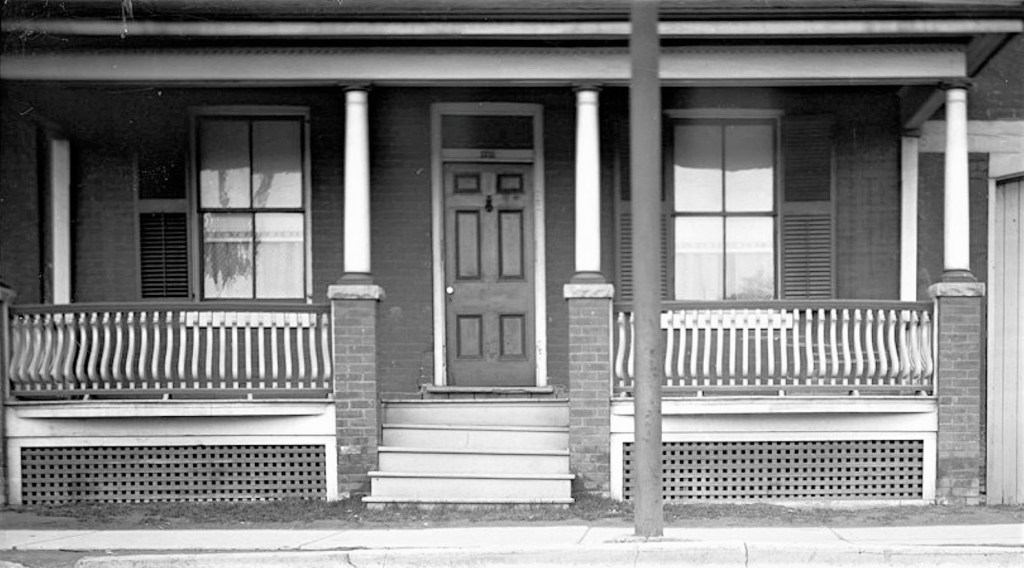
1211 Queen St. East, the house has since been torn down, May 4, 1915
1211 Queen St. East – curb heaved up by frost and T.S.R. 00

From there It continued south, curving east to enter Ashbridge’s Bay at the foot of Laing Street where there was a cove called the Gut.
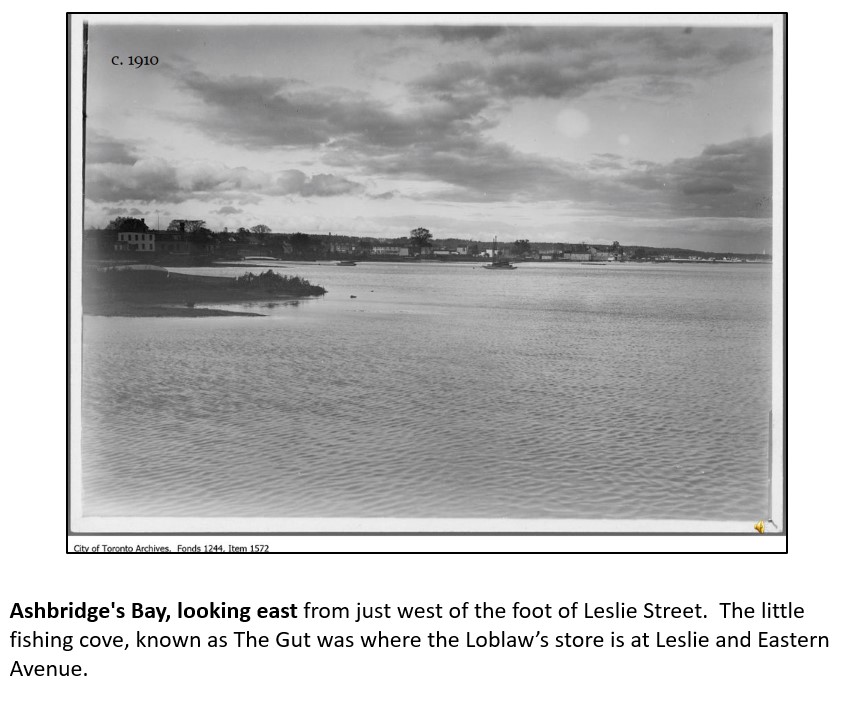
The Gut is where the Loblaws Super Store and City of Toronto Works Yard are now.

A map of Ashbridge’s Bay showing Leslie Street, the old shoreline and the marsh. Don’t be confused. South is at the top of the map and north is on the bottom — the opposite of what we are used to.
The Duke of York Tavern, May 4, 1915
Ashbridge’s Bay 1852
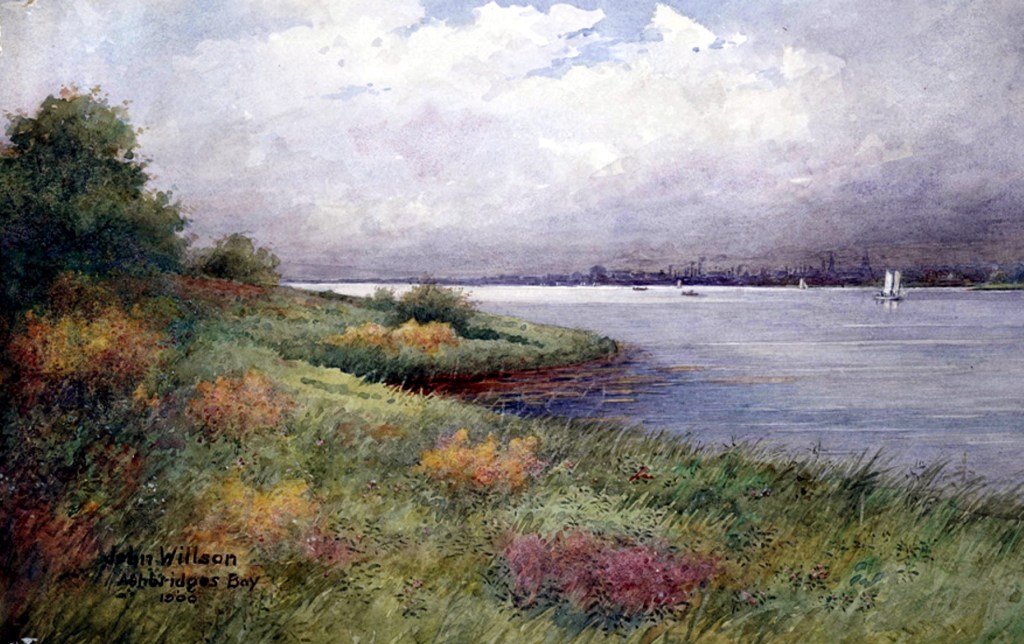
Ashbridges Bay, John Willson, 1900

Gerrard and Carlaw, May 3, 1930

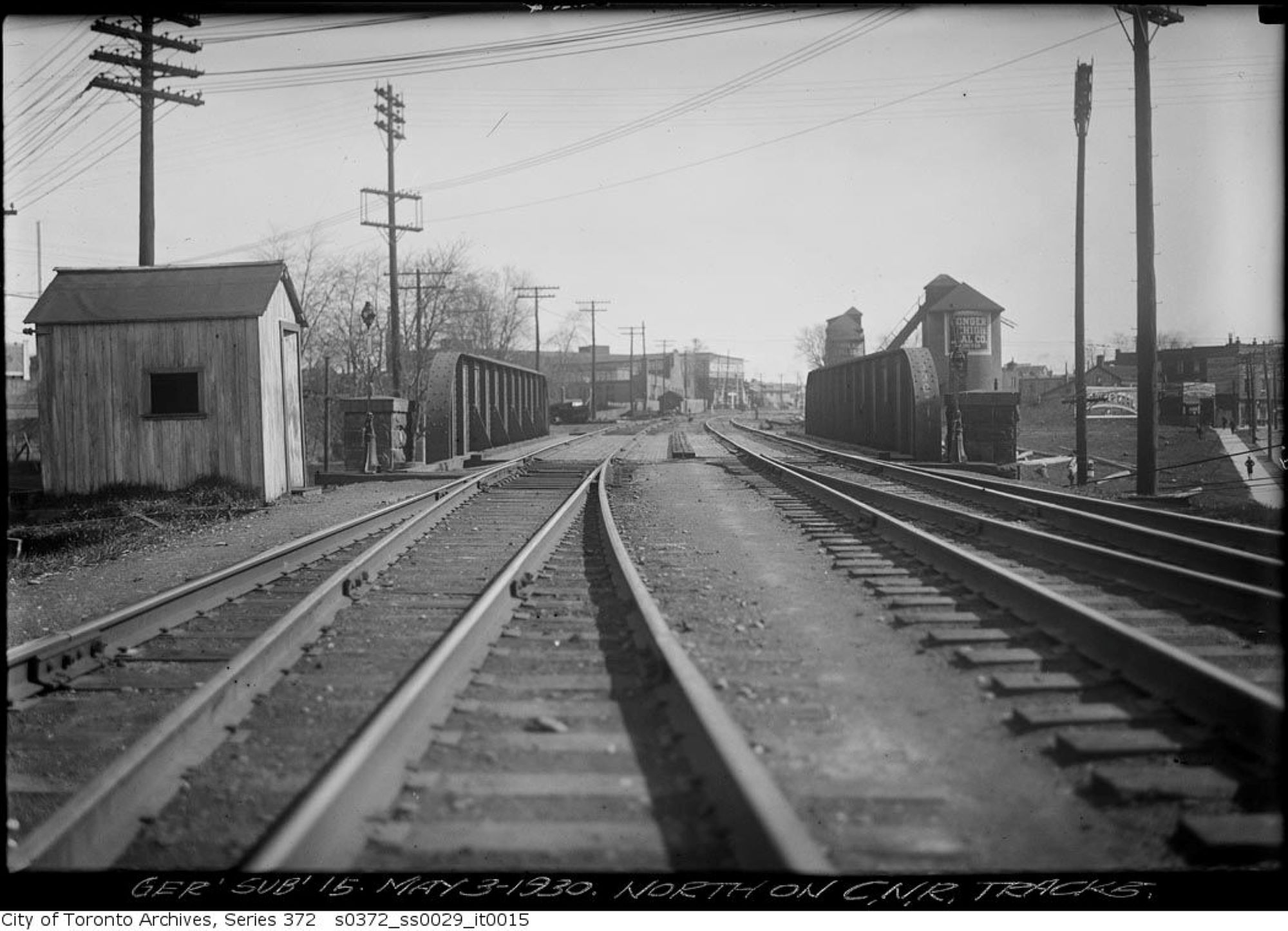
North on CNR tracks from just south of Gerrard Street, May 3, 1930
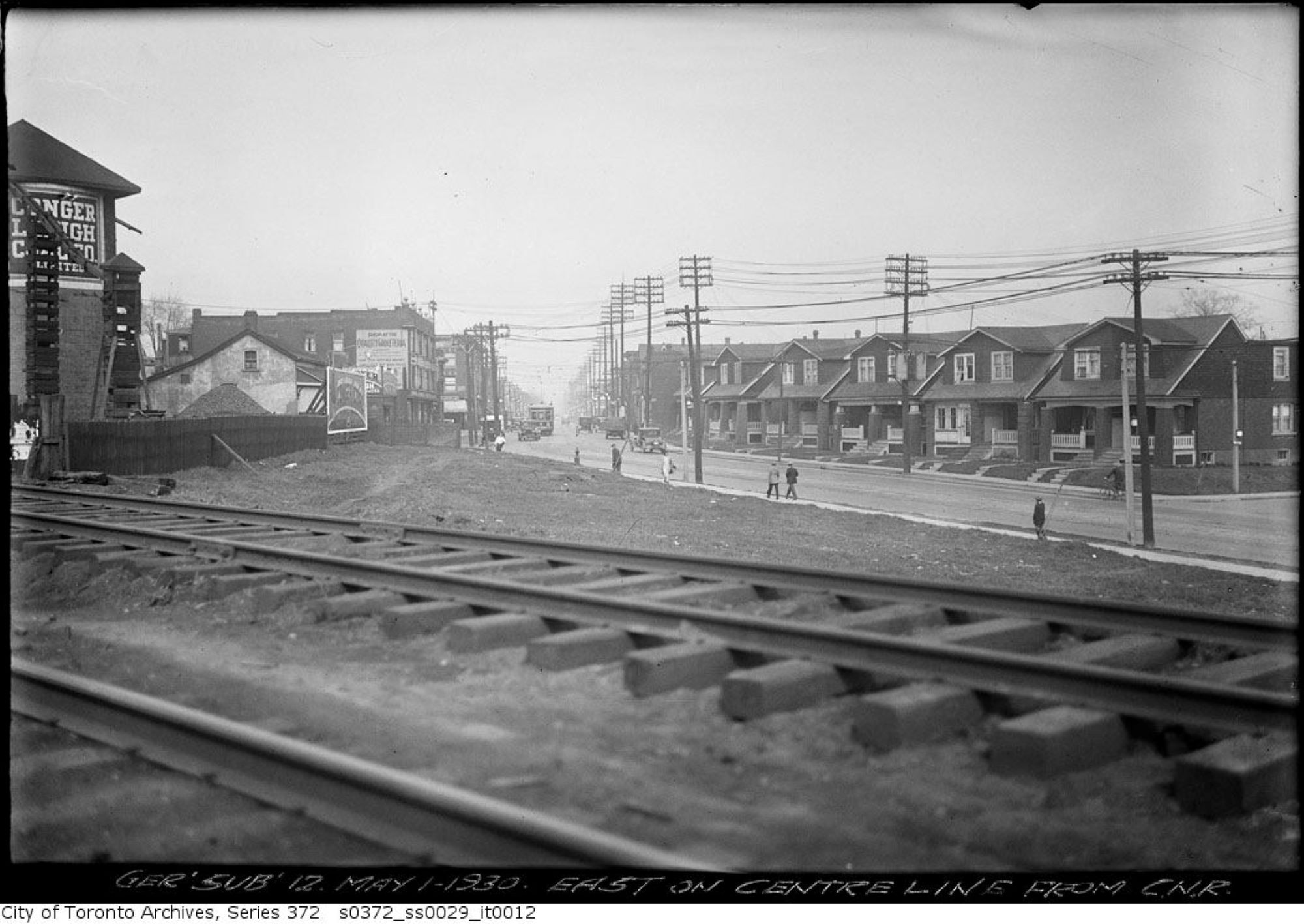
East on [Gerrard Street East towards Pape] Centre line from CNR – May 1, 1930
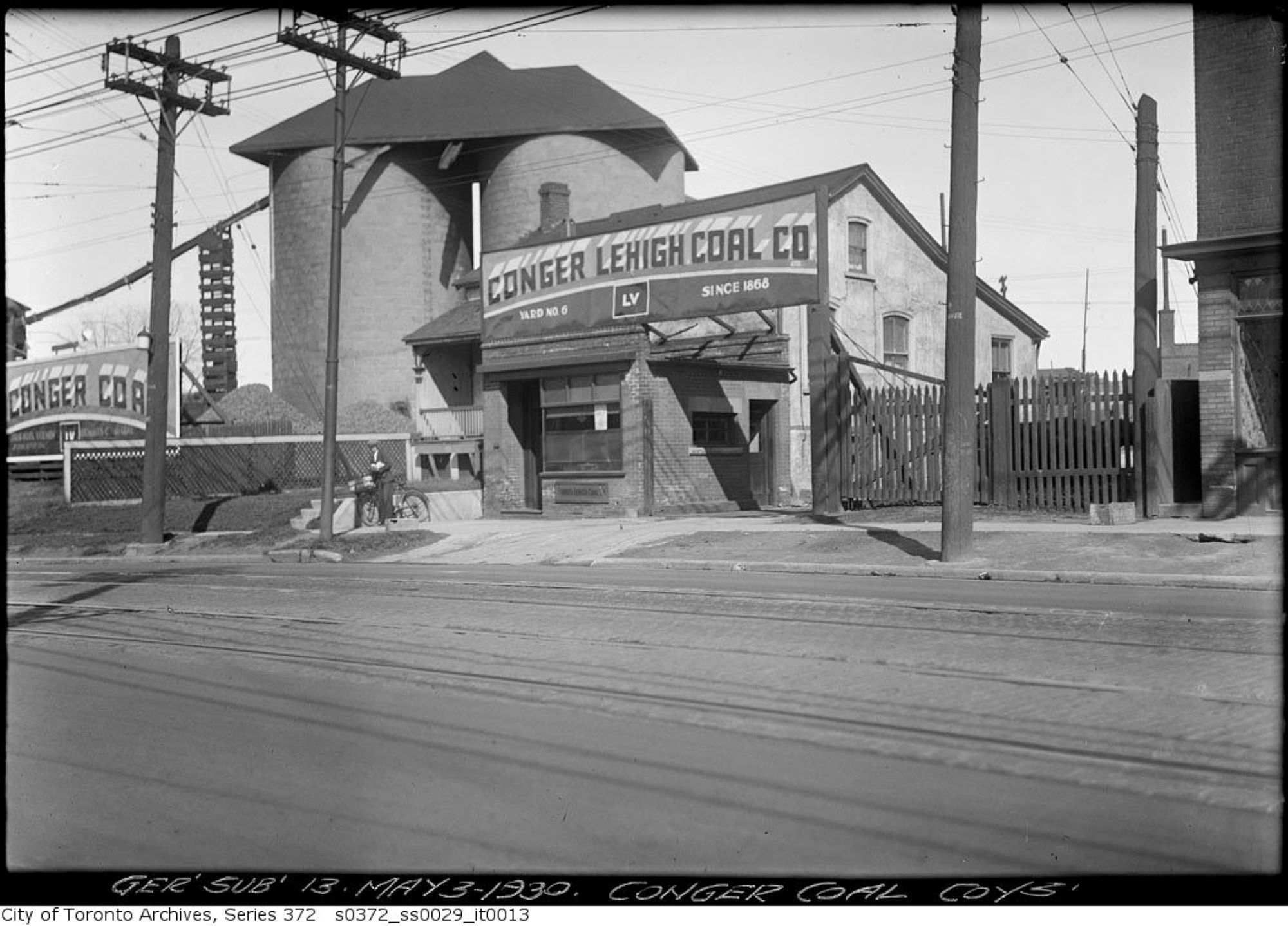
Conger Lehigh Coal Company (Branch Yard No. 6), 930 Gerrard Street East – May 3, 1930
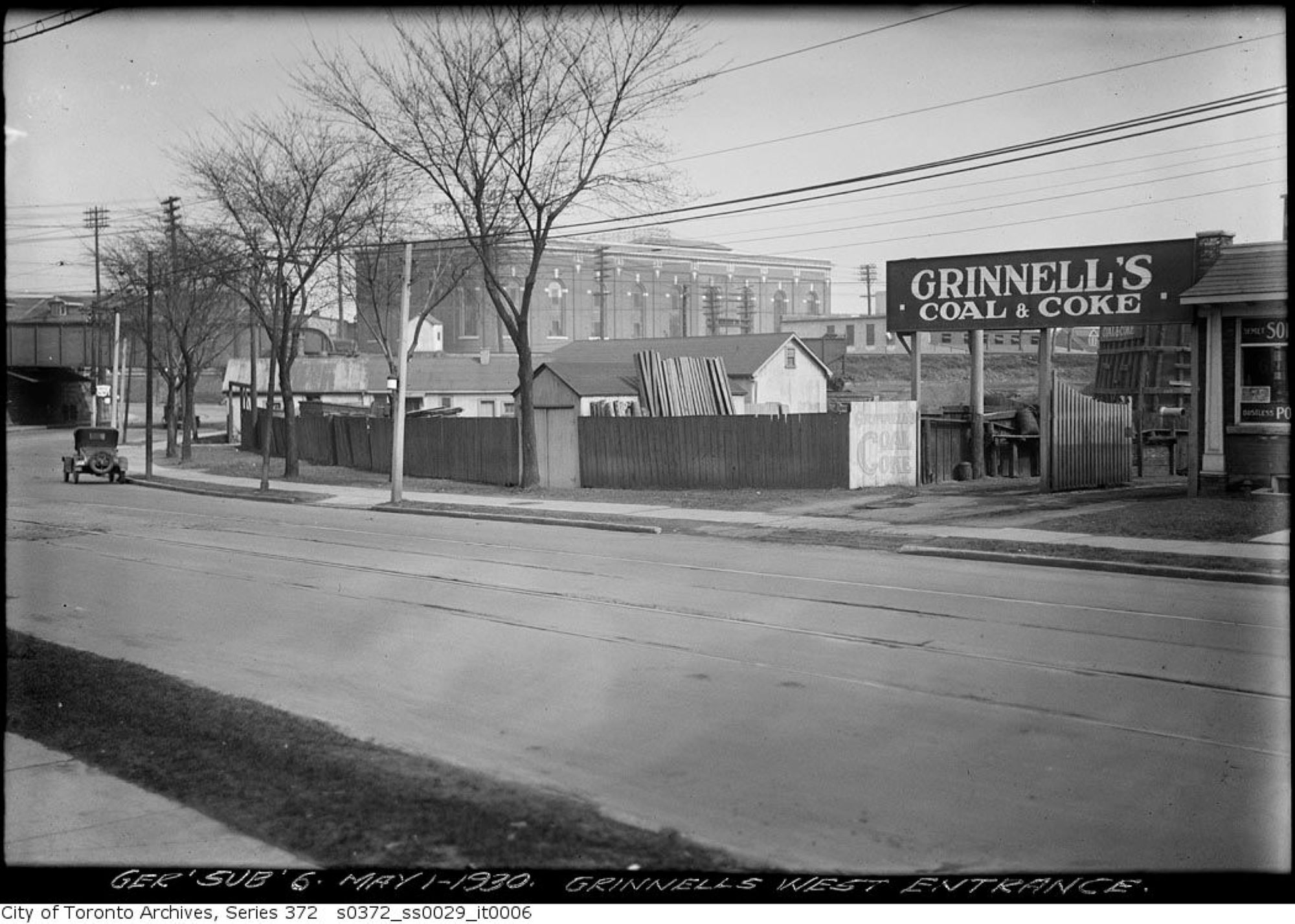
T. Grinnell & Son (Coal and Coke) – 843 Gerrard Street East (west entrance) – May 1, 1930
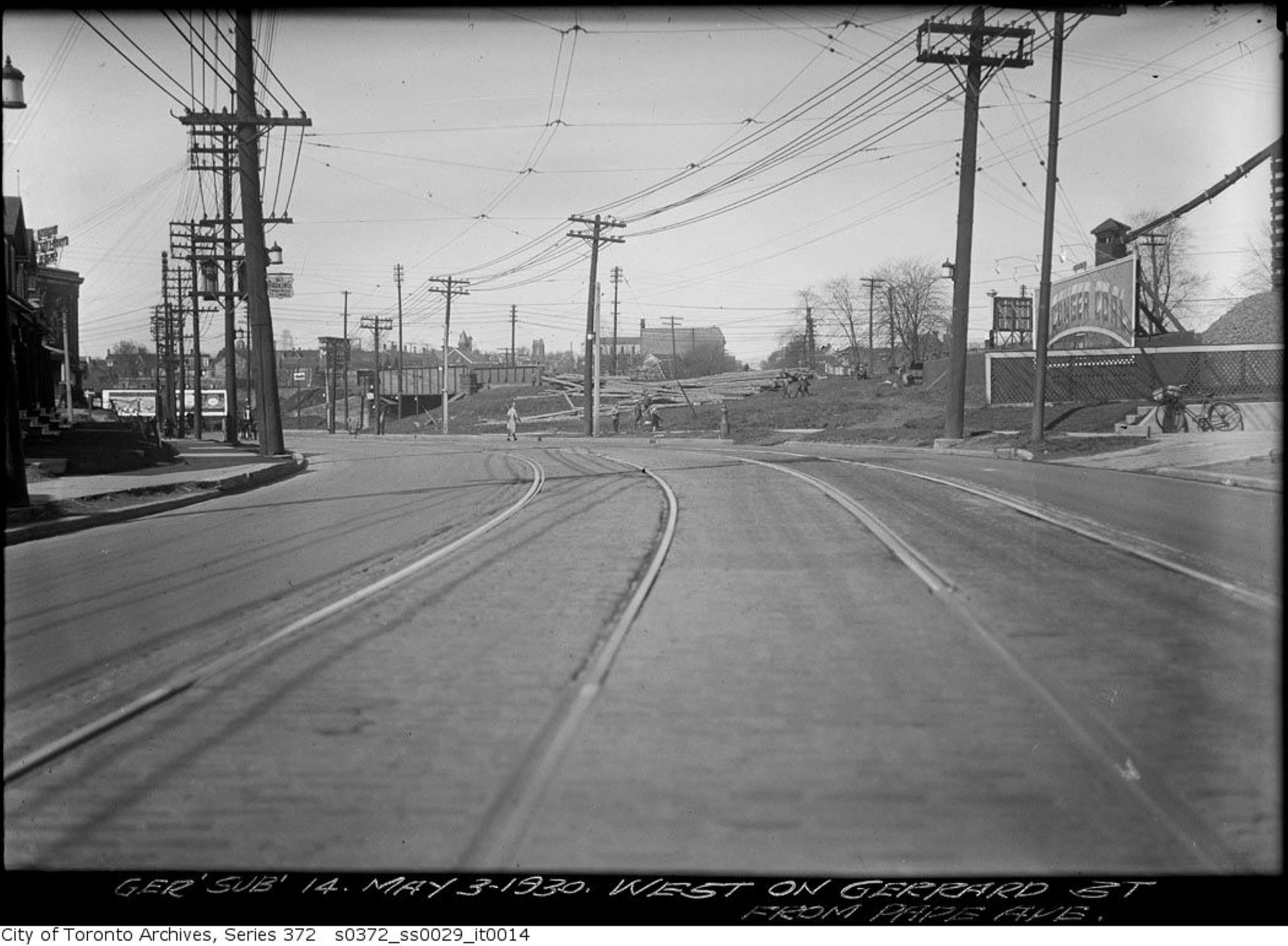
West on Gerrard Street from Pape Avenue – May 3, 1930

Location, Location, Location

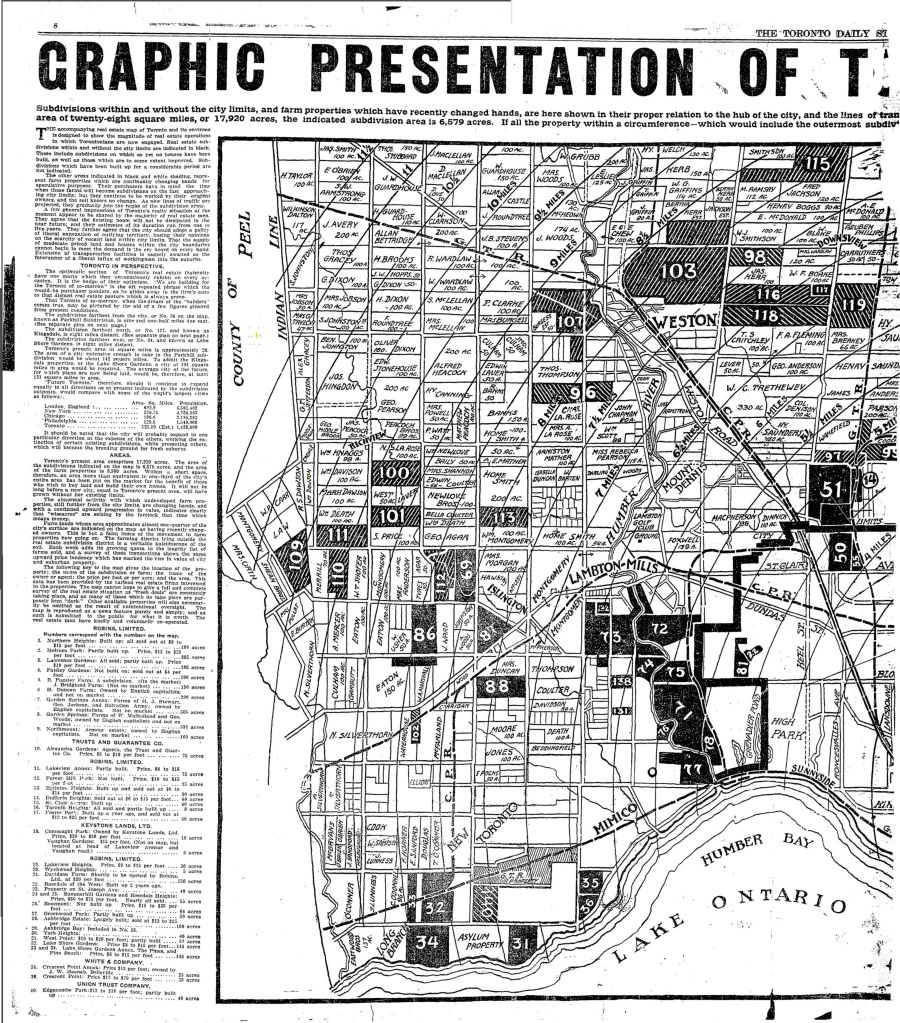
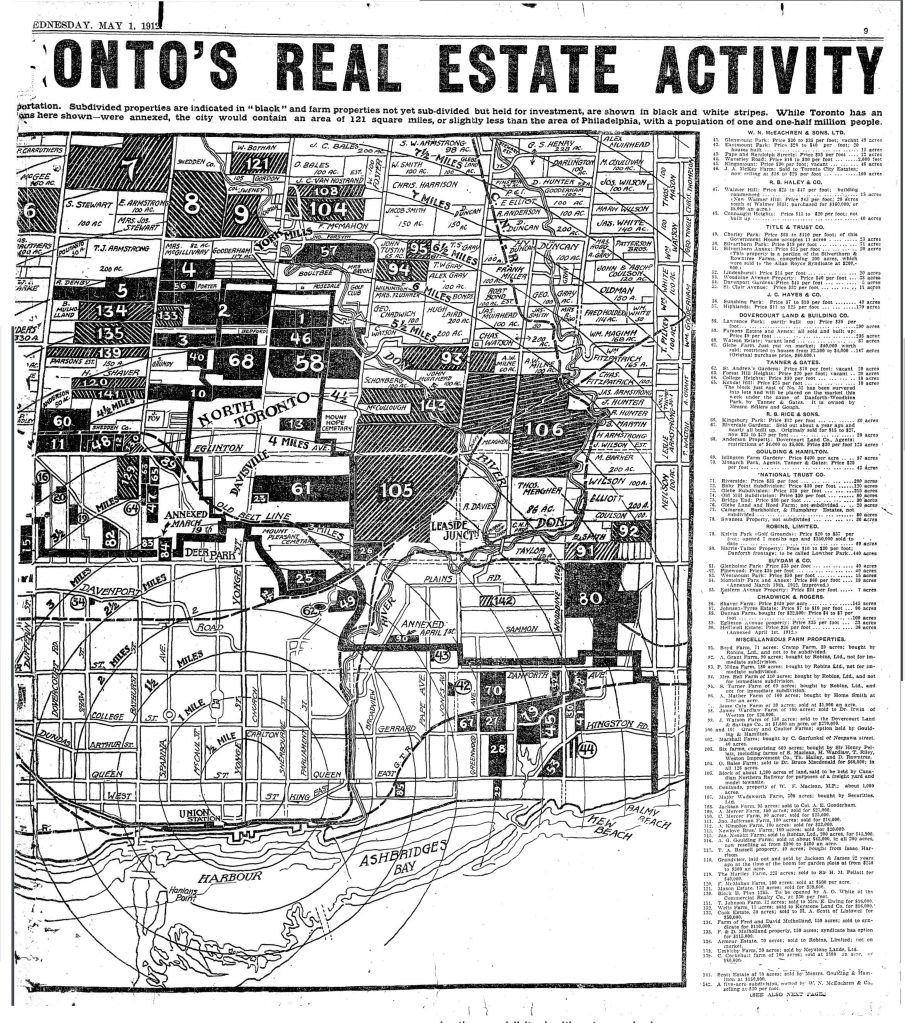
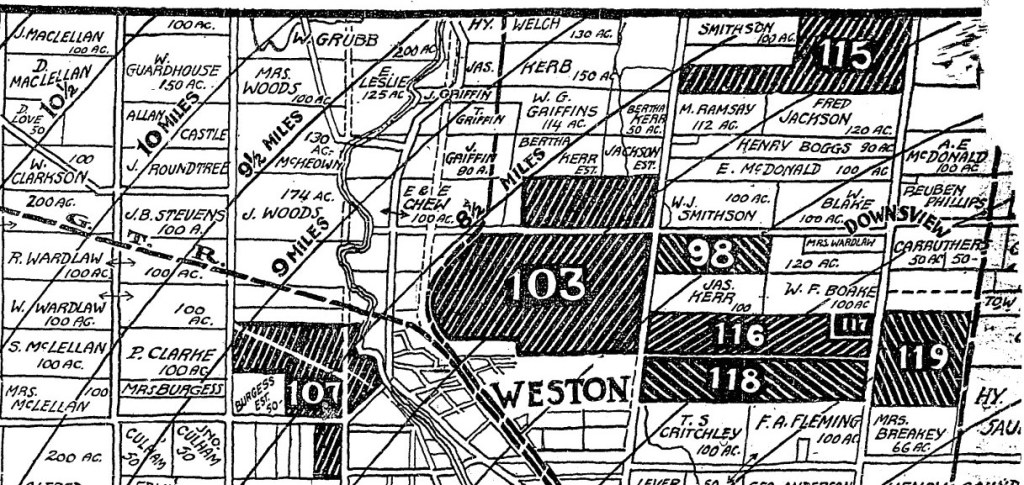
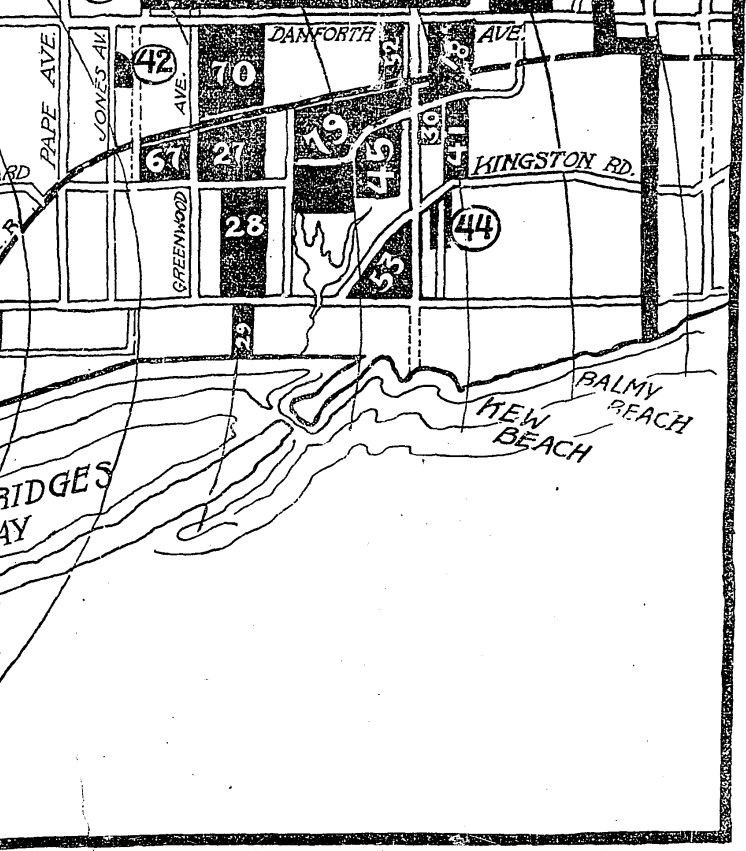
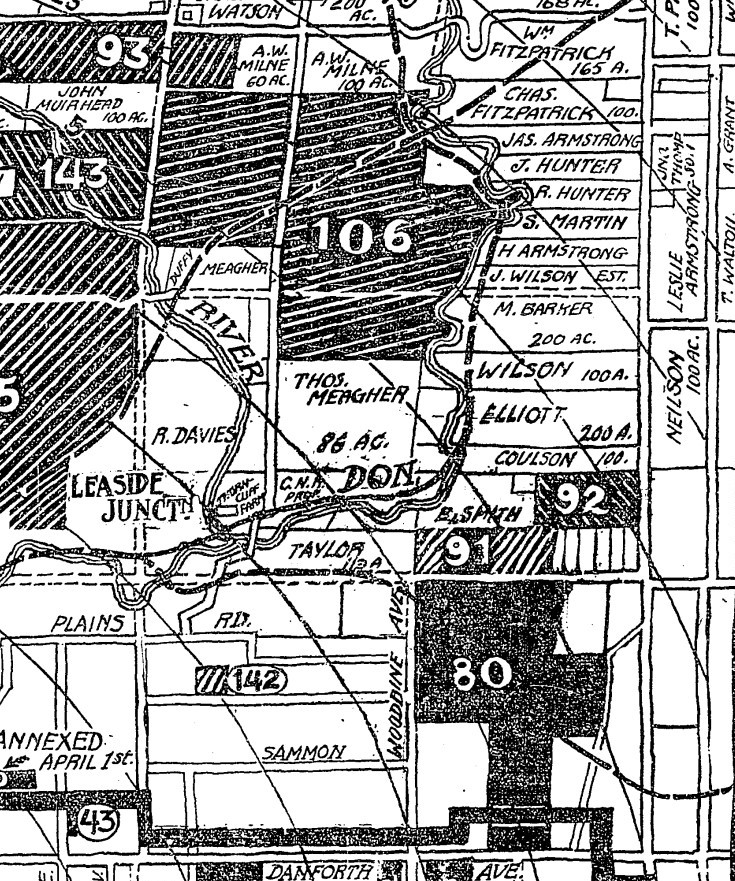
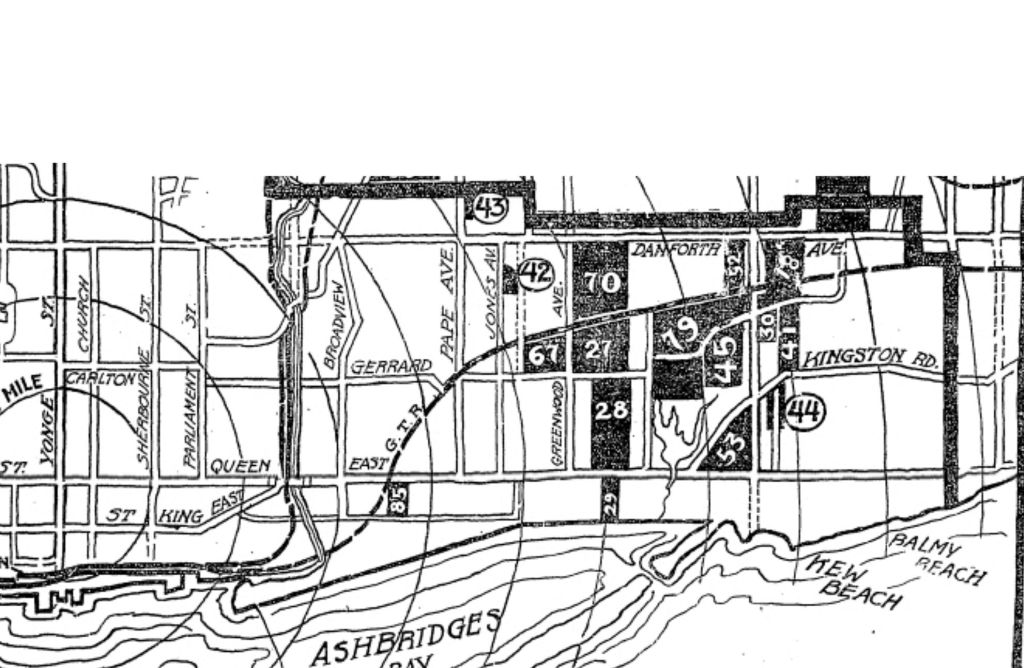
A Graphic Presentation of Toronto’s Real Estate Activity, Toronto Star, May 1, 1912

Graphic Presentation of Toronto’s Real Estate Activity, Toronto Star, May 1, 1912, p. 8-9
The Real Estate Map, Toronto Star, May 1, 1912
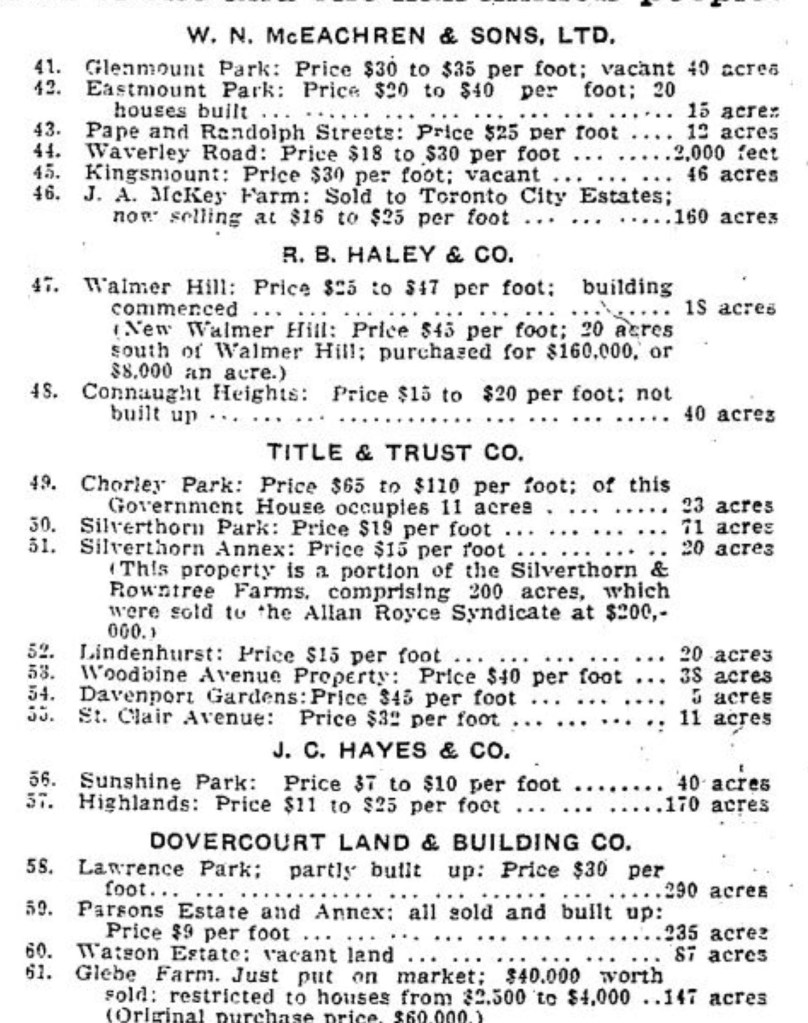
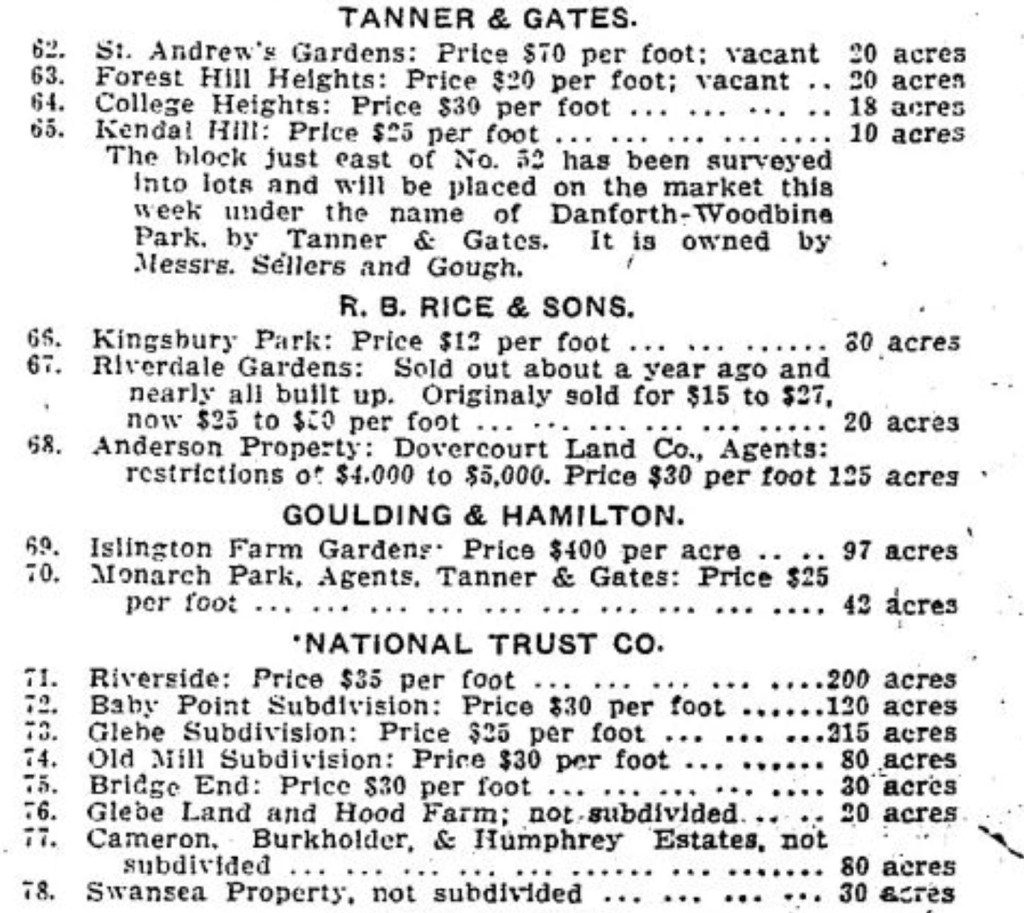
Graphic Presentation of Toronto’s Real Estate Activity, Toronto Star, May 1, 1912 p 10
Graphic Presentation of Toronto’s Real Estate Activity, Toronto Star, May 1, 1912 p. 8
Graphic Presentation of Toronto’s Real Estate Activity, Toronto Star, May 1, 1912 p 9

Key to the Map

The Neighbourhoods

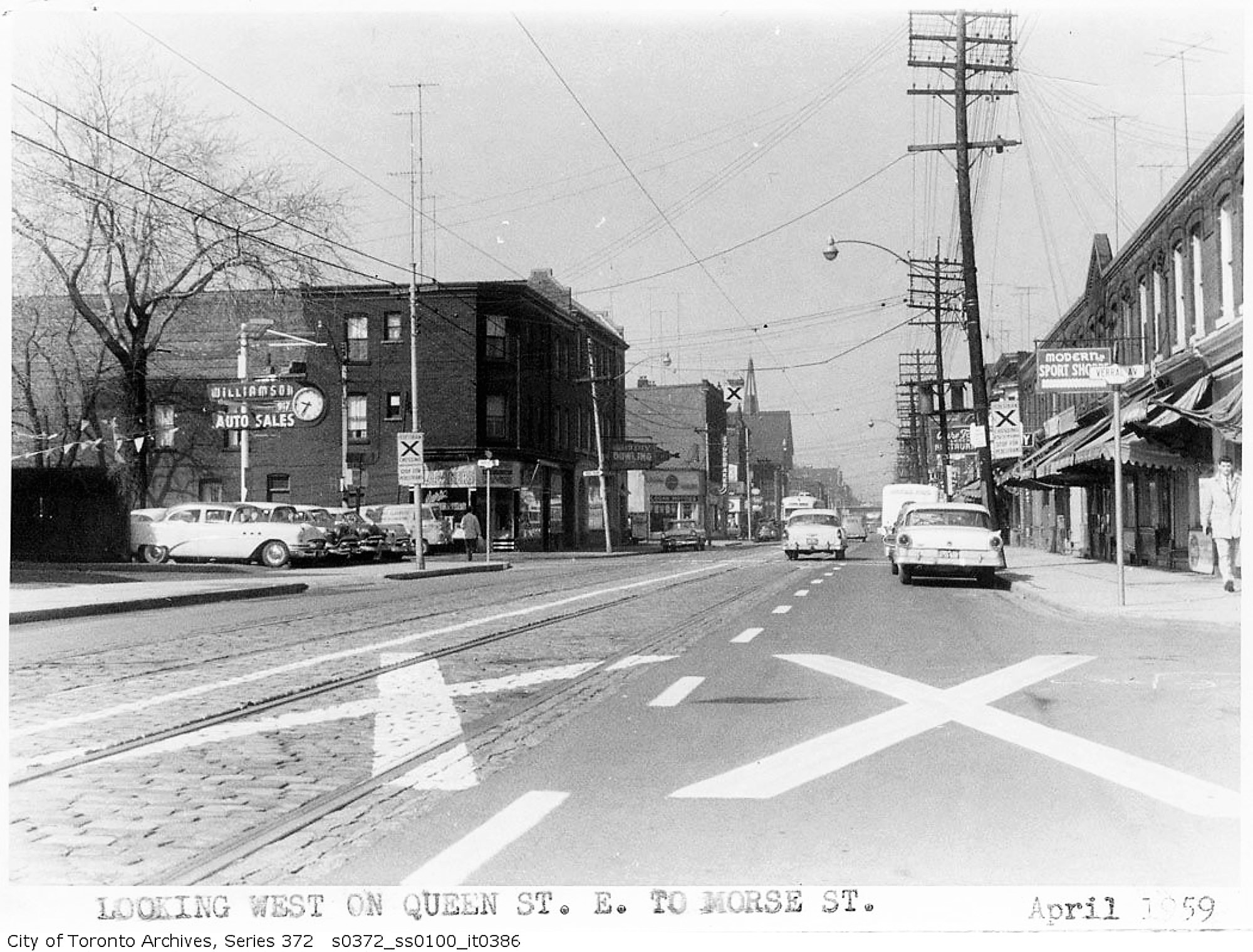
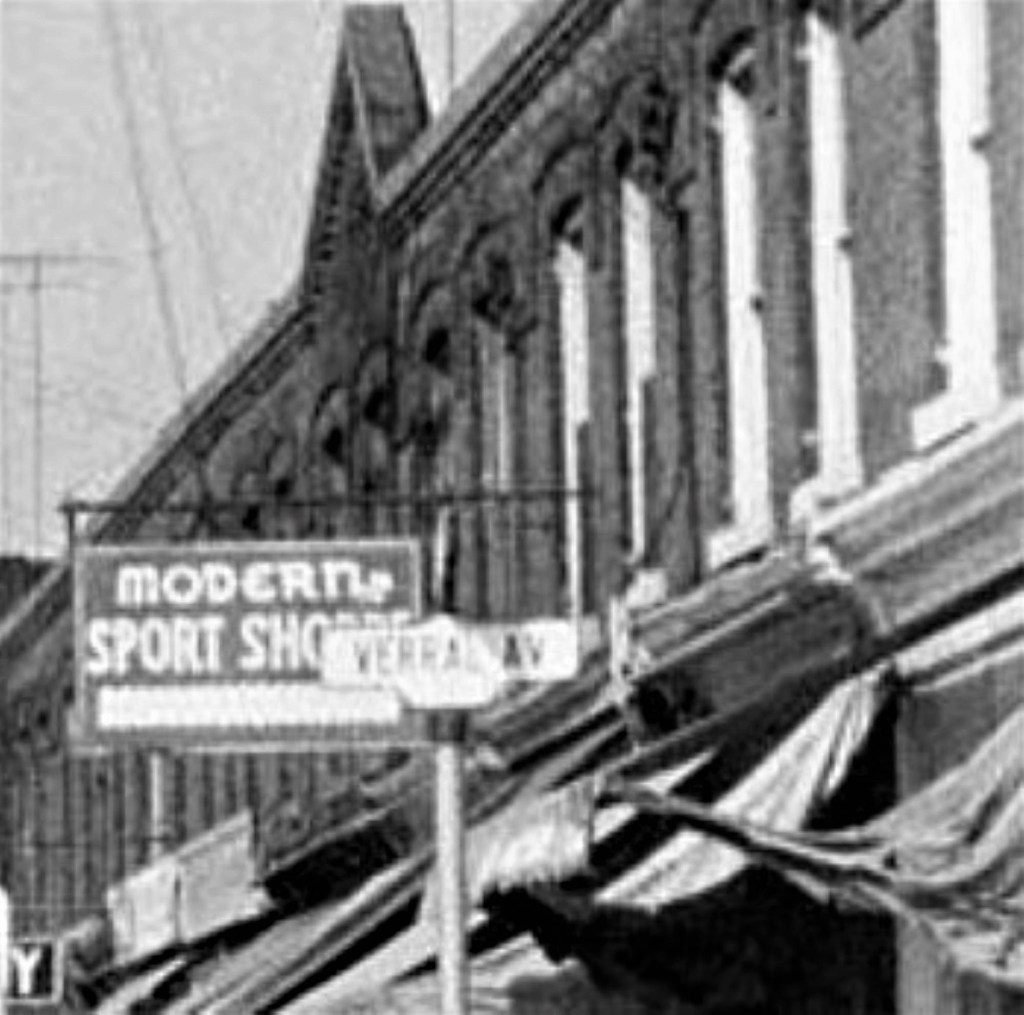
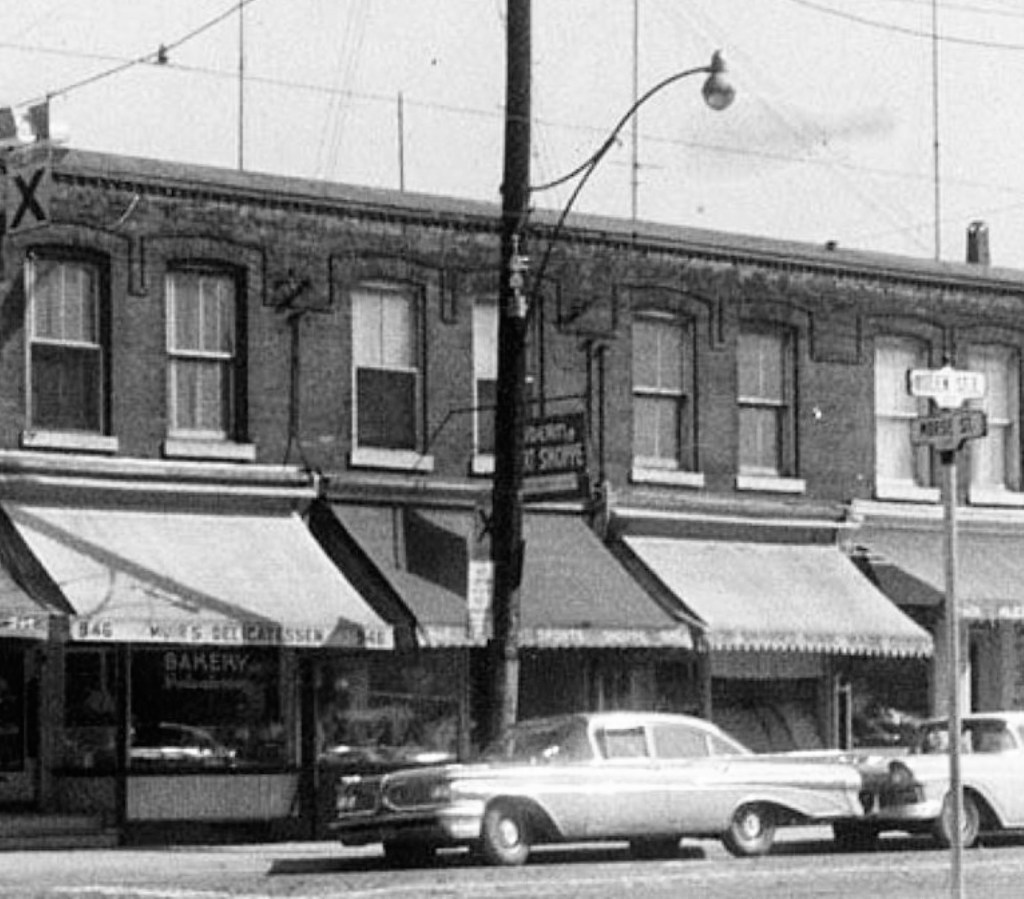
The corner of Morse Street & Queen Street East, April 1959

Queen Street East looking west to Morse Street – [ca. April, 1959]
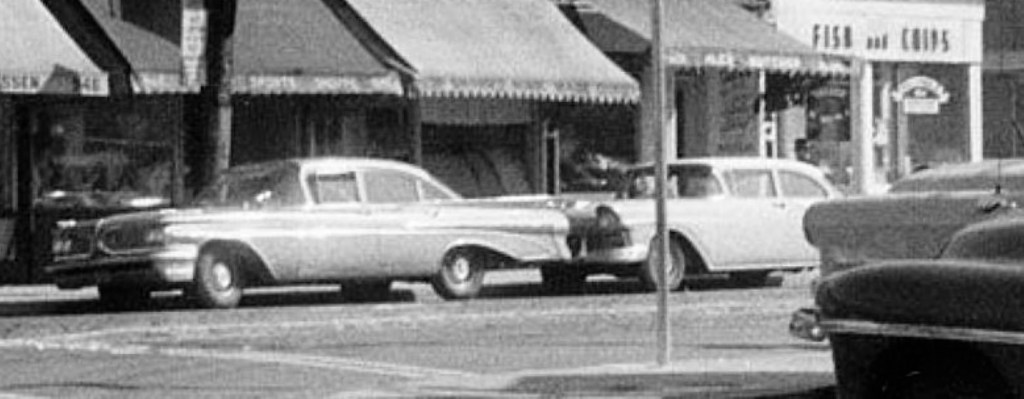
Southeast corner Morse and Queen Street – [ca. April, 1959]

A little lost street, Doel Avenue

Part One: the Doels of Doel Avenue

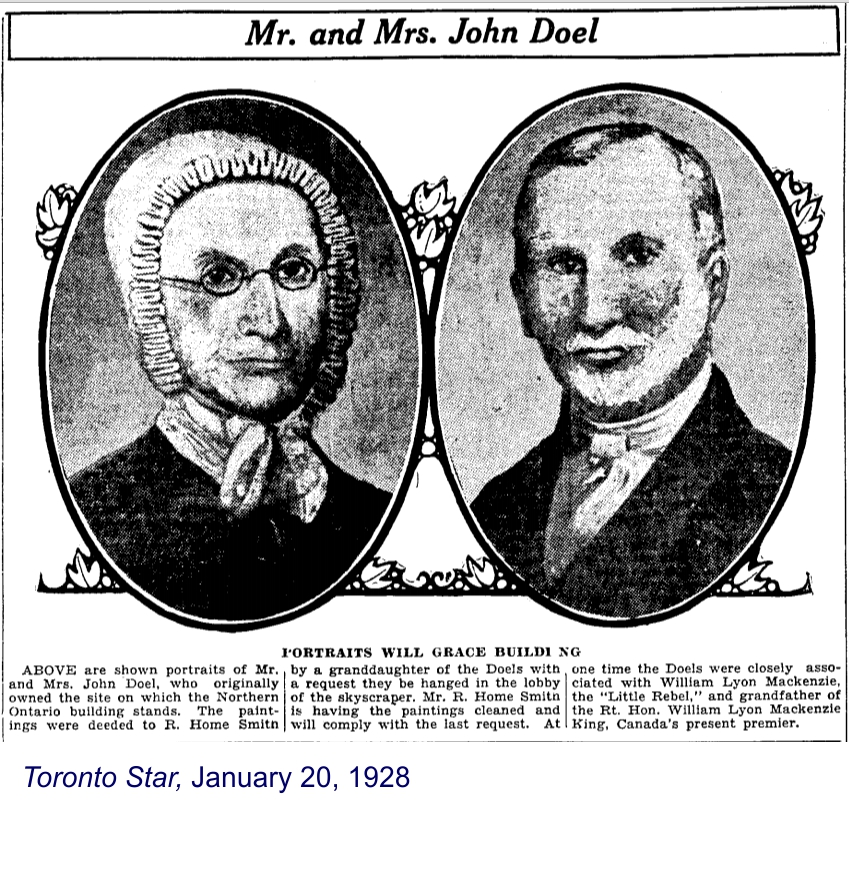
John Doel’s tavern
William Mackenzie and his rebels met in John Doel’s tavern to plan (poorly) their 1837 Upper Canadian Rebellion.
Biography of John Doel and his son William Henry Doel, for whom Doel Avenue was named.
William Henry Doel, Justice of the Peace, pharmacist, with a store and home at what is now Broadview and Dundas Street.
William Henry Doel was adamantly against slavery and enlisted in the U.S. Army Medical Corps during the American Civil War. He often assisted with operations, providing pain relief where he could.

Part Two: The Lost Doel Avenue
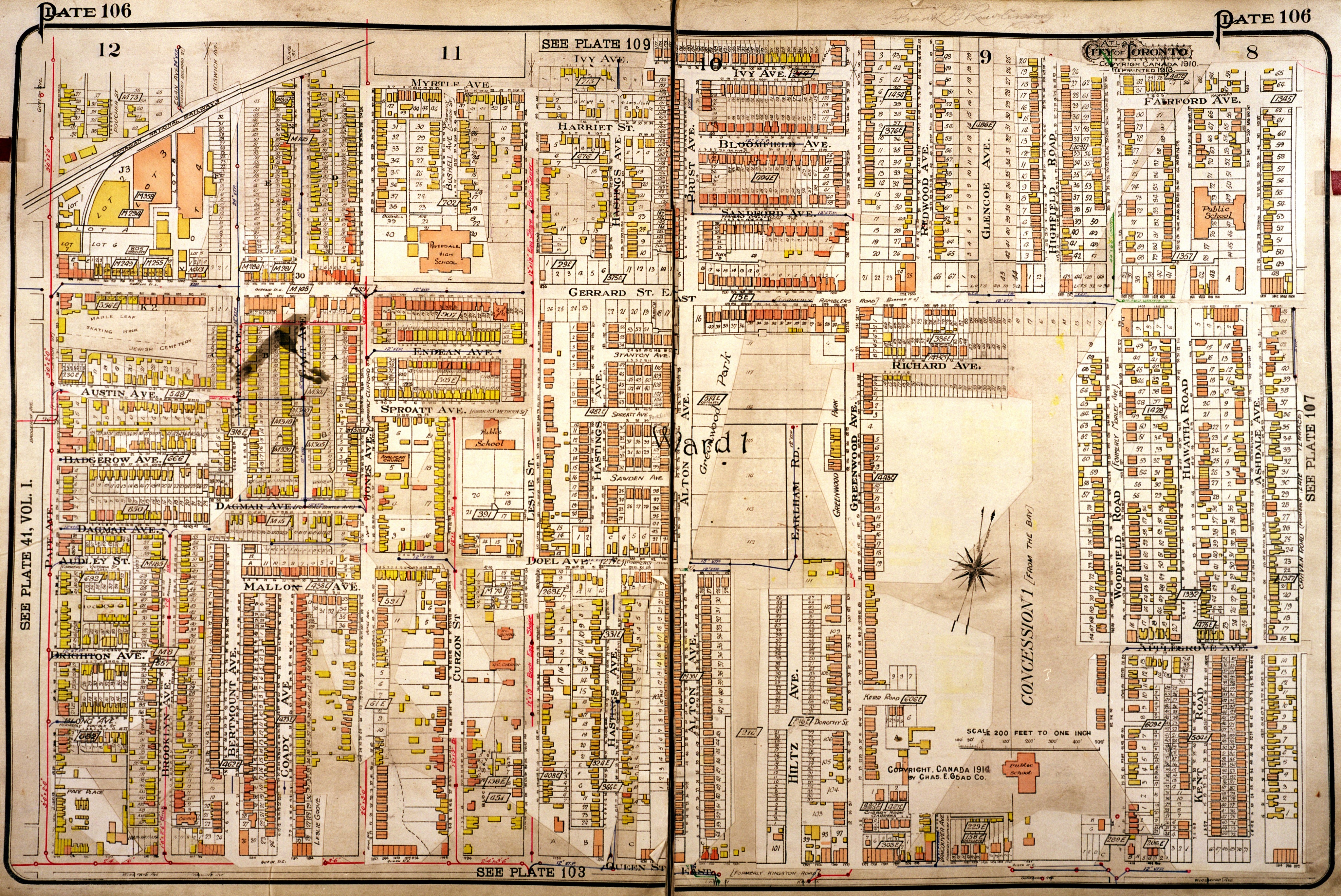
13 & 15 Doel Avenue April 29, 1953 This duplex is still standing though renumbered as part of Dundas Street East.
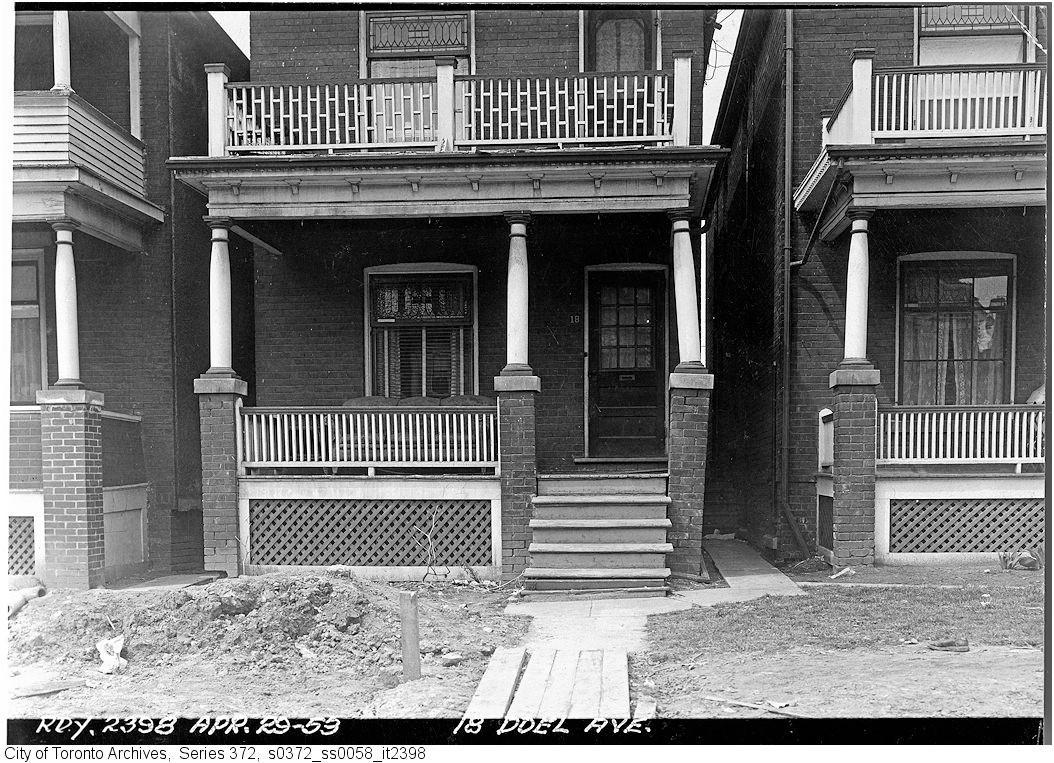
18 Doel Avenue, April 29, 1959 This house is also still standing, but the front has been changed beyond recognition. Some of the neighbouring houses retain the spindly pedestals and cornices in this photograph. None of the surviving pedestals or the posts they sit on are quite as off kilter as those in the photo.
Goad’s Fire Atlas Plan, 1924, 106 (Pape to Craven south of Gerrard) showing Doel Avenue (now part of Dundas Street East).
1924 Goad’s Atlas detail. That’s Jones Avenue on the left. Doel Avenue runs east from Jones Avenue. The houses are numbered (small numbers) as are the lots (larger numbers). The subdivision plan # is 591.
1955 Realtor’s map of Metropolitan Toronto (shows Dundas Street route through East End)
Doel Avenue looking east from Jones Avenue April 7, 1953
Doel Avenue looking east from Curzon Street, April 7, 1953
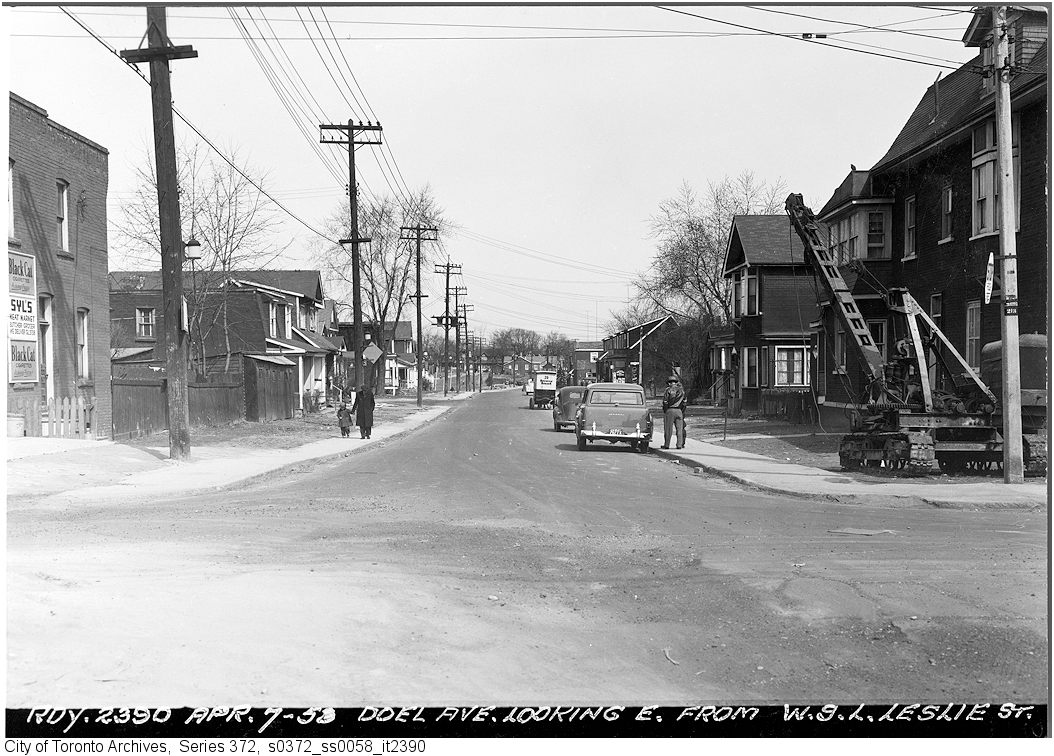
Doel Avenue looking east from Leslie Street April 7, 1953
Doel Avenue looking east from opposite #22, April 7, 1953
Doel Avenue looking east from opposite #79, April 7, 1953
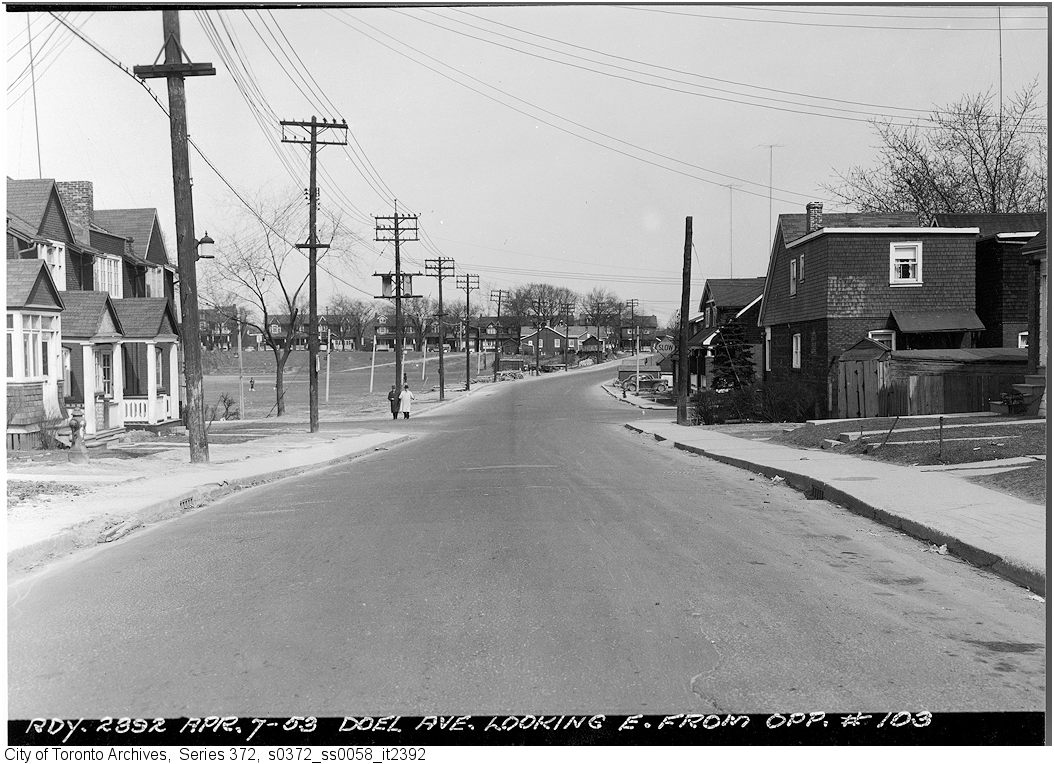
Doel Avenue looking east from opposite #103, April 7, 1953
Approval to extend Dundas Street eastward, Globe and Mail, June 27,1950
1-49 Doel Avenue 1934 South side
12-48 Doel Avenue 1934 North side
58-118 Doel Avenue 1934 North side
79-135 Doel Avenue 1934 South side

Rolph Clark Stone April 1951

Rolph Clark Stone April 1951

Ashbridge’s Creek: twins: one captured, one free

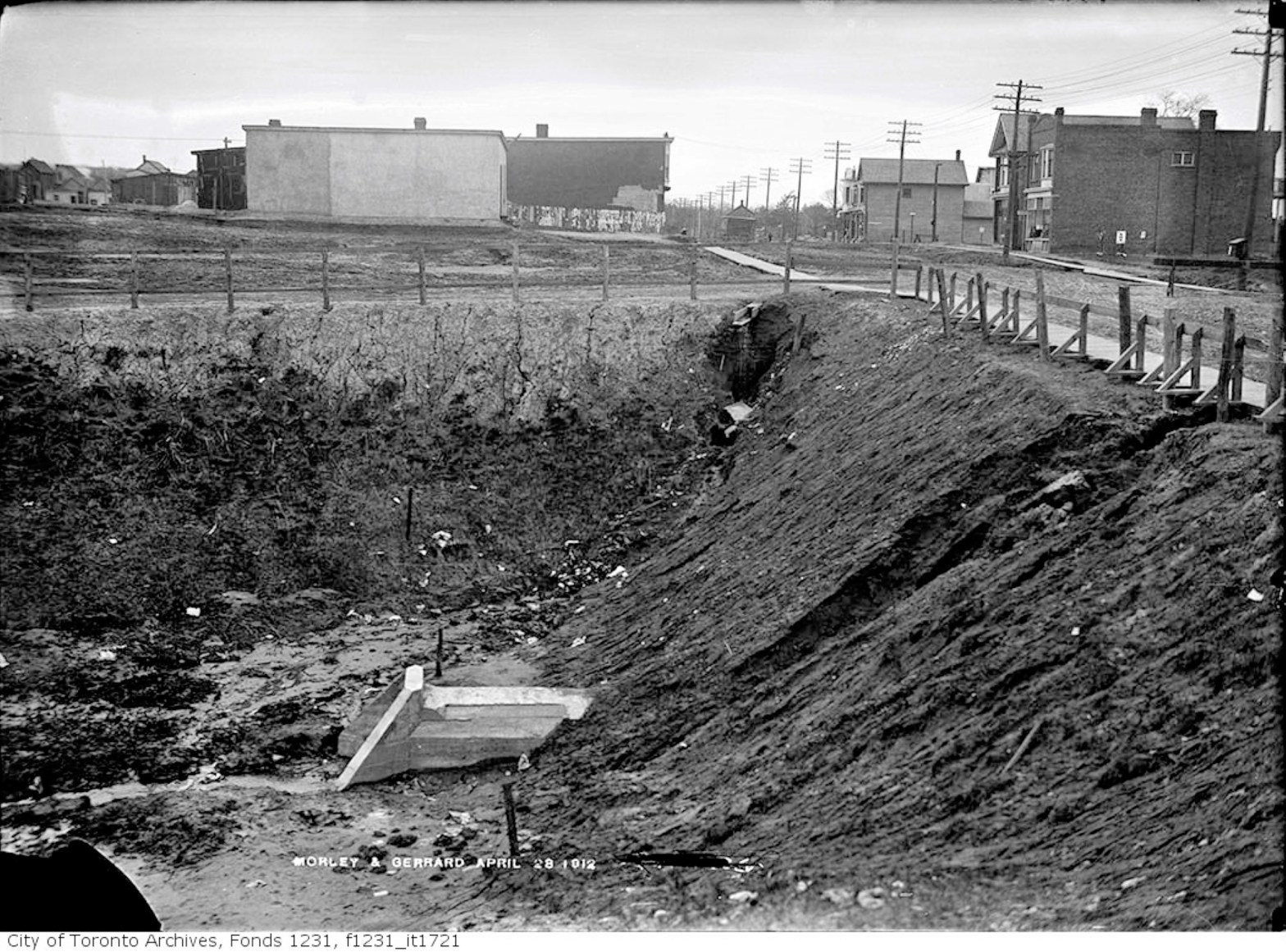
Morley Avenue and Gerrard Street fill operations, April 28, 1912
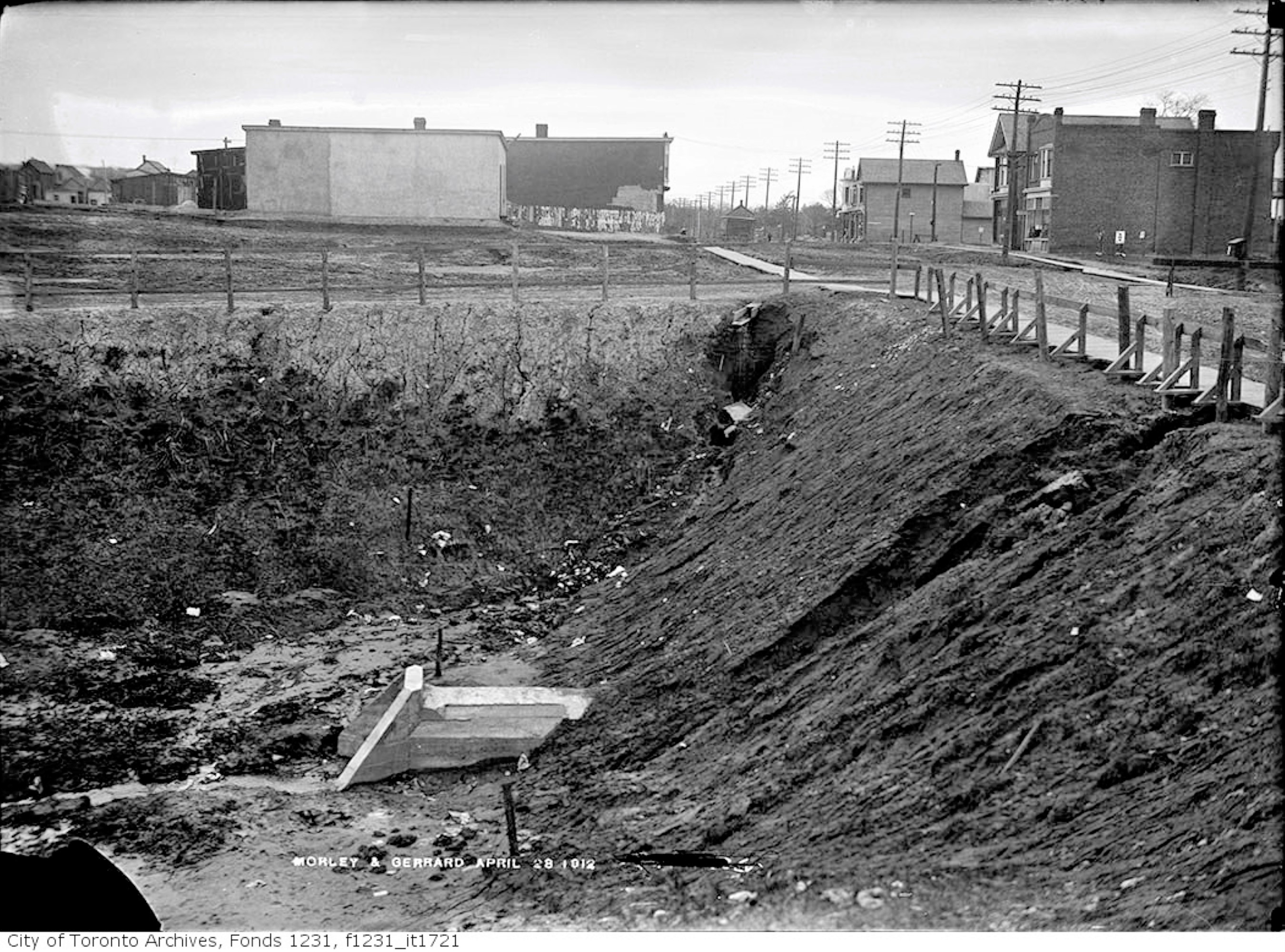
Morley Avenue and Gerrard St fill April 28, 1912

Looking east across Woodfield Road (then called Morley Avenue) towards Coxwell. Ashbridges Creek is in the deep ravine. A culvert has been installed under Gerrard Street to carry the creek south.
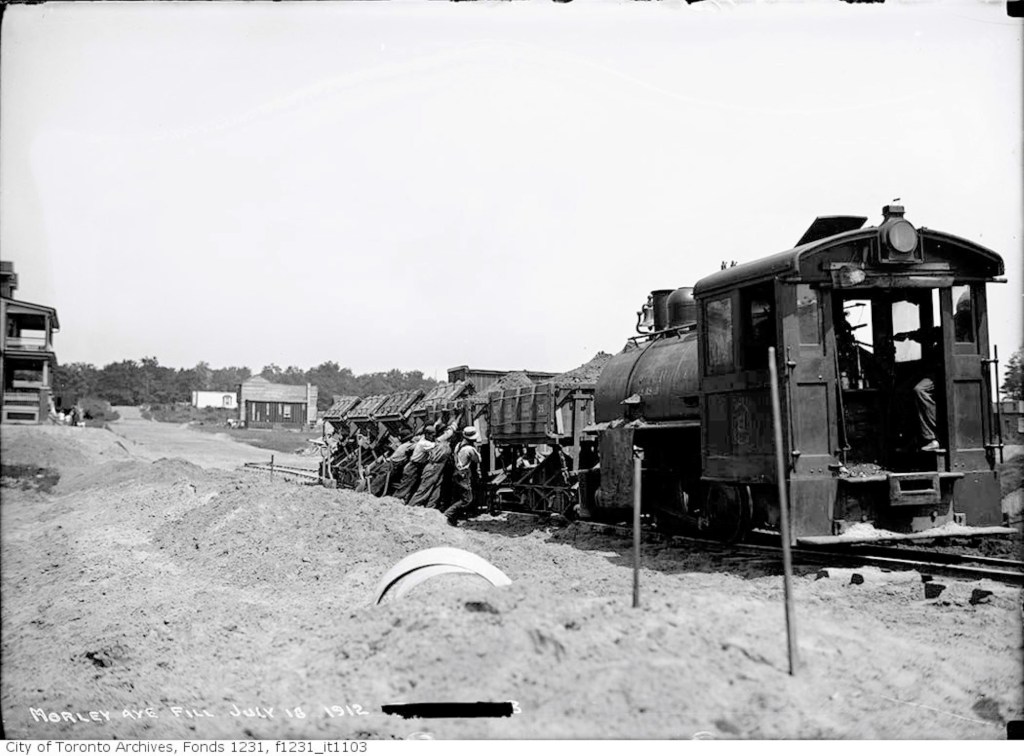
City of Toronto Locomotive No. 6, Morley Avenue fill, July 18, 1912

Workers will install a cement artificial creek about 18-30 metres below the surface. They will then fill in the ravine with sand.

Filling in Ashdale Ravine, Morley Avenue (Woodfield Road), July 18, 1912

A miniature steam locomotive (a dinky), and miniature rail cars (dinky cars) will carry sand dug out from the underpass on Coxwell Avenue along a temporary narrow gauge set of tracks to Woodfield Road.

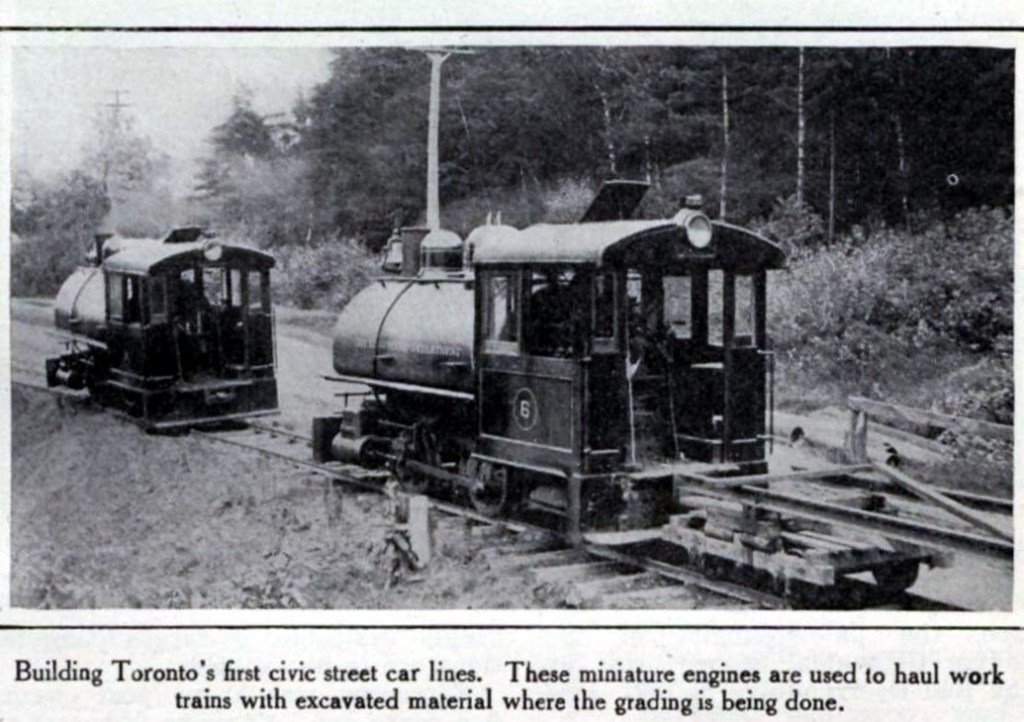
Dinkies for Civic Car Line Toronto Star, August 18, 1911
Dinkies at work, Canadian Courier, October 18, 1911
Gerrard car line construction, Toronto Star, November 16, 1911

The culvert crosses Gerrard where the Lahore Tikka restaurant is today.

Looking west along Gerrard Street from Woodfield Road over the filled in Ashdale Ravine, July 15, 2019 photo by Joanne Doucette

The photo from just before the Pandemic was shot looking west along Gerrard Street across the landfill and over the buried Ashbridge’s Creek.
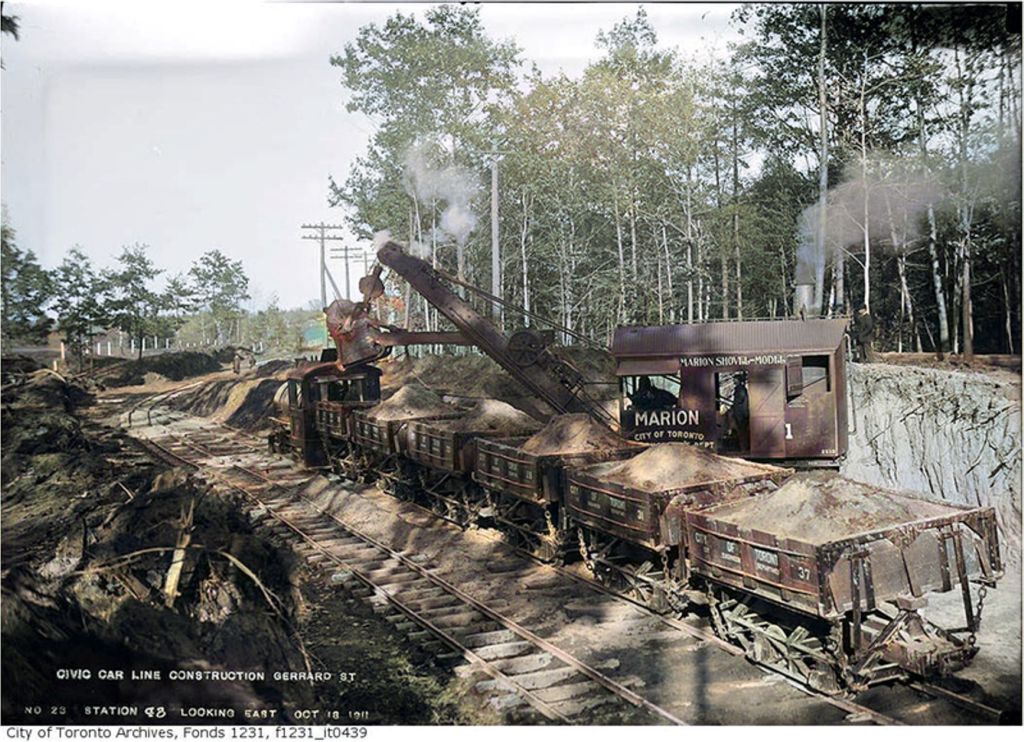
Gerrard St E construction, October 11, 1911 (Colourized)

Ashbridge’s Creek is now two creeks: the creek in the concrete sewer pipes and a groundwater creek flowing through the soil and sediment outside of the concrete sewer culverts.

Cement mixer and labourers, Gerrard Streetcar line, July 6, 1912
Cement mixer and labourers at work, Greenwood to Coxwell Avenue, Toronto Star, November 8, 1910
Morley avenue (Woodfield Road), Globe, December 28, 1912

The creek began in springs near Michael Garron Hospital.

Flooding Gerrard and Coxwell, Toronto World, November 10, 1913

It flows across Danforth Avenue, across the tracks at Rhodes Avenue and diagonally under the Roden school yard.

Lost Creeks 1909 Topographical map with labels

It crosses Woodfield Road, half way between Fairford and Gerrard.

Believed to be an early photo of Ashbridges Creek from around 1912, just before it was put under ground in pipes.

From there it continues on a diagonal to cross just west of Highfield. It flows south, under the Duke of Connaught school yard, and crosses Queen Street where the Russell streetcar barns are. From there the hidden groundwater creek makes its way south to the lake.

Route & Car barns, Toronto Star, December 11, 1912
One fare system, Civic Streetcars, Toronto Sunday World, February 8, 1914
Civic car line, Toronto Star, December 16, 1912
First Gerrard Streetcar, December 18, 1912, leaving from the foot of Redwood Avenue, heading east.
Ticket, Civic car line, Toronto Star, December 19, 1912
Toronto Civic Railways Car No. 3 – February 24, 1913

Canada’s Greatest Baseball Star dies, home on a quiet Leslieville street

Guelph Maple Leafs, 1885
1886 Game of Baseball

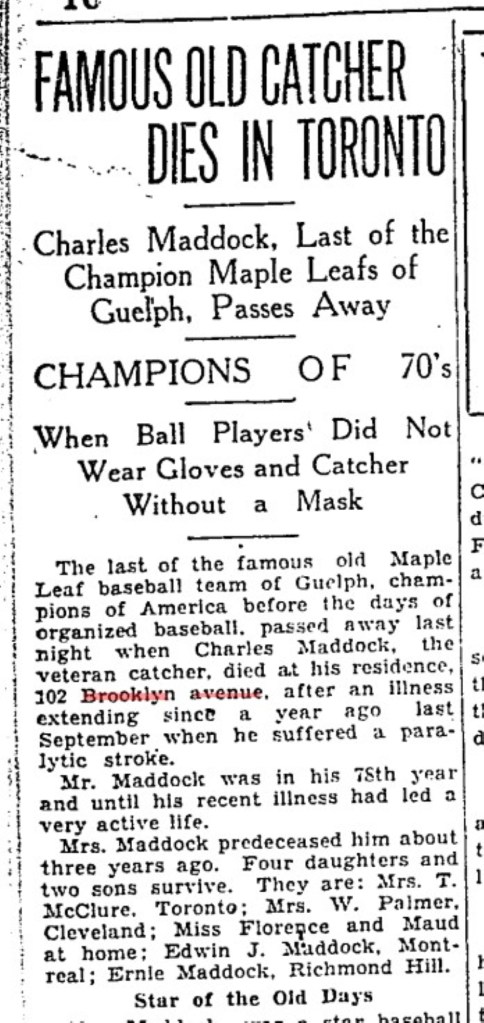
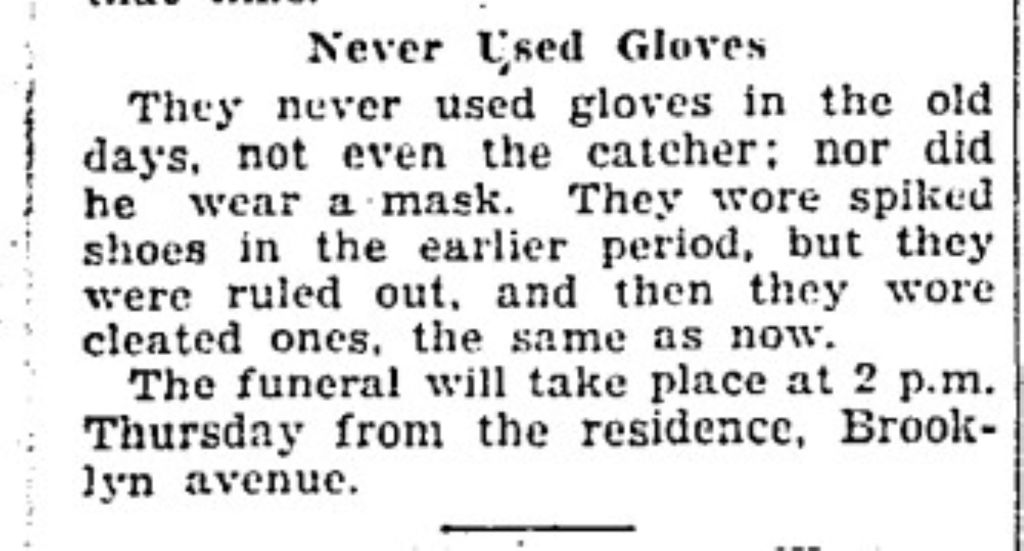
Charles Maddock obituary, Toronto Star, April 27, 1927
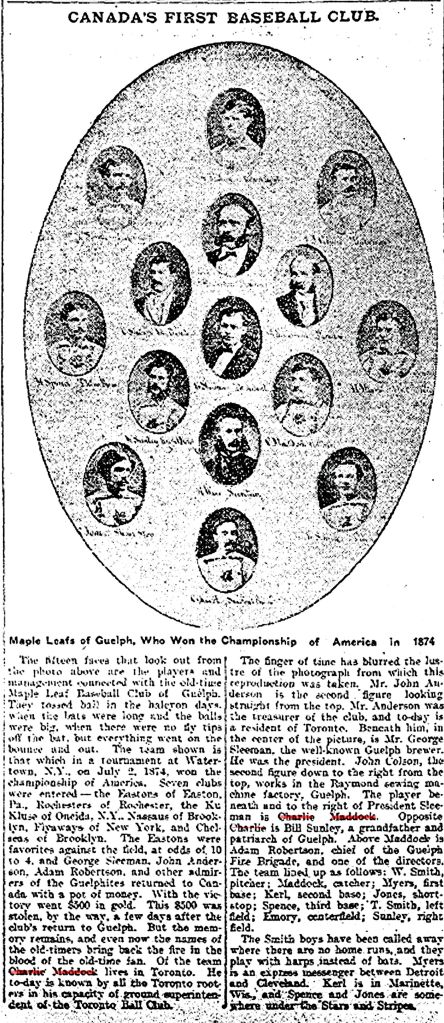
Canada’s First Baseball Club, Toronto Star, October 10, 1903
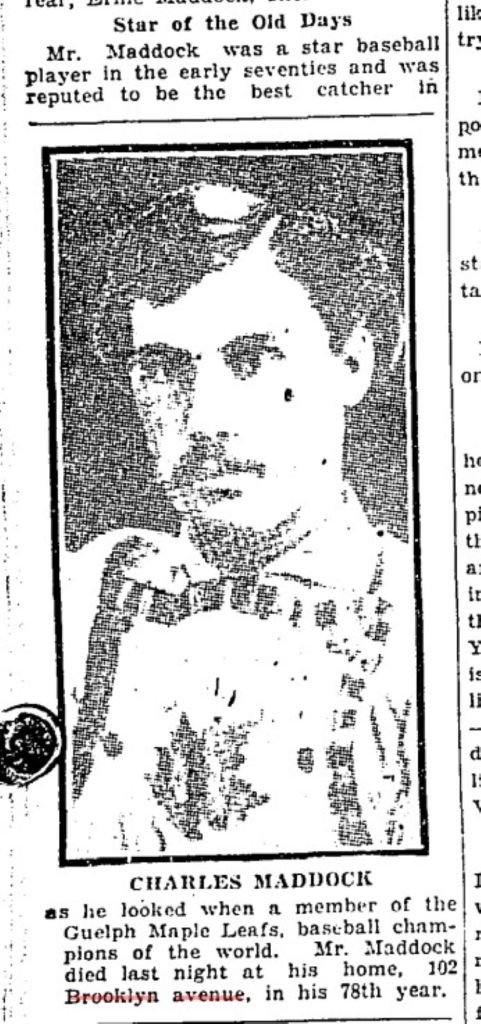
Charles Maddock, Guelph Maple Leafs, World Champions, 1874
1890 at the plate
baseball 1897
Baseball, The Canadian Courier, May 15, 1909