
















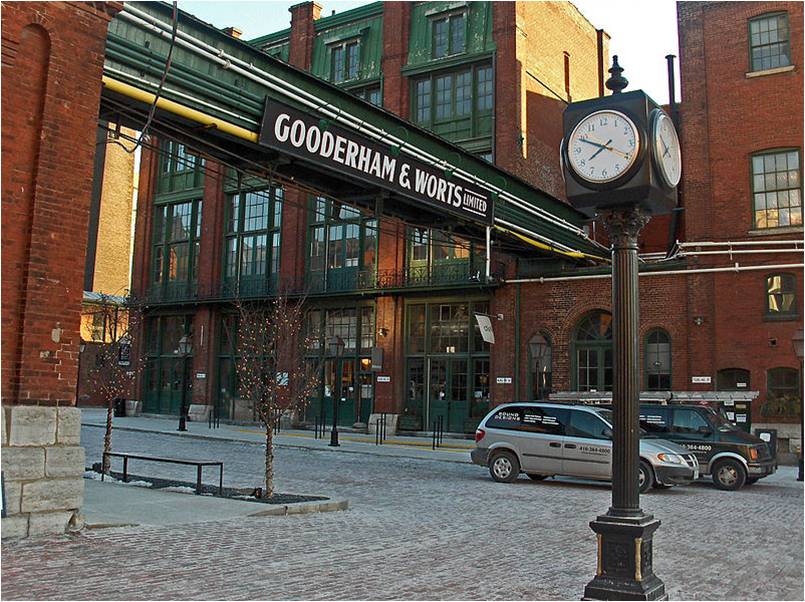
If we could see relationships visually – as silver threads and cords and ropes we would see a multitude of glittering lines tie these people and their families to the long low red brick complex of buildings on the west side of Carlaw from 260 to 290 Carlaw. Many of those silver cords run to the Phillips family who built the Phillips Manufacturing Company on the west side of Carlaw. Others net together to reach over the globe.
In the mid 1970s the City of Toronto decided not to expand the office core. Instead it encouraged residential and mixed office/housing projects downtown. The Kings are two big former industrial districts covering about 500 acres in the Parliament/King and King/Bathurst areas. City Policy was to protect working class jobs here so The Kings were kept for industry. The policy didn’t work, but it did stop Corktown and the Niagara Neighbourhood, as well as other downtown industrial areas, from being re-made in a 1970s-style development.
The building and real estate boom crashed in 1989. In the 1990s the subsequent recession hit Carlaw hard — at the same time as a housing shortage. A number of factors were behind the housing shortage of the 1990s and vacancy rates of less than one percent:
At the same time as high unemployment, government cut income distribution programs like Employment Insurance and welfare. Younger people began to use warehouses as residential lofts. It was illegal but there was a need for cheap housing and buildings were unused as industries were leaving Carlaw and other downtown industrial areas.
It took changes in City of Toronto policies and by-laws as well as creativity to take these old factories and remake them as highly-valued “hard lofts”.
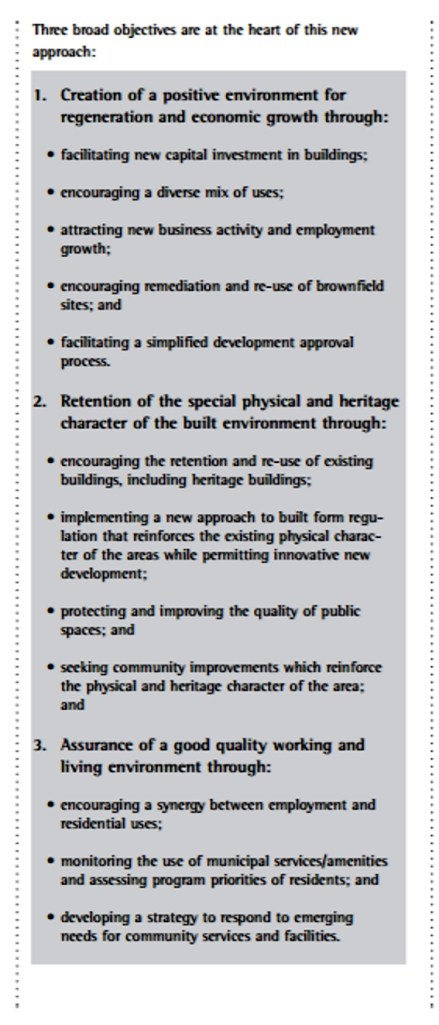
In the mid 1990s, the City’s planning department had a new approach for the Kings. The demand for office space was non-existent. Industry was. The City designated Corktown and Spadina/Niagara as “reinvestment areas.” Building and land owners were allowed to use their existing buildings for any use, or mixture of uses, they wanted (except for certain toxic industries). Owners could adjust use in response to the market. The Kings was the first big scale effort in North America to let a new type of neighbourhood emerge mostly through market forces. It has created much new housing, a lot of it condos, but some co-op. More than 50 housing projects were started. For more info about “The Kings” go to:
http://www1.toronto.ca/wps/portal/contentonly?vgnextoid=03f50621f3161410VgnVCM10000071d60f89RCRD
and also
The artists and other illegal loft dwellers had seen the beauty of the high ceilings, exposed brick and wood beams, polished concrete floors and big warehouse windows. Now it took entrepreneurs with vision could to take other areas, including the Old East End, “up market”.
Gyan Chand Jain arrived in Canada in 1964 from New Delhi, India with a degree in engineering and German work experience. However, as with many immigrants, he found he needed North American credentials to get ahead. In 1966 he obtained a Masters Degree in Industrial Engineering from Ohio State University. In 1969 he began buying up rundown properties at auction and renovating them for re-sale. He founded Atria Developments. His sons, Hans Jain and Vipin Jain, now run Atria Developments. Atria Developments bought up old rundown factories on Carlaw and renovated them from brownfield to highly desirable properties (Toronto Star, June 10, 2006). As well as being pioneers in renovating old buildings, Gyan Chand Jain and his family are very involved in charitable works and supporting vegetarianism, as well as with the Jain religion in the GTA.
Today we know the red brick complex Atria Developments redeveloped on Carlaw’s west side as home to a number of interesting and creative small enterprises and boutique shops such as:
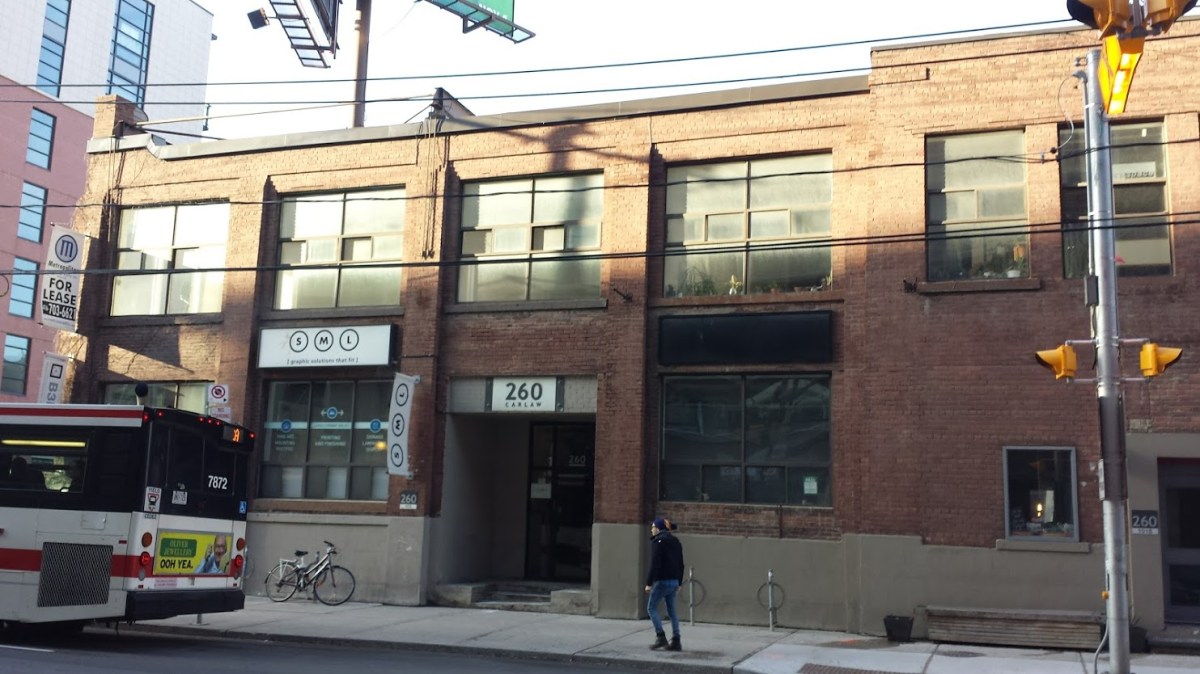
SML Graphics
Flaunt Boutique, hairdressers
That Toronto Studio Photography Rental Space
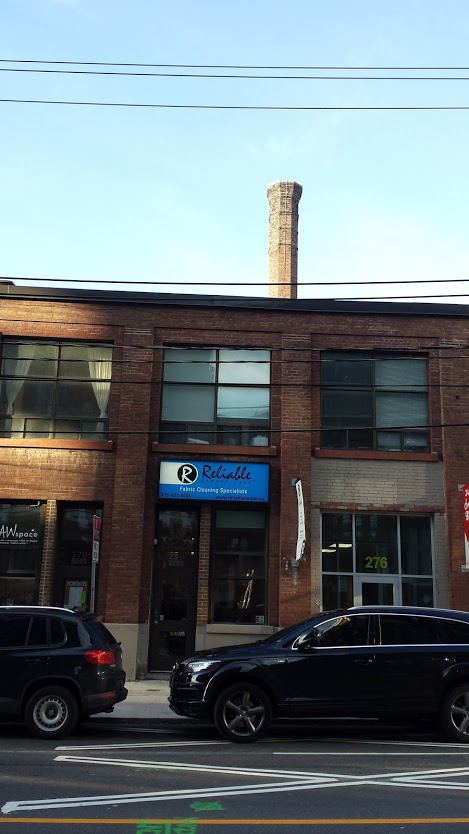
[Mend] (Physio)
RAW Space
Reliable Carpet and Upholstery Care
Awaken Studio

Dwell Gym
Donnelly Law
The Canadian School of Lutherie
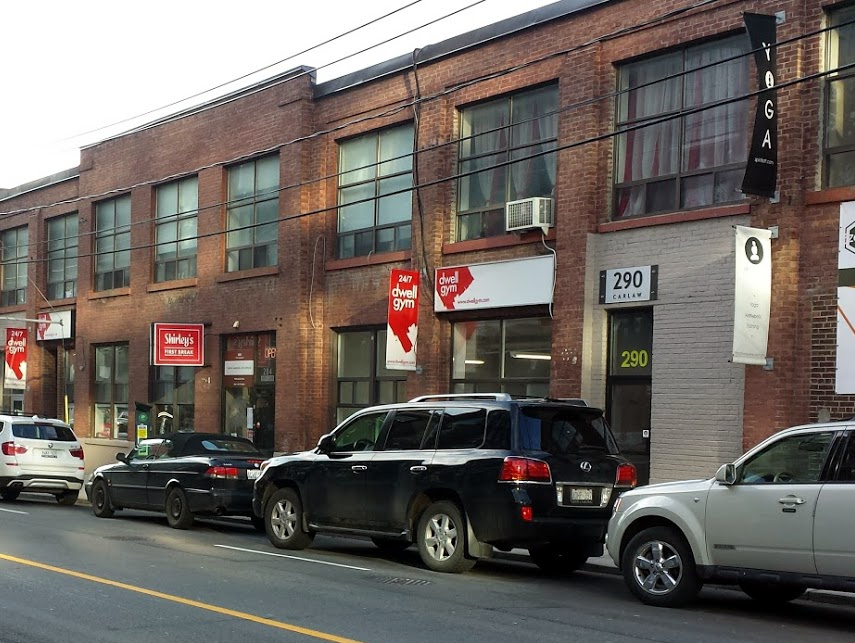
Shirley’s First Break
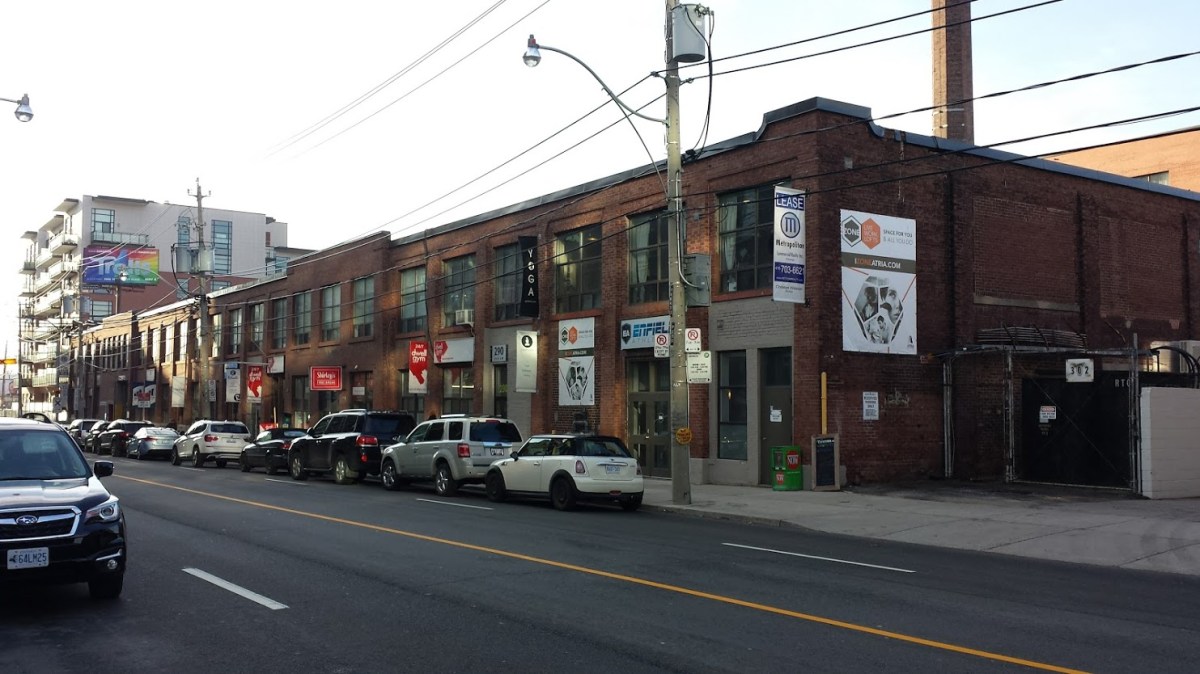
I-Zone Live Work Lofts
Undercover Kids Amazing Spy Parties
Spirit Loft Movement Centre
Woodbecker
Enfield Athletics
326 Carlaw formerly Crown Cork and Seal is now also I-Zone Live Work Lofts. I will be posting separately in the future about Crown Cork and Seal, as well as two other companies that occupied this block: Reliable Toy and Pratt Food Co.
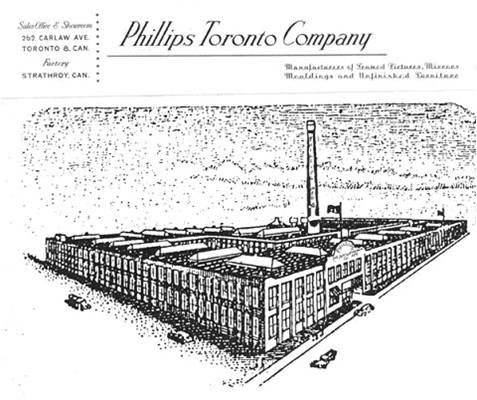
One of the first of those silver threads ran from Carlaw avenue to Ireland and the Phillips family.
Francis Phillips [1847-1910], was born in Cork, Ireland. He immigrated to Canada in 1856 and settled at Kingston. He moved to Toronto in 1864 where he worked for John McGee, Iron Founder, later that company became E. and C Gurney.
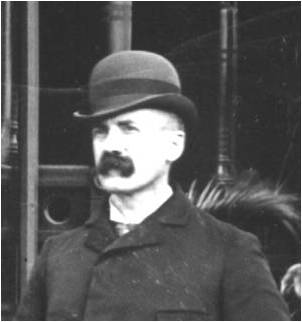
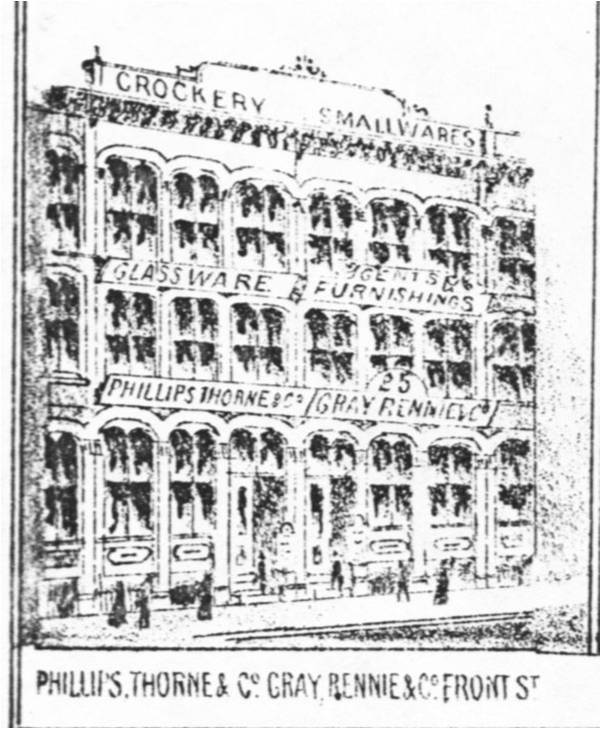
In 1872 Frank Phillips married Annie Bacon, daughter of John Bacon and Harriet Roberts. He went into business with his father-in-law, John Bacon and Frank Phillips, buying out Hurd and Leigh, a crockery and china importer near Yonge and King. They changed the company’s name to Bacon and Phillips. John Bacon retired in 1876 and Phillips formed a new partnership formed with C. E. Thorne, forming “Phillips Thorne and Co., importers of fine china”. In 1878 Phillips Thorne and Co. dissolved.
Frank Phillips became manager of C. G. Cobban Co. In 1874 Cobban had founded this company which made mouldings, mirrors, and frames, as well as cabinet work. In 1880 the name was changed to Cobban Manufacturing Company, glass manufacturer.
The Cobban Manufacturing Company, 47-61 Hayter Street. This business was established by C. G. Cobban in 1874, and came into possession of the present firm in June, 1881, being composed of the following: John Bacon and Frank J. Phillips. About one hundred and twenty-five hands are employed in the manufacture of mouldings, looking-glasses, frames and all kinds of cabinet work. The firm also imports plate, German and sheet-glass, making a specialty of plate-glass and silvering. In 1882, they received a silver medal for mirrors at the Industrial Exhibition. Toronto. The building has a frontage of 200 x 50 feet, and contains three storeys, besides which there is a large yard for the storage of lumber, etc. This firm ranks as one of the largest in the Dominion, having a trade which extends from the Atlantic to the Pacific ocean.
Graeme Mercer Adam, Charles Pelham Mulvany, Christopher Blackett, Robinson, authors. History of Toronto and County of York, Ontario. Volume 1. Toronto: C.B. Robinson, 1885
In 1893 Frank Phillips became president.
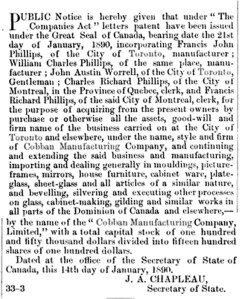 The Canada Gazette, 1890
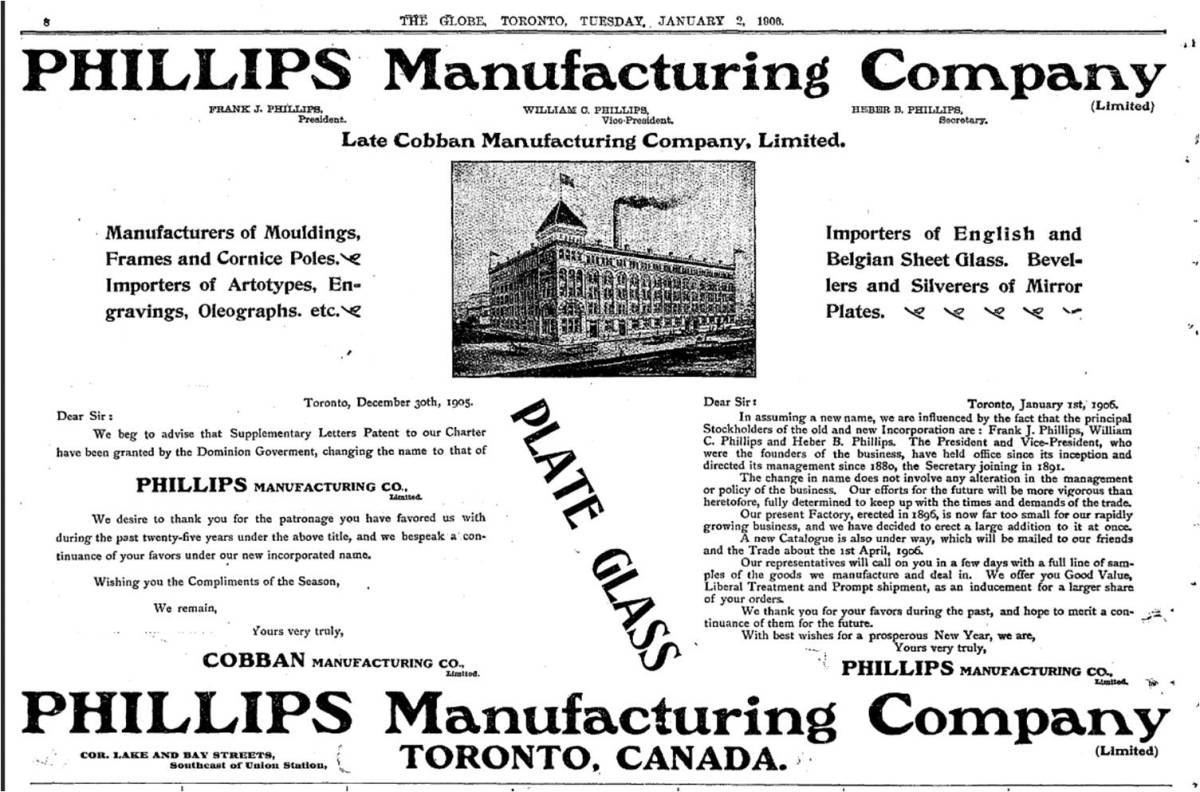
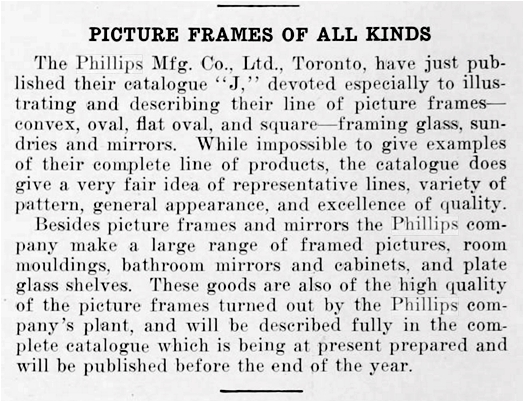
The company now made mostly picture frames and plate glass. It began operating under the name “Phillips Manufacturing Co. Ltd., late Cobban”. In 1905 the Cobban Manufacturing Company formally changed its name to the Phillips Manufacturing Company. (Globe, Dec. 9, 1905)
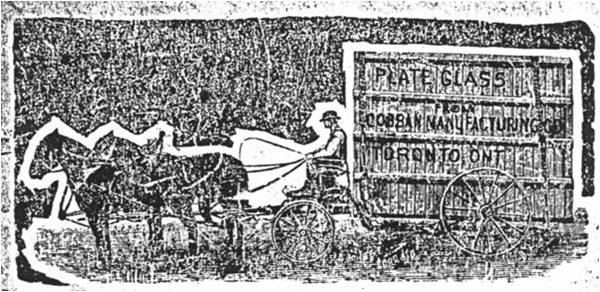
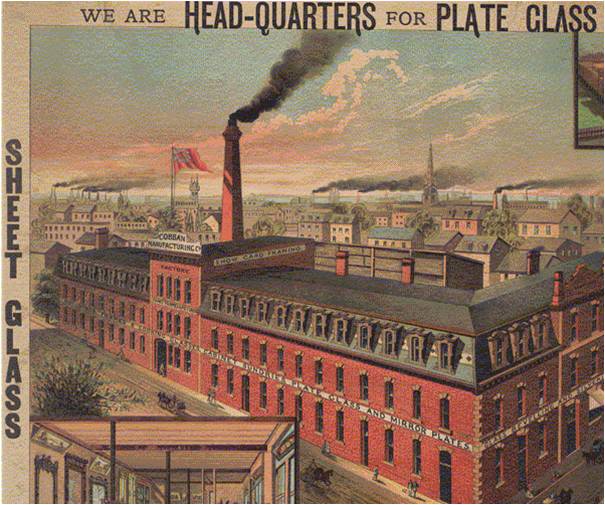
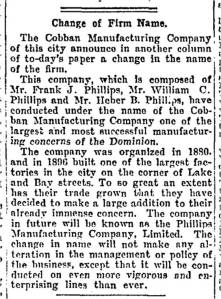
Instead of building “a large addition to their already immense concern”, Phillips Manufacturing Co. Ltd. decided to move. In 1906 the Phillips paid $16,733.00 for property on Carlaw Avenue to build a new factory. This property had a frontage of 600 feet on the west side of Carlaw by 300 feet deep. (Toronto Star, Nov. 26, 1906) Phillips again contracted Edward J. Lennox (1855-1933), fas architect for their factory on Carlaw Avenue. (http://dictionaryofarchitectsincanada.org/node/1445) (Canadian Engineer, xiv, Feb. 8, 1907).
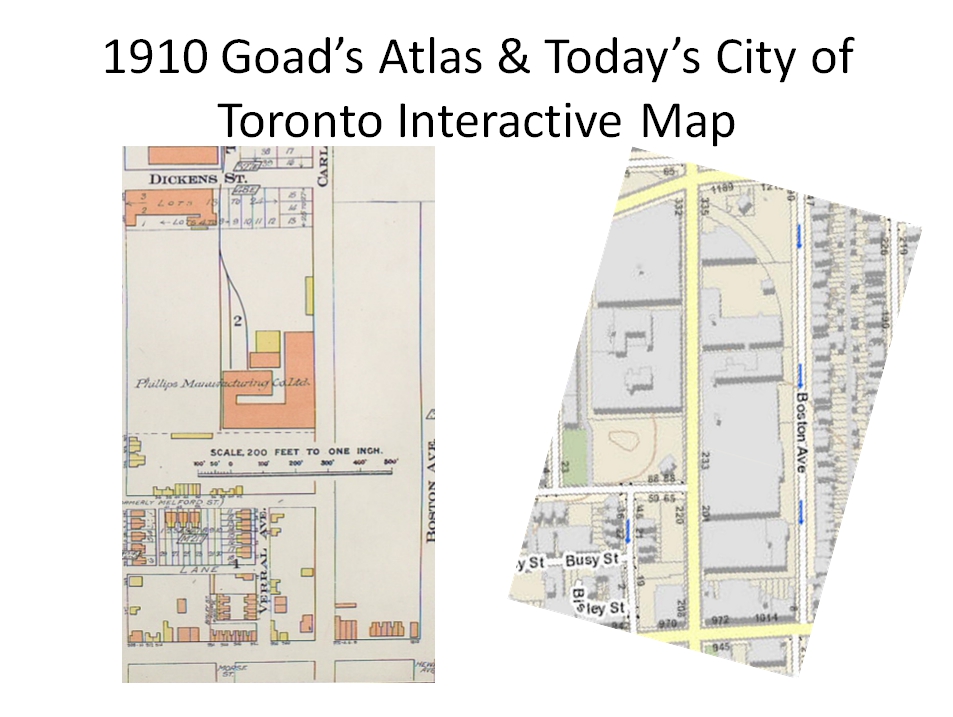
The call for tenders to build the plant was advertised on January 26, 1907. (Globe, Jan. 26, 1907). There were issues with the site as a branch of Holly/Heward Creek ran through the site of and across Carlaw to the Russell property on the east side of the street. This stream had to be diverted in order to build the Phillips factory. The cost at the time was projected to be over a thousand dollars, an expensive fix at that time. (Toronto Star, April 11, 1907)
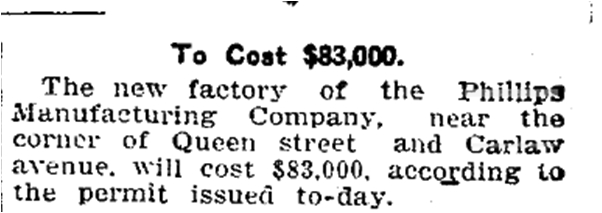
On May 20, 1907 the City of Toronto issued the building permit for the project. The new plant was expected to cost $83,000. The new plant was one of the biggest on Carlaw Avenue and shipped its products to retailers across Canada via rail.
Phillips Manufacturing would be one of the largest employers in the old East End of Toronto.
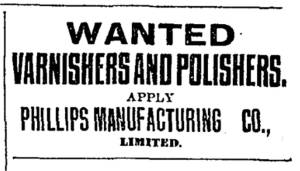
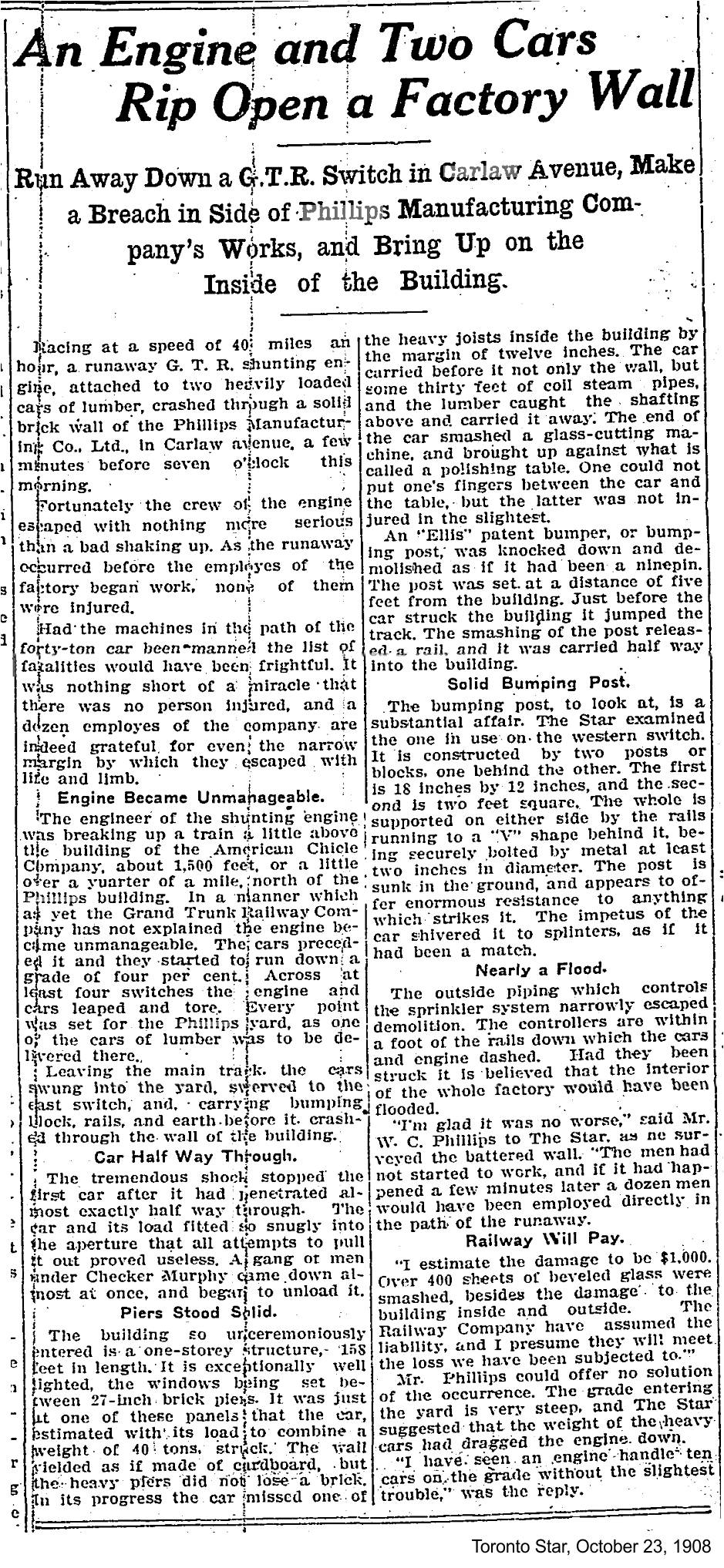
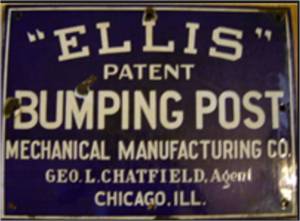
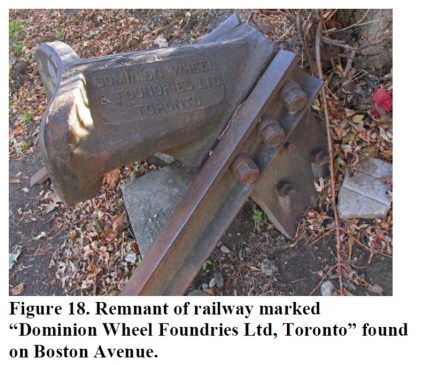
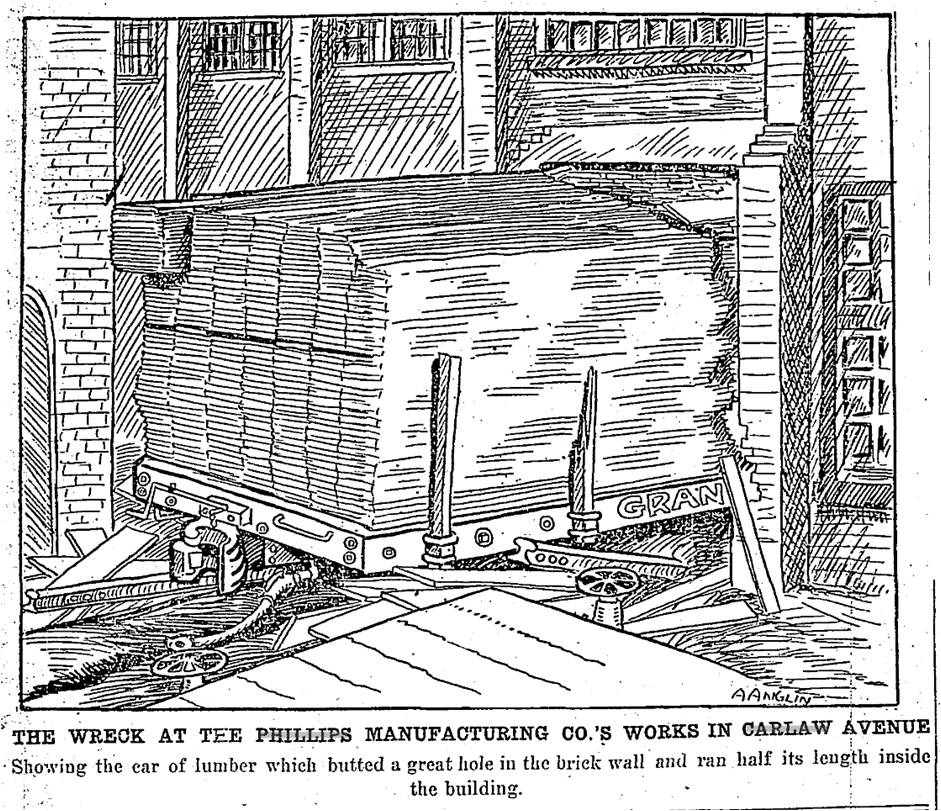
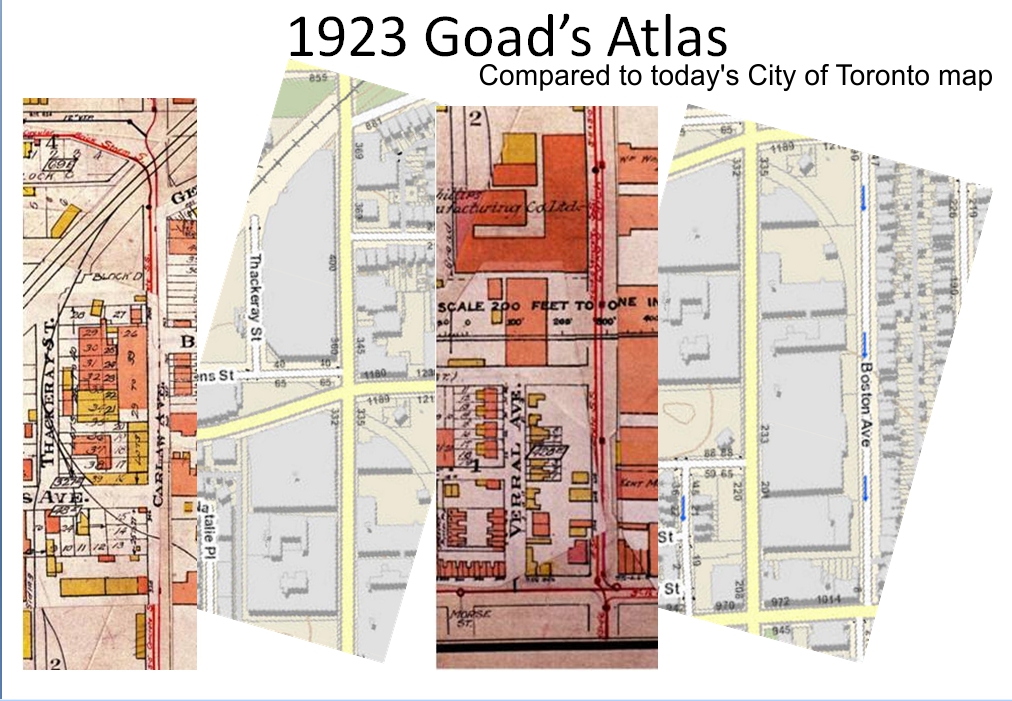
At the end of December, 1907, Phillips Manufacturing moved to their new plant on Coxwell Avenue. (Globe, Dec. 31, 1907). Ward One (included Riverdale, Leslieville and the Beach) welcomed three large new plants: Dunlop Tire, the Toronto Plate Glass Company, and Phillips. (Toronto Star, May 9, 1908). These were modern facilities using electrical power and up-to-date machinery and methods, including transportation. A railway spur line ran down Thackeray Street to serve the factory. This was not an unmixed blessing as in 1908 a runaway freight car thundered down the spur line and right through the wall of the new factory.
The Phillips Manufacturing Company was active in the local community and particularly in promoting sports including hockey and baseball.
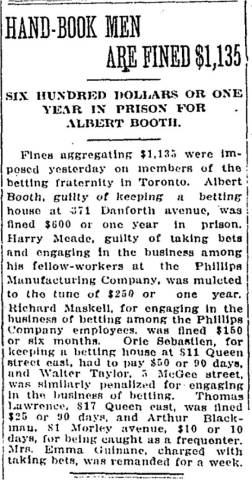
Other “sporting” activities were not so welcome. “Making book” or taking illegal bets on the shop floor was a firing offense — if the “bookie” got caught.
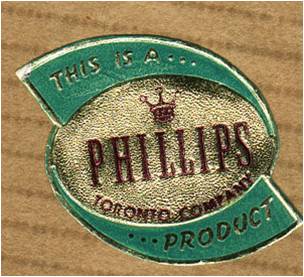
In 1910 Frank Phillips died, but the Phillips family continued to own the company. His sons and daughters ran the company. Heber Phillips was President and William Phillips was Vice-President. The family business was now known as Phillips Toronto Ltd.
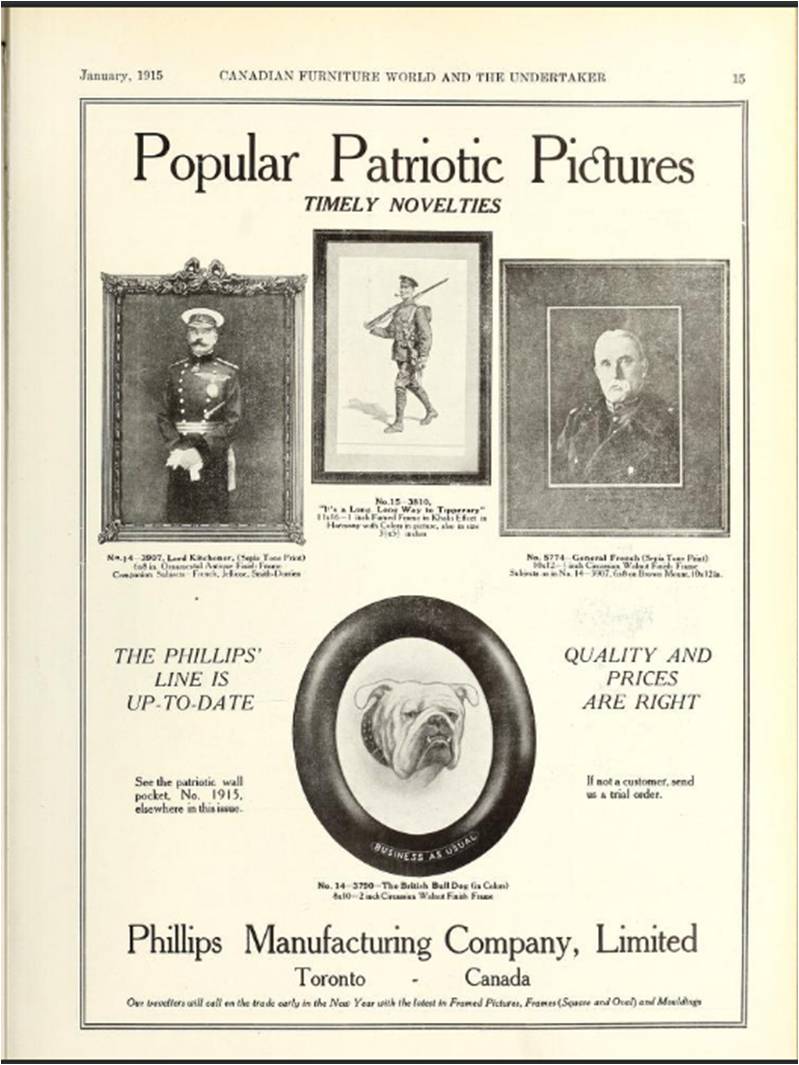
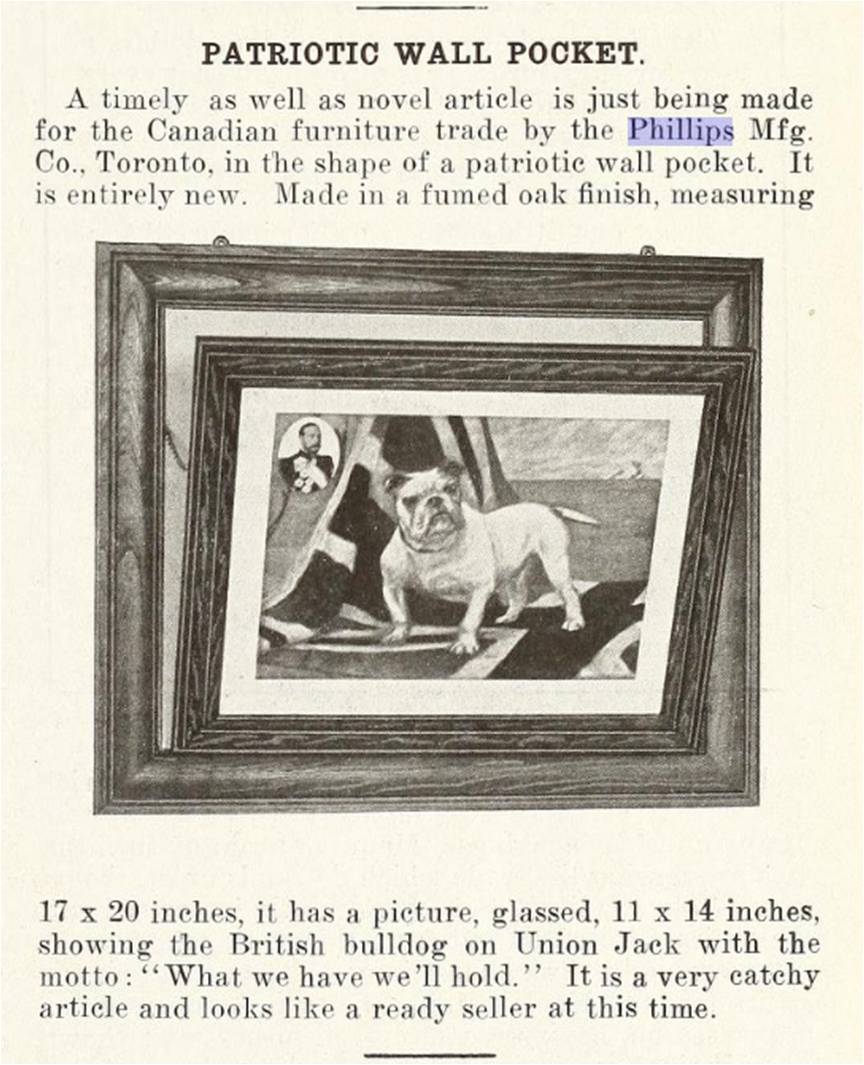
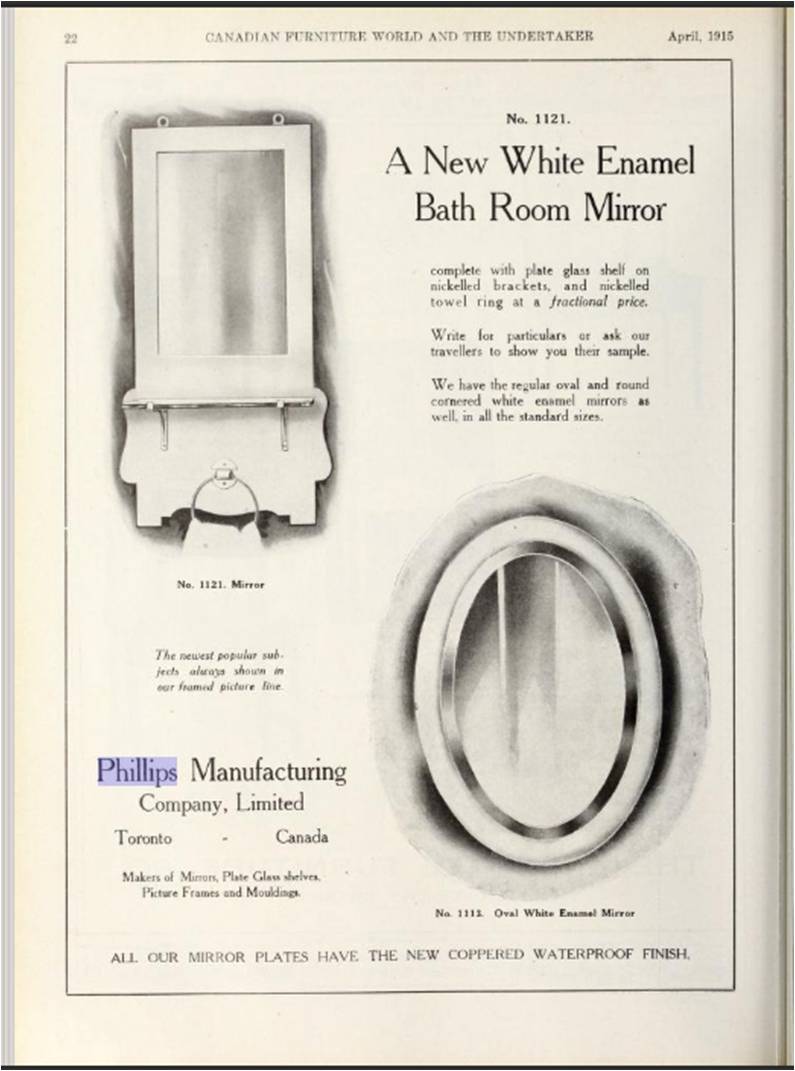
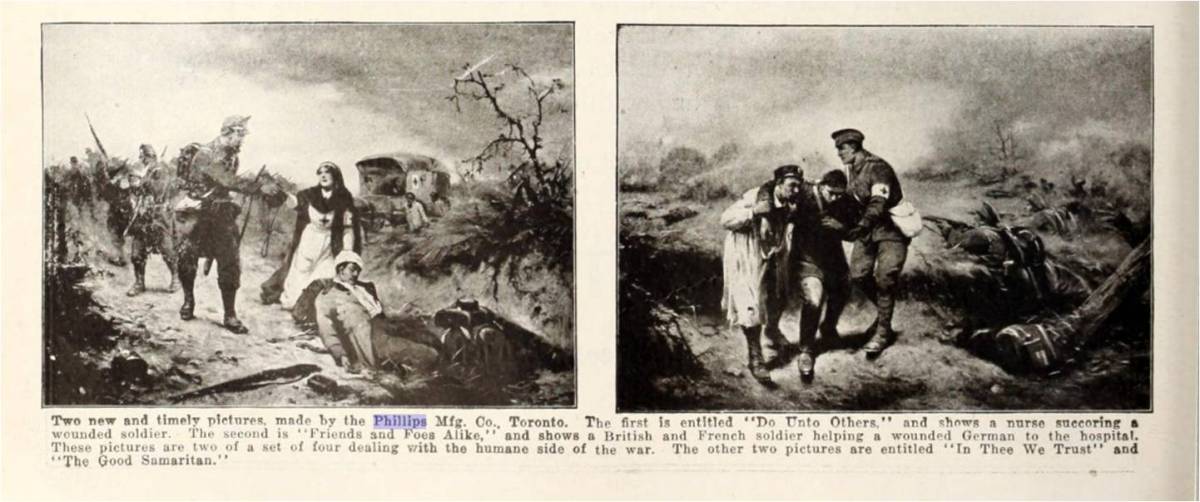
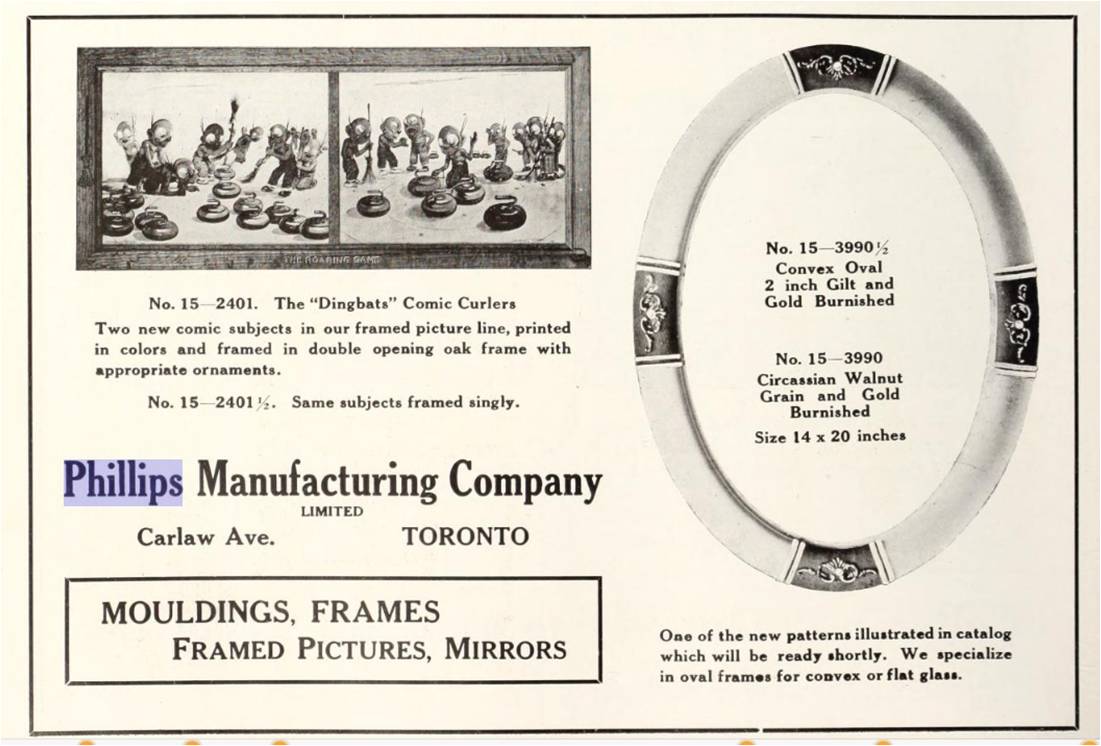
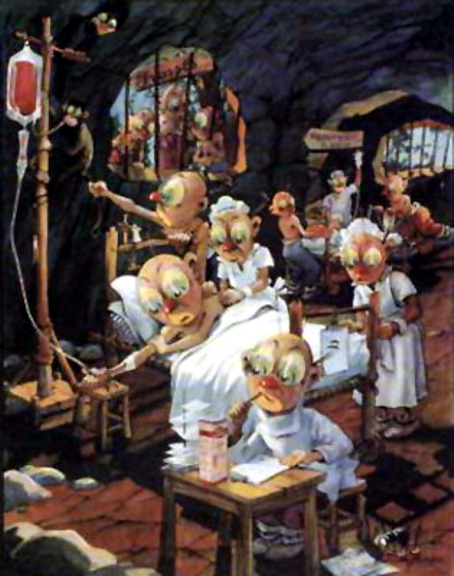
Phillips published not only picture frames, but pictures.
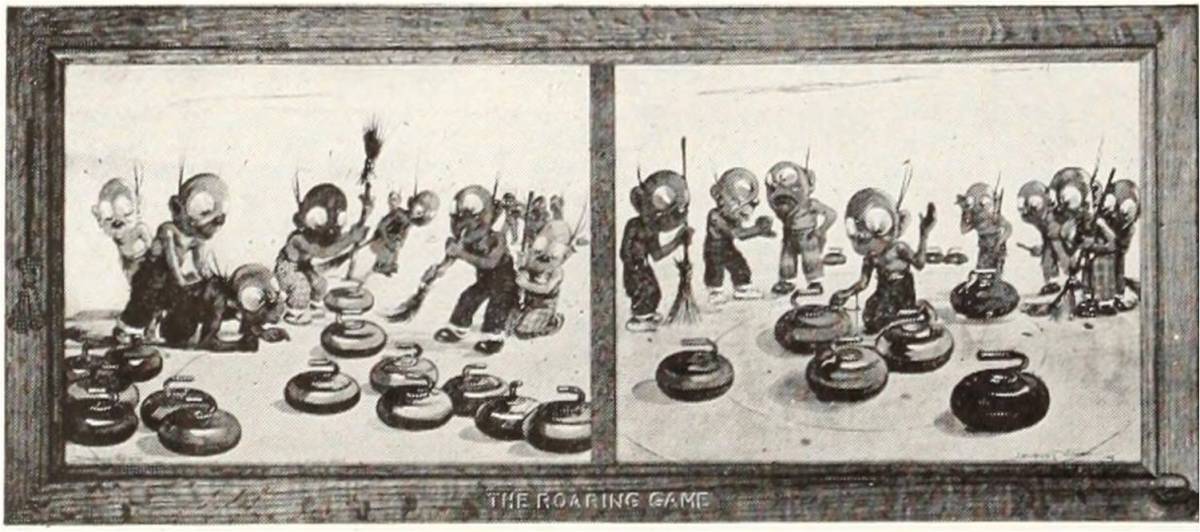
One of the most popular advertising art in Canadian history were the Dingbats. Charles E. Frosst & Co., Montreal, begin publishing calendars with these tiny elf-like creatures in 1915. Usually they were performing surgery or some other medical procedure (as above), but in the Phillips ad they are curling.
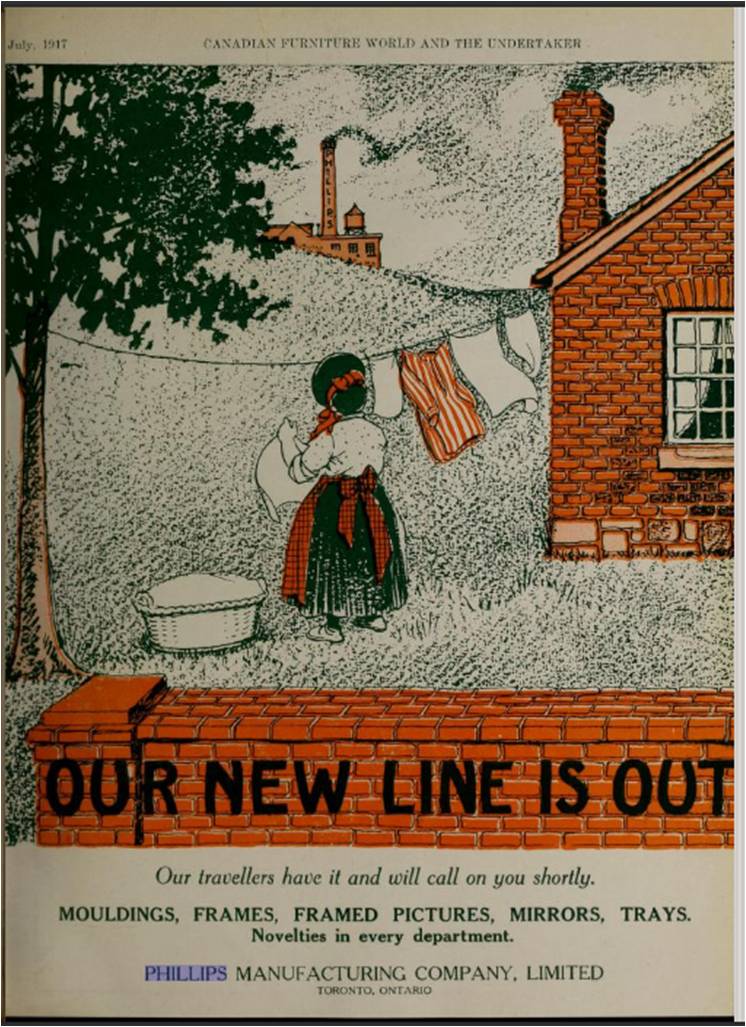
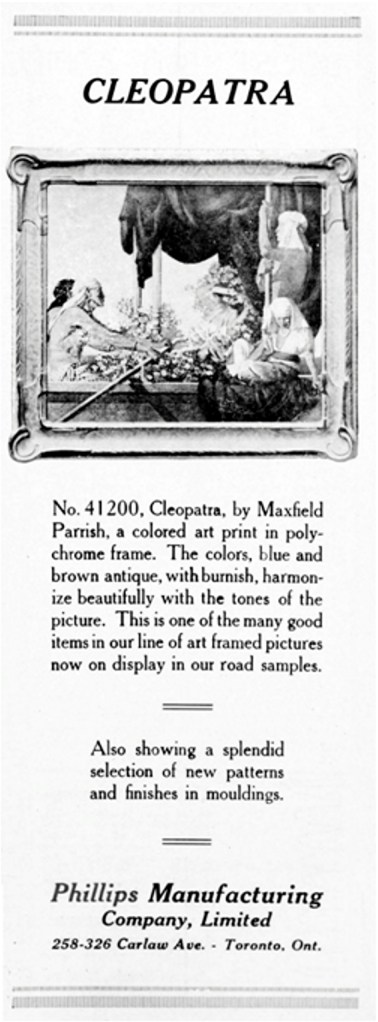
Max Parrish prints were also extremely popular, as in this Cleopatra print from Canadian Furniture World and The Undertaker, Feb., 1921, and the same print in a period frame (photo from http://picclick.ca/Maxfield-Parrish-Cleopatra-Vintage-Print-112014360063.html#&gid=1&pid=1).

In 1932 Heber Phillips died and the Phillips family sold the company in the late 1930s.
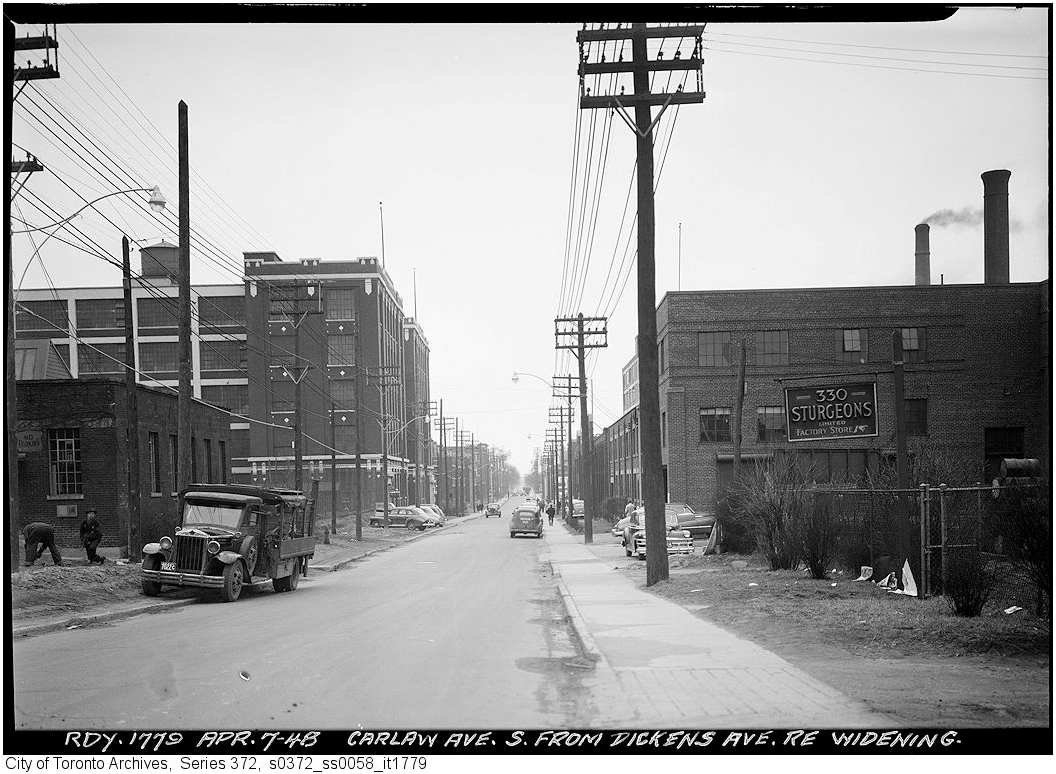
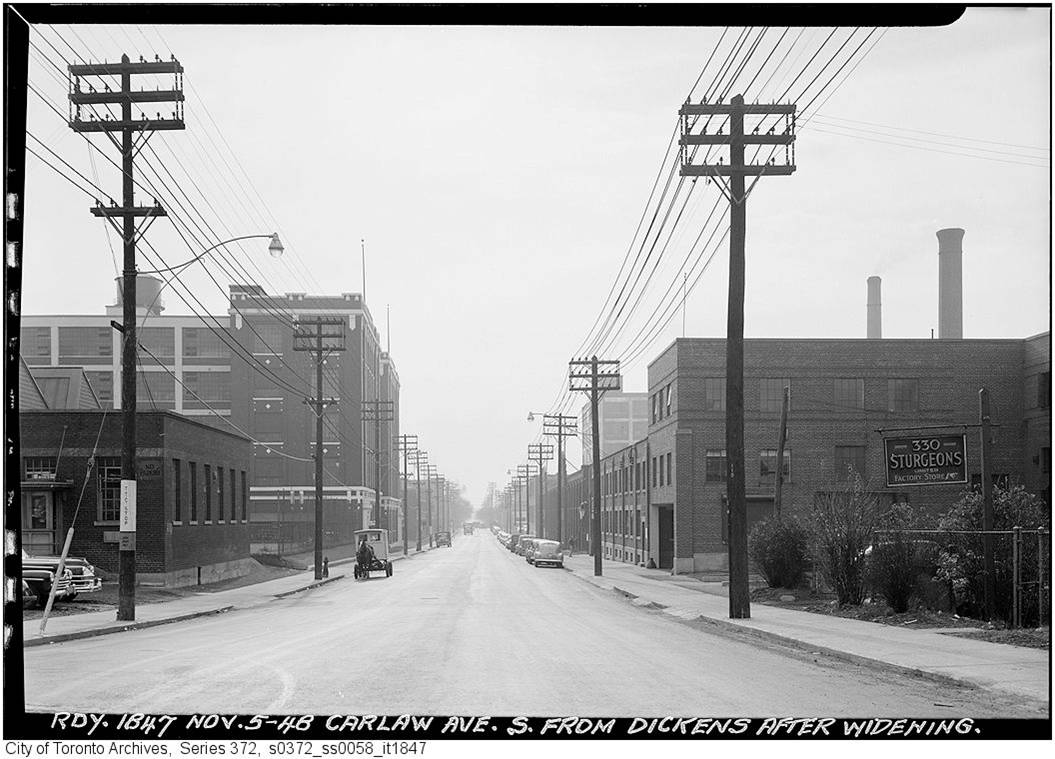
In 1950 S. F. Samuels and A. Samuels, owners of Reliable Toys, took over the “Phillips Toronto Limited” name and the company surrendered its charter. The firm now operated as “Phillips Toronto Company”.
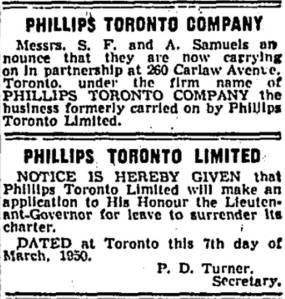
The plant moved to Strathroy in 1953 while keeping the head office and showroom on Carlaw, next to Reliable Toys which now occupied much of the block.
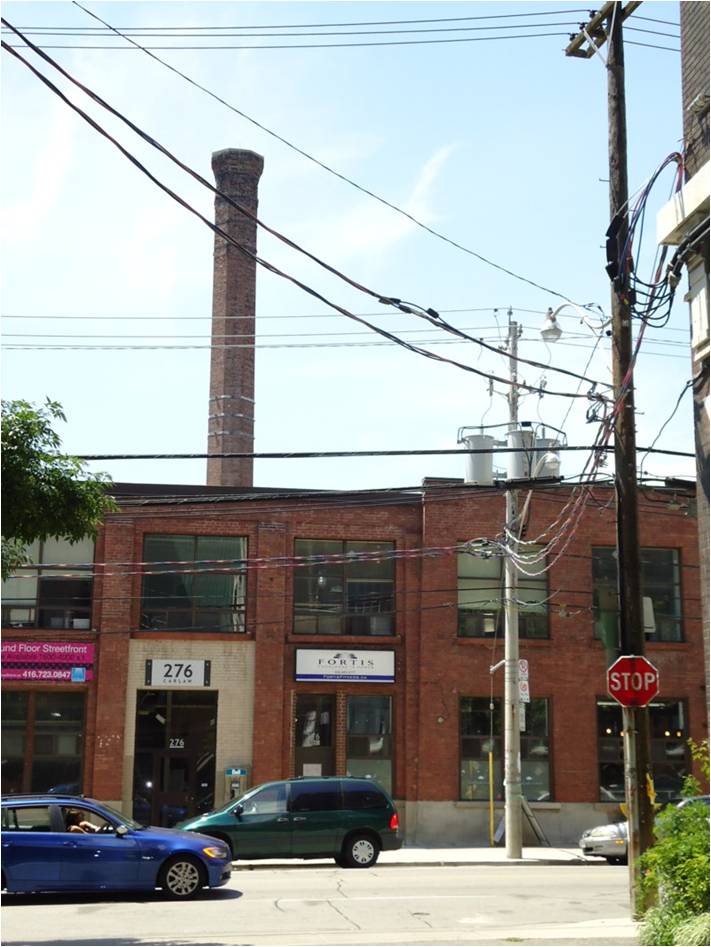
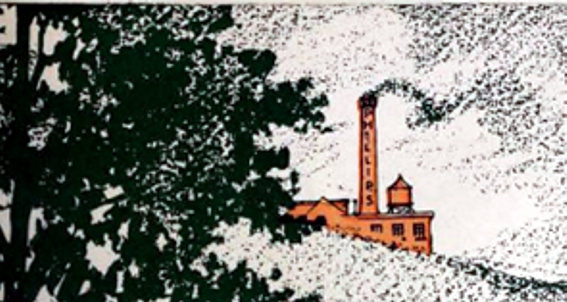
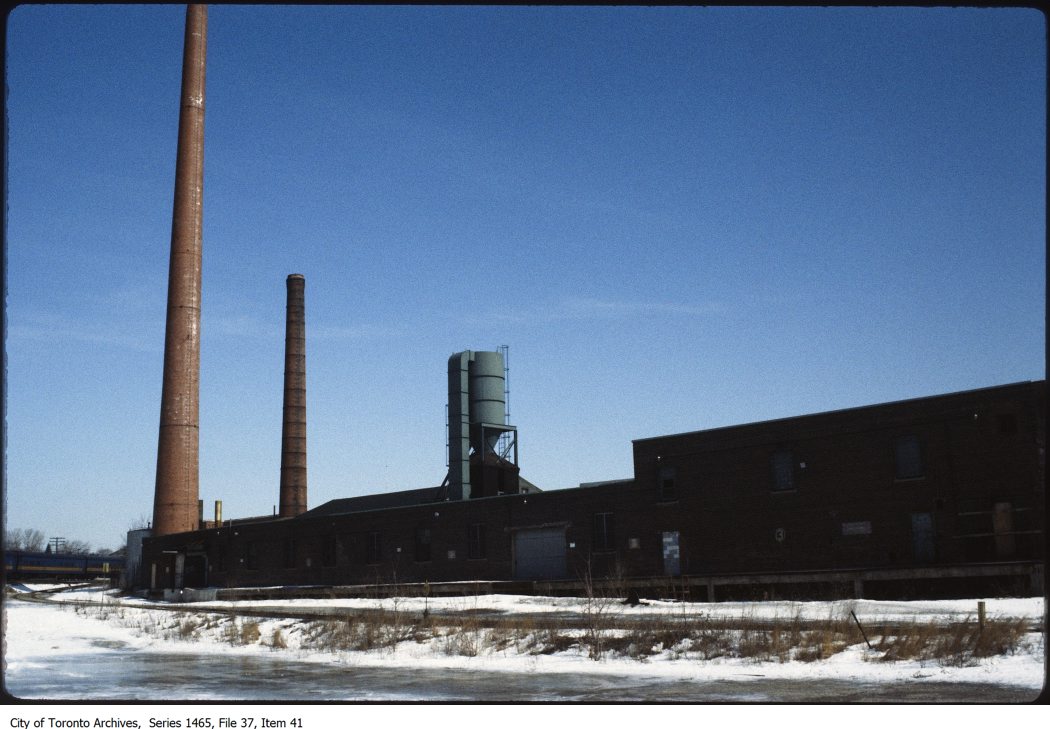
The Phillips plant and chimney as it is today. Photo by Joanne Doucette.
The company moved again to Richmond Hill in 1962 – and was later known as Oxford Picture Frame Co.
Oxford Picture Frame has been designing and manufacturing quality wood mouldings for over 80 years in our world-class production facility. Our successful moulding designs are truly unique and innovative in the framing marketplace. Custom run orders, International distributor and OEM enquiries are always welcomed. http://forums.creativeshake.com/Showcase.asp?ID=38
The Oxford Picture Frame Company is now the biggest Canadian maker of picture frame moulding and accessories.
The Heritage Analysis Report: Carlaw and Dundas District Landscape and Public Realm Improvements, City of Toronto, Ontario, by Unterman McPhail Associates, of March, 2016, details the heritage value of buildings in the area, including the Phillips Manufacturing factory.
258 Carlaw Avenue, the 1907 Phillips plant, was renumbered to 260 Carlaw Avenue. The plant at 260-290 Carlaw Avenue is described as:
The family married into some of the most influential names in Canadian society.
William Phillips [1893-1964], son of William Charles Phillips and Eleanor McMillan, was born at Toronto and attended Upper Canada College. He graduated from the University of Toronto in 1914 and served with the British Army during World War One. He rose to the rank of Lieutenant Colonel at the age of 23. He won the Distinguished Service Order and the Military Cross. In 1918 William Eric Phillips married Mary Eileen McLaughlin [1898-1959], daughter of Robert Samuel McLaughlin and Adelaide Louise Mowbray. Later he re-married to Doris Gibson. After the First World War William Phillips worked with his father in Phillips Company Ltd. Later he moved to Oshawa and ran a company making glass. After the Second World War he was, with E. P. Taylor, one of the founders of the Argus Corporation.
Lillian Annie Phillips [1873-1947] married 1899 William Hargraft Gooderham [1875-1929] Lillian, daughter of Francis J. Phillips and Annie Bacon.
In 1915 Heber Bacon Phillips [1877-1932] married Kathleen Jessie Nesbitt [1885-1965], well known golfer and journalist.
In 1910 Beatrice Helen Phillips [1885-1962] married Lawren Harris [1885-1970] painter and member of the Group of Seven. She later divorced from Lawren Harris and he re-married to Bess Housser. (http://www.paulturner.ca/Phillips/Phillips/phillips-dossiers.htm)
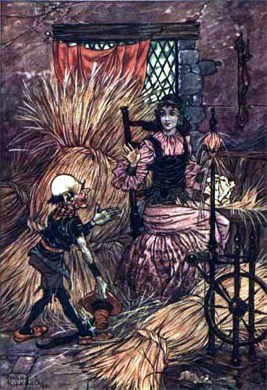
It should be no surprise that artists like Lauren Harris and entrepreneurs and business leaders, like the Gooderhams, Colonel Sam McLaughlin and E. P. Taylor, should have connections to Carlaw Avenue. Toronto’s Old East End was a powerhouse of industry in the first half of the Twentieth Century. The Phillips lived and moved in a world of privately-owned Muskoka Islands, debutante balls, world travelling and luxury, far away from the factories and workers who made the money for them. Like marries like — at least in most cases. Cinderella is an endangered species. But while talking of fairy tales, consider artists, 1990s loft-dwellers, and small business entrepreneurs, as modern-day Rumpelstiltskins, doing their own spinning not foisting it off on the poorest of the poor.
While suburban companies are doing well, now there are alternatives to industrial parks and strip malls along expressways and giant box homes and stores spreading across the green fields. The inner city brownfields are key to preserving the Green Belts greenfields. The Phillips Manufacturing Company site is at the heart of the re-making of Leslieville with new housing, new enterprises, and new galleries and theatres. Links from Carlaw Avenue thread out all around the globe, bringing creativity, wealth and growth here and sending it out again. This is spinning the proverbial straw, in this case, old brick factories and their gritty brick dust, into silver and gold.
 Carlaw Avenue is becoming the major north-south artery in Leslieville. It has evolved from impassable country lane to an industrial hub to a brownfield of abandoned factories and rusting equipment to a vibrant neighbourhood. Leslieville has few “high rises” and they are found only on Carlaw Avenue. These condos include new builds and adaptive re-uses of old industrial buildings like The Printing House Lofts and The Wrigley Building. Other old factories now host a wide variety of boutique shops, gyms, studios, art galleries, and even one of the best bakers of birthday cakes in Toronto. In January we will explore the West Side.
To give a sense of just how industrial Leslieville, look at this list.
JANUARY 1926
76 Canadian John Wood Mfg. Ltd., 81-123 Hanson St. (boiler, tanks etc.)
78 Bastian Morely Ltd. (heating apparatus), 81-125 Hanson St.
80 Canadian Line Materials Ltd. (forgings), 8 Hillingdon Ave.
82 W. H. Farrell Lumber & Fuel Ltd.
86 Harris Coal Co. Ltd., 514 Coxwell Ave.
90 City of Toronto Rhodes
92 David Atkin Co.
94 Peerless Artificial Stone Ltd., 514 Coxwell Ave.
96 Toronto Transportation Commission (material supply), Hanson St. Yard
100 J. Lucas & Co. (brick), 359 Greenwood Ave.
102 Frank A. Bowden & Sons Ltd. (lumber), 377-387 Carlaw Ave.
104 John Price Ltd. (brick), 395 Greenwood Ave.
104 Toronto Brick Co Ltd. (brick), Greenwood Ave.
106 Standard Fuel Co. Ltd., 334 Greenwood Ave.
108 Albert H. Wagstaff (brick) 348 Greenwood Ave.
112 Charcoal Supply Co., 465 Leslie St.
114 Canadian Wirebound Boxes Ltd., 1000 Gerrard St. E.
116 Conger Lehigh Coal Co. Ltd., 930 Gerrard St. E.
118 Elias Rogers Co. Ltd., 369 Pape Ave.
120 Grasselli Chemical Co., 347-351 Pape Ave.
122 Thompson & Norris Co. of Canada Ltd., 353 Pape Ave. (paper box manufacturer)
124 Hillman Coal & Coke Co. Ltd., 359 Pape Ave.
126 Milnes Coal Co. Ltd., 354-358 Pape Ave.
128 Wm. H. Banfield & Sons Ltd., 370 Pape Ave. (electrical fixtures, phonograph motors)
128 Way Sagless Spring Co. Ltd.
128 Easy Washing Machine Co.
132 Brandram-Henderson Ltd. (paint & varnish), 377 Carlaw Ave.
134 International Varnish Co. Ltd., 371-375 Carlaw Ave.
134 Martin-Senour Co. Ltd. (paints), 371-375 Carlaw Ave.
136 Connell Anthracite Mining Co. Ltd. yd #5, 325 Carlaw Ave.
Wrigley Building, 245 Carlaw Ave.
138 Delco-Light Co. of Canada Ltd., 245 Carlaw Ave.
140 Dyment Ltd. (window displays), 245 Carlaw Ave.
142 Diamond State Fibre Co. of Canada Ltd., 245 Carlaw Ave. (fibreboard)
144 De Forest Radio Corp. Ltd.
146 General Fireproofing Co., 235 Carlaw Ave.
146 A. D. Shoup Co. Ltd. (paper boxes), 245 Carlaw Ave.
148 Blachford Shoe Mfg. Co. Ltd.
148 Geo. LaMonte & Son Ltd. (paper mfgs.), 319 Carlaw Ave.
148 Wm. Wrigley Jr. Co. Ltd. (gum) 235-245, Carlaw Ave.
150 Rolph-Clarke-Stone Ltd. (litho.), 201-213 Carlaw Ave.
152 Kent-McClain Ltd. (showcase mfg.), 181-199 Carlaw Ave.
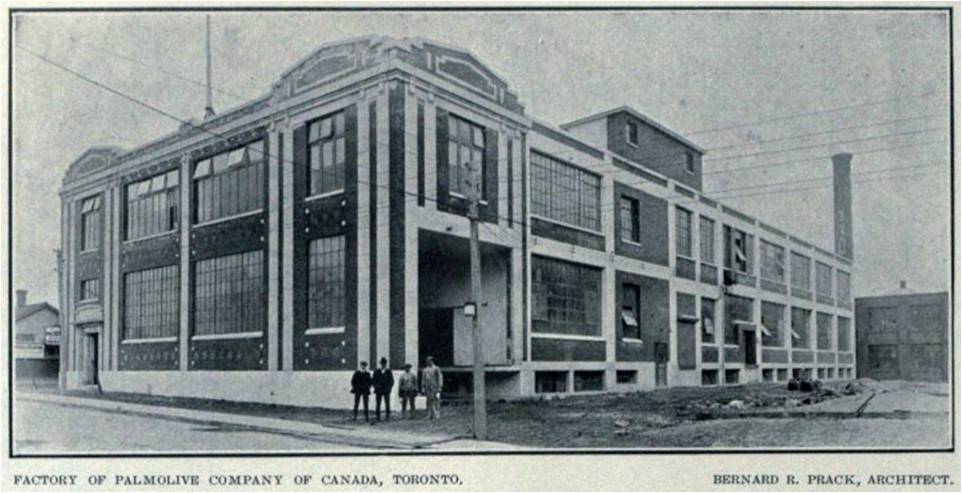
156 The Palmolive Co. of Canada Ltd. (soap), 58-64 Natalie St.
158 Phillips Mfg. Co. Ltd. (mouldings), 258-326 Carlaw Ave.
160 Pratt Food Co. of Canada Ltd., 328 Carlaw Ave. (poultry remedies)
162 Sturgeons Ltd. (painters’ supplies), 330 Carlaw Ave.
164 Frederick G. Harrold’s Coal Co., 346 Carlaw Ave.
166 Dominion Glass Co. Ltd., 388 Carlaw Ave.
168 John E. Russell (builders’ supplies)
170 Adams Furniture Co. Ltd., 309-353 Logan Ave.
172 Woods Mfg. Co. Ltd. (bags), 401 Logan Ave.
174 Canada Waxed Papers Ltd.
174 Canadian Chewing Gum Co. Ltd. (Chiclets), 405 Logan Ave.
176 Canada Starch Co. Ltd., 401 Logan Ave.
178 Reliable Mfg. Co. Ltd., 405 Logan Ave.
180 P. Burns & Co. Ltd. (coal & wood), 449 Logan Ave.
182 T. Grinnell & Son (coal & wood), 843 Gerrard St. E.
184 Geo. Oakley & Son Ltd. (cut stone), 355-367 Logan Ave.
186 Dunlop Tire & Rubber Goods Co. Ltd., 870 Queen St. E.
188 Consumers Gas Co. “B” Works, Eastern Ave.
190 Scott Bros. (stone contractors), 38-42 McGee St.
I have adapted this list from R. L. Kennedy’s research at:
http://www.trainweb.org/oldtimetrains/industrial/history/train_sidings.html
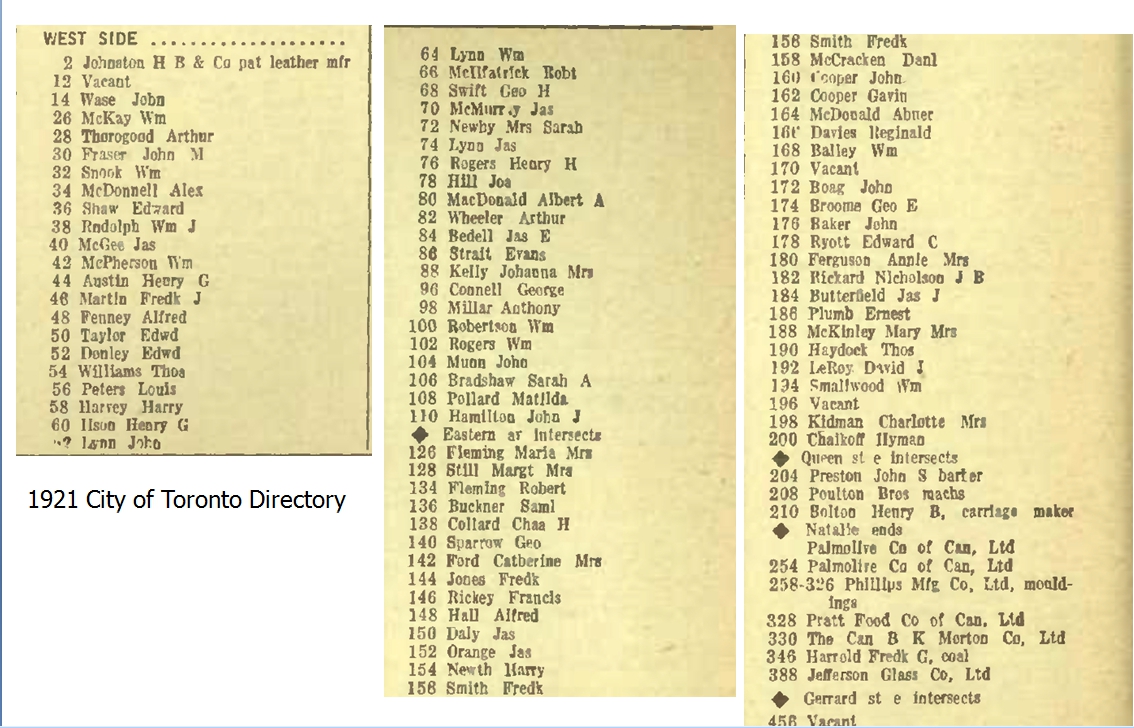
The 1921 Directory also gives a good picture.
These 1947 Aerial Photographs from the City of Toronto also give a good idea of just what a manufacturing powerhouse Carlaw Avenue was.
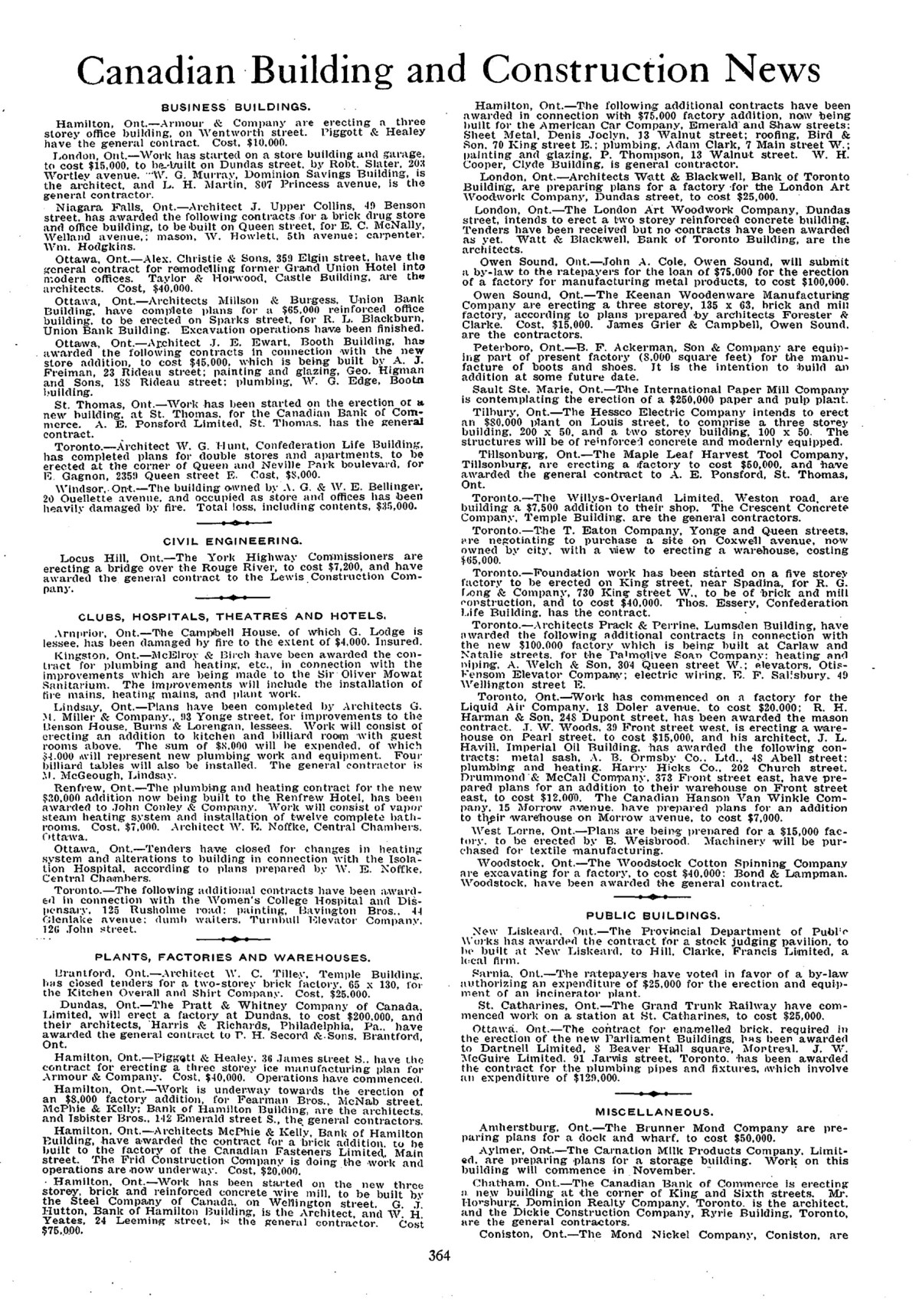
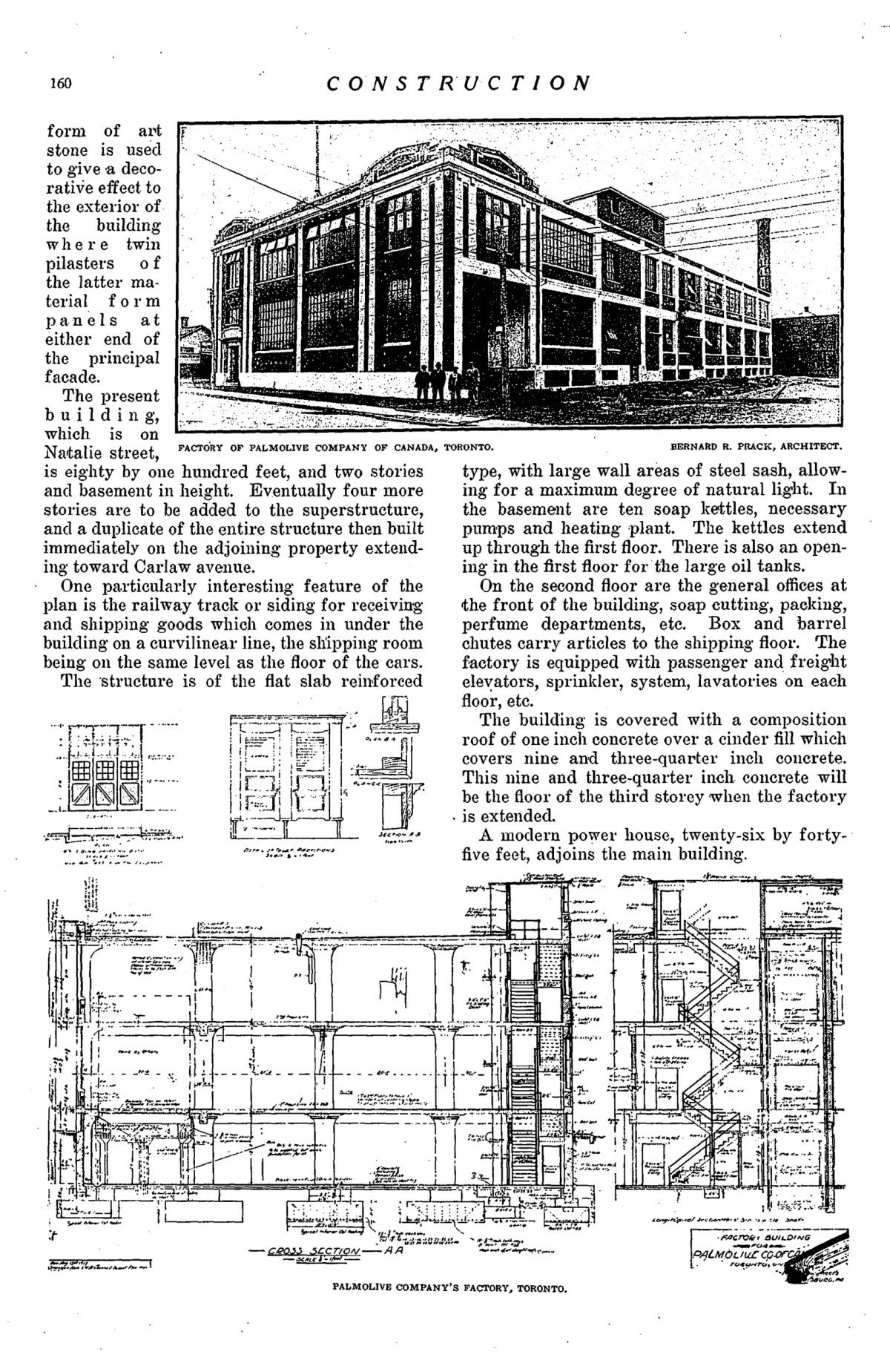
We will proceed up Carlaw from Queen in our imaginary time machine. We visited Palmolive yesterday. There are more old Carlaw factories to come! Stay tuned!


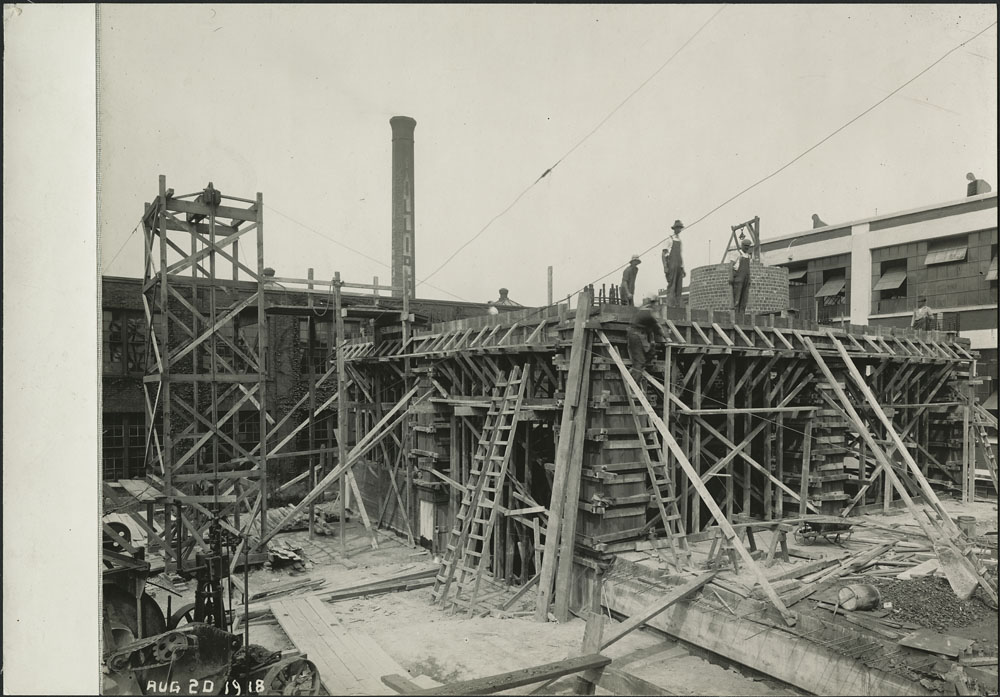
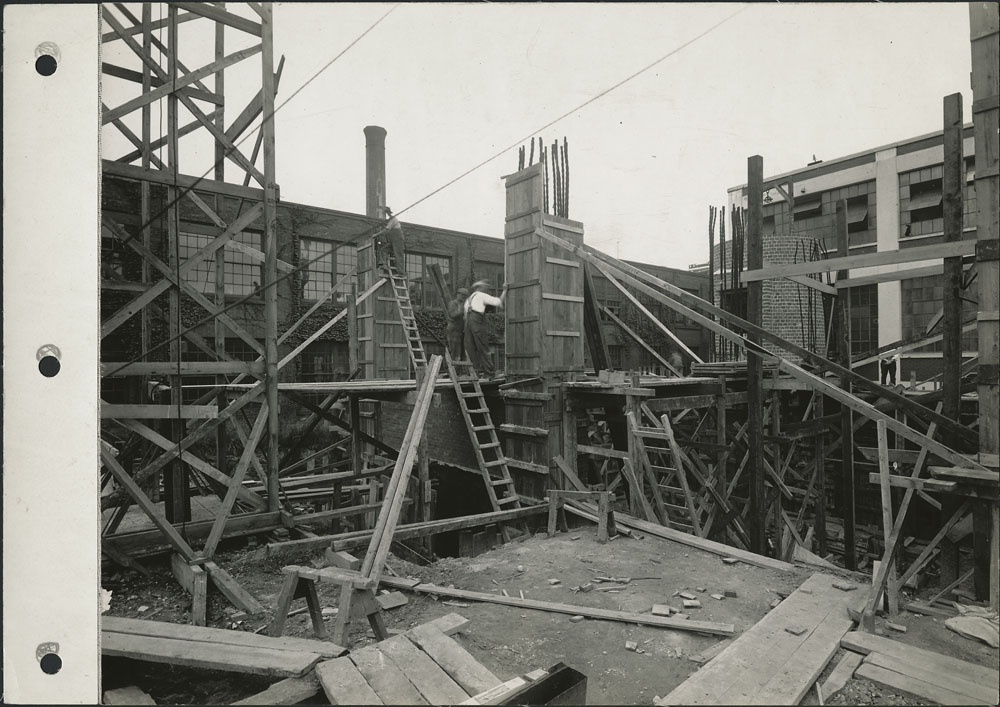



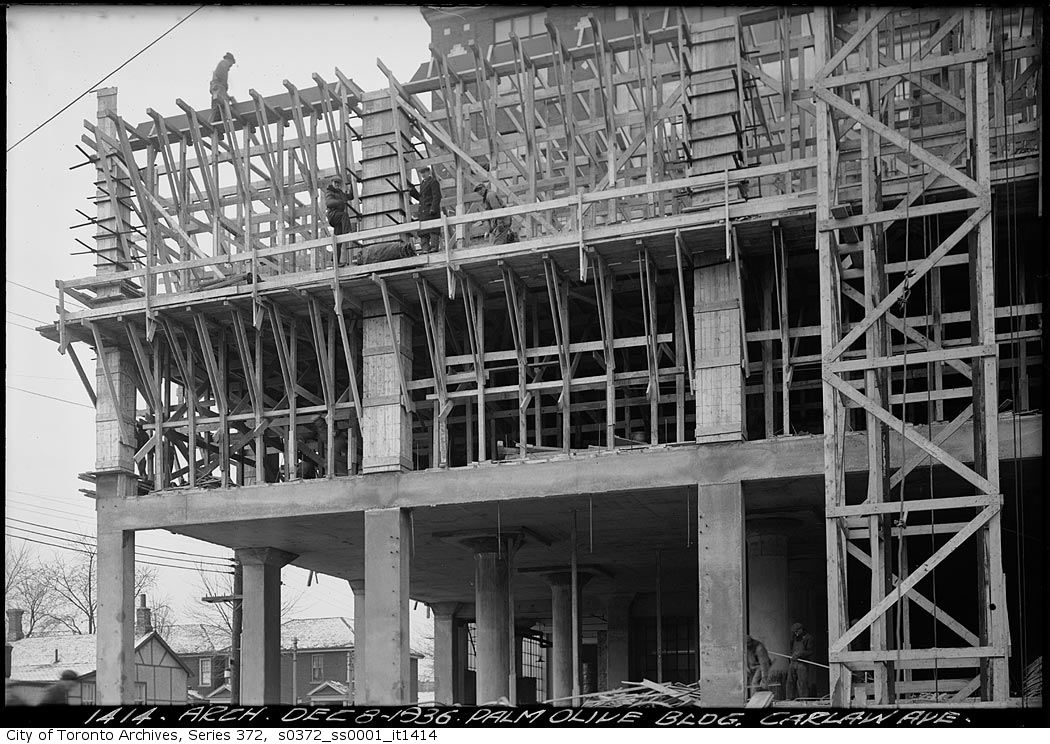
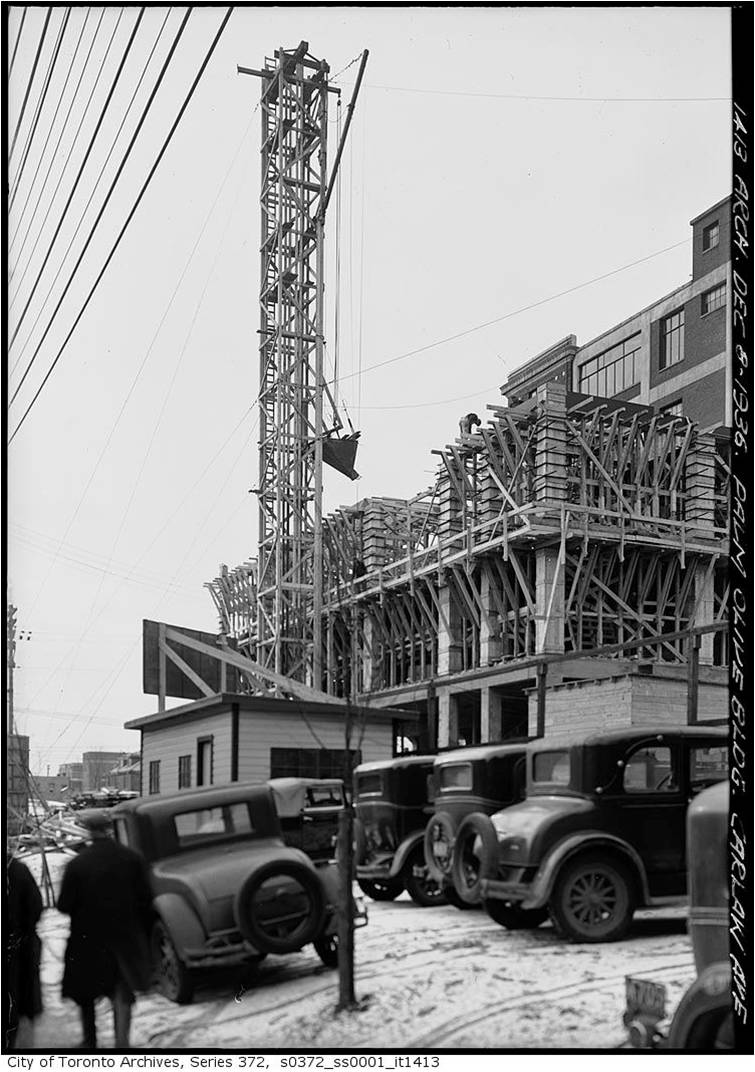
An addition, 1936.
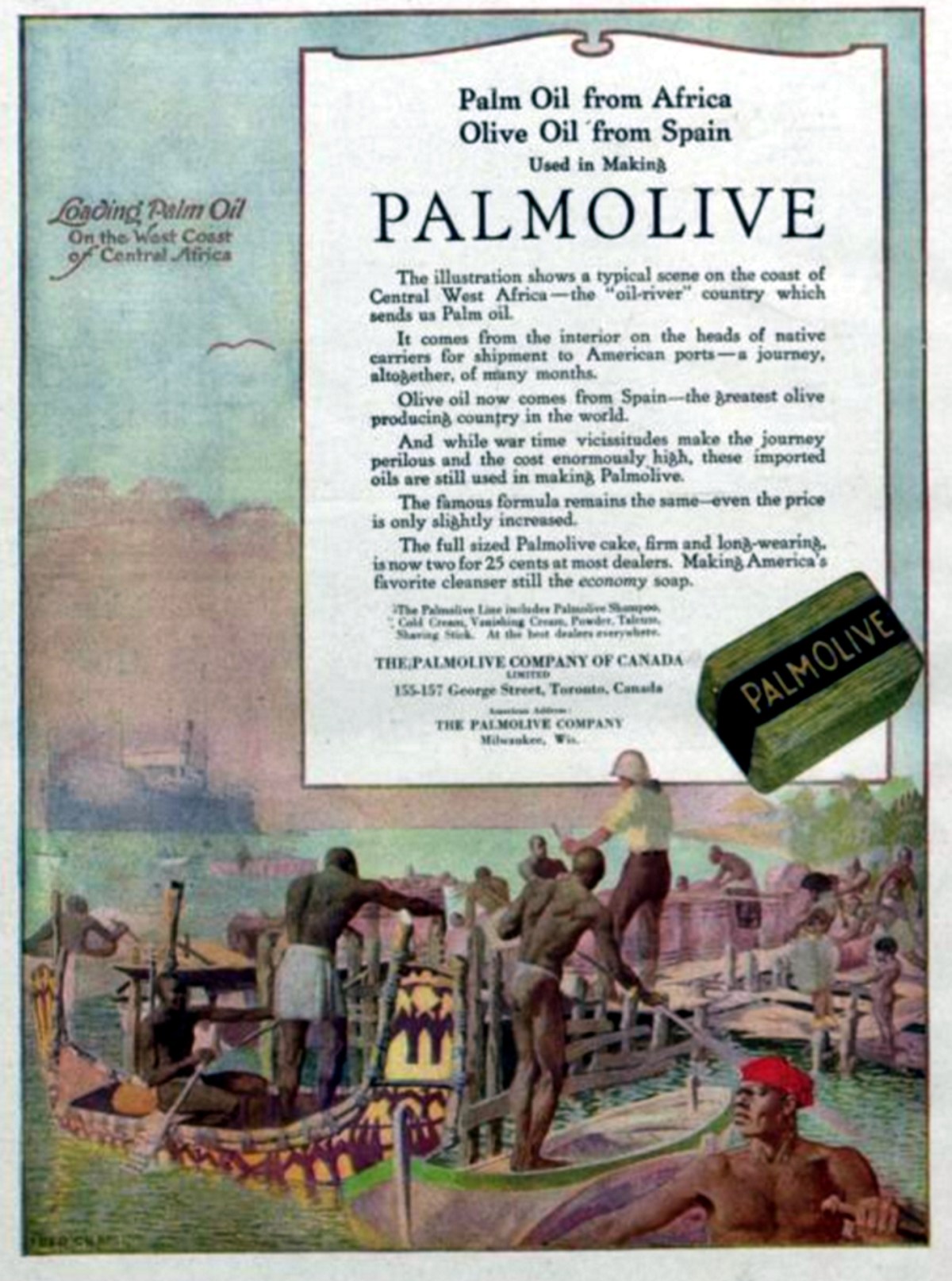
Credit: The Canadian Courier, Vol. XXII, No. 24, Nov. 10, 1917


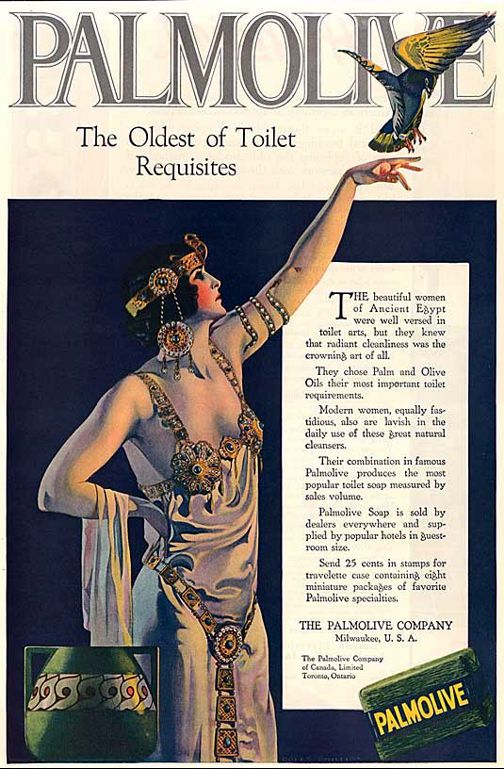
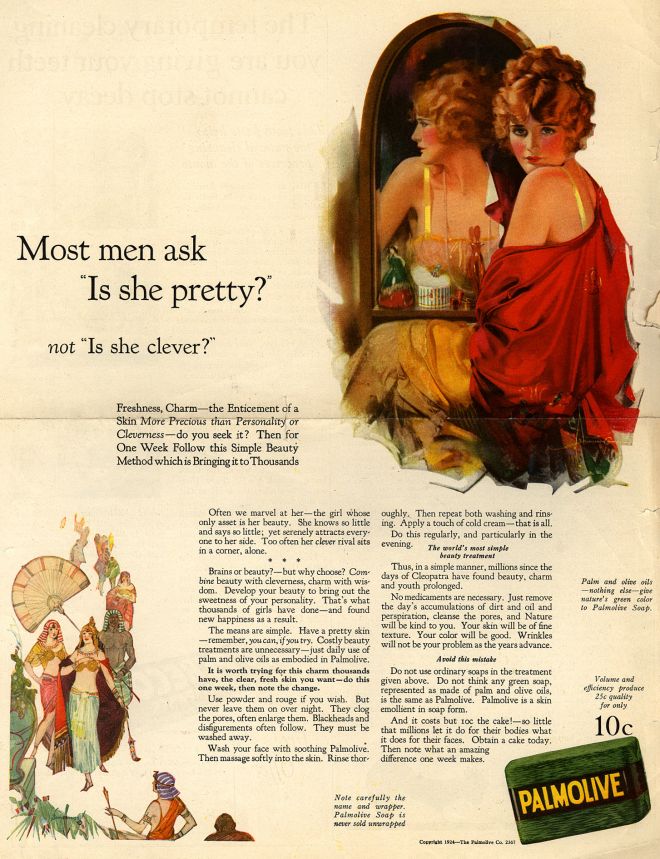
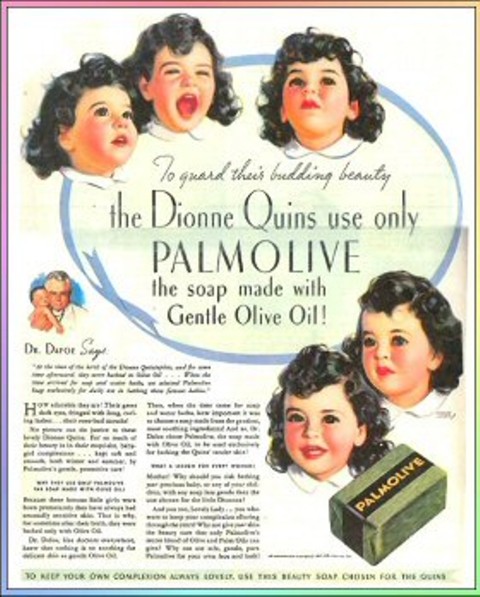

For my favourite Palmolive ad, meet Madge on Youtube:

![Broadview Boys' [Fall] Fair, group of boys with rabbits : Stan Hollywood, 90 Chatham, Kingston Beamish, 128 Chatham, Joe Edwards, 400 Pape.](https://leslievillehistory.com/wp-content/uploads/2016/11/broadview-boys-fall-fair-group-of-boys-with-rabbits-stan-hollywood-90-chatham-kingston-beamish-128-chatham-joe-edwards-400-pape-oct-2-1930.jpg?w=1200)
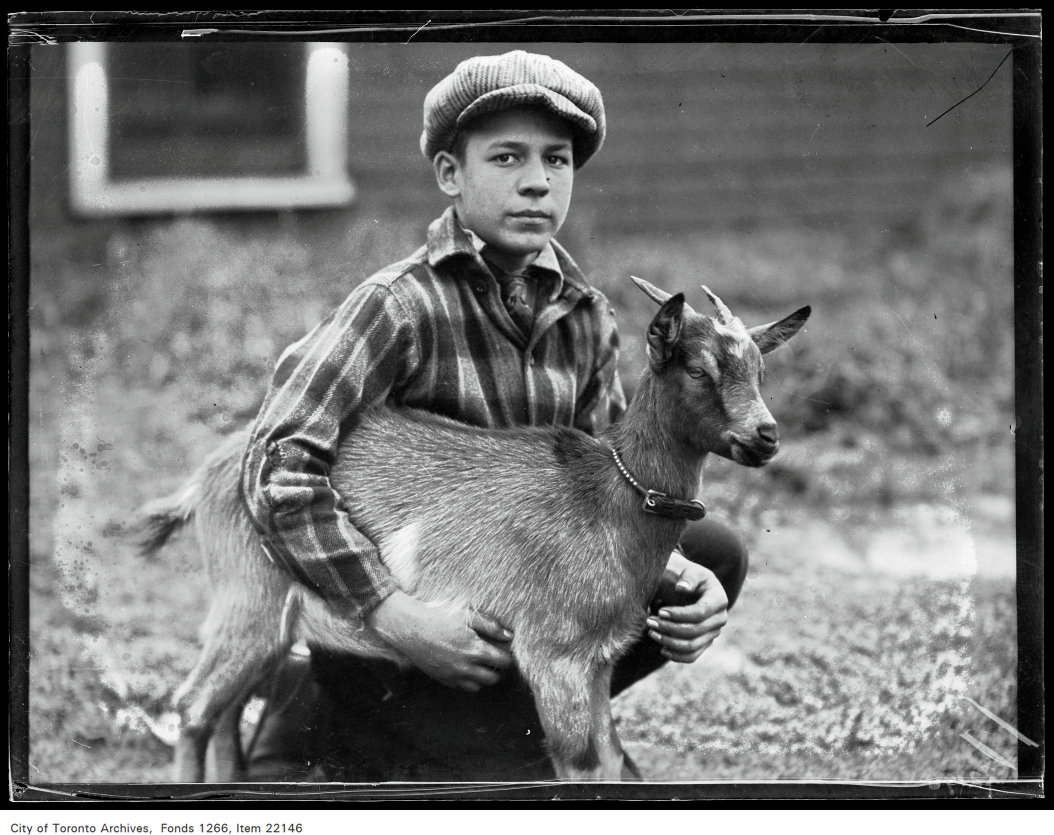
![Broadview Boys' [Fall] Fair, Nelson McDole, 165 First Avenue, goat "Kiddo".](https://leslievillehistory.com/wp-content/uploads/2016/11/broadview-boys-fall-fair-nelson-mcdole-165-first-avenue-goat-kiddo-oct-2-1930.jpg?w=1200)

![Eastern [School of] Commerce [commencement portraits], Lawrence Newnham.](https://leslievillehistory.com/wp-content/uploads/2016/11/eastern-school-of-commerce-commencement-portraits-lawrence-newnham-nov-13-1930.jpg?w=1200)
![Eastern [School of] Commerce [commencement portraits], Norman McDermott.](https://leslievillehistory.com/wp-content/uploads/2016/11/eastern-school-of-commerce-commencement-portraits-norman-mcdermott-nov-13-1930.jpg?w=1200)
![Eastern [School of] Commerce [commencement portraits], Roma Bowman.](https://leslievillehistory.com/wp-content/uploads/2016/11/eastern-school-of-commerce-commencement-portraits-roma-bowman-nov-13-1930.jpg?w=1200)
![Eastern [School of] Commerce [commencement portraits], Thelma Bowe.](https://leslievillehistory.com/wp-content/uploads/2016/11/eastern-school-of-commerce-commencement-portraits-thelma-bowe-nov-13-1930.jpg?w=1200)

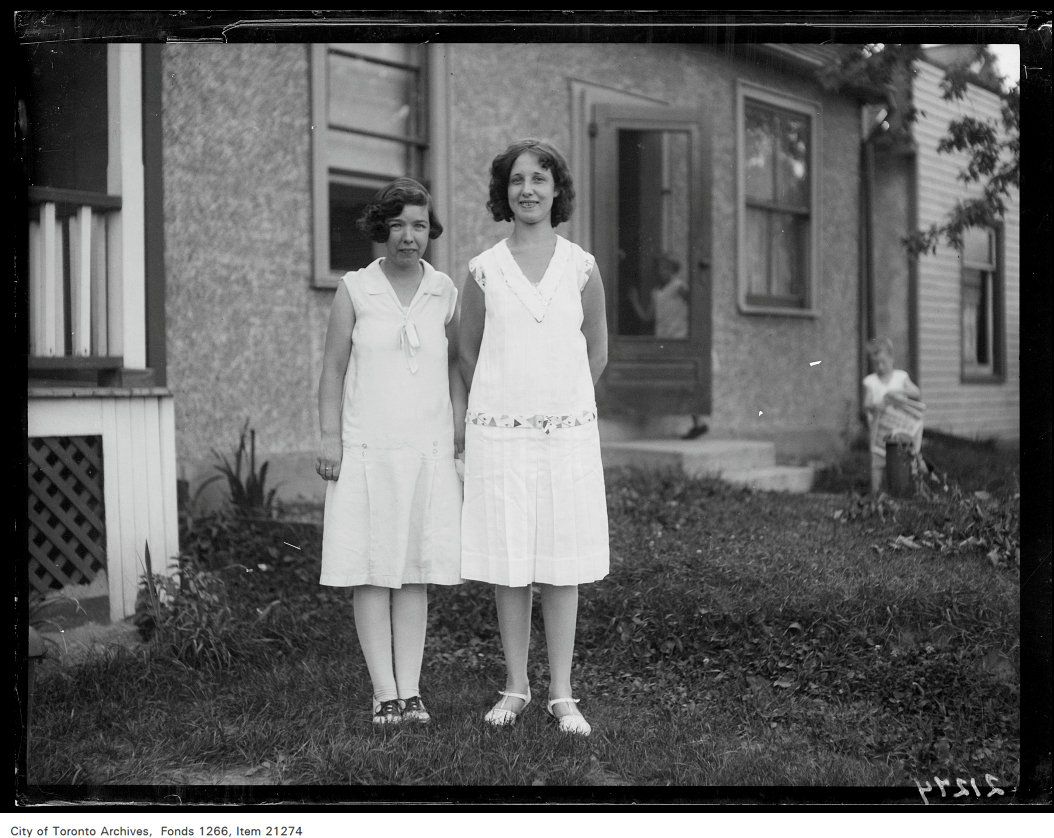
![Riverdale Collegiate [commencement portraits], David Trembetsky, 1002 Queen East.](https://leslievillehistory.com/wp-content/uploads/2016/11/riverdale-collegiate-commencement-portraits-david-trembetsky-1002-queen-east-nov-12-1930.jpg?w=1200)
![Riverdale Collegiate [commencement portraits], Flora Christie, Elsie Cochrane.](https://leslievillehistory.com/wp-content/uploads/2016/11/riverdale-collegiate-commencement-portraits-flora-christie-elsie-cochrane-nov-12-1930.jpg?w=1200)
![Riverdale Collegiate [commencement portraits], Gillies Hunter, James Lavery.](https://leslievillehistory.com/wp-content/uploads/2016/11/riverdale-collegiate-commencement-portraits-gillies-hunter-james-lavery-nov-12-1930.jpg?w=1200)
![Riverdale Collegiate [commencement portraits], Harold and Carl Medcof, 85 Earl Grey Road.](https://leslievillehistory.com/wp-content/uploads/2016/11/riverdale-collegiate-commencement-portraits-harold-and-carl-medcof-85-earl-grey-road-nov-12-1930.jpg?w=1200)
![Riverdale Collegiate [commencement portraits], Helen Davidson, 171 Munro Street.](https://leslievillehistory.com/wp-content/uploads/2016/11/riverdale-collegiate-commencement-portraits-helen-davidson-171-munro-street-nov-12-1930.jpg?w=1200)
![Riverdale Collegiate [commencement portraits], Hubert Dighton, 43 Kent Road.](https://leslievillehistory.com/wp-content/uploads/2016/11/riverdale-collegiate-commencement-portraits-hubert-dighton-43-kent-road-nov-12-1930.jpg?w=1200)
![Riverdale Collegiate [commencement portraits], Margaret Snow.](https://leslievillehistory.com/wp-content/uploads/2016/11/riverdale-collegiate-commencement-portraits-margaret-snow-nov-12-1930.jpg?w=1200)
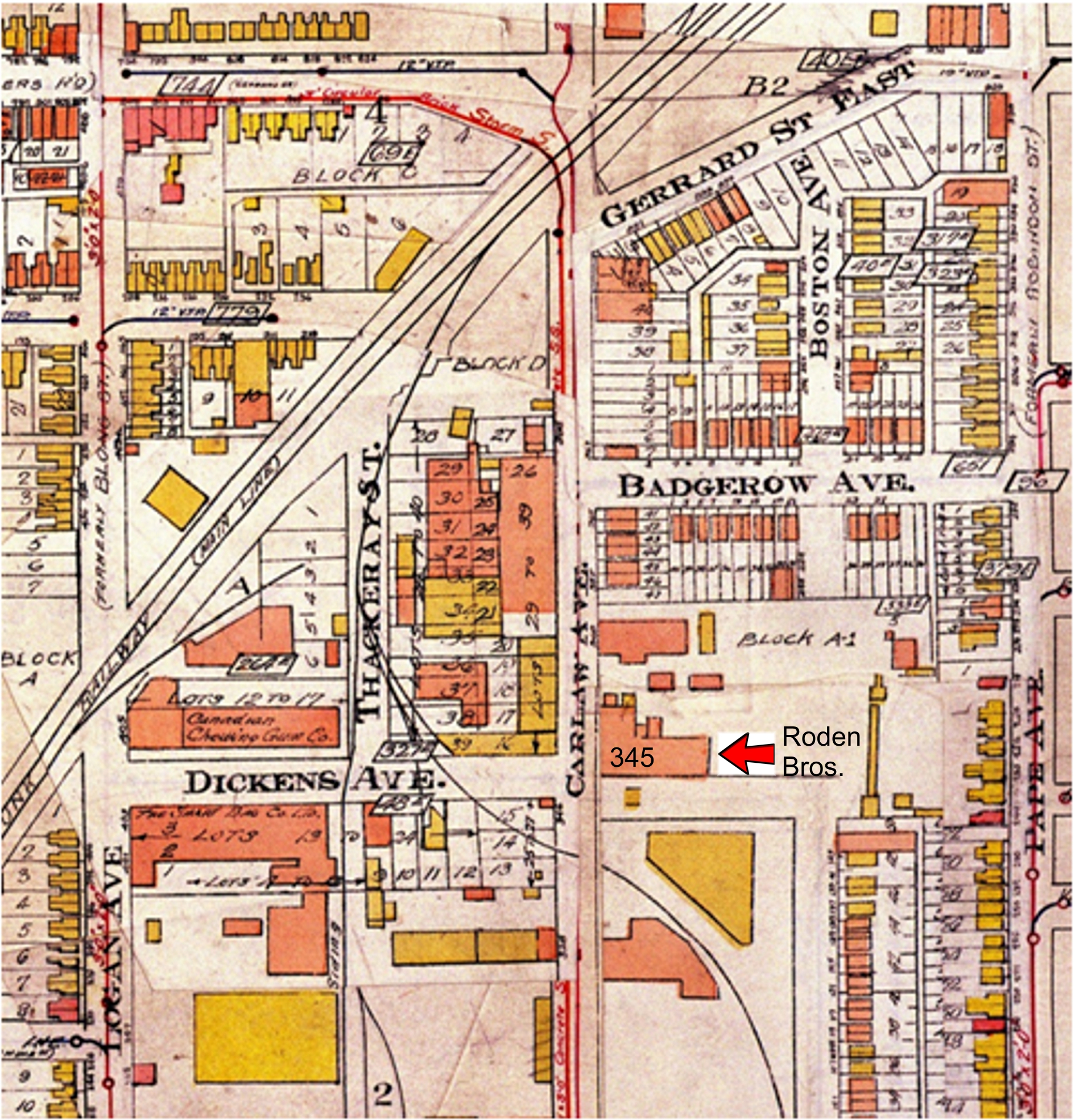

One of the firms that made its name on Carlaw was the Roden Bros. Ltd. Thomas and Frank came to Canada in 1879 and established a silversmith business in Montreal. They branched out into cutting glass as well. At the time, Roden had a sterling reputation (pun intended) and became:
a household name with prestigious esteem amongst the affluent of Ontario.[1]
Thomas and Frank Roden came to Toronto and founded Roden Brothers in 1891. Their first factory was at 99 ½ King Street West near York Street.[2] They turned out a wide range of silver hollowware and flatware in traditional English styles such as Stratford, Queens, and Louis XV. Roden Bros. Ltd. was incorporated in 1912. That year they purchased the 165 by 400 foot lot of land on Carlaw from A. Barthelmes for $25,000.[i] Goldsmiths Stock Company were their exclusive selling agents from 1900 to 1922.
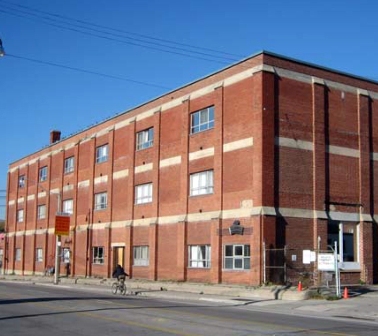
Their factory was at 345 Carlaw Avenue at the north east corner of Dundas Street and Carlaw Avenue, the site of “The Carlaw” condominium. Dundas Street was not completed through the East End until 1957. Before Dundas Street existed a short laneway ran east off Carlaw just south of the Roden Brothers factory. Their plant sat between the Wrigley Building on the south and the Barthelmes Building on the north. Just to the east of their factory was a buried watercourse known as Holly or Heward Creek. A rail spur allowed them to ship their products across Canada and cheap access to electricity from Niagara Falls powered their machinery and the industrial boom along Carlaw Avenue in the early Twentieth Century. The much-loathed power lines we see on photos were symbols of progress and economic growth at the time. Like others in the Canadian Manufacturing Association (CMA), Thomas and Frank Roden were strong supporters of the by-law that created Toronto Hydro.[1] Carlaw was a dark, dirty industrial street with smoking chimneys, but, in its heyday its plants produced some of those beautiful and desirable products ever made in Canada.
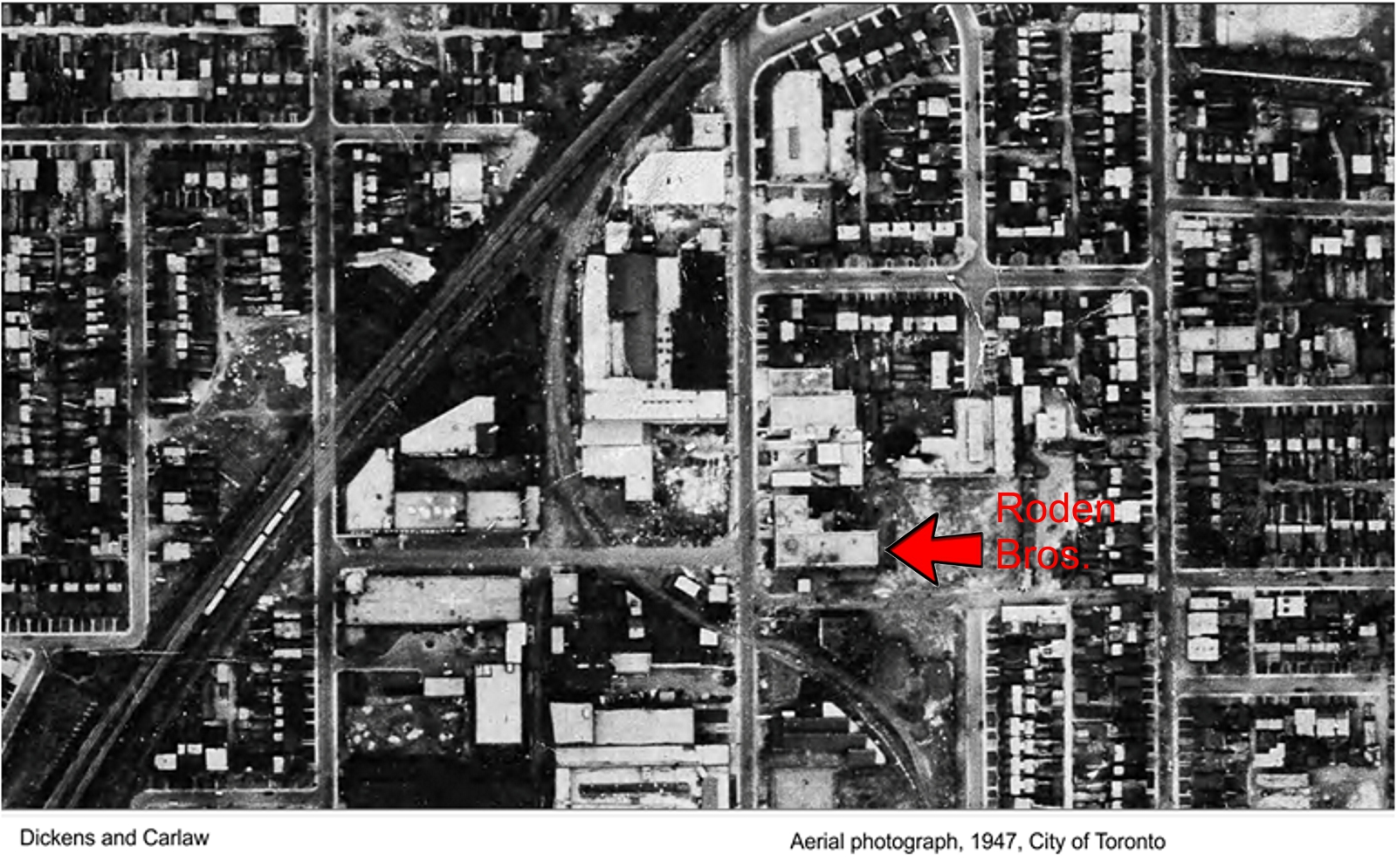
[1] Globe, Dec. 20, 1907
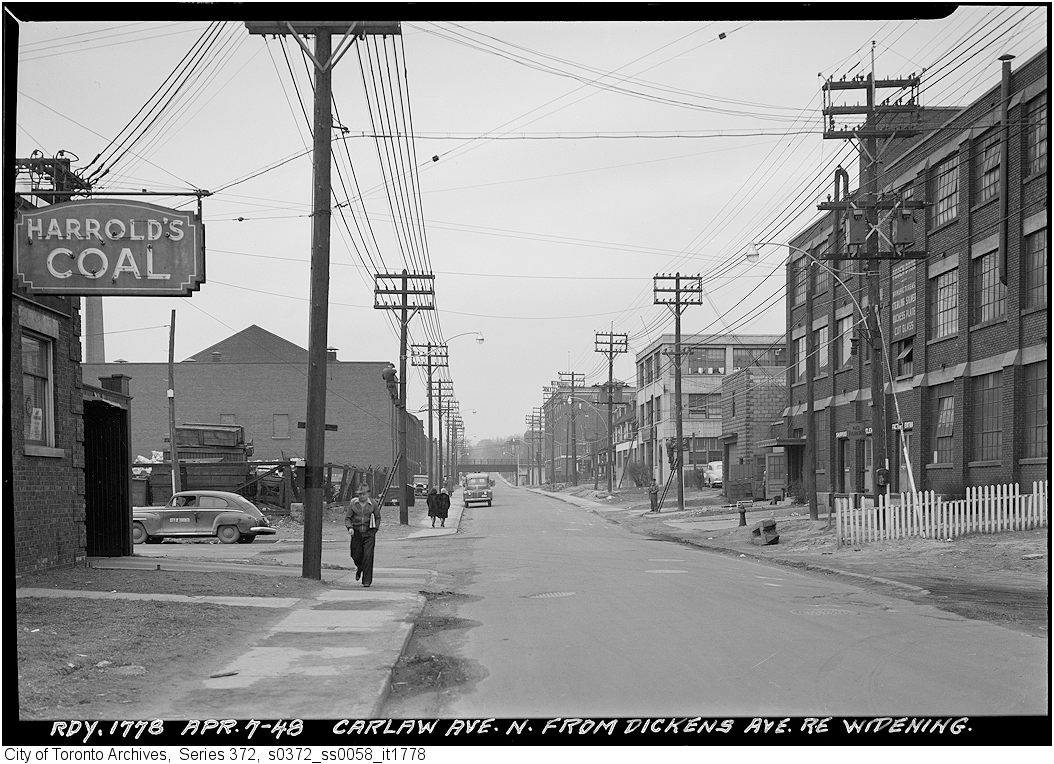
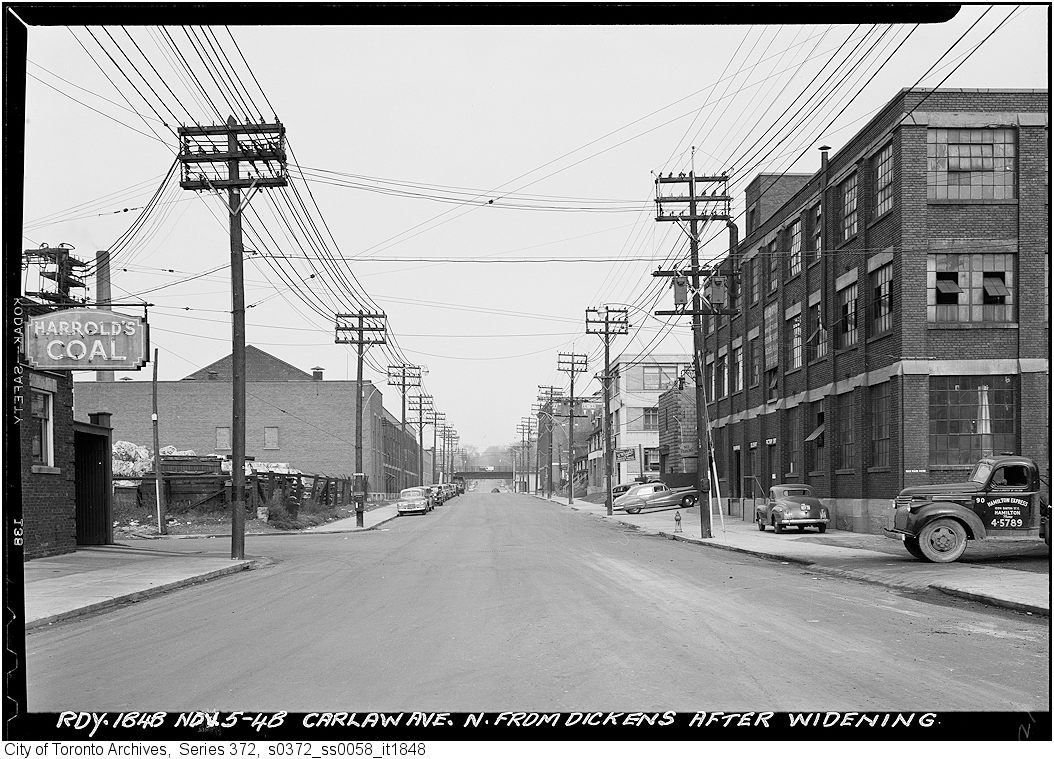
This photo from 1948 shows the Roden factory, a red brick and concrete three-storey structure on the right. Across the street sets Harrold’s coal yard. The street on the left is is Dickens. The white building on the right is the Barthelmes Building where pianos were made.
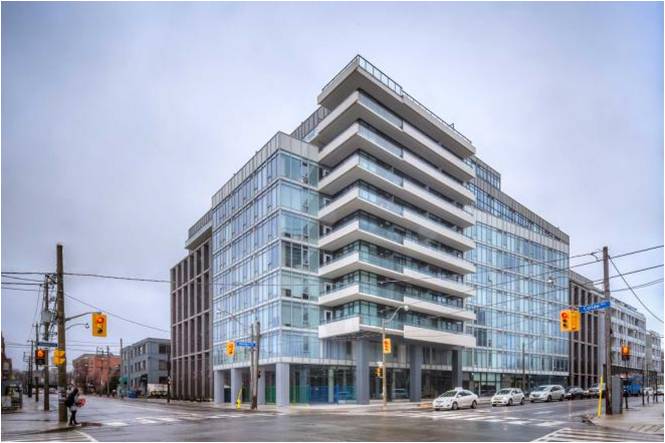
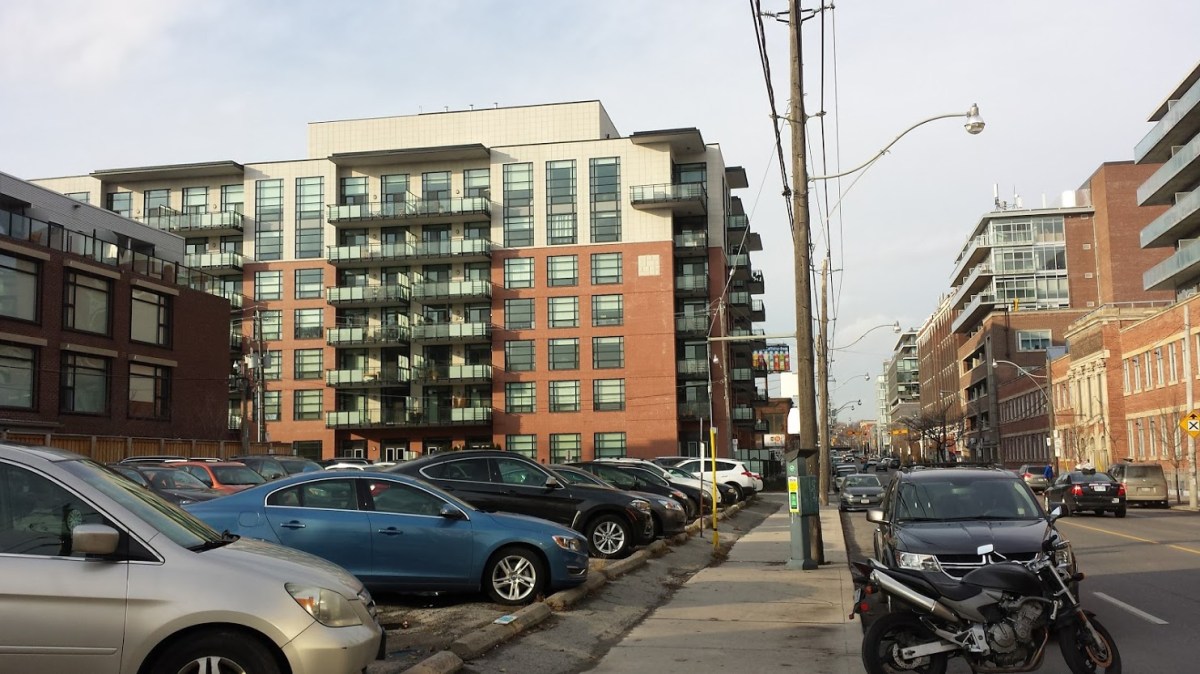
This photo from Condo.ca shows the same scene today. The street has changed radically. However, some things, including the position of fire hydrants do not change much, if at all. Find the fire hydrant in both pictures and you will be looking at exactly the same view.
Who were the Rodens and how did they leave their mark on Toronto?
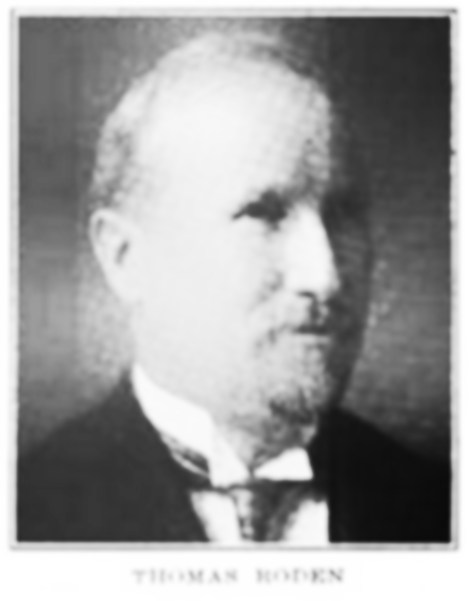
The family was from Birmingham, England. Thomas and Frank’s father, George (1822-1887), was a grocer and provision dealer who became a very successful “commercial traveller” or sales person for one of Birmingham’s chemical factories. Their mother, Susannah Ryland, came from a prominent family that was listed in Burke’s Peerage. Their grandfather William Roden was a currier, a specialist in the tanning of leather.
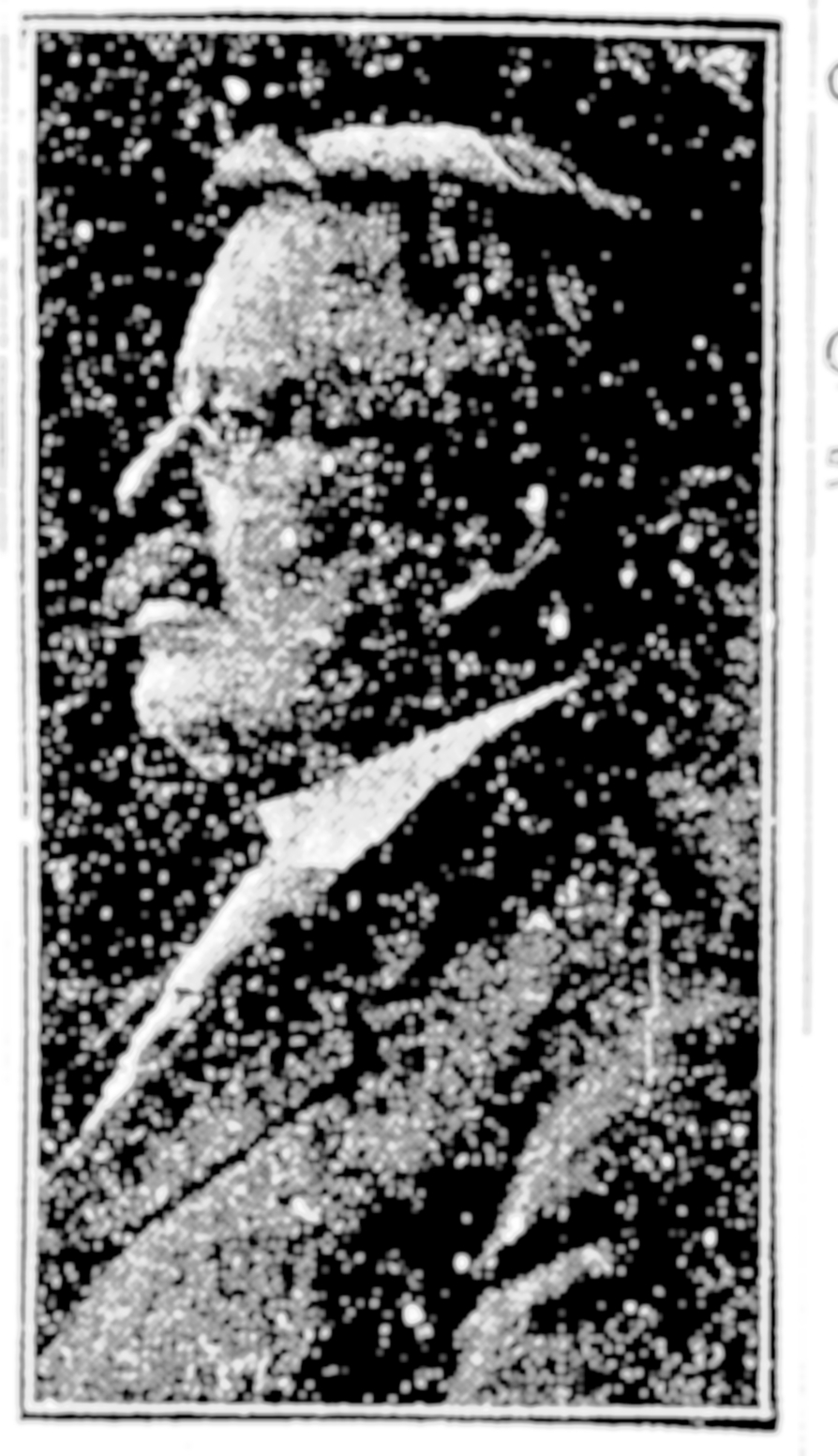
Like others in the Canadian Manufacturing Association (CMA), Thomas Roden (1859-1929) and Frank Roden (1863-1928) were strong supporters of the by-law that created Toronto Hydro.[3] Carlaw was a dark, dirty industrial street with smoking chimneys, but, in its heyday its plants produced some of those beautiful and desirable products ever made in Canada.
The Roden brothers and their family left more than silver marks in Toronto. They, like many others who had climbed out of Birmingham through their skills, they were committed to the welfare of others, leaving a mark on Toronto’s social fabric that may outlast their silverware. They were Methodists and conservative in their politics, but progressive in many ways.

Throughout their lives both Thomas Roden and his son Alfred were deeply involved in both the CMA and a housing company, the Toronto Housing Company, formed to provide affordable decent housing for working families. The Toronto CMA chapter worked with organized labour, the Toronto of Trade and the Great War Veterans Association (the forerunner of the Canadian Legion) to set up the Ontario Housing Committee. Out of this grew the Toronto Housing Company. Their motives were not entirely altruistic.
“The formation of the Ontario Housing committee and the Winnipeg housing survey were in themselves indications of growing public demand for government-assisted housing construction. Thomas Roden had warned his colleagues in the Canadian Manufacturers’ Association that “the indifference of the guiding classes” in Canada to housing problems was encouraging “that condition that brought about the downfall of Russia” [in the 1917 Bolshevik Revolution]. Following Roden’s advice, the Toronto chapter of the CMA resolved that Canadian housing problems posed a “menace” to the “industrial, social and political welfare of the whole country.”[4]
The Rodens were also very involved in the Associated Charities, a forerunner of the United Way[5]. Frank Roden was particularly interested in good cars and roads, both of which he, apparently loved. He was one of the founders of the Good Roads Association in Ontario, as well as the Ontario Motor League and the Canadian Motor League.[6] Frank Roden died in 1928; brother Thomas followed him a year later. Thomas’ son, Alfred J. Roden (1884-1947) led the company after the brothers died.

What exactly did the factory at 234 Carlaw Avenue make?
“Roden Brothers, Ltd., Toronto, 1891-1956: Roden Bothers manufactured superior sterling silver teaware, flatware, toiletware, baby items, trophies, shields and novelties, as well as jewellery; they also manufactured silverplate, Sheffield reproductions, and “Pompeian Glass.”[7]
During both World Wars they produced military badges.
Royal Flying Corps Cap Badges were made in two types. Officer’s cap badges were made either in bronze or of a deeply “pickled” brass which made them deep bronze in colour. The enlisted cap badges, while essentially identical in form, were made from brass or other light golden metallic variations. Examples have been found made in UK and marked “Gaunt” while there have also been examples made in Canada and marked either “Roden Bros” and “Roden Toronto”. There are also many unmarked examples. There is considerable variety in the finish and material colour of these badges. Identical to the cap badge are a smaller version in both bronze and brass for officers and enlisted men which were worn on the raised collars of the “Maternity” smock and later on the lapel of the field uniform. In approximately 1915, an “economy badge” was produced for enlisted men and this differed from the regular badge by not being voided between the letters RFC.
http://www.worldofmilitarywings.com/wingpage/uk/rfccaps.html
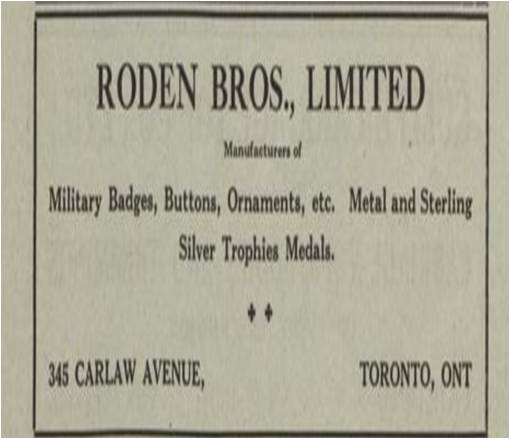

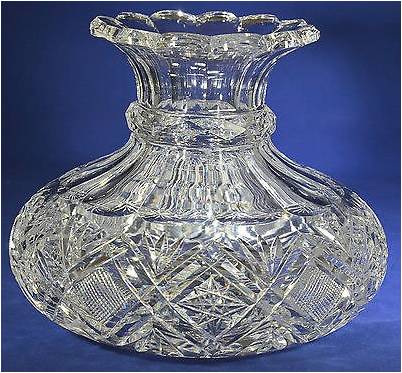
Their glass is from that style known as “Canadian Brilliant Period Cut Glass”. Today their cut glass is hard to identify as many of their pieces of cut glass were not signed. They competed with such Cut Glass Companies as Gundy-Clapperton, Gowans-Kent and Birks who was also their main competitor for the silver consumer market.
A few unique items that Roden Bros. Ltd. produced were a gold rose bowl with the royal route across Canada engraved on it for King George VI and Queen Elizabeth in 1939 and, a tea service for Princess Elizabeth’s wedding in 1947.
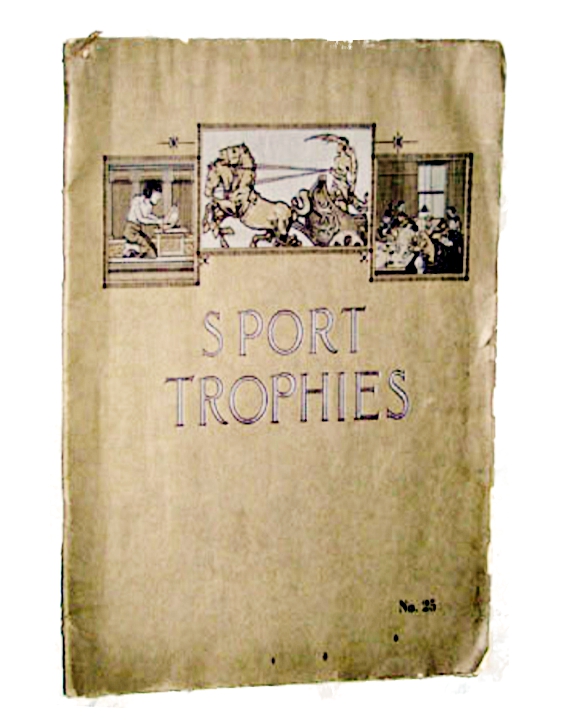
They put out a special sport trophies catalogue which marketed their medals, trophy cups and other similar items, such as plaques and shields, belt buckles, charms, silver trowels for special events, etc. They advertised in their 1929 catalogue that they had produced “some iconic Canadian trophies” such as the Brier Tankard, the coveted curling trophy. They also produced trophies for hockey, baseball, football, motorcycle racing, curling, track and field, etc.[8]


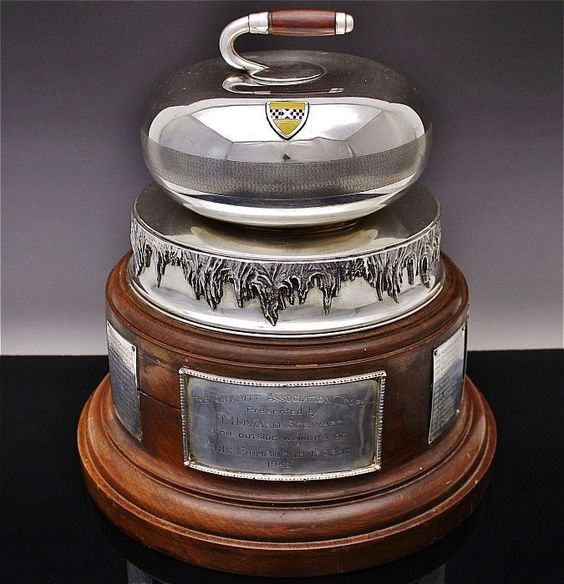

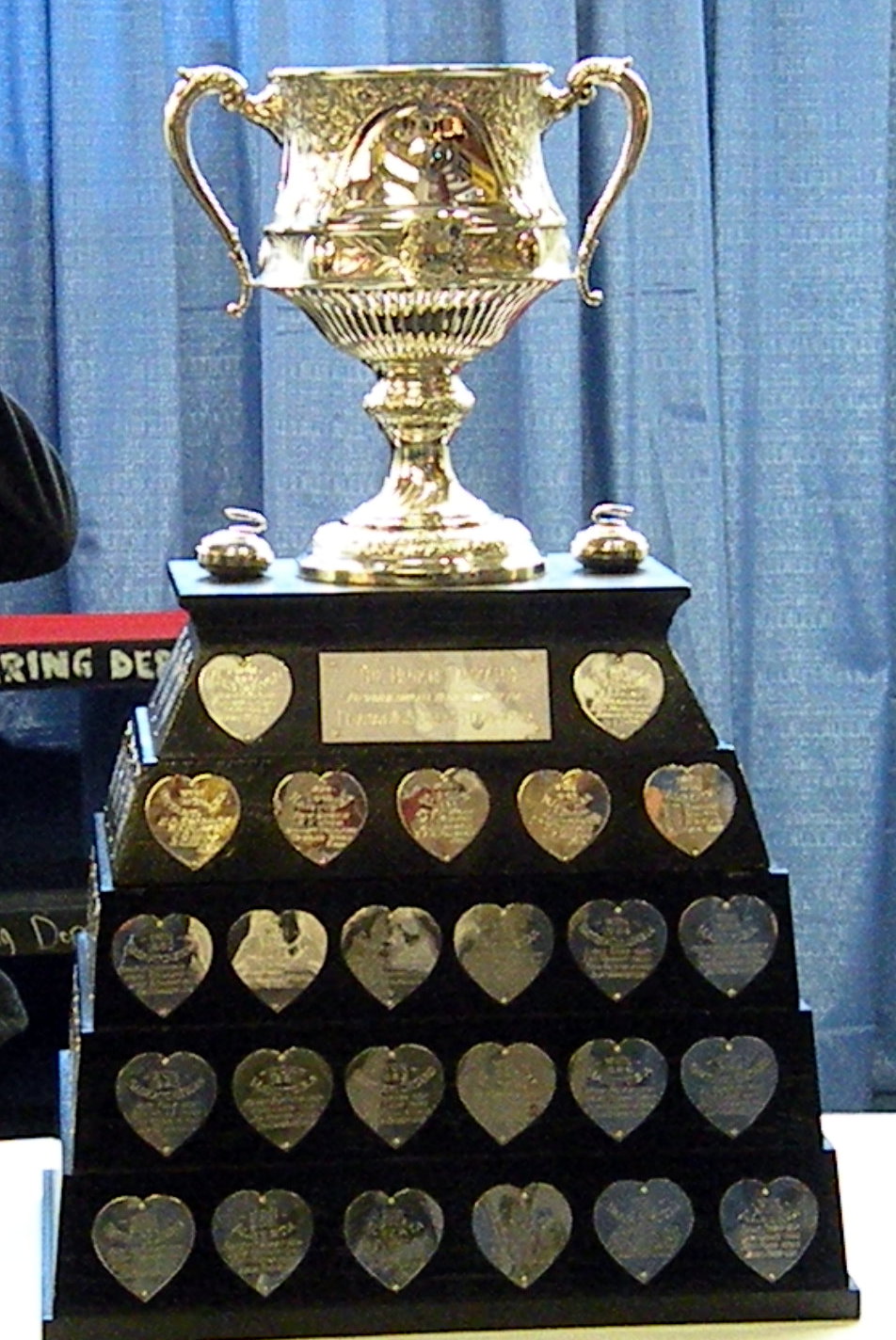

“On Dec. 4, 1909, at Toronto’s Rosedale Field, a crowd of 3,807 mostly exuberant fans — the average ticket price was 70 cents — watched the University of Toronto Varsity Blues defeat the Toronto Parkdale Canoe Club by a score of 26-6. Unfortunately, Earl Grey and his staff had been tardy ordering the cup from Birks Jewelers (at a cost of $48), and it took another three months for the inaugural awarding of the Grey Cup to the victorious Blues.” Allan Levine, “History of the Grey Cup” in the National Post. See http://news.nationalpost.com/full-comment/allan-levine-history-of-the-grey-cup

What about the Stanley Cup?
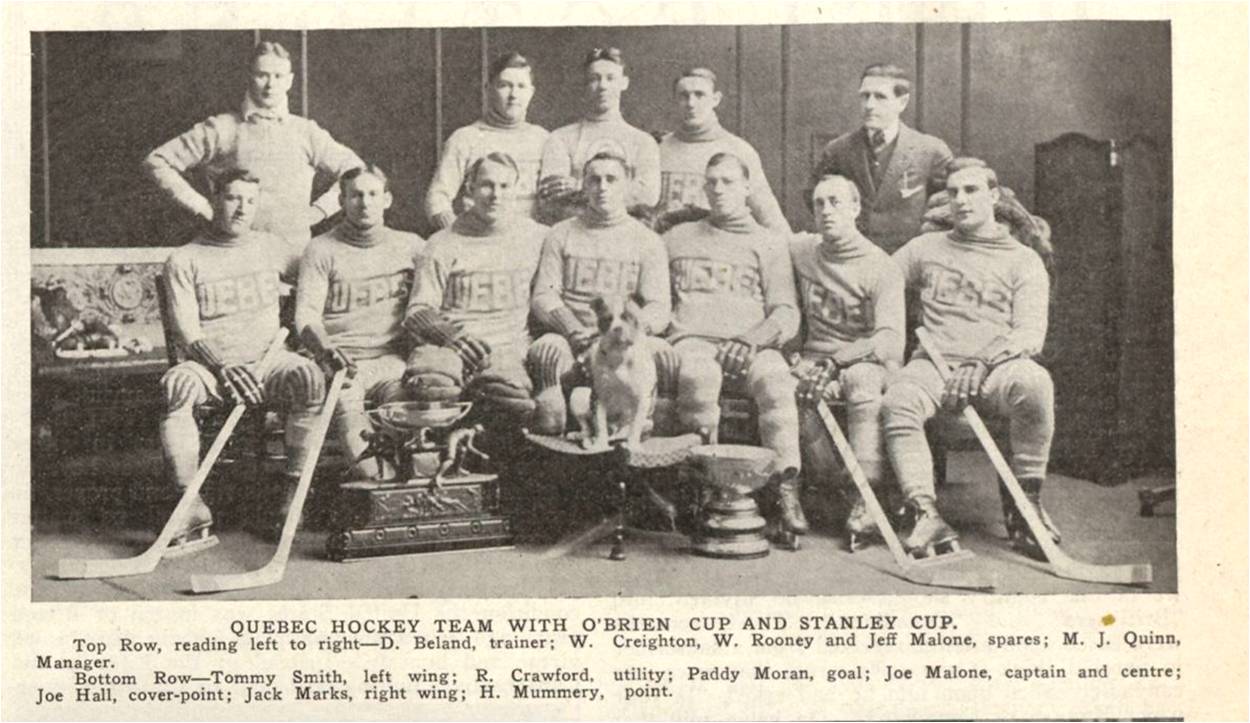
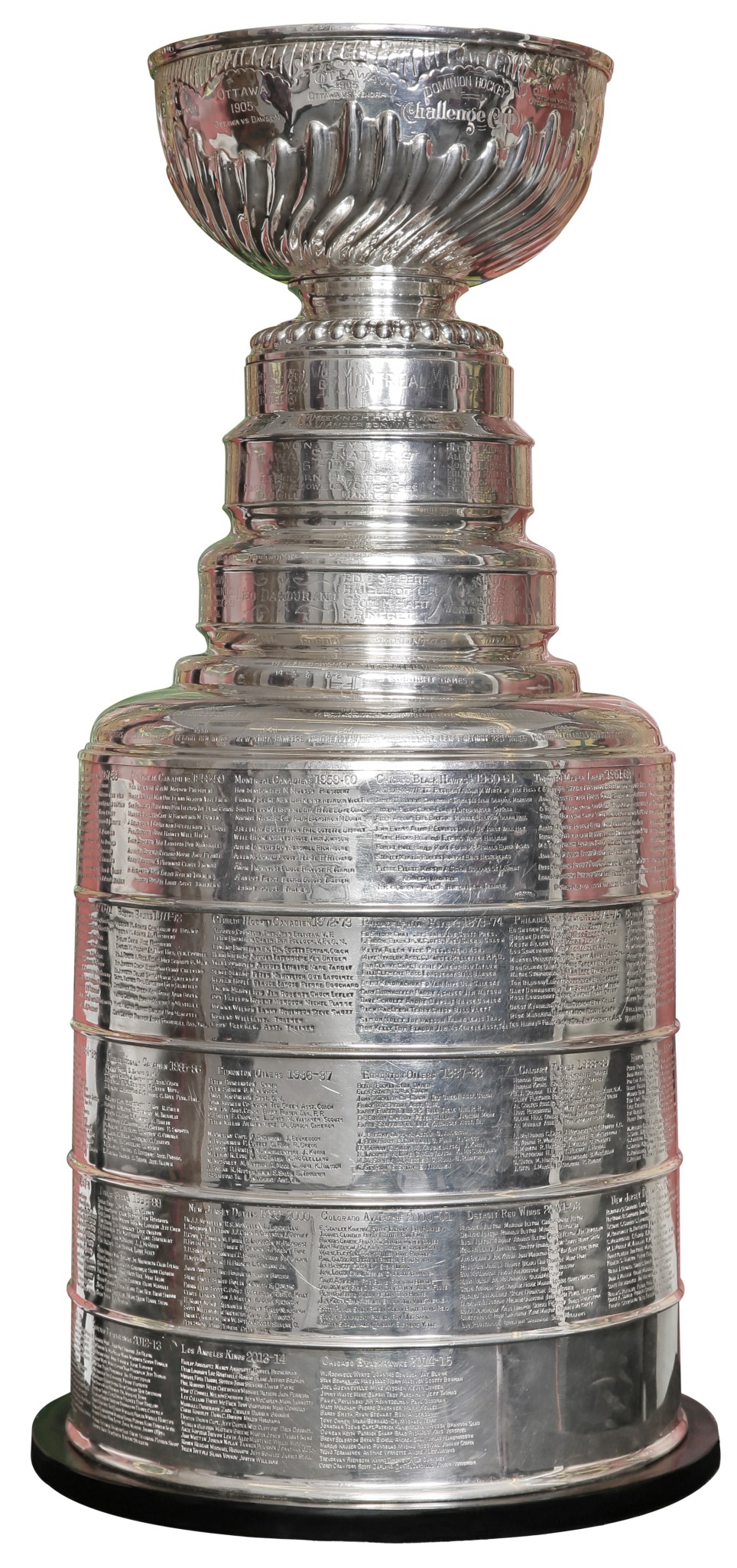
Many attribute the Roden Brothers with helping to produce both the Stanley Cup and the Grey Cup.[9] Although I have found no evidence that they actually made either, it is quite probable that they were involved in the alterations over the years, including the adding of the many rings on both cups, various repairs and replacements. The original Stanley Cup consisted of just the bowl and cost $48.67 in 1892. It was made of silver and was 7.28 inches in high and 11.42 inches in diameter. Today’s Stanley Cup has a copy of the fragile, aged original bowl. It is made of a silver and nickel alloy; it is 35.25 inches tall and weighs 34.5 pounds.
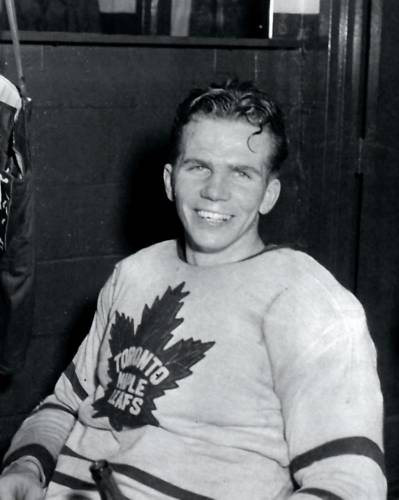
On Saturday, February 8, 1947 the Toronto Maple Leafs defeated the Boston Bruins 5-2. One of the rising new stars that night was a rookie just recently called up from the minors. His name was Bill Barilko.


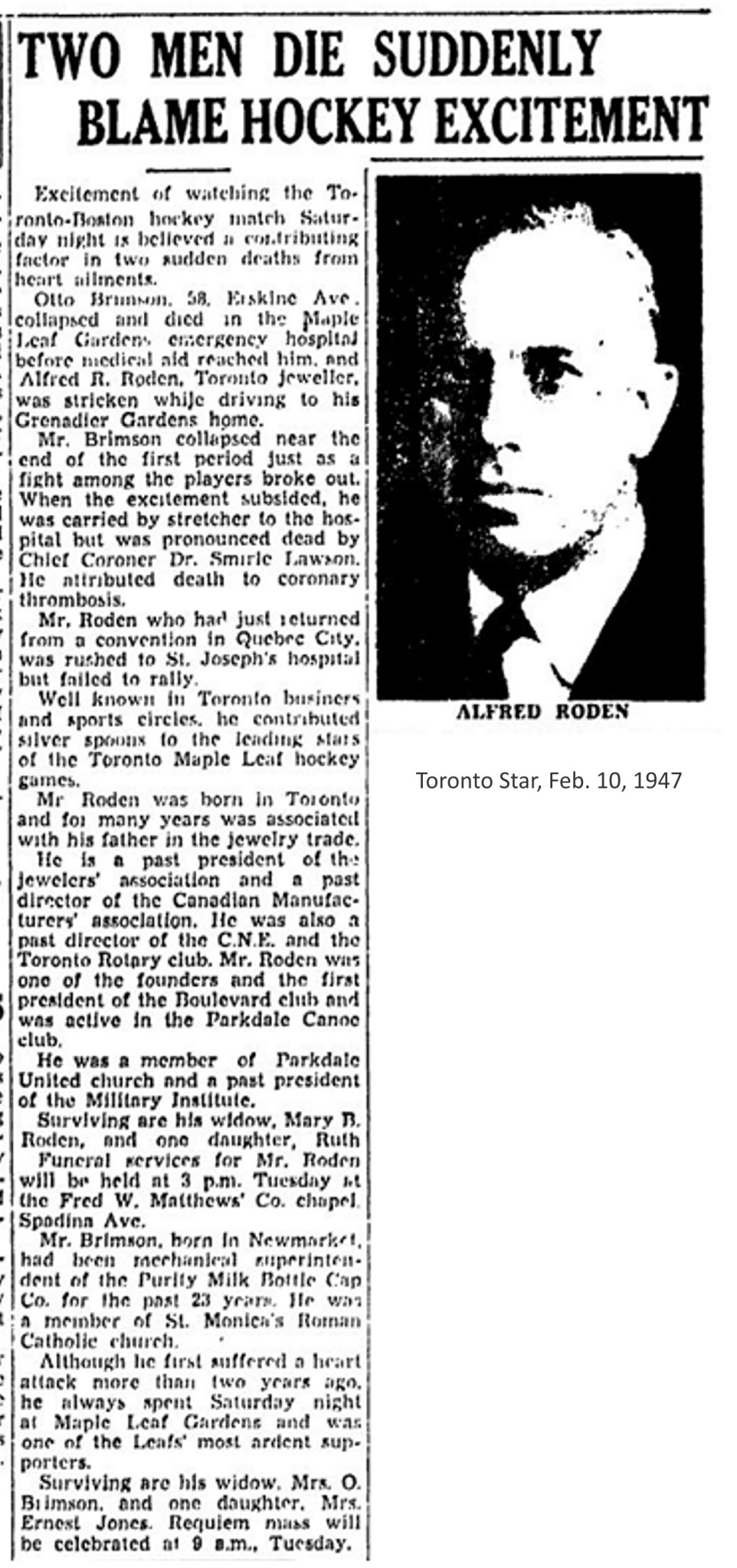
Alfred Roden, a die-hard hockey fan, watched the game in Maple Leaf Gardens. On his way home to Grenadier Gardens in Swansea he suffered a fatal heart attacks. This Leafs fan gave special silver spoons to the stars of all the games at Maple Leaf Gardens.
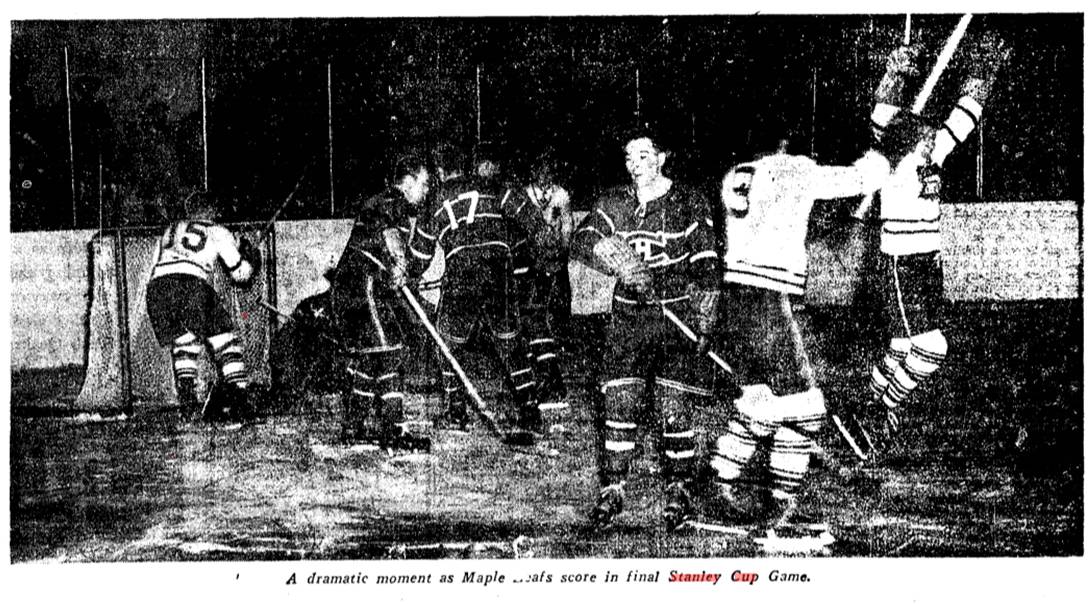
On April 19, 1947 the Leafs defeated the Montreal Canadians 2-1 winning the Stanley Cup.

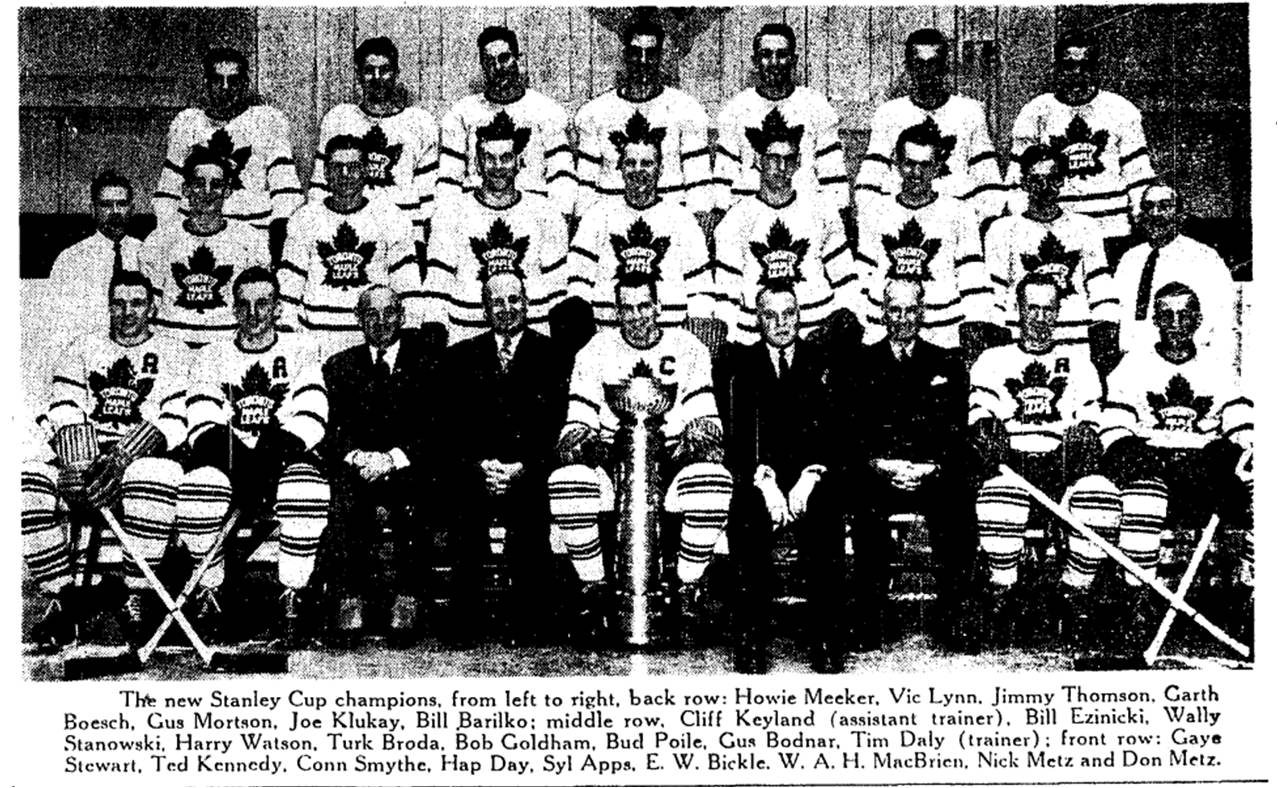
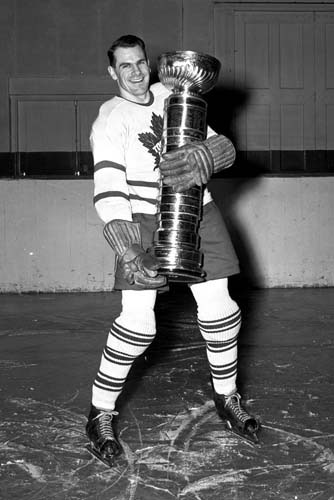
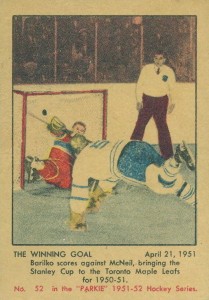
On August 26, 1951 (age 24), Bill Barilko died in a plane crash in the bush near Timmins. His body was not found until 1962. The Leafs won the Stanley Cup that year – the first time since Barilko disappeared 11 years before.
Birks took over Roden Bros. Ltd. in 1953, but continued production on Carlaw until about 1956.[10]
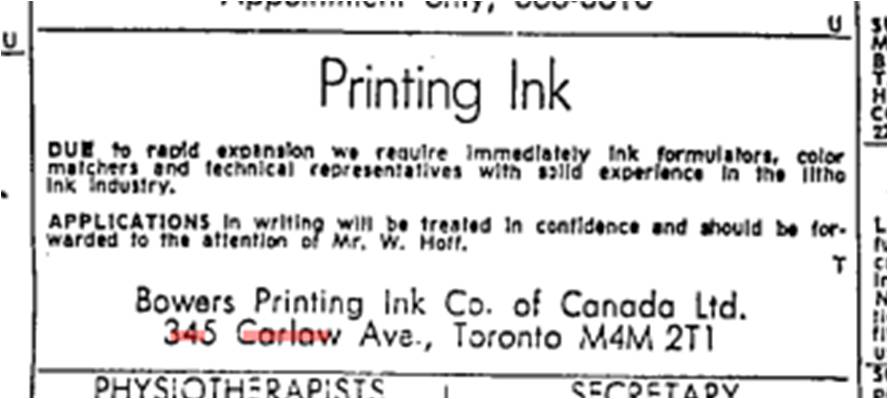
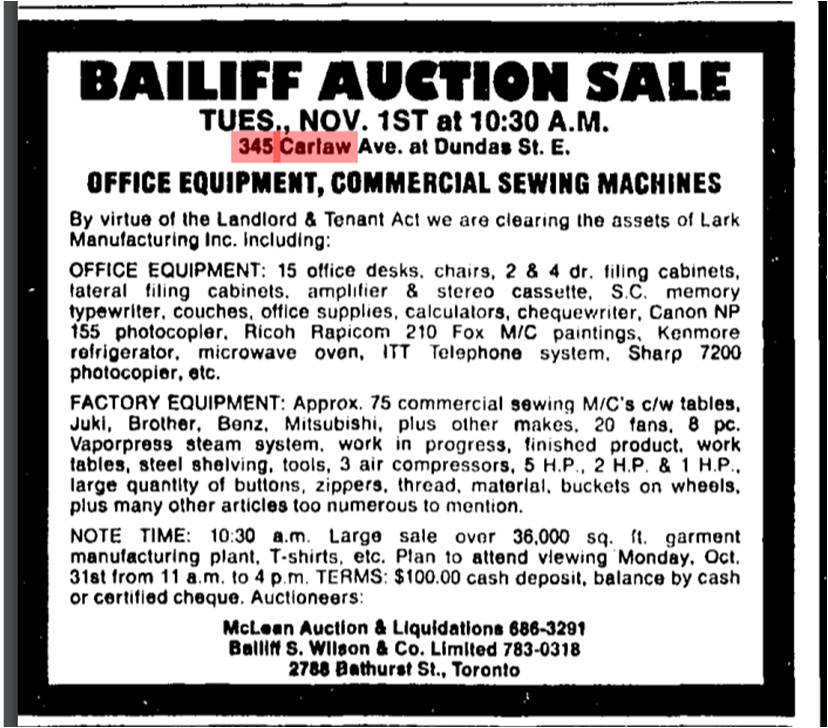
After the Roden Bros. Ltd. left, 345 Carlaw became a printing factory for a while and then a textile company, Larks, until it went under in 1988. Then it became a warehouse and housed a number of different small manufacturers over the next two decades, sharing the general decline of Carlaw Avenue as industries left or went out of business. The street was a sad shadow of itself when I moved here in the early 1980s.

In September, 2011, Streetcar Developments (formerly Dundee Realty) began advertising “The Carlaw” as a “midrise condo with 1- and 2-bedroom lofts” at prices “from the low $200,000s”. Amenities would include a 24-hour concierge, guest suites, a fitness centre, a rooftop party room and a terrace for barbecues, a courtyard garden and even a pet spa. Occupancy was expected in December 2014, but sales began in October, 2011. [11]
In 2013 the City of Toronto approved the building of a 12-storey condominium tower and three-storey stacked townhouses, with a total of 313 units, on the site of the Roden factory. There were conditions for amending the zoning by law to allow Streetcar Develops the increased density and a 12-storey building. One of the City’s conditions was that the new complex would house a theatre company such as Crow’s Theatre. Another was that, although the Roden Building would be torn down, the Barthelmes Building to the north would be kept. The Carlaw and its neighbour, the Taylor, were completed in the fall of 2015. Tact Architecture designed both buildings.[12]
If there is a ghost in 345 Carlaw, it is probably waiting for the Leaf’s to win the Stanley Cup and the people who live in The Carlaw to invite that spectre to the party. He knows they have a great party space and there’s a lot of Leaf fans on Carlaw.
[1] http://www.passionforthepastantiques.com/store/products/item/categories/semi-precious/products/roden-bros-amethyst-marcasite-ster-earrings-c-1900-10/?tt_products%5Bbegin_at%5D=10&cHash=d6dc57942c8031ea192c00c4b258b5f7
[2] Globe, Feb. 22, 1908
[3] Globe, Dec. 20, 1907
[4] John Christopher Bacher, Keeping to the marketplace: the evolution of Canadian housing policy, University of Toronto Press, 1984, pp. 56-57.
[5] Who’s Who in Canada, 1922
[6] Globe, October 16, 1912
[7] http://www.costumejewelrycollectors.com/2014/08/01/early-canadian-sterling-enamel-souvenir-jewelry-patricia-gostick-cjci/
[8] http://www3.sympatico.ca/norman4/SelectAntiques.htm
[9] Unterman McPhail Associates, Heritage Analysis Report: Carlaw and Dundas District Landscape and Public Realm Improvements, City of Toronto, Ontario. Appendix D.
[10] see also http://www.silvercollection.it/AMERICANSILVERMARKSRDUE.html and http://www.justinteeantiques.com/news.html
[11] Toronto Star, Sept. 24, 2011
[12] http://urbantoronto.ca/database/projects/carlaw
[i] Toronto Star Dec. 17, 1912
![Miscellaneous, Railway Lands. - [between 1977 and 1998]](https://leslievillehistory.com/wp-content/uploads/2016/11/s1465_fl0037_id0039.jpg)
![Miscellaneous, Railway Lands. - [between 1977 and 1998]](https://leslievillehistory.com/wp-content/uploads/2016/11/s1465_fl0037_id0040.jpg)
![Miscellaneous, Railway Lands. - [between 1977 and 1998]](https://leslievillehistory.com/wp-content/uploads/2016/11/s1465_fl0037_id0041.jpg)
![Miscellaneous, Railway Lands. - [between 1977 and 1998]](https://leslievillehistory.com/wp-content/uploads/2016/11/s1465_fl0037_id0042.jpg)
![Miscellaneous, Railway Lands. - [between 1977 and 1998]](https://leslievillehistory.com/wp-content/uploads/2016/11/s1465_fl0037_id0043.jpg)
![Miscellaneous, Railway Lands. - [between 1977 and 1998]](https://leslievillehistory.com/wp-content/uploads/2016/11/s1465_fl0037_id0044.jpg)
![Miscellaneous, Railway Lands. - [between 1977 and 1998]](https://leslievillehistory.com/wp-content/uploads/2016/11/s1465_fl0037_id0045-1.jpg)
![Miscellaneous, Railway Lands. - [between 1977 and 1998]](https://leslievillehistory.com/wp-content/uploads/2016/11/s1465_fl0037_id0045.jpg)
![Miscellaneous, Railway Lands. - [between 1977 and 1998]](https://leslievillehistory.com/wp-content/uploads/2016/11/s1465_fl0037_id0046-1.jpg)
![Miscellaneous, Railway Lands. - [between 1977 and 1998]](https://leslievillehistory.com/wp-content/uploads/2016/11/s1465_fl0037_id0046.jpg)
![Miscellaneous, Railway Lands. - [between 1977 and 1998]](https://leslievillehistory.com/wp-content/uploads/2016/11/s1465_fl0037_id0047.jpg)
![Miscellaneous, Railway Lands. - [between 1977 and 1998]](https://leslievillehistory.com/wp-content/uploads/2016/11/s1465_fl0037_id0048.jpg)
![Miscellaneous, Railway Lands. - [between 1977 and 1998]](https://leslievillehistory.com/wp-content/uploads/2016/11/s1465_fl0037_id0049.jpg)
![Miscellaneous, Railway Lands. - [between 1977 and 1998]](https://leslievillehistory.com/wp-content/uploads/2016/11/s1465_fl0037_id0050.jpg)
![Miscellaneous, Railway Lands. - [between 1977 and 1998]](https://leslievillehistory.com/wp-content/uploads/2016/11/s1465_fl0037_id0051.jpg)
![Miscellaneous, Railway Lands. - [between 1977 and 1998]](https://leslievillehistory.com/wp-content/uploads/2016/11/s1465_fl0037_id0052.jpg)
![Miscellaneous, Railway Lands. - [between 1977 and 1998]](https://leslievillehistory.com/wp-content/uploads/2016/11/s1465_fl0037_id0053.jpg)
![Miscellaneous, Railway Lands. - [between 1977 and 1998]](https://leslievillehistory.com/wp-content/uploads/2016/11/s1465_fl0037_id0054.jpg)
![Miscellaneous, Railway Lands. - [between 1977 and 1998]](https://leslievillehistory.com/wp-content/uploads/2016/11/s1465_fl0037_id0055.jpg)


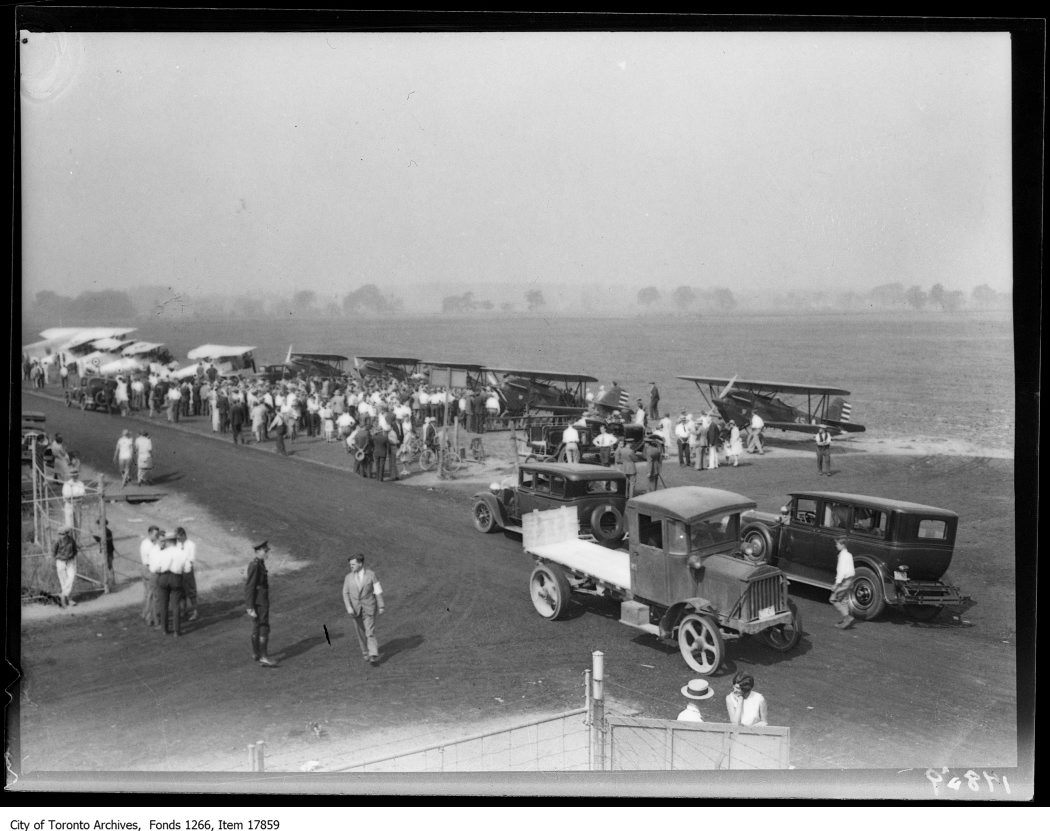
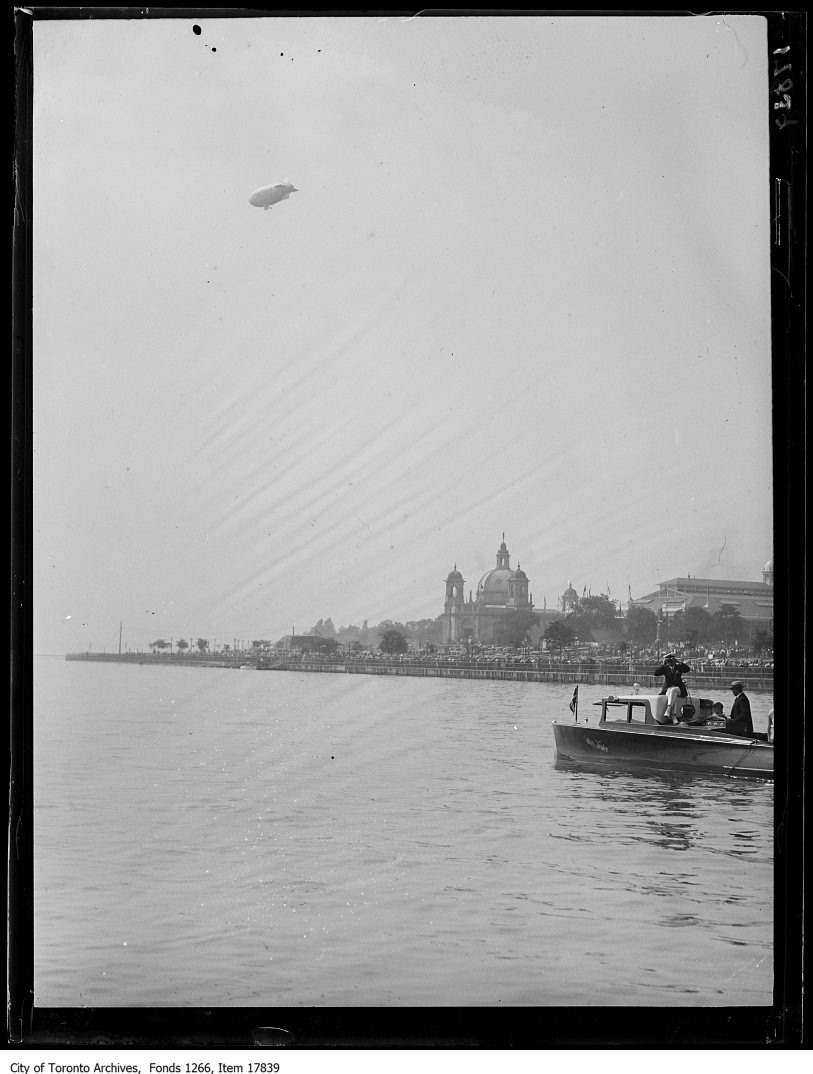
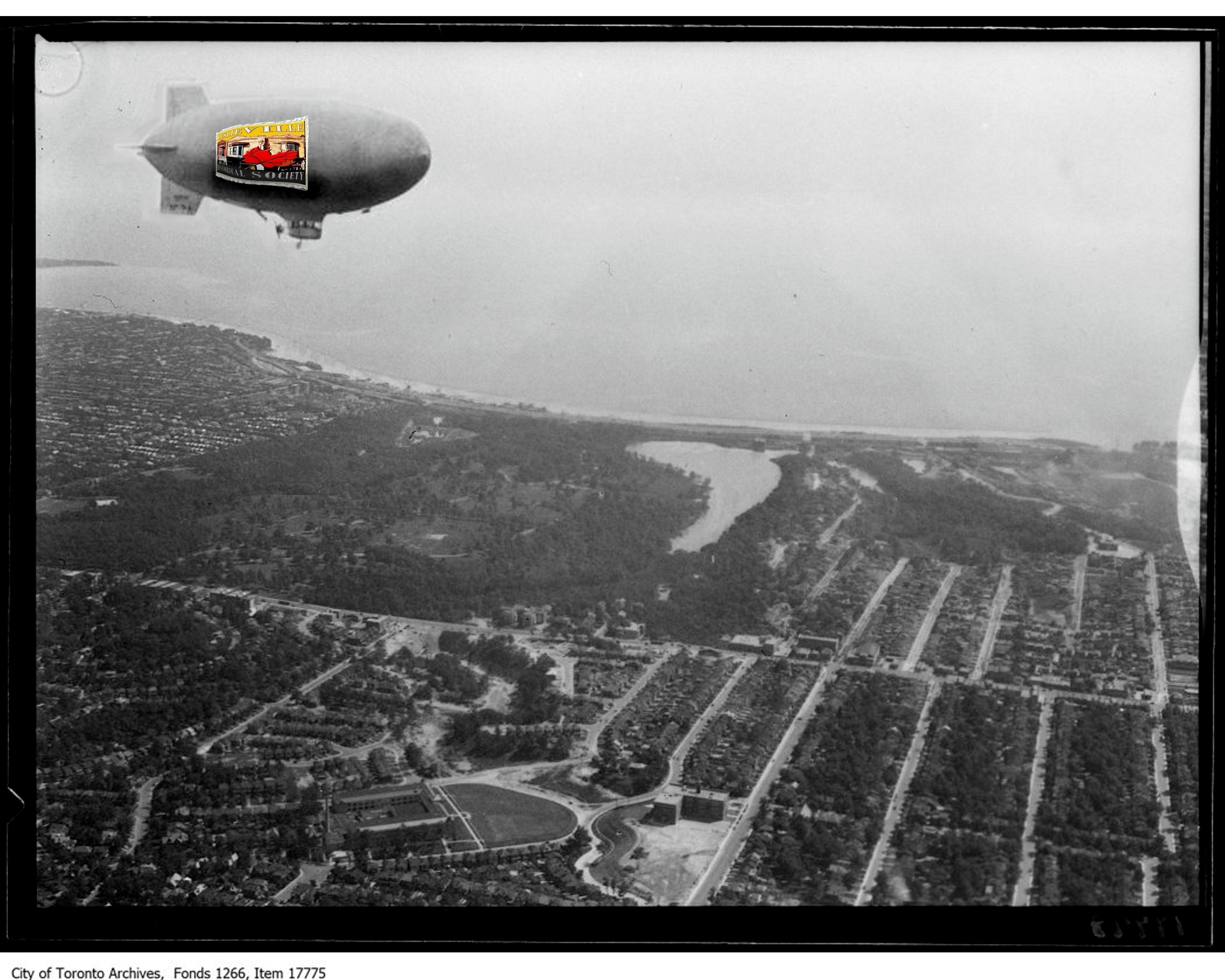
Since there has been so much hot air about lately, why not harness its power to drive a virtual airship into the past: 1929 before the Great Crash that ushered in the Great Depression.
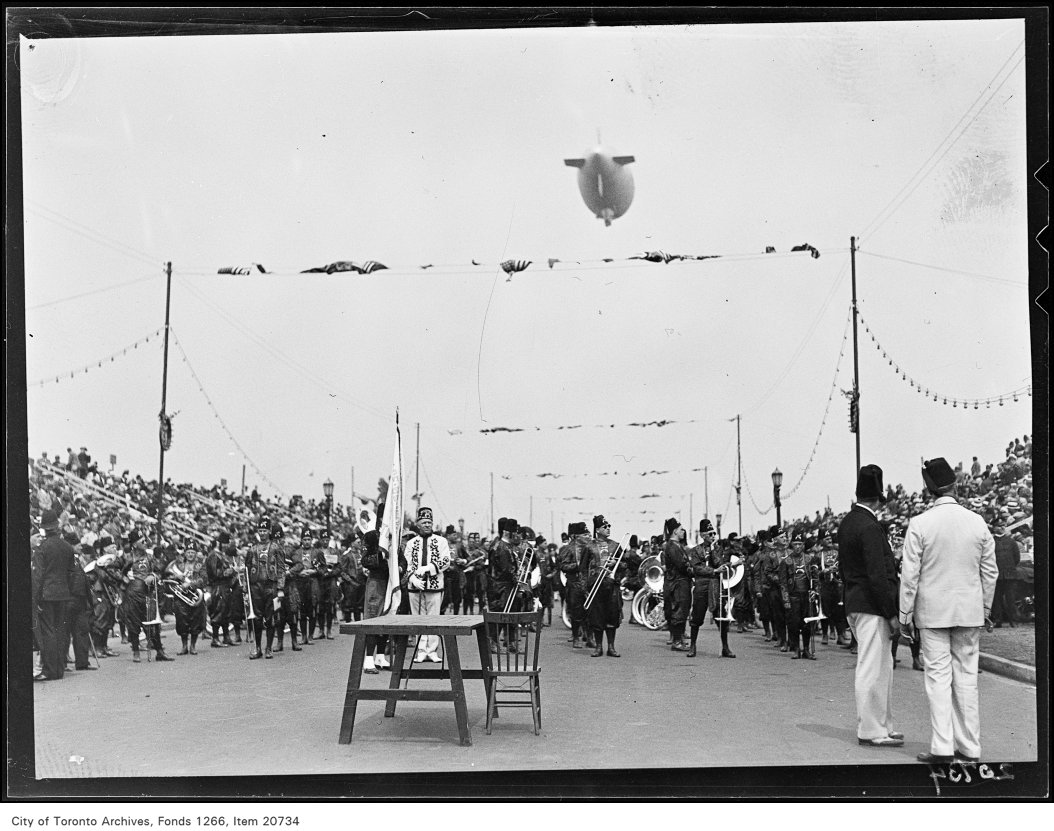 Shrine Peace Parade, Parade on Boulevard, blimp overhead June 12, 1930
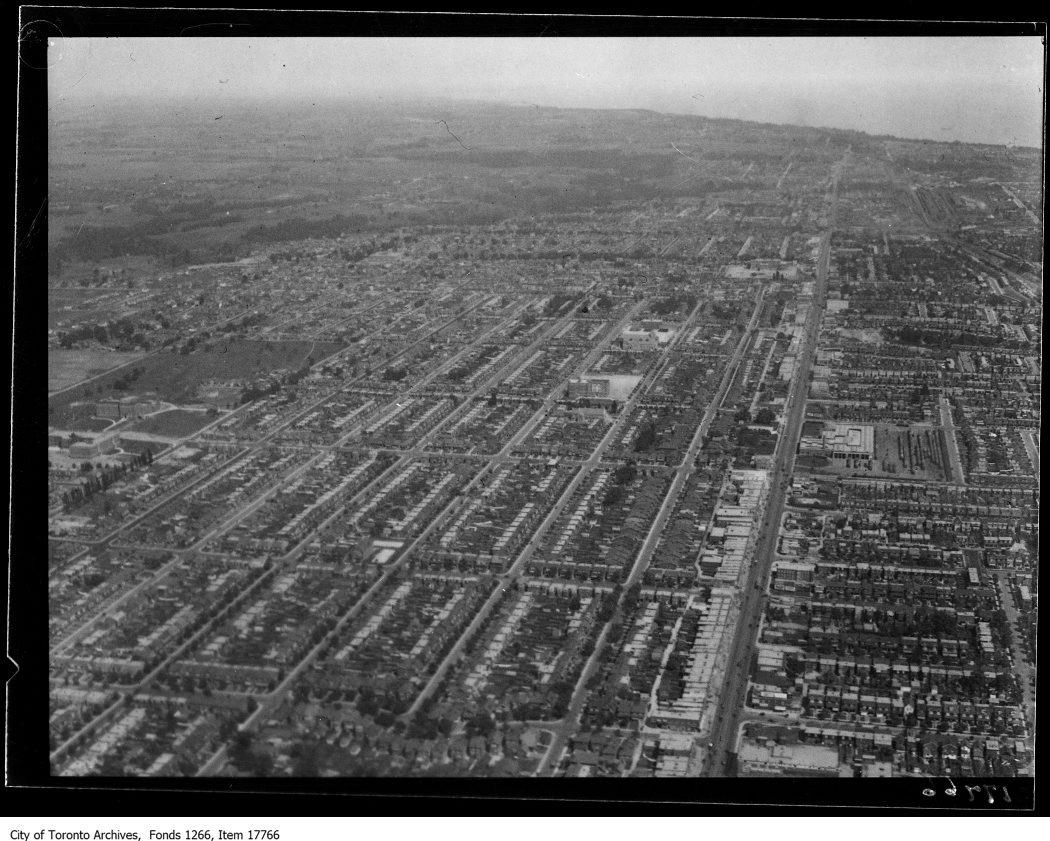
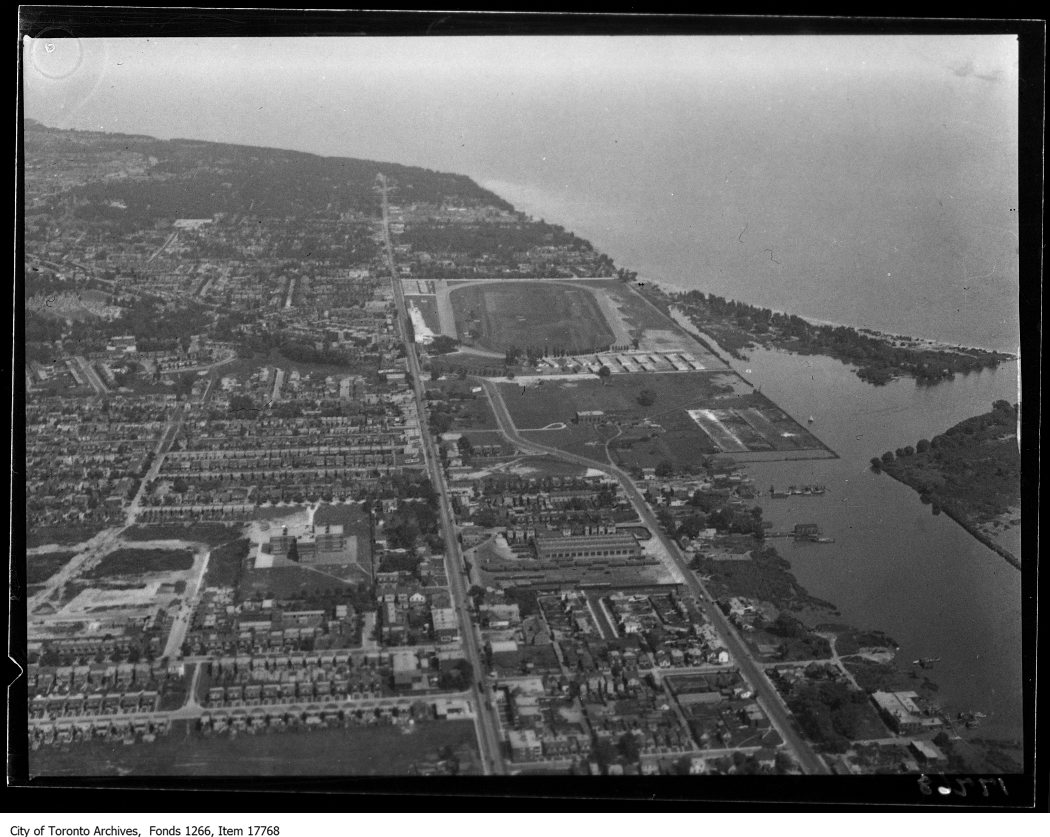
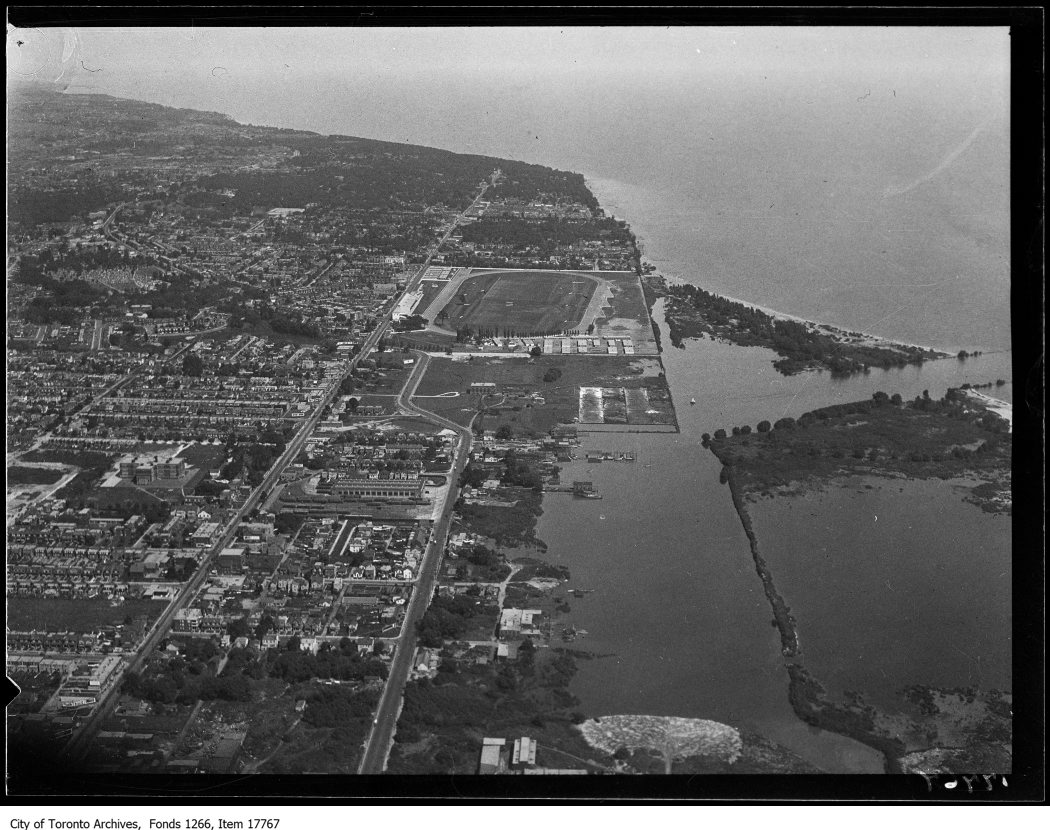
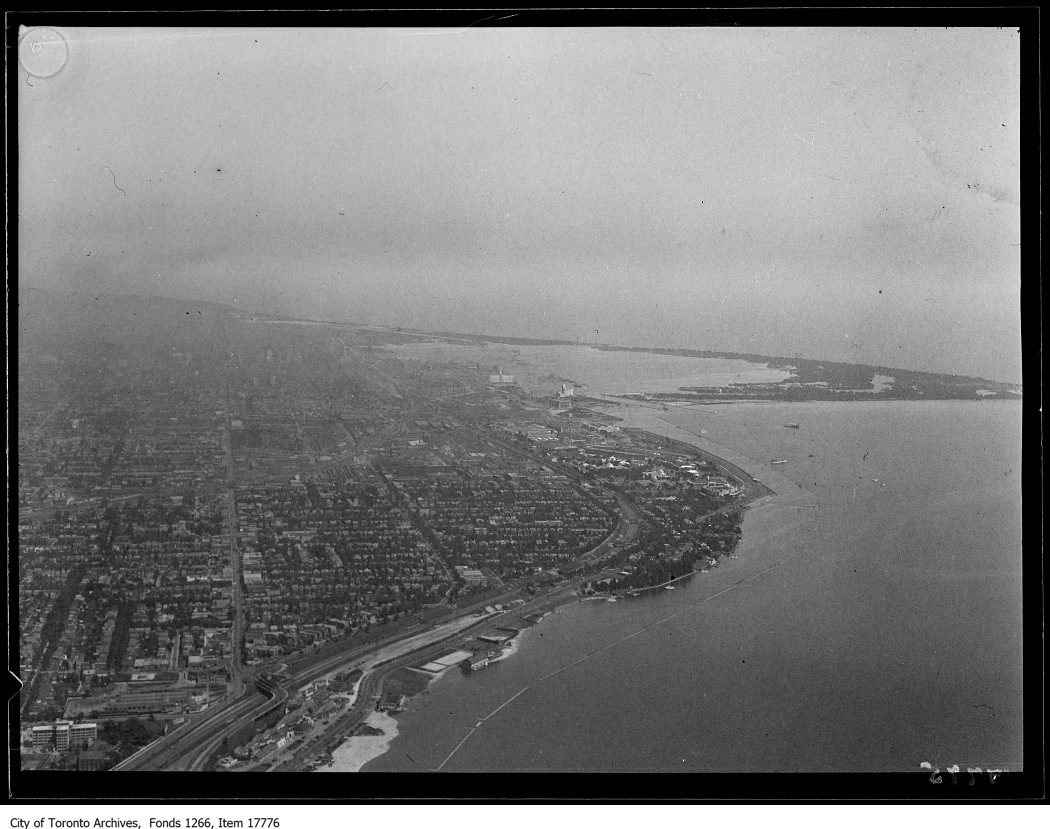
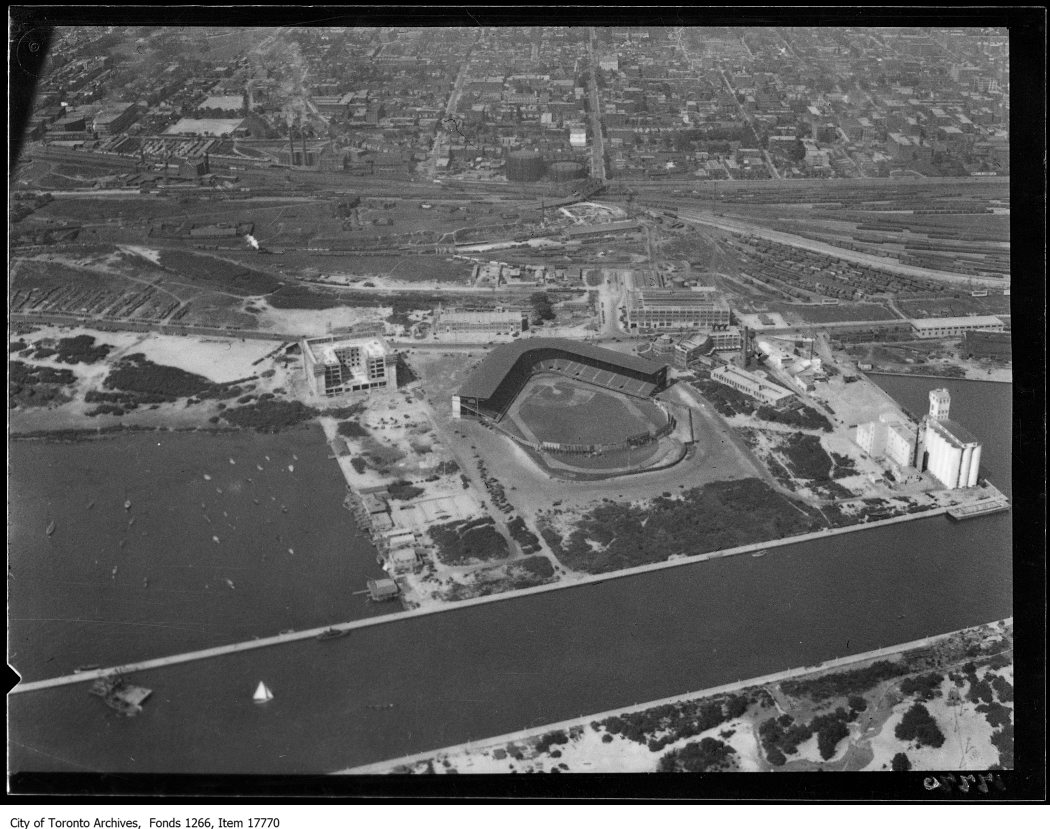
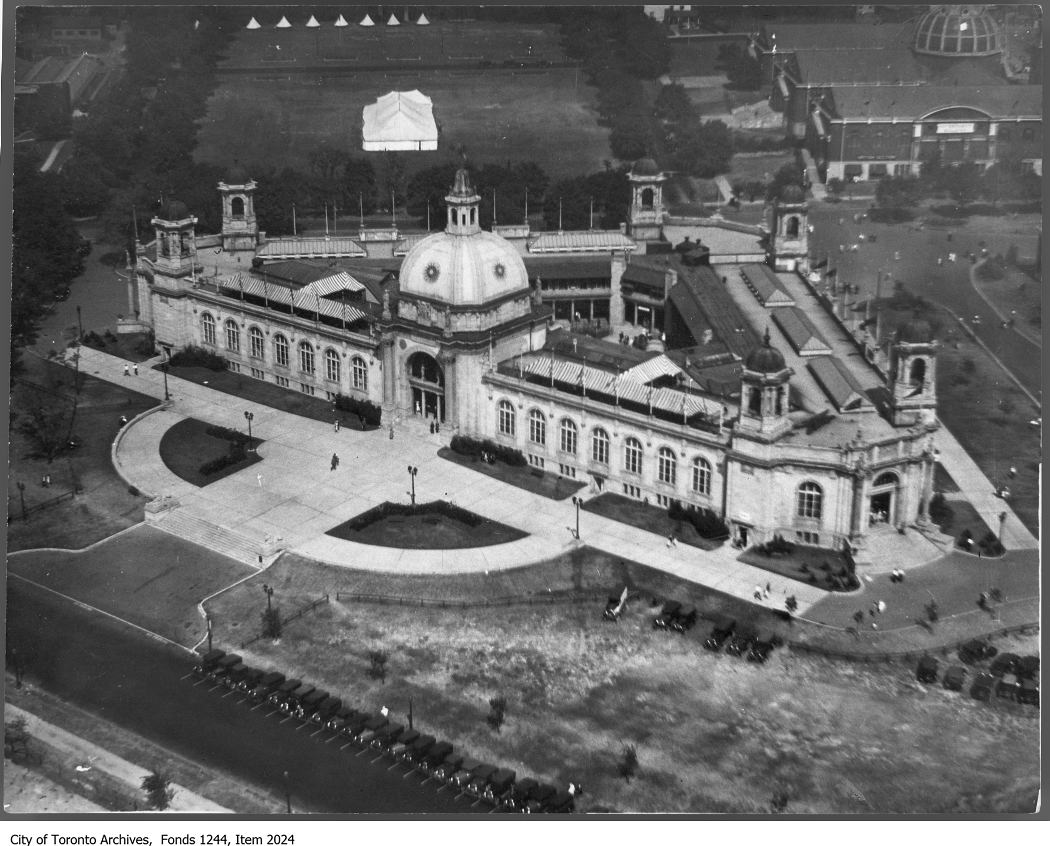
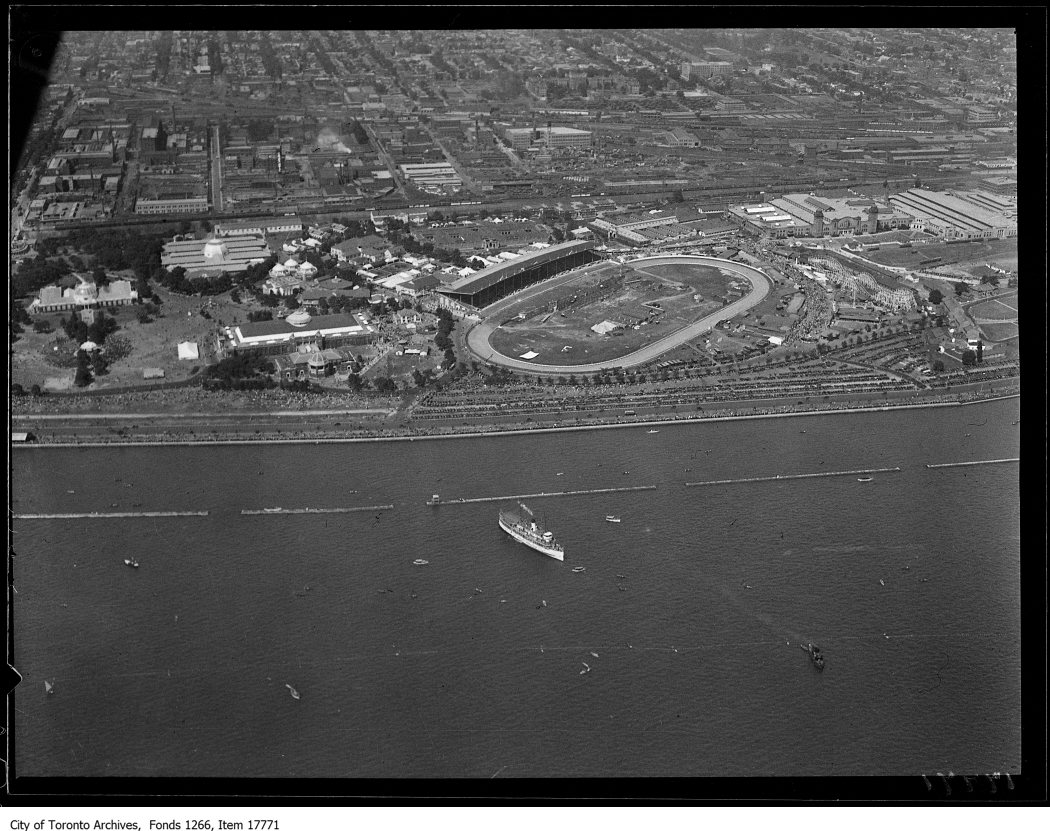
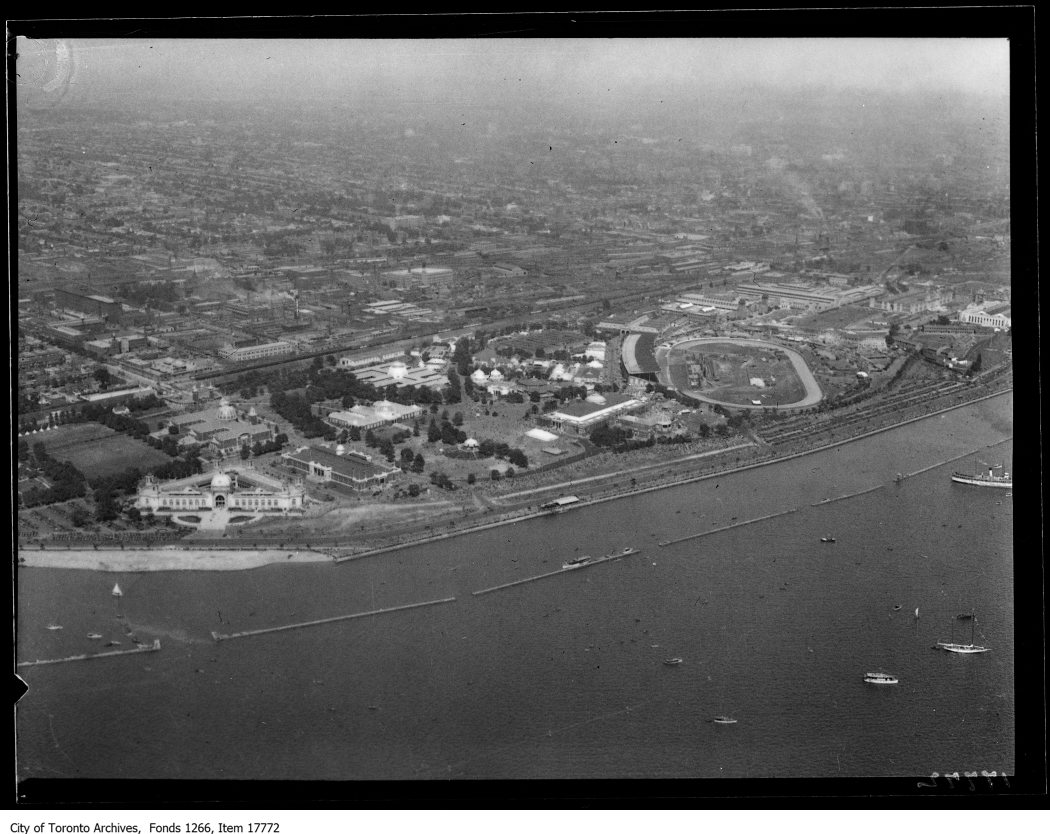
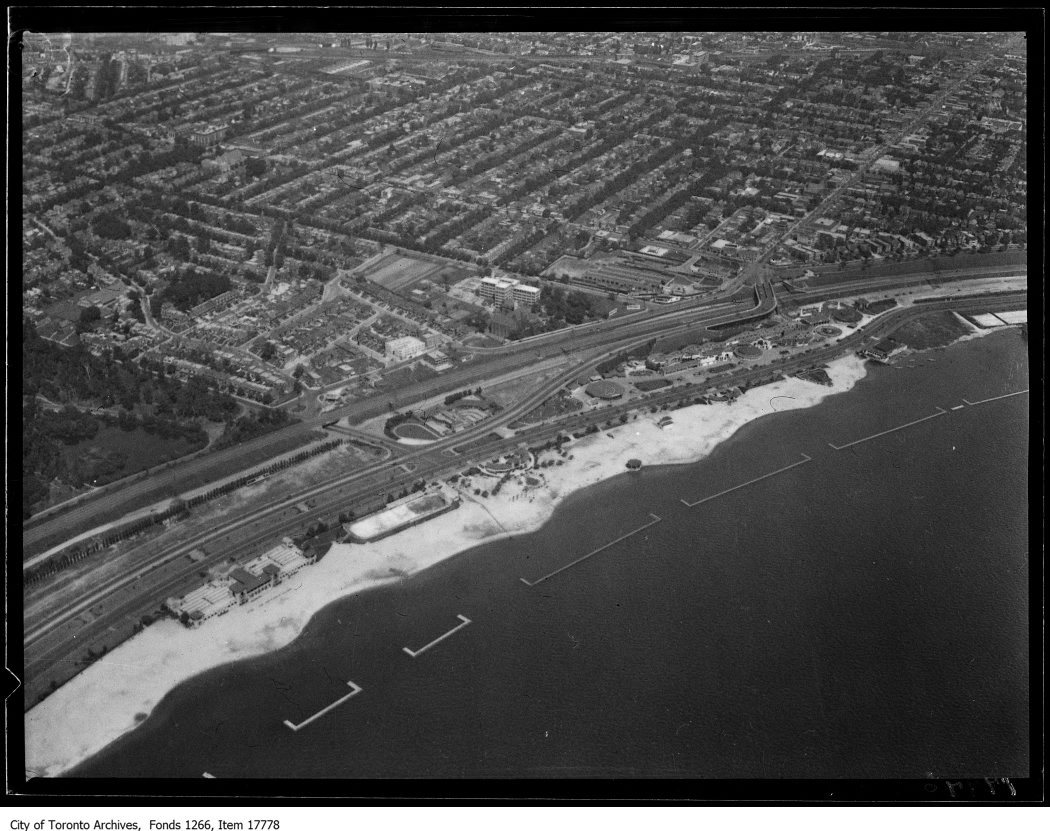
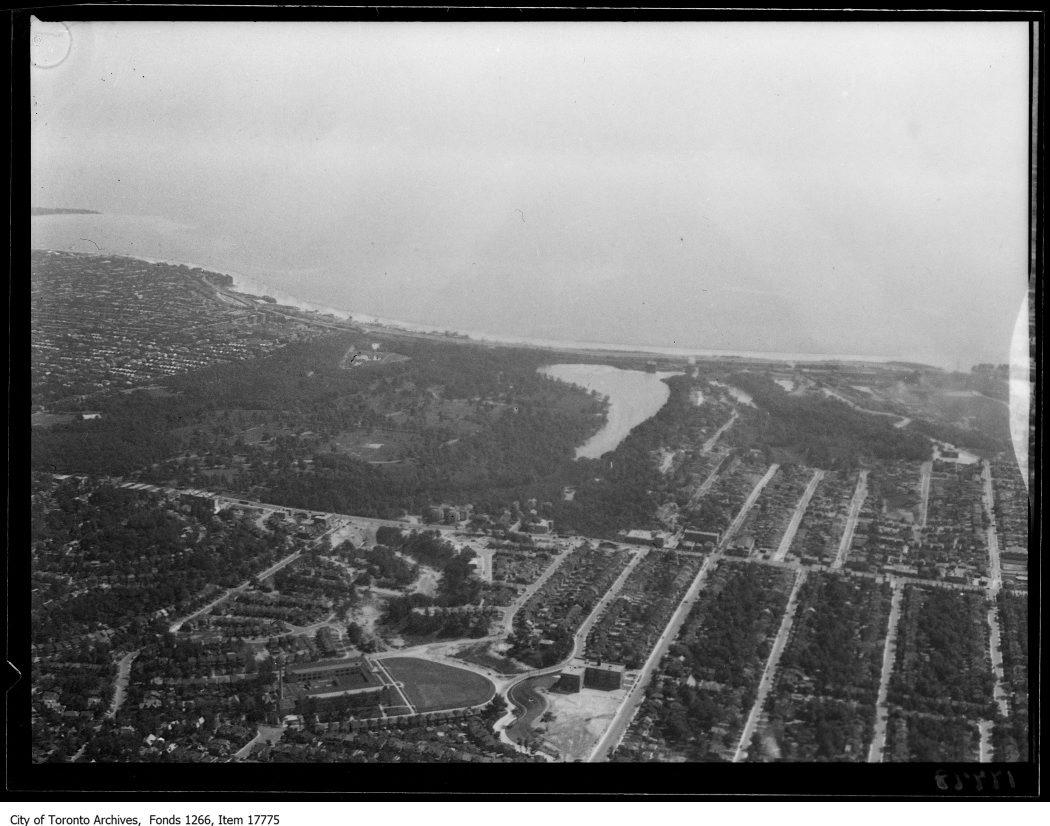
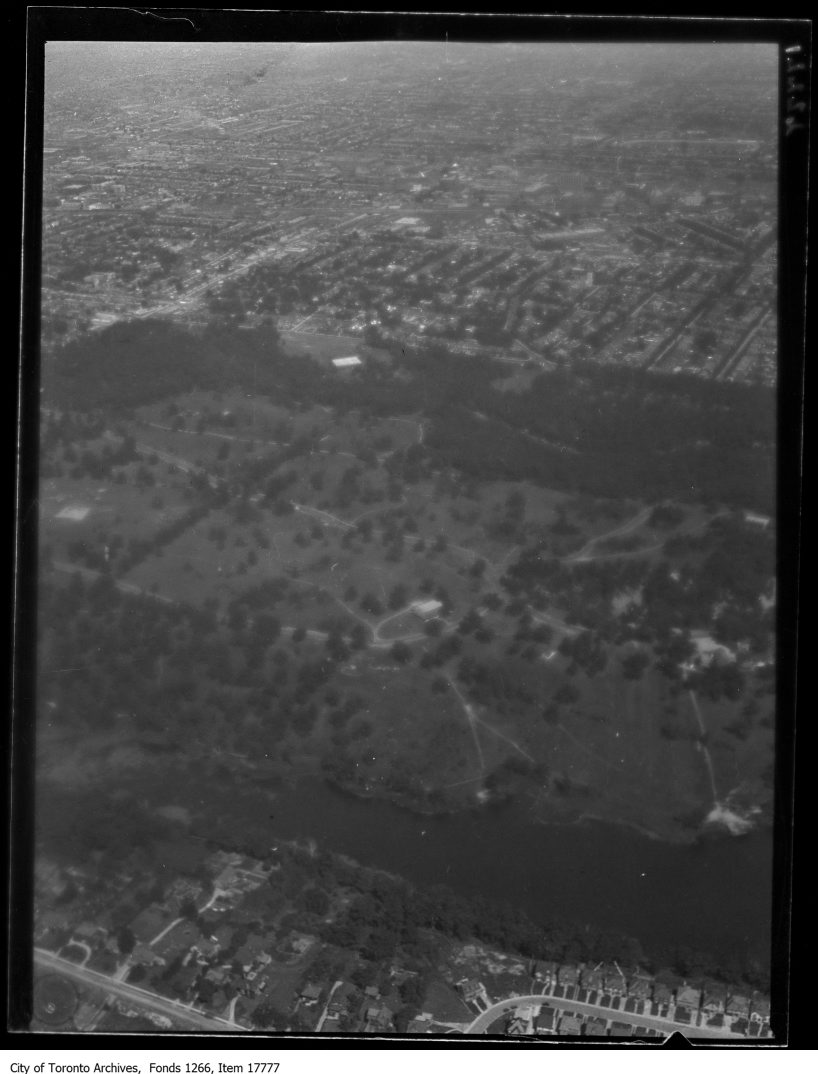
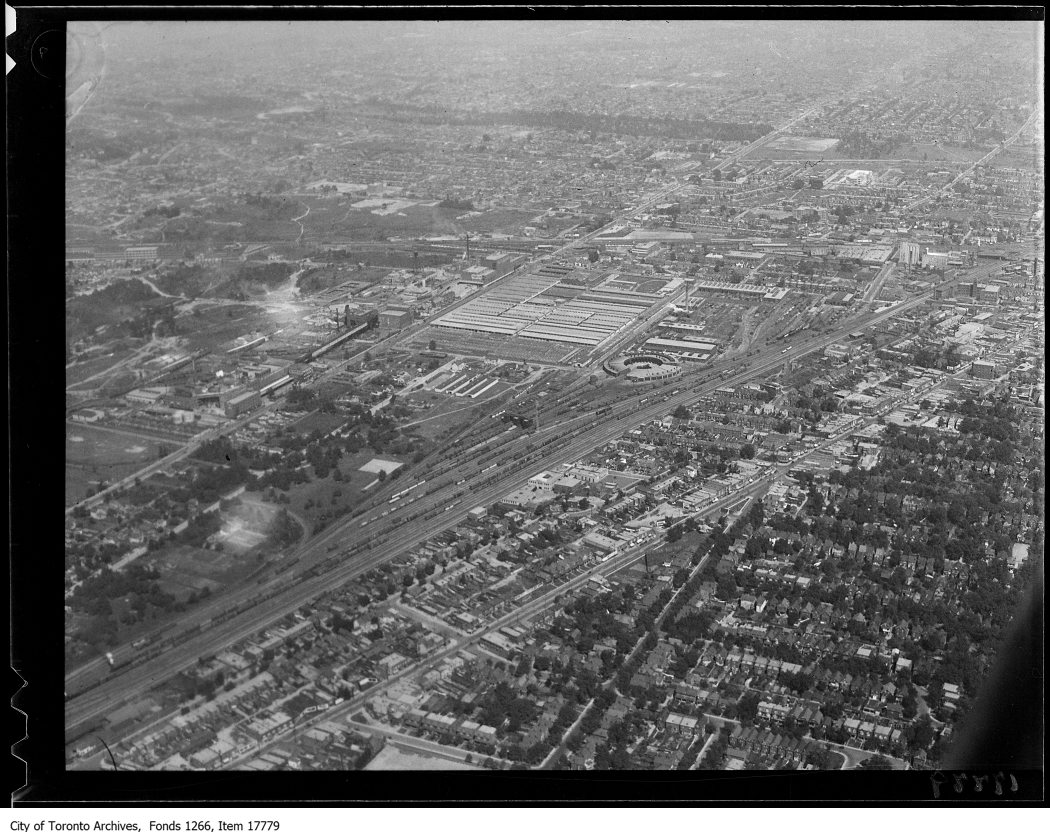
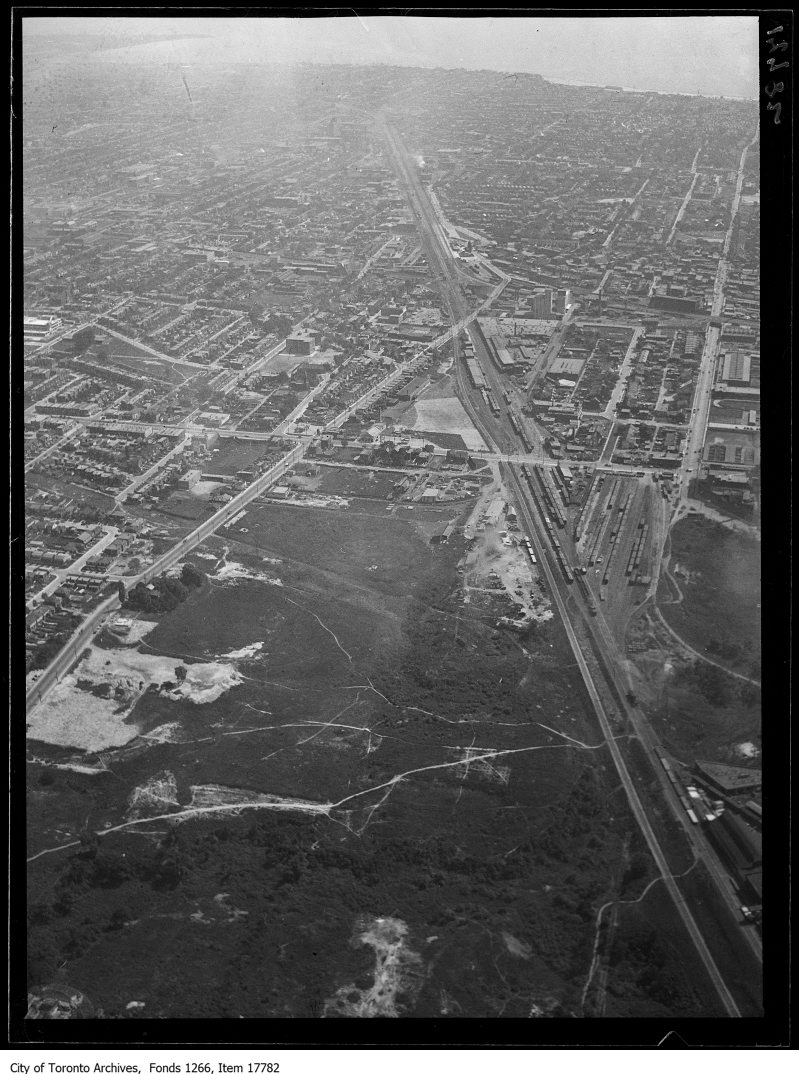
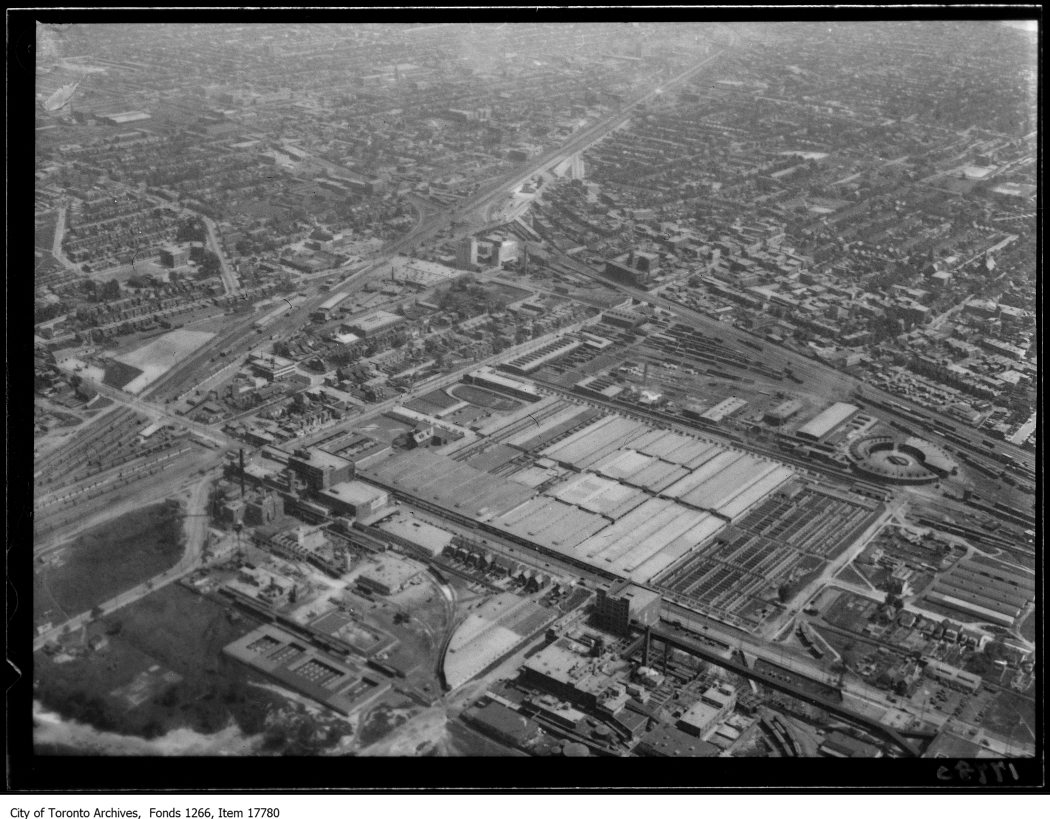
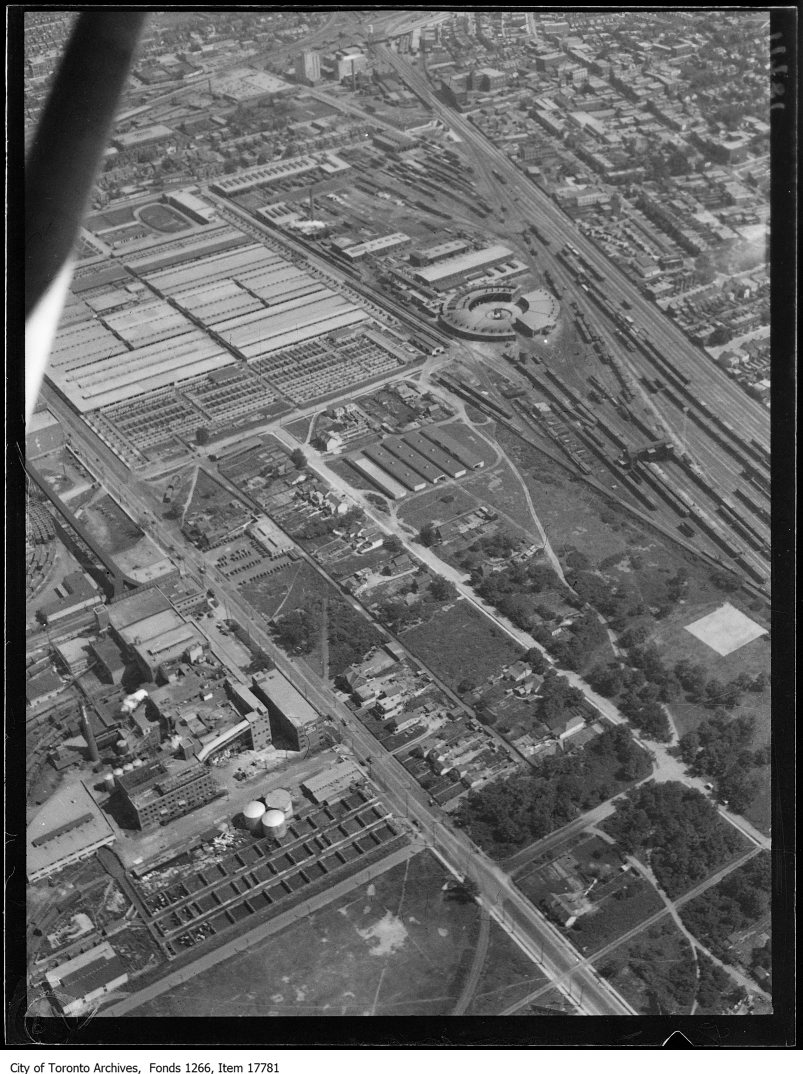
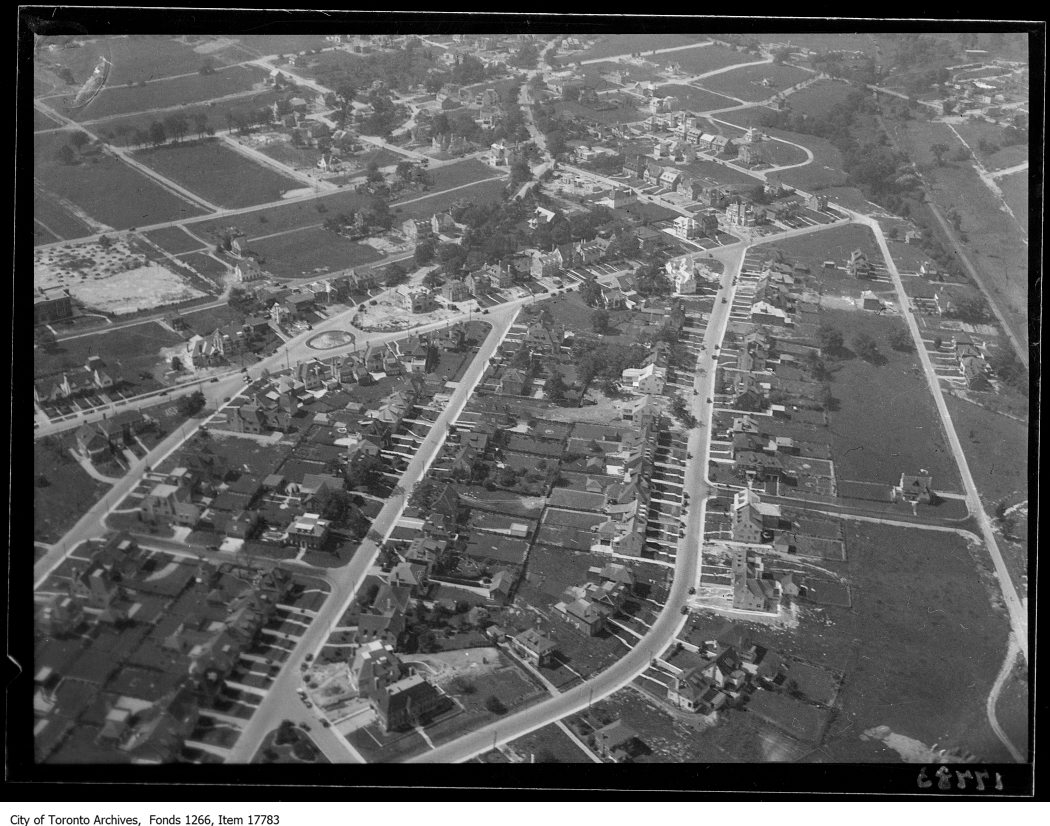
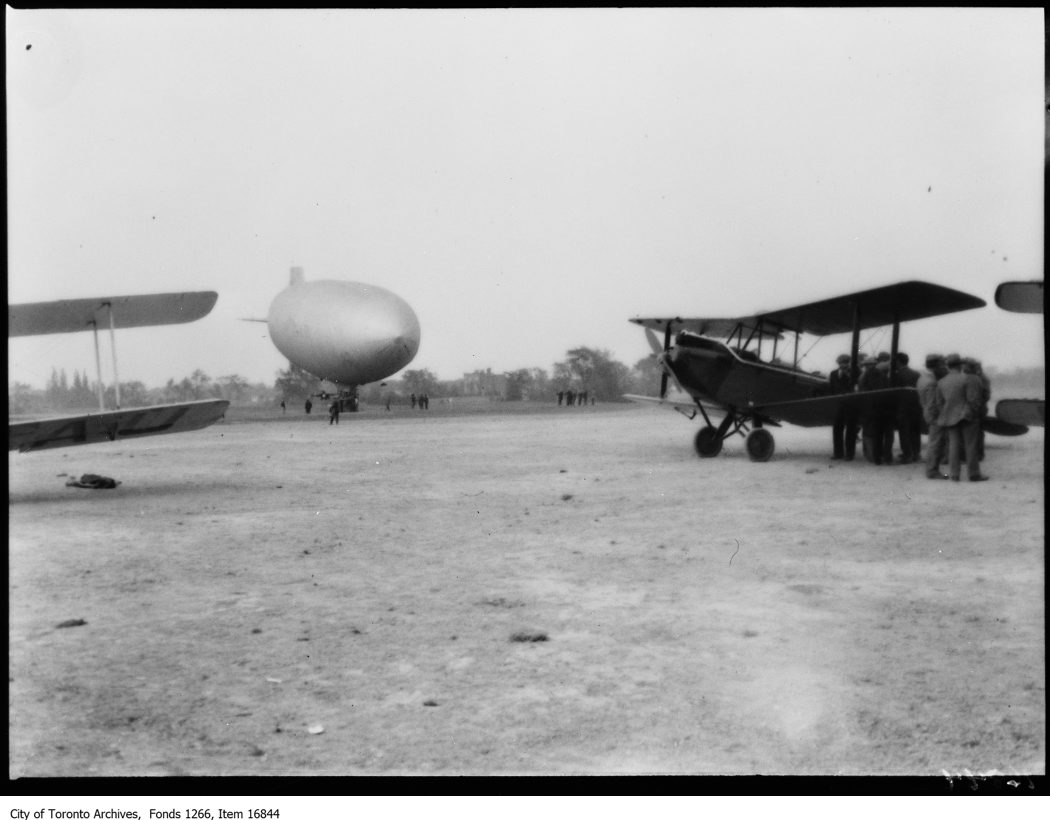
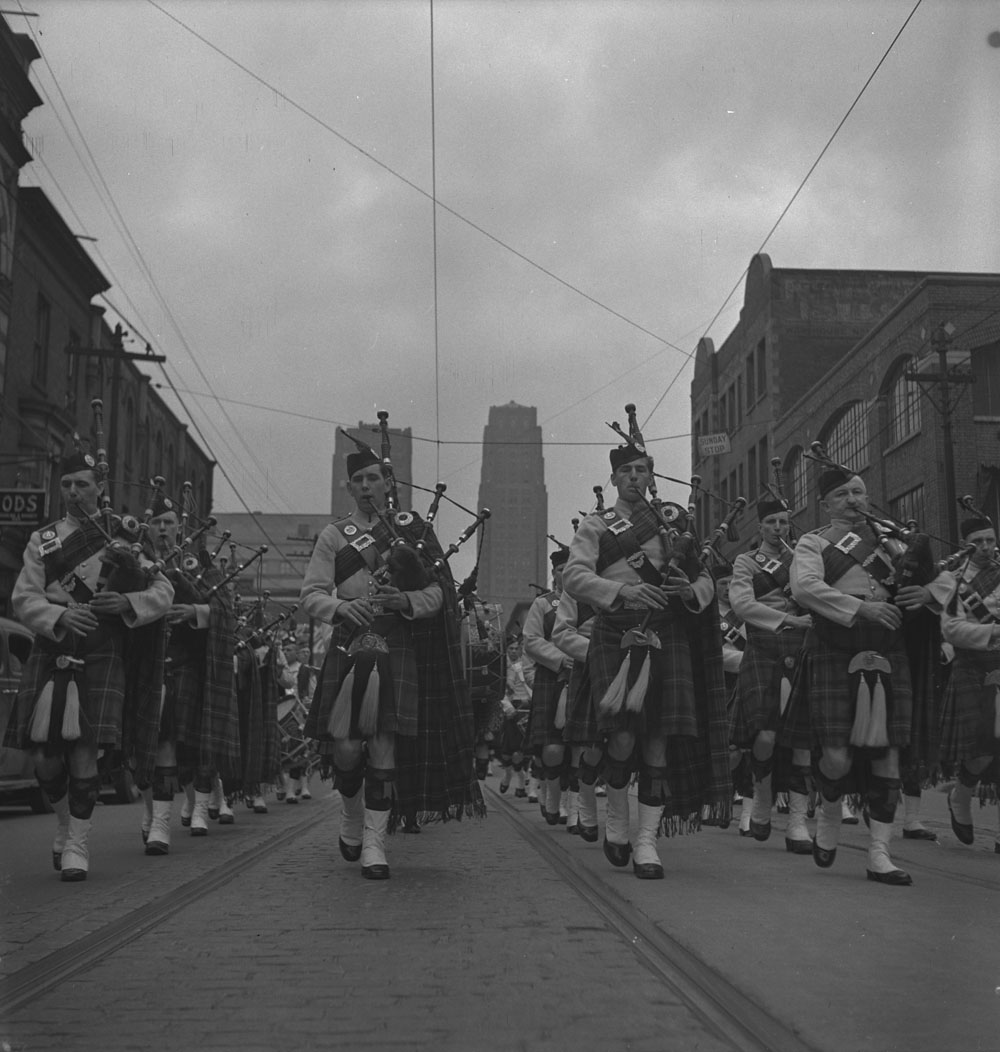
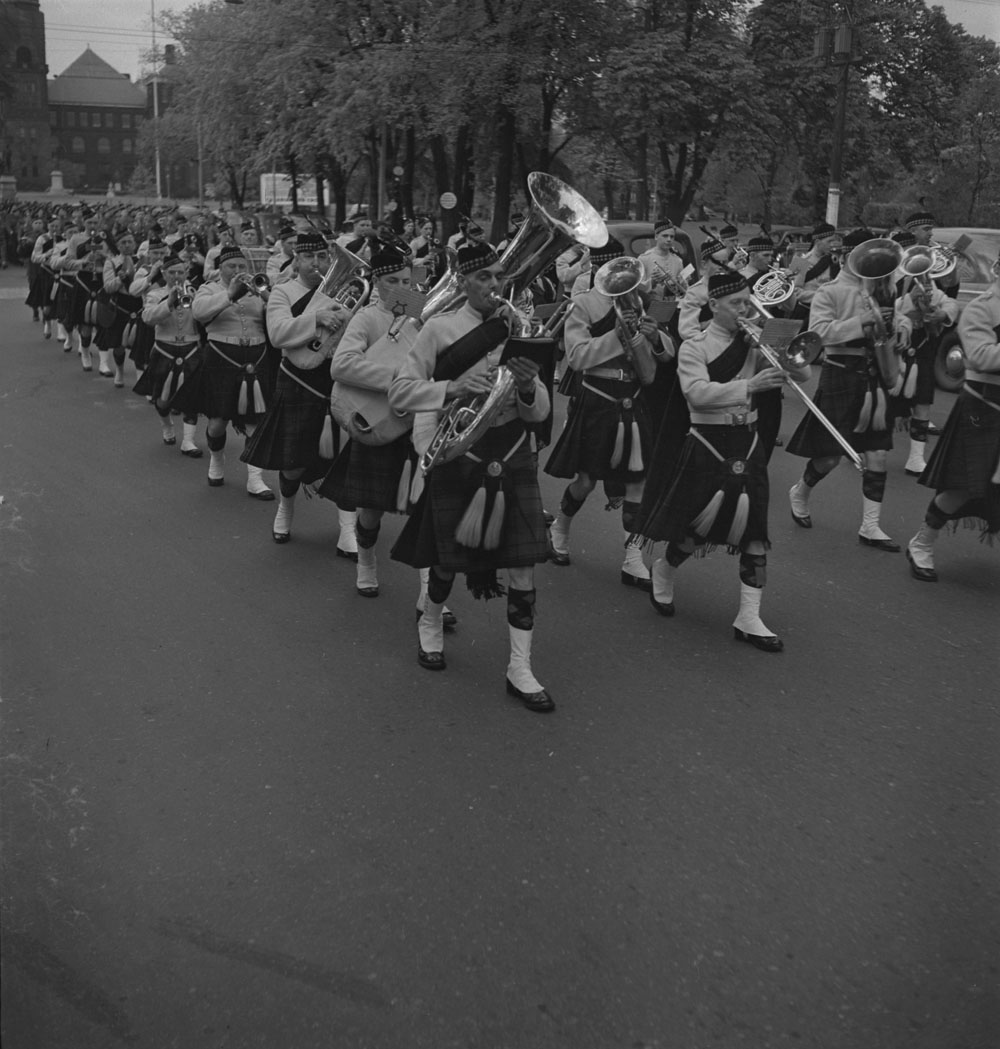
All photographs are from from 1939-1951 Library and Archives Canada








 Leslieville Historical Society