Title Page Township of York Directory 1909 — before Midway was annexed to TorontoNorway encompassed the Upper Beaches and the Greenwood Coxwell area as well as the old village of Norway at Kingston Road and Woodbine.
Some of the streets included Applegrove Avenue (now part of Dundas St E), Ashdale, Bellefair, Berkley Ave., Birch Avenue (now Silverbirch Avenue), Burgess, Cassells, Coxwell Ave., DuVernet, Erie Terrace (now Craven Road), Fern Ave., Gerrard Street, Gibson Ave., Hambly Ave, Hiawatha Rd., Hubert, Kenilworth Cres., Kingston Road, Lee Ave., Oak Ave. Reid (now Rhodes Ave.), Waverley Rd., Wheeler, Woodbine Avenue, etc.
More streets: Alga Ave., Balmy, Elmer, Heyworth Crescent, Maple Ave., Morley Avenue (now Woodfield Rd.), Small (now Eastwood), and the Orchard Park Hotel.More streets: Herbert, Lawlor Ave., Maclean Ave., Norway Ave., and Victoria Park Ave.More streets: Lincoln, WinevaMore streets: Amroth, Danforth, Queen, captionSome of the occupations: carp = carpenter, comp = newspaper compositor; cond = railway conductor, lab = labourer, trav = traveller, watchmn = watchmanMore occupations: pntr= painter, steno = stenographer, trainer = trainer of horses, wks fcy gds = works in a fancy goods store,
The day will come when the big sheep will put the plough up in the rafters . . .
The big sheep will overrun the country till they meet the northern sea . . . in the end, old men shall return from new lands.
The Brahan Seer ( 17th century Highland Prophet)
The earliest known depiction of the Scottish kilt, Public Domain
In the 1780s Scotland was uneasy. The Leslies of Rogart lived through turbulent times as did others in Sutherlandshire. Sutherlandshire was not the base of the Leslie Clan who came from Aberdeenshire in the Lowlands. They may have moved north in the early seventeenth century when the Covenanters rebelled against Charles the First in the Battles of Dunbar and Hamilton or even earlier when the Scots were defeated at Flodden, 1615.
From Eliza Ann Ogilvy, The Book of Highland Minstrelsy, 1860, Illustration by R. R. McIan. Public Domain.
Many Scots were unhappy with the Union of 1707, uniting England and Scotland. They rose up unsuccessfully in 1715. They rose again in 1745 but lost in the Battle of Culloden.
The Battle of Culloden, April 16, 1746. By David Morier, oil on canvas, 1746. Public DomainThe field at Culloden. From Eliza Ann Ogilvy, The Book of Highland Minstrelsy, 1860, Illustration by R. R. McIan. Public Domain.
After Culloden, the wearing of Highland dress including tartan and kilt was banned.
David Allan, The Highland Wedding, 1780. Public Domain
Bonnie Prince Charlie went over the “friendly Main” – the English Channel and did never come back again. In 1747 Britain passed the Heritable Jurisdictions Act decreeing that Scots who refused loyalty to the Crown would lose their lands by forfeit.
Charles Edward Stuart (Bonnie Prince Charlie) by John Pettie. Public Domain
Between 1780 to 1854 the Seer’s prophesy came true.
From Eliza Ann Ogilvy, The Book of Highland Minstrelsy, 1860, Illustration by R. R. McIan. Public Domain.
In the 1780s the landlords began to evict their tenants to make way for sheep. The Highlands were cleared of an estimated 90 per cent of their small farms or crofts. Displaced Highlanders went on hellships to America, Australia, New Zealand and Canada. Not all the hellships arrived.
Thomas Faed, The Last of the Clan, 1865. Public Domain.
While some who left Scotland had means, most of the Scots had little more than they could carry. Although some were skilled tradesmen, most were simple crofters. Many only spoke Gaelic. Some have described the Highland Clearances as an ethnic cleansing; others say that it was only about money. The landowners could make more profit from wool than from the rents of their tenants.
From Eliza Ann Ogilvy, The Book of Highland Minstrelsy, 1860, Illustration by R. R. McIan. Public Domain.
Many Highlanders joined new Regiments raised to fight in America, Ireland and later in the Napoleonic Wars.
The refugees from the Highland Clearances were not the first Scots to settle in Ontario. In 1778 Loyalists who had fought in the American Revolution against Washington and Highland soldiers and their families arrived in Upper Canada near Akwesasne in 1778 and 1779. However, many more came with the Highland Clearances.
Publication of United Empire Loyalists’ Association of Canada http://www.uelac.org/Clan Cameron, from R. R. McIan, Clans of the Scottish Highlands, 1845.
1785 was the official beginning of the Highland Clearances. In the 1780s Donald Cameron of Lochiel began to clear his family lands which ran from Loch Leven to Loch Arkaig. Refugees from the Highland Clearances began to come to Canada. Father Alexander Scotus MacDonell arrived at Glengarry, eastern Ontario, in 1786 “with his whole parish”. (Wm. Perkins Bull, From Macdonell to McGuigan, Toronto: The Perkins Bull Foundation, 1939)
When the Napoleonic Wars began, the price of wool rose dramatically while the price of the beef from the crofters’ cattle fell. One shepherd, alone but for his hard-working collies, could manage sheep on as much land as 12 to 16 families of crofters had worked.
From Eliza Ann Ogilvy, The Book of Highland Minstrelsy, 1860, Illustration by R. R. McIan. Public Domain.
Meanwhile the Scottish elite were running up debts to support a Regency life style, far away from the tiny crofts or farms who paid to support their “lairds” with the little they earned raising cattle.
The Highland Shepherd, 1859 (oil on canvas); by Bonheur, Rosa (1822-99); 49×63 cm; Hamburger Kunsthalle, Hamburg, Germany; French, Public Domain
Allan Ramsay – Portrait of Lady Jane Douglas, full-length, as a shepherdess seated in a landscapeMajor William Clunes by Sir Henry Raeburn. Public Domain.
James Hunter, author of ‘The Making of the Crofting Community’, described the situation:
Many chiefs were as at home in Edinburgh or Paris as they were in the Highlands, and French or English rolled off their tongue as easily as – perhaps more easily than – Gaelic. Moreover, while away from his clan the typical chief, conscious since childhood of his immensely aristocratic status in the Highland society whence he came, felt obliged to emulate or even surpass, the lifestyle of the courtiers and nobles with whom he mingled. And it was at this point that the 18th century chief’s two roles came into irreconcilable conflict with one another. As a southern socialite he needed more and more money. As a tribal patriarch he could do very little to raise it.
James Hunter, The Making of the Crofting Community, John Donald, 2nd Revised edition, 2006 quoted on line and accessed June 13, 2016 at http://www.clannada.org/highland.php
George Leveson-Gower, First Duke of Sutherland, by Thomas Phillips. Public Domain.
Hungry for more and more money, the large land-owners of Scotland turned out their tenants in larger and larger numbers. This almot severed the bonds between the clan chiefs and the crofters, but instead of blaming their lairds they blamed those who did the actual burning and pillaging of the crofts. The Highland Clearances have never been forgotten: in Scotland or by their many descendents in Nova Scotia, Ontario and other Canadian provinces. Canadian author William Perkins Bull recalled:
…the country north of the Tweed became practically one huge sheep-walk”.
Bull, From Macdonell to McGuigan.
Berrydale, Caithness. Public Domain.
Berrydale in Caithness was just one of the estates in Scotland owned by the Marquess of Stafford who later became the Duke of Sutherland.
Good Company, 1807. Public Domain.Crofters, Public Domain.Elizabeth Gordon, Countess of Sutherland
James Loch, factor or estate manager, for the Sutherlands
The Canadian Boat Song captures some of the sorrow of the Highlanders:
Many came to Canada to escape the Clearances and were not always happy with what they found.
Archibald McKellar, “Recollections of Colonel Talbot”, Journal and Transactions of the Wentworth Historical Society, Volume 1 Head-of-the-Lake Historical Society, 1892, 118Thomas Talbot, Attributed to J. B. Wandesford, Collection of McIntosh Gallery, The University of Western Ontario
The Crown granted Colonel Thomas Talbot, an Irishman of good family, 5,000 acres of land on the condition of conveying fifty acres out of every two hundred to an actual settler. He was also commissioned addition grants that covered in all about 28 townships with 618,000 acres of the Western Peninsula along the Lake Erie shore, south of the Thames River to Lake Erie and from Windsor in the West to all most Long Point in the East. He established himself on the bluff of Lake Erie, at what is now Port Talbot. The irascible Irish Colonel became a tyrant in his own petty kingdom. St. Thomas and Talbotville, Ontario, are named for him.
Lucille H. Campey, The Scottish Pioneers of Upper Canada, 1784-1855: Glengarry and Beyond Dundurn 2005, 117.
The Colonel Talbot Settlement was the whole of the county of Elgin and part of Essex, Kent, Middlesex and Norfolk Counties.
His style of settlement was opposed by many, including government officials. Fees were not being paid to the government in the appropriate time frame as Talbot’s power was increasing. The only record of settlement could be found in Talbot’s “Castle” on maps with pencilled in names of settlers. He could easily rub a settlers name off the map for reasons including personal dislike or political views. The land would then be given to someone else, with the government not being involved at all. Sometimes years and even decades would go by between the initial settlement and the issue of any legal papers to the settler, stating that the land was indeed theirs.
Alexander, known as “Alastair Mhor”, Macdonell (July 17, 1762 – January 14, 1840), was the first Roman Catholic bishop in Ontario, and a leader who brought his clansmen from Glengarry, Scotland to Glengarry, Ontario.
Clan Macdonell of Glengarry. Illustration by R. R. McIan from James Logan’s The Clans of the Scottish Highlands, published in 1845.Bishop Macdonell, Wikipedia Commons
Macdonell was born Alexander McDonell in Glengarry, Scotland, in 1762. He was ordained at Valladolid and was devoted to his Catholic kinsmen and clan. When they were evicted in 1792 in the Highland Clearances, he led them to Glasgow where some found work in factories. When his efforts to settle them in Glasgow failed, The Macdonell formed them into a British regiment, the Glengarry Fencibles. He was appointed their chaplain, the first Catholic British Army chaplain in centuries.
Lochaber, Glengarry, ScotlandCharlottesburgh Township, Glengarry County, Ontario
At that time it was against the law at the time for a Catholic to be an army officer. When the regiment was disbanded Father Macdonell appealed to the Crown to grant his clan land in Canada. In 1804, the Government granted 160,000 acres (650 km²) in what is now Glengarry County. Macdonell came to Canada with his clan folk, founded churches and schools and organised the settlement. In 1812 he raised another regiment, the Glengarry Light Infantry Fencibles to defend Upper Canada against the Americans. Macdonell was conservative and got along well with the oligarchy that ran Upper Canada, the Family Compact. In 1819 he was made vicar Apostolic of Upper Canada. In 1826 Upper Canada became a diocese with Macdonell its bishop. Five years the British Government appointed Macdonell to the legislative council. He founded a seminary at Saint Raphael’s and a college at Kingston. He was not known for getting along well with his Irish Catholic parishioners. Macdonell died in Dumfries, Scotland, of pneumonia.
His local Scots clansmen called Macdonell Easbuig Mhor meaning The Big Bishop since he was six feet four inches tall and with a miter on his head looked like a giant. He sat on the Legislative Council and supported the Family Compact against the Rebels in 1837. He referred to red-headed and fiery William Lyon Mackenzie from Dundee as “that little tiger mayor”.
Back in Scotland, the Clearances continued. Those of Sutherland would become notorious for their brutality. Elizabeth Gordon, Countess of Sutherland (1765 – 1839) and her husband, the Marquis of
Elizabeth Gordon, Countess of Sutherland, by George Romney, Cinncinnati Art Museum
Stafford (later the first Duke of Sutherland) used their estate manager, James Loch, known as a “factor”, their lawyer, Patrick Sellar, close relative of the Countess of Sutherland, to do their dirty work. Some believe that the factors and their men burned down up to 2,000 crofts a day. Some families had lived in these thatched cottages for 500 years or more. In 1811 the Countess and her husband made more than 50 shepherds Justices of the Peace who could bring the law to bear on their crofters or “lotters” as they were called in Sutherland. One of the conditions such Justices of the Peace agreed to was to “clear” a set number of families annually.
Between the years 1811 and 1820, 15,000 inhabitants of this northern district were ejected from their snug inland farms by means for which we would seek in vain a precedent, except, perhaps, in the history of the Irish massacre.
Hugh Miller quoted in Mathilde Blind, The Heather on Fire. Kessinger Publishing, 2004, 72.
During medieval times in Rogart small scale farming occurred in almost every glen and people lived by a clan or feudal system. Small townships were found all around and people were subsistence farmers with economies relying on small black cattle – the original Highland cattle. The Clearances changed this way of life forever in the early and mid 1800s. People were cleared from the glens to make way for sheep which provided a much more profitable income for landlords.
The Highland cattle that had been the mainstay of the crofters’ livelihood for centuries.
Sir Edwin Henry Landseer, Highland Drovers
Life in the Highlands was in pieces as displaced people starved. Sheep grazed where, for centuries, the Leslies and others had farmed.
Enter a captionFrom Eliza Ann Ogilvy, The Book of Highland Minstrelsy, 1860, Illustration by R. R. McIan. Public Domain.
Young George Leslie saw all this. He never trusted the established elites as his father and forefathers had. He never wanted to be beholding to anyone and was never happy working for or in partnership with anyone. He rejected all attempts to force him to act or think against his will, living true to the Leslie motto, “Grip Fast”. He hated poverty and died as a wealthy man. Unlike those Leslies around him who were horribly maimed by their service in the Highland regiments, he never became a soldier, but was not a pacifist either.
Some like the Leslies emigrated in good ships with no one’s help, drawing on savings. Landlords paid the passage of others, including some who were given no choice, but thrown into hellship holds, bound hand and foot. Others from Rogart went to the Prairies to join a pioneering effort at what is now Winnipeg. Lord Selkirk recruited Highlanders from Rogart, Dornach, Kildonan and the area to join his proposed settlement in Canada.
Red River Settlement, circa 1860Thomas Douglas, Fifth Earl of SelkirkHenry Scadding, “Toronto of Old, The Canadian Journal, Toronto, Royal Canadian Institute, Vol. 8, 1873, 90.
My great-grandfather and grandmother became attached to the Selkirk settlement. They had a very bad time. They were to be disembarked at York Factory but dumped off at Churchill. My great-grandfather played the bagpipes during the march to York Factory to keep spirits up.
John G. Diefenbaker quoted in “Diefenbaker’s North, from TIMESPAN quoted in and accessed at http://www.electriccanadian.com/makers/diefenbaker.htm
Charles William Jefferys, Library and Archives Canada, Public Domain. Note this was painted almost a century after the Battle of Seven Oaks and owes as much to Hollywood westerns as it does to history.
The North West Company was a rival of the Hudson’s Bay Company (HBC’s). The North West Company worked with First Nations and Metis people damage HBC’s operations and wipe out Lord Selkirk’s settlement in Manitoba, Kildonan. The First Nations were rightly suspicious of the Scottish settlers fearing that British farms would eventually mean the end of the giant buffalo herds that all the Plains nations depended on. The Metis feared that they would be crowded out and their lands taken. At the Battle of the Seven Oaks, June 18, 1816, North West Company men and Metis attacked the Governor of the North West Company, killing him and 21 others.
Chief Peguis stayed to bury the dead, the rest escaped to the bush, fearing retribution. In 1821 the Hudson’s Bay Company and the North West Company amalgamated, but Rogart men were not anxious to head for the farthest frontiers, preferring the relative safety and security of Nova Scotia and Ontario.
Patrick Sellar
In 1814 Patrick Sellar began burning Strathnaver in Sutherland.
Patrick Sellar was charged of murder, but found not guilty. This modern publication pokes wry fun at the justice of two centuries before.
Strathnaver endured another clearance in 1819. A young stonemason, Donald MacLeod, was an eyewitness:
Duncan Macleod, History of the Destitution in Sutherlandshire, Edinburgh, 1841, 21R. R. McIan, Clans of the Scottish Highlands, 1845
In 1819 John Beatty encouraged his sister Esther and her husband John Leslie to join him in Upper Canada where land was cheap and there were no lairds. They would have better farmland than the beautiful, stony fields of the Highlands where they were no longer wanted. Virtually all of the people who lived in Rogart were ‘cleared’ though not the Leslies although they were on the list to be cleared. These veterans of Waterloo and the Peninsular War had hoped they might be overlooked, but their houses were burnt around them, their stock sized and their belongings scattered. Homeless, thousands of Scots were on the move. In the 1820s the great Scottish migration into Canada began, as the Highland Clearances drove many off the land they had tilled for generations. By 1830 the Town of York’s population had grown to 2,860. By 1836 only thirty years later the population had more than tripled to 374,000. By 1841, it was 456,000. (C.C. James, History of Farming in Ontario, Toronto, 1914, 556-558.)
An Ejected Family by Erskine Nicol. Public Domain.
Young George Leslie had a skill and an interest that helped him and his family survive the Clearances. Since he was a child he had loved nature. As he grew into a young man, it was clear that gardening was his calling. When he left school at 16, he apprenticed as a gardener on Lord Anchorfield’s estate at Tarlogie, near Tain in Rosshire. He was an apprentice until 1822. He soon became known for his skill in landscaping. Young George was a hot commodity among the gentry who competed then, as now, for the best gardens. Lord Anchorfield put George Leslie in charge of the Arabella gardens where he worked until 1824.
Lord Anchorfield, Sir Alexander Morison (1779-1866). Painting by Richard Dadd, 1852. Sir Alexander Morison was one of the first psychiatrist. Richard Dadd was one of his patients in the Bethlem Asylum.
He could have found work on the large estates of Scotland until he died, but he disliked the conservatism and the regimented hierarchical nature of Scottish society.
Tarlogie, Lord Anchorfield’s Estate, Tain, Scotland
In 1824 his mother and step-father decided to join John Beatty, in Upper Canada. George, young, ambitious, and reform-minded, was glad to leave. On April 1, 1825 the Leslie sailed for Canada.
When the Island of Rum was cleared of all but one family in 1826, the year after the Leslies safely arrived in Streetsville, MacLean of Coll paid for his tenants to sail to Halifax in Canada on the “James”. Everyone on board caught typhus while at sea.
From the Archives of Nova Scotia, Public DomainHighland Whiskey Still, by R. R. McIanJames Loch, Improvements in Sutherlandshire, 1819, 176.
James Lock, the factor responsible for the Sutherland Clearances, lost no opportunity to blame the lotters, as the crofters of Sutherland were called, who would rather make whiskey illegally that gather kelp on the rocky seashore where he removed them to.
Highland Whiskey Still, R. R. McIan. The deer was undoubtedly poached, as was the grouse hanging from the little boy’s hand. A border collie and a terrier keep watch should the laird’s men appear to break up the still.
Scots in Toronto never forgot the horror of the clearances and almost 50 years later still donated money to help those who were still being cleared.
This slideshow requires JavaScript.
Globe, March 17, 1847 List of donors to aid the destitute in Scotland. The Highland was hit by the same blight that caused the Irish Potato Famine.
Grinding oatmeal, Skye, Public Domain
In 1851 Colonel Gordon of Cluny called his crofters to a meeting to talk about their rents. If they did not attend, they would be fined. Once they were inside the meeting hall, police overpowered, tied up, and loaded 1,500 tenants aboard ships bound for America.
Crofter carrying a load of peat, Public Domain.
Englishwoman Josephine Macdonell (nee Bennett) of Glengarry cleared Knoydart of the last of her crofters in 1853, forcibly evicting over 400 people from their homes. These included seniors and women in labour. If Catholic bishops can haunt, then the ghost of Alastair Mohr Macdonell haunted Mrs. Macdonell.
Mairi Mhor Nan Oran or Big Mary of the Songs (1821 – 1898), Gaelic poet who wrote of the Clearances.
When men came to clear Strathcarron in Ross-shire in 1854, women blocked the road. The police attacked the women with truncheons, in what has been called The Massacre of the Ross Women”. Donald Ross was an eyewitness and said that the constables:
. . struck with all their force. . . . not only when knocking down, but after the females were on the ground. They beat and kicked them while lying weltering in their blood . . . . (and) more than twenty females were carried off the field in blankets and litters, and the appearance they presented, with their heads cut and bruised, their limbs mangled and their clothes clotted with blood, was such as would horrify any savage.
When the landowners tried to recruit troops to fight for the Crown, as their fathers and grandfathers had done fifty years before, the Highlanders were far less than enthusiastic about going off to Crimea. One tenant said,
…should the Czar of Russia take possession of (these lands) next term, we couldn’t expect worse treatment at his hands than we have experienced in the hands of your family for the last fifty years.
With typical lack of tact or perception, the Duke of Sutherland, when asked to raise more Highlanders for the war in Russia, sent factor James Loch into Sutherland to get volunteers. He was despised only less than Patrick Sellar and Lord and Lady Stafford themselves. After six weeks he returned with no volunteers. Donald Ross wrote of it:
“In Sutherland not one soldier can be raised. Captain Craigie, R.N., the Duke’s factor, a Free Church minister and a moderate minister, have been piping the days for volunteers and recruits; and yet, after many threats on the part of the factor, and sweet music on the part of the parsons, the military spirit of the poor Sutherland serfs could not be raised to fighting power. The men told the parsons
“We have no country to fight for! You robbed us of our country and gave it to the sheep. Therefore, since you have preferred sheep to men, let sheep defend you!”
Robert M. Gunn, The Tragic Highland Clearances, accessed June 14, 2016 at http://skyelander.orgfree.com/clear5.html
James Lesslie and Willion Lyon Mackenzie were business partners.
In 1854 the Highland Clearances officially ended although landowners continued to force people off their land for decades. In Canada “Rep by pop” threatened to break up the Reform Party, founded by Scots, including George Brown born in Alloa, Clackmannan, Scotland, James Lesslie from Dundee and George Leslie from Rogart. Reformers were known as “Grits” and they laid the foundations of the Liberal Party of Canada. The Grits attacked alleged governmental waste and corruption in railway schemes, especially in regard to the Grand Trunk Railway. Canada and the U.S. signed a Reciprocity Treaty, ensuring reduction of customs duties (June 6). The British North American provinces could now send their natural products (principally grain, timber, and fish) to the United States without tariff, while American fishermen are allowed into British North American fisheries. Augustin Morin and Sir Allan MacNab formed a political coalition secularized the Clergy Reserves, ended seigneurial tenure and laid the foundations for the future Conservative Party. In 1854 the Charge of the Light Brigade was a singularly stupid moment in British military history.
In November 1854, The Times war correspondent William Russell, writing from the Crimea, reported that an attack by Russian cavalry had been repulsed, having come up against a piece of ‘Gaelic rock… a thin red streak topped up with a line of steel’ – a description that would later become ‘the thin red line’. Russell was describing the heroic part played by the 93rd Highlanders in the Battle of Balaclava, probably better known as the occasion of the disastrous charge of the Light Brigade.
The Thin Red Line by Robert Gibb, 1881, Oil on canvas
When Canada was borth with Confederation in 1867 our first Prime Minister, John A. Macdonald, was born in Glasgow, the son of Hugh Macdonald and Helen Shaw, from Kildonan, Sutherlandshire. His attitude towards adversity was one shared by other Scots:
When fortune empties her chamber pot on your head, smile and say, ‘We are going to have a summer shower.’
John A. Macdonald
Documentation suggests that between 1783 and 1881 170,571 landlords threw Highlanders being off their traditional lands. There may have been many more.
The Cameron Family, Kildonan, 1905 accessed June 13, 2016 Public Domain at http://www.heathermacleod.co.uk/735An image of an evicted Scottish family circa 1895 photographed on the ruins of their house, accessed June 13, 2016 at http://www.educationscotland.gov.uk/scotlandshistory/jacobitesenlightenmentclearances/clearances/
In 1930 St. Kilda in the Outer Hebrides was evacuated because the people there were so poor. The men in this picture do not even have shoes.
John G. Diefenbaker speaking at the dedication of a monument in Kildonan, Photo from TIMESPAN
From TIMESPAN
John Diefenbaker (1895-1979), the 13th Prime Minister of Canada was Prime Minister in office (21 June 1957 – 22 April 1963). He was descended from the Bannerman family who were forced to leave their home in Strath of Kildonan just outside Helmsdale in Sutherland during the Highland Clearances in 1813. They travelled to Canada and joined Lord Selkirk’s settlement of Kildonan on the Red River.
Diefenbaker later recalled:
“All that remains there today is the occasional ruin. The ruin of my great grandfather’s cottage is still to be seen and is not more than two or three feet high.
So if it hadn’t been for the Highland Clearances, the first and thirteenth Prime Ministers of Canada might not have been.”
1930, the women of St. Kilda waiting to leave their home foreverEnter a captionThe children of St. Kilda, 1930Oil painting on panel; A Scottish Crofter, by an artist from the circle of Erskine Nicol. A romanticized painting, but perhaps he is reading Robbie Burns.
MY HEART’S IN THE HIGHLANDS
Robert “Rabbie” Burns
Farewell to the Highlands, farewell to the North,
The birth-place of Valour, the country of Worth;
Wherever I wander, wherever I rove,
The hills of the Highlands for ever I love.
My heart’s in the Highlands, my heart is not here;
My heart’s in the Highlands a-chasing the deer;
A-chasing the wild-deer, and following the roe,
My heart’s in the Highlands wherever I go.
Farewell to the mountains high covered with snow;
Farewell to the straths and green valleys below;
Farewell to the forests and wild-hanging woods;
Farewell to the torrents and loud-pouring floods.
My heart’s in the Highlands, my heart is not here;
My heart’s in the Highlands a-chasing the deer;
A-chasing the wild-deer, and following the roe,
My heart’s in the Highlands wherever I go.
George Leslie’s birthplace, Rogart, Sutherlandshire and the deforested Highlands
Late 19th Century Photo of Rogart, Clan Leslie Tartan
Only the large country estates of the wealthy and the glens or valleys had trees in any significant amount. George Leslie loved trees and apprenticed to gardeners in Estates similar to this one. He hated the hierachy and conservatism of Scottish society and came to Peel County (now Mississauga and the Peel Region) in the mid-1820s with his family.
Crofters. Public Domain.
The Forests of Canada
Burning Trees in a Girdled Clearing, Archives and Libraries CanadaWinter – Impeded Travelers In A Pine Forest, Upper Canada, by George Harvey
The Leslie Log Cabin in Streetsville later moved to Mississauga Road. Built by George and Robert Leslie in 1826. Photo courtesy of Harold and Valada Leslie. It has since been restored and is now a City of Mississauga Museum.
Some of the places where George Leslie first worked gardening and planting trees when he came to York, Upper Canada
Osgoode Hall, build 1929, photograph, 1856 (City of Toronto Archives)Upper Canada College 1831-1891 (Toronto Public Library)The Parliament Buildings on Front Street where the CBC Building is today. By John George Howard, 1834 (Toronto Public Library)George Crookshank’s house, Bathurst west side, between Dundas & College (Toronto Public Library) Artist Unknown.Sir William Campbell’s Jpise, Adelaide St. E. Painting by Owen Staples, 1912. (Toronto Public Library)Bishop Strachan’s House, Front Street, ca 1885 (Toronto Public Library)Bishop Strachan House ca 1900 (Toronto Public Library)Sir William Allan’s Estate, ‘Moss Park’, Sherbourne St., w. side, s. of Shuter St. 1880 (Toronto Public Library)Alex Baird, Head Gardiner, Arabella’s Farm, Tain, Rothshire, Reference Letter for George Leslie, 1826, Private CollectionPortrait of George Leslie as a Young Man, J. Doucette 2016
George Leslie’s father William and William’s cousin John Leslie were from Rogart, Sutherlandshire, Scotland.
Rogart…even the inhabited land is everywhere encumbered with rock. Thompson, John, The Traveller’s Guide to Scotland & its Isles, 1824
Clan Map of Scotland, Rogart is marked with a star
William Leslie was in the Fencibles, but some of these militia men also volunteered for short-term service in the new 93rd Regiment of Foot, known as the Sutherland Highlanders. The 93rd were a regular British army regiment or “regiment of the line” although the way they were recruited was anything but regular. It has been seen as the last great act of clan loyalty in Scottish history. Everything was soon to change and the loyalty of the Highlanders would be crushed in a great act of betrayal. The bonds which enabled the Countess to call on her clansmen would be violently cut and the old ways dead.
The Sutherland Highlanders had a good reputation in their dealings with the Irish. It is not recorded whether or not the Irish Catholic peasantry agreed with this benign assessment of their mostly Protestant occupiers.
The Sutherlands served in different places around Ireland including Tyrone. Esther Beatty (1783-1867), eldest daughter of James Beattie (also spelled “Beatty”), of Omagh, County Tyrone, met & married William Leslie. William had previously been married to Christina Ross who died in childbirth several years before.
The Irish girls were attrracted to the bonnie laddies from over the Irish sea as this song recalls. The 42nd Royal Highland Regiment is better known as The Black Watch.
Officer of the 92 Gordon Highlanders left, Sergeant of the Cameron Highlanders middle, enlisted man of the 42 Royal Highlanders (The Black Watch) right.
Officer of the 93rd Sutherland Highlanders
The Sutherland Clearance had already begun when William Leslie probably went with John Leslie, his cousin, to Spain with the 79th Cameron Highlanders to fight in the Peninsula Campaign against Napoleon and his armies. The Countess of Sutherland had betrayed her people by driving them by force off their land to make way for sheep in a protracted campaign that is remembered as the Sutherland Clearances. Many men preferred to enlist uner Alan Cameron of Erracht who was neither a clan chieftain or responsible for clearances. Deeply devoted to his soldiers, he raised the 79th Regiment of Foot privately and lead them into battle.
Leslie family tradition says from wounds at the Battle of Waterloo in 1815, but the scanty records available don’t support this. Robert Leslie’s obituary states,
They were preceded from Quebec a few months earlier by their father, John Leslie, who was a retired soldier of the British Army, having served in the 79th Highlanders [Cameron Highlanders] from 1793 to 1814, a full term of 21 years. He participated in all the celebrated engagements of the Peninsular war, including Nive, Nivelle, Pyrenees, Badajos [Badajoz], Ciudad Roderigo, Salamanca, and was shot through the arm and leg at Corunna, noted in history as the place of the celebrated retreat under Sir John Moore when he lost his life.
John Leslie is listed in the records of Royal Hospital Chelsea Pensioners, 79th Cameron Highlanders. The records note that he was “severely wounded right arm” and that he was a laborer from Rogart, Sutherland. Before he fought in Spain, he served in Canada during the War of 1812. John Leslie had served in Canada as well. He is described in the “British Regimental Registers of Service, 79th Foot Soldiers, 1st Battalion, 1809-1816, as having dark complexion, a round face, brown eyes, dark hair, and as being a laborer from Rogart, Sutherlandshire.
December , 1808. Retreat to Corunna, a death march. Over 5,000 men died.
(c) The Royal College of Surgeons of Edinburgh; Supplied by The Public Catalogue Foundation
These are the kinds of wounds sustained by John and William on the retreat from Corunna. William died, John survived.
(c) The Highlanders’ Museum; Supplied by The Public Catalogue Foundation
By the time of the Battle of Waterloo in 1815 John Leslie was on a pension back in Rogart and William Leslie was dead. The 93rd were in North America where the Sutherland Highlanders were decimated at the Battle of New Orleans.
The 79th Cameron Highlanders were at Waterloo. While William and John Leslie were not there, Norman Leslie from Rogart was.
Arthur Wellesley, The Duke of WellingtonWhile George Leslie was never a soldier, his sons both joined the Queen’s Own Rifles and John Knox Leslie rose to become the Colonel of the Regiment. The sporran of the Highland Company of the Queen’s Own Rifles was borrowed from that of the 93rd Sutherland Highlanders.
Highland Regiments would go on to play a vital role in Canada’s military history.
George Leslie’s was Canada’s very own “Johnny Appleseed”, but who was the original Johnny? And how was George like Johnny?
John Chapman “Johnny Appleseed”
The original “Johnny Appleseed” was John Chapman (1774-1845). The myth of Johnny Appleseed has him wandering around America, scattering apple seeds here and there. Like all myths, it has an element of truth. John Chapman was responsible for apple trees and orchards in Pennsylvania, Ohio, West Virginia and other Mid-Western states. However, just like George Leslie, he was a skilled nurseryman who grew trees, sold trees and promoted trees. He was responsible for supplying the nursery stock that started the orchards of those states just as George Leslie was responsible for supplying the nursery stock that started orchards across Canada, including Ontario. Like George Leslie, John Chapman was a trained professional who apprenticed as a gardener. Like George Leslie, he carefully selected and tested varieties of fruit trees that would thrive in the growing conditions around the Great Lakes. John Chapman was generous with his trees, giving thousands away, just as George Leslie. Both were deeply religious men committed to their faith and their communities. Both were famous in their day, much quoted and admired.
There are differences. John Chapman’s orchard was much bigger than George Leslie’s, George had 250 acres; John Chapman, had a 1,200 acres. John Chapman was an eccentric who wore rags and died of exposure in 1845, just two years after George Leslie opened his nursery in Leslieville. George Leslie was highly respectable: an Alderman, School Trustee, Justice of the Peace and “Squire” Leslie to those who knew him.
Americans are good at myth-making; Canadians tend more towards the cold, hard truth. We have few myths: the Maple Leaf Forever Tree is one. John Chapman lives on in children’s stories and Disney popularized the myth in his movies. I have included a link to Walt Disney’s “Johnny Appleseed” here. George Leslie lives on in the name “Leslieville” and is forgotten except in the last few years when my books and articles have made his name more familiar so that even a condo project is named “George” after him.
So let’s see if you think George Leslie deserves to be recognized as “Canada’s Johnny Appleseed.”
In 1832 he organized the first exhibition of fruit in Ontario.
Then came the time when a few men saw the possibilities of the future if fruit-culture was undertaken in a systematic way. George Leslie, one of the earliest nurserymen in Toronto, organized a fruit exhibition in 1832, but a few specimens of apples, some wild plums, and some small fruit [berries] were all he could procure. He brought trees from New York, organized a nursery, and succeeded in interesting others in the subject.
(Canadian History, No. 10, June, 1900, 263)
In 1834 George Leslie was one of the founders and first Directors of the Toronto Horticultural Society. He opened a seed and grocery store was on Front Street. Like many others George Leslie purchased his first stock of seeds from London, England. Often the seeds were not viable or the plants successful in the very different growing environment of Ontario. George Leslie secured and tested seeds and young apple saplings that were suitable for Ontario. He faced difficulties finding enough varieties of trees and plants. He was also concerned about quality. In the late 1830s he travelled to the US looking for suitable stock. In the spring he found two men in Rochester, New York, who had similar views and ambitions to his own, George Ellwanger and Patrick Barry.
Both businesses had large greenhouses. The 1840s and 1850s were a golden age of greenhouses. For the first time technology was available to make large sheets of plate glass and iron frames. Soon “crystal palaces” went up, heated by boilers and steam. For the first time, fruits and vegetables became available and affordable for the middle classes year round. George Leslie used every possible opportunity to market his products especially his apple trees.
In 1841, when the Horticultural Society began holding annual exhibitions, George Leslie was an energetic participant and supporter, as were some other market gardeners. Exhibitions were an excellent opportunity to advertise their seeds, exchange information and encourage the public to plant orchards, especially of apples and pears. In an era without television, radio or Internet, there could be no better way to promote products.
In 1842, George Leslie leased 20 acres of land from Charles Coxwell Small for a 21- year term. Small, member of the Family Compact and Clerk of the Crown, was owner of extensive lands in the area. (Coxwell Avenue is named after him.) Small may have thought he got the better of the deal when he found someone foolish enough to lease his 20 acres of mucky swampland on the shores of Ashbridges Bay. The Toronto Nurseries was built on tamarack-covered swamp (Larchmount Avenue recalls this). These 20 acres of rich black mud were the core of his nursery which would expand to 200 acres, the largest in Canada. George Leslie did not buy that land until the lease ran out in 1863. Then Small demanded an exorbitant price from Leslie and apparently got it.
George Leslie valued that soft, rich dark muck and others recognized its worth. Orchards flourished then and now on the shores of the lower Great Lakes, especially Lake Ontario. The microclimate is ideal for fruit-growing. Though the Niagara Fruit Belt did not exist then, George Leslie’s fruit trees helped to create it.
In the 1840s, the “New Town”, west of the original “Old Town” (King and Parliament area), grew rapidly. Yonge Street became an important thoroughfare. Sensitive to “Location! Location! Location!”, in September 1843 he moved his seed store to Yonge Street on the east side, south of King Street. He advertised the expansion of his business:
Having twenty Acres in the liberties of the city, in course of breaking in, as a Nursery and Seed Garden, he can now supply the public with Fruit and Ornamental Trees, Shrubs, Roses, Herbaceous Flowering Plants, &C., at a cheaper rate than they can be got from New-York or Rochester.
(The British American Cultivator, Vol. 3, No. 3, March 1844)
Leslie was a skilled user of the media using advertising, interviews, and stories in newspapers and journals to promote the growing of trees and his business. He became good friends with another Reformer George Brown, who, in 1844, established The Globe. The connection worked well for the nurseryman. People in southwestern Ontario could pick up the Toronto Nurseries catalogue at the Western Globe in London and buy apple trees and other fruit trees.
In the spring of 1845 George Leslie began to advertise his new partnership with Ellwanger and Barry. He still offered a full array of seeds at his Yonge Street store including importations from J. Wresch & Son, London, England. He also promoted his new nursery:
G. L. would also invite public attention to his Nursery Establishment, for the cultivation of FRUIT and ORNAMENTAL TREES, on a more extended scale that has been hitherto attempted in Canada. Trees and Flowering Plants will be carefully packed, so as to bear transportation to any part of the Province, should their passage take two weeks.
(Globe, February 18, 1845;Globe, March 25, 1845;The British American Cultivator, New series, Vol. 1, No. 9, Sept. 1845)
Here is an ad from a little later in the spring of 1845.
Toronto Nursery and Seed Store
ON THE KINGSTON ROAD
1 ½ MILES FROM THE MARKET-PLACE
GEORGE LESLIE & CO., PROPRIETORS
THE undersigned would respectfully inform their friends and the Public , that they have entered into a Co-partnership, for the purpose of carrying on the
NURSERY AND SEED BUSINESS,
in the City of Toronto. THE NURSERY ESTABLISHMENT is situated as above, on the Kingston commenced three years ago by GEORGE LESLIE. The Tract of Land, 20 acres in extent, is admirably adapted to the purpose. Upwards of ten acres are already planted with Trees, Shrubs, &c. And more will be planted this Spring, and arrangements are being made with a view to make this the most extensive and useful Establishment of the kind yet attempted in the province. They have on hand, and now for offer for sale a superior collection of
FRUIT AND ORNAMENTAL TREES
FLOWERING SHRUBS AND PLANTS
GREEN HOUSE PLANTS
BULBOUS FLOWER ROOTS, DAHLIAS, &c.
The collection of Fruit Trees comprises the most valuable and approved varieties, adapted to our latitude, either here or in the well-known MOUNT HOPE NURSERIES, Rochester, New-York, with which this Establishment is now connected. The collection of ORNAMENTAL TREES, SHRUBS, ROSES, HERBACEOUS PLANTS, etc. etc. is quite extensive, and are offered at moderate prices.
Public Grounds, and other places requiring large quantities of Trees and Shrubs, will be laid out and planted, by contract, at low price.
All articles sent from the nursery are carefully packed for which a small charge, covering expenses, will be made. Packages will be addressed and forwarded, agreeable to the advice of persons ordering, and in all cases at their risk. A large supply of Fresh and Genuine, GARDEN, FIELD and FLOWER SEEDS, constantly on hand at their SEED STORE AND NURSERY DEPORT on Yonge Street between King Street and the wharf.
ALSO AGRICULTURAL AND HORTICULTURAL BOOKS, IMPLEMENTS, &c.
Orders by Mail (post-paid) from any part of the country if accompanied with a remittance, or a satisfactory reference in the City of Toronto, will receive prompt attention. Priced Catalogues will be furnished gratis in all post-paid applications.
GEORGE LESLIE, GEORGE ELLWANGER,P. BARRY
27TH March, 1845.
(Globe, April 1, 1845)
George Leslie at the age of 40. By Joanne Doucette
The December issue of The British American Cultivator included an article promoting the partnership of Ellwanger and Barry and their Mount Hope Nursery with George Leslie’s Toronto Nursery. Their catalogue offered 171 varieties of apples, 141 of pears, 35 of plums, 48 of cherries, 8 of apricots, 38 of peaches, 6 of nectarines, 6 of quinces, 26 of grapes, 7 of currants, 8 of raspberries, and 24 of strawberries. As well, they sold 70 varieties of street and shade trees; 78 different
ornamental shrubs; 37 different conifers; and many other plants, including roses and peonies. (The British American Cultivator, New Series, Vol. 1, No. 12, Dec. 1845, 357-358.)
In late 1845 the City of Toronto purchased part of George Leslie’s Yonge Street property for $5,000 in order to extend Colborne Street through to Yonge. That spring the Leslies moved to a home on the Kingston Road near the nursery.
He opened his nursery to the public: “The Public are respectfully invited to visit the Nursery, and judge of the manner in which business is carried on.” George Leslie and other reputable nurseries faced competition from itinerant peddlers who lied about their wares and sold trees so badly neglected that they died soon after they were sold to farmers. Of course, the solution to the problem was Toronto Nurseries, if customers would:
… bring their waggons to the ground, and have their trees taken up, and carried home with them. They may then often be planted within forty-eight hours after being dug; and if the following directions are carefully followed, success may reasonably be anticipated.
Visiting the nursery gave potential buyers the opportunity to see the growing conditions for themselves. As well people were beginning to visit nurseries (and cemeteries) almost as if they were public parks which, for all intents and purposes, did not exist in the Toronto of the 1840s. Since people were intrigued by greenhouses, this could be an outing for the family and George proceeded to develop his nursery grounds into an arboretum. George Leslie did not start most of his trees in his nursery, but instead imported trees from Britain, including some of Toronto’s most common street trees such as Norway maple, European ash, London plane tree, Scotch elm, etc. The Leslies left many specimen trees to grown in their nursery. 40 years later Leslie’s Grove, the nickname locals gave to the tree nursery, had, according to the Leslies, “European and American forest trees of large size…in our grounds, some of them measuring over two feet through.”
In the spring of 1848 George Leslie sold his seed business, known as “The Toronto Nursery Depot” to William Gordon and announced that “his whole personal attention will in future be given to the Nursery Business” (The British Colonist, March 28, 1848) Though William Gordon bought out the name, stock and “good will” of the seed business, George kept the seed store itself. Having just built it, George Leslie did not intend to lose it. He put the store, “one of the best built frame structures of the time”, on rollers and towed it his new nursery. (Globe, May 6, 1893) George Leslie continued a business arrangement with William Gordon, supplying him with fruit trees, shade trees, ornamentals, flowers and greenhouse plants.
In 1848, George Leslie bought out Ellwanger and Barry’s interest in the Toronto Nursery for $5,000. The public reason for ending the partnership was the increasing demands made by Mount Hope Nursery on George Ellwanger and Patrick Barry. Given George Leslie’s attitudes towards authority, he was not easy to work with; the relationship was doomed from its start. George Leslie, though reputed to be an amiable soul, was tenacious, stubborn and, above all, his own man.
In the fall of 1848 George Leslie placed large advertisements in the Globe now boasted that he had a “variety of large well grown healthy Trees, of the most approved varieties, [that] now equals any between this and New York.” His nursery had now grown beyond the initial 20 acres and he offered 40,000 apple trees for sale. He had planted them in 1843 and took pride in his “well grown healthy Trees.” He also offered a wide variety of nursery stock for orchards, vegetable and flower gardens, including his beloved Dahlias. He also offered plants at wholesale prices to other nurserymen. Each year he put out a new catalogue with this on successfully transplanting and growth plants and trees (Globe, September 16, 1848)
His reputation was growing. He began writing articles for farm and horticultural journals. In November, 1848, The Farmer and Mechanic pointed out that Leslie was a valuable resource for Canadians:
This respectable firm [Ellwanger & Barry] have been connected with Mr. George Leslie’s nursery business for the past four years which connexion, however, is amicably dissolved; and Mr. Leslie having procured all the best varieties cultivated, and perfected arrangements for procuring new ones as they from time to time are ushered into notice, a full and complete assortment of the choicest fruit trees may be had at the Toronto Nursery, each warranted to be true to their sorts, at as low a price as can be had in any part of the United States.
(The Farmer and Mechanic, Vol. 1, no. 2, Nov. 1848, 42)
On March 14th, 1849 George Leslie played on Canadian nationalist sympathies to take a shot at the heirs of Johnny Appleseed, his American rivals:
I have been engaged in the business of tree culture for twenty years in this neighbourhood. In recommending varieties of fruit, I shall mention only such kinds as personal observation has convinced me are quite suitable for this neighbourhood. …Canada has a right to share, with other parts of North America, the profit and honour of having her fruit shipped to all parts of the world.
(The Farmer and Mechanic, Vol. 1, no 7, April, 1849, 188 –193)
He promoted the growing of apple and other fruit trees throughout his life – not by wandering by foot scattering seeds here and there, which the real John Chapman never did even though the American legend Johnny Appleseed did. Instead he used his shrewd business sense; his friendships with politicians, others in the trade and other Scotsmen; his ability to communicate his life of trees and his reputation as a nurseryman to promote fruit growing at every opportunity. One can sense his sadness that many Canadian farmers did not value orchards or appreciate the potential for exporting a valuable red, round cash crop to Britain and the rest of Europe. That spring George Leslie wrote another article encouraging the planting of orchards in a different publication also aimed at farmers. He recommended his catalogue, as well as his favourite fruits. (The Canadian Agriculturist, Vol. 1, no. 4, Apr. 2, 1849, 100-102) In another article for The Canadian Agriculturalist published in June, 1849, he encouraged landscaping, claiming that the planting of shrubs and shade trees was “a work of genuine patriotism, as evidencing the wealth and increasing greatness of the country.” Planting trees also should that the homeowner had both “superior intellect and a refined taste.” (The Canadian Agriculturist, Vol. 1, No. 6, June 1, 1849, 157-158)
He continued to write articles giving practical advice on subjects such as pruning fruit trees, but he was also busy in another business in which he made more money than he did selling trees. That business was real estate. Around 1850 George Leslie had some of his land north of Kingston Road between Jones and Hastings, survey into lots for market gardeners and butchers. This was the first residential subdivision in Leslieville and filled with Irish Catholics, many of whom were refugees from the Irish Potato Famine. Throughout his life, discrimination on the basis of creed was abhorrent to Leslie.
By the early 1850s, a wider audience was beginning to tune in to George Leslie’s crusade for trees, especially fruit trees. William Henry Smith, in his Statistical Account of Canada West, 1851, commented on the new interest in fruit growing:
…we heard, two or three years since, of a Toronto merchant, having a residence a short distance from the city, who sent some apples from his orchard to Scotland, and made a profit of £40 on the small quantity sent.
(William Henry Smith, Canada Past, Present and Future, London: T. Maclear, 1851, 419)
On February 5, 1852 Caroline Anne Davis Leslie died at the age of 32. They had been married 15 years. Her cause of death is not known but a cholera epidemic was raging in Toronto at that time. George Leslie was now alone with young children: George Jr. (aged 11), John Knox (6), Caroline Jane (4) and Esther Ann (2). He seems to have thrown himself into his work, continuing to exhibit and win at that fall.
Early in the 1850s Robert Baldwin commissioned George Leslie as a Justice of the Peace. George Leslie also was a school trustee for nine years. The village school was next to his General Store at Curzon and Kingston Road. The locals began to refer to him as “Squire Leslie”. While not officially elected as Mayor, he was the leading figure in the village. Leslie’s catalogue of February 1853 reflects his optimism:
In presenting to the public a new edition of a descriptive Catalogue, the Proprietor of the Toronto Nursery takes the opportunity of acknowledging that his efforts to keep his Establishment up to the requirements of the times have been duly appreciated. This is evident from the greatly increased and steadily increasing demand for his productions, from all parts of the United Provinces. It is highly gratifying to him, to receive so many assurances that the articles sent from here prove satisfactory and are almost invariably successfully transplanted. He will continue to persevere in endeavouring to maintain this, the largest, the most correct and complete in the Canadas.
To effect this, the grounds have recently been considerably enlarged; their extent is now SEVENTY ACRES, and the general favorable result attending Nursery productions sent form here, proves that the ground is entirely suitable for the purpose.
For the last few years, a regular correspondence has been held with some of the principal Nurseries in Great Britain and the United States. The leading Horticultural Periodicals of the day are carefully consulted; and no pains are spared to add to the Stock all acquisitions of merit; these are procured only from Nurseries of high standing and reputation, and can be fully relied on.
Ornamental Deciduous and evergreen trees have lately been much in request, and this demand is likely not only to continue, but greatly to increase. To keep the assortment as extensive and varied as possible, importations of seedlings are yearly made from England, exclusive of what are raised here. It is thought that in the ornamental department, the Toronto Nursery will bear a favourable comparison with similar establishments anywhere else, in all trees and shrubs proper for the climate.”
…Amateurs, Nurserymen, Wholesale Buyers, all who feel interested in Horticulture, and the public generally are invited to visit and inspect the grounds. To each, every attention will be paid, and all necessary information imparted.
Persons at a distance in want of trees, and communicating by letter, will have their orders as faithfully executed as if they personally present…
George Leslie,
Toronto Nursery,
Toronto, C.W.
(Descriptive Catalogue, Toronto Nursery, 1853)
New horizons were opening up for apple trees and the Toronto Nurseries. In 1856 the Grand Trunk Railway (G.T.R.) advertised that it was opened from Montreal through to Toronto. Trains delivered nursery stock much faster and much more efficiently. The G.T.R. stopped at the level crossing on Kingston Road less than half a mile west of Leslie’s Nursery. At the same time as the railways began to crisscross southern Ontario, the economy boomed. People wanted and now could afford flowers, shrubs and trees. With the development of civic pride in Toronto, members of the public began calling for more trees, even petitioning for street trees. A 1857 Letter to the Editor pleads:
Wretched looking wooden awnings disfigure our finest thoroughfares, and not a solitary tree is to be seen to lend its grateful shade to the passerby! This state of things should not continue. Unsightly awnings should at once be removed, and a commencement made to plants some of our principal streets with trees. The expense would be a mere trifle; and the beauty as well as the healthfulness of shade trees would amply repay the inconsiderable outlay incurred…All who desire to join in its prayer can call during the day at Mr. Armour’s, and sign this document.
(Globe, September 7, 1857)
Landscape architecture was beginning to become a formal profession, separate from gardening. George Leslie was quick to see the benefits of working with landscape professionals. He worked with early landscape architect, William Mundie, a fellow Scot, based in Hamilton. George Leslie took orders for Mundie at the Toronto Nurseries. In this period “the Garden Cemetery” made new graveyards like St. James Cemetry and the Necropolis, as well as the St. John of Baptist Cemetery on Woodbine, more attractive through planting trees and shrubs. George Leslie was eager to supply the need:
Gentlemen planting largely, Corporations planting Public Grounds and Cemeteries, will be supplied with large or small Trees at reasonable prices.
(Globe, April 4, 1855)
Advertisement from the Canadian Horticulturalist.
In 1857 the Toronto Horticultural Society incorporated. George Leslie was one of those who signed the Articles of Incorporation. In 1859 the Horticultural Society had a special meeting to deal with the land offered to them by George William Allan for use as a public garden. Allan leased, free of charge, to the Horticultural Society the five acres around the centre portion for five years. Edwin Taylor designed the grounds. George Leslie was a Director and donor. The trees there came from his nursery and probably from John Gray, Leslie’s chief competitor and fellow member of the Toronto Horticultural Association. (Statues of the Province of Canada, Toronto: Stewart Derbishire & George Desbarats, 1857, 831-832)
Ad, Globe, April 1, 1845. April 1st or April Fool’s Day was George Leslie’s birthday. He tended to introduce new advertisements on his birthday.
George Leslie was also one of the founders of the Provincial Exhibition, forerunner of the Canadian National Exhibition (C.N.E.). He showed his seeds there in 1858 and continued to exhibit over the years, winning many prizes. However around 1858 George Leslie stopped competing for prizes for vegetables in fairs and exhibition. His efforts now were solely directed at winning awards and recognition for his trees, shrubs and flowers. When the Provincial Exhibition incorporated in 1879 George Leslie Jr. was one of the Directors. Toronto Nurseries exhibited often over the years. The Leslies stayed active in the Exhibition throughout their lives and John Knox Leslie became the Ex’s Treasurer. They were also involved in the Toronto Electoral Division Society’s Agricultural Society and the Fruit Growers’ Association.
Another young man became more successful as a politician. Leslie bought over many young Scots, probably as indentured servants or apprentices, to work in the nurseries. John McPherson Ross came to Toronto from Scotland in 1854. He went to work for George Leslie, in 1863. Presbyterian Ross defied anti-Catholic sentiment when, on September 7, 1874, he married Annie Mulcahey, an Irish Catholic who refused to convert to Protestantism. While many Protestants would have summarily fired Ross for marrying a “mick”, George Leslie was far more open-minded. John McPherson Ross became the Toronto Nursery superintendent and later Mayor of East Toronto. George Leslie trained his men so thoroughly that they succeeded in their own businesses.
George Leslie’s nursery grounds were becoming popular as a garden. At that time there were no public gardens “over the Don” and few in the City of Toronto. Though private, many local people and from Toronto enjoyed a visit to “Leslie’s Grove” so that it became an unofficial park. Leslie’s Grove stretched from just north of Queen Street to Ashbridges Bay’s shore south of Eastern Avenue. In a Letter to the Editor of the Agriculturist, in 1860, his future son-in-law praised George Leslie’s gardens:
Having occasion lately to visit some of the nurseries about Toronto, it may not be amiss for me to drop a hint or two upon some points not unseasonable at the present time. Leaving home at half-past 3 a.m., by the early train, I arrived at the nursery of Mr. Leslie a little after five. As gardeners never sleep after sunrise, I felt sure of finding Mr. L. about his premises even then. It happened, however, that he was in the farther part of his grounds and thus I was left to take a quiet stroll through them. Be sure that is was an hour of exquisite enjoyment. The sun had risen – not in fiery splendor, betokening a burning day, very common at this season.
The air was soft and balmy, and so reviving; the trees laden with blossoms, filled the air with their delightful fragrance, and the numerous birds…
(Canadian Agriculturist, Vol. 12, 1860, 281)
Like Johnny Appleseed, George Leslie was always generous with his time, money and trees, donating to worthy causes:
TREES.—Mr. George Leslie, of the Toronto Nurseries, has lately sent a handsome donation in the shape of 150 trees of different sorts to the Agricultural Society of Kingston, for the purpose of adorning and beautifying the grounds around the crystal Palace, belonging to the Association there. Such a present is alike honorable to the giver and must be very gratifying to the recipients.
(Canadian Agriculturist, Vol. 12, no. 11, June 1, 1860, 260)
He also established his own prize and became a judge in fairs and exhibitions. The first winner of the Toronto Nursery prize was George Vear, gardener to D. Macpherson, who had the best collection of gooseberries.
As his nursery grew larger, his advertisements grew longer. This reflected Toronto Nurseries’ success, but also George’s concern about competition from peddlers like Johnny Appleseed had been:
BEWARE of American Tree Agents, who sell inferior stuff, at higher prices than Canadian Nurserymen. All Agents for these Nurseries have my signature to a certificate to that effect.
(Canadian Agriculturist, Vol. 13, no. 5, Mar. 1, 1861, 159)
He continued to use agents, suing the dissatisfactory ones from time to time, usually without success. He commissioned other nurserymen to act on his behalf. For example Charles Chapman in Ottawa was Toronto Nursery’s only agent in that area and distributed the George Leslie’s catalogue at his own nursery. Sometimes consignments of his trees and shrubs were auctioned off in batches in other parts of Canada as they were in Prince Edward Island in 1881.
In 1862 George Leslie took over a local institution that helped to make their fortune. A Post Office, usually in a general store, was an essential component of a rural village. People came in to pick up their mail. Of course they usually purchased something, perhaps something that they had not planned like dahlias or forsythia or even a tree. The post office name changed to “Leslie” and was in Leslie’s General Store at the northwest corner of Kingston Road and Curzon Street. He was Justice of the Peace, nurseryman and biggest employer in the village, owner of the general store which housed the Post Office, issuer of his own currency and large land owner (in relative terms).
Even American horticulturalists who knew about Johnny Appleseed also knew about the Toronto Nursery by the 1860s. An American trade journal praised George Leslie’s Descriptive catalogue of fruit trees, shrubs, etc. of 1860:
We are apt to think our brethren of the north, with their cold climate, must necessarily be limited in their enjoyments. A glance at this splendid and very accurate catalogue will speedily dispel such an idea.
(The Gardener’s Monthly and Horticultural Advertiser, Vol 2, 1860, 154)
The Toronto Nursery was one of a list of nurseries of the United States and Canada. George Leslie still faced competition from Ellwanger & Barry in Rochester. Their advertisements for 1864 are remarkably similar.
By the mid-1860s the name “Leslieville” was used in the city and county directories. George Leslie himself may have encouraged the use of “Leslieville”. City Directories were not neutral. They included descriptions and reviews of businesses, usually flattering. “Conflict of interest” was not a widely held concept or value at that time. The directories relied on advertising. In an 1867 Directory, praise for George Leslie was probably well paid for, but it also reflected the liberal view that prosperity was the natural reward for hard work:
In all its departments every care and attention that a thorough knowledge of and experience in the nursery line may suggest, is readily taken advantage. From this fact, and the already high reputation of the Toronto Nurseries, continued prosperity must be the reward.
By 1868 George Leslie’s advertisements claimed the Toronto Nurseries was the largest in Canada. There was about 80 acres in the main block of the Toronto Nurseries between Pape Avenue on the west, Leslie Street on the east; Kingston Road on the north and Eastern Avenue on the south. Another 20 acres lay south of Eastern Avenue, on the lake. He owned or leased other land totaling about 150 acres.
In 1869 George Leslie Sr. was 65 years old and his sons began to take over more of the work of Toronto Nurseries. For the next twelve years John Knox Leslie (Jack) was in the nursery business with his father and brother George Leslie Jr. Though officially Postmaster, George Jr. was more hands on, doing physical labour with his father in the nursery. Jack Knox became the clerk in the store and also the telegraph operator for the business and village.
George Leslie (April 1, 1804 – June 14, 1893) Painting attributed to John McPherson Ross. Courtesy of Leslie SparksLeslie Nurseries and streetcar 1916
As the nineteenth century progressed, people were becoming more aware of the interrelationships between trees and the environment, particularly the water cycle. Fruitgrowers’ President D. W. Beadle spoke of the need to plant shelter belts and forests:
… our health and length of years, and the sanitary condition of the country, depend on the influences these noble forest trees exert upon them. They stand, if I may so express it, as gigantic capillary ducts, for the daily attraction and repulsion of fluids, set in motion by the force of the sun, which raise these fluids gently from, and gain return them to the bosom of the earth, and in this way they are made the instruments in regulating and graduating the permanency of rainfall. While inhaling carbonic acid vapours, and condensing them in the shape of woody fibre as so much stored up heat for our future use, they daily accumulate and emit that pure oxigen [sic] element without which human life could not exist.
(The Canada Farmer, v. 1, no. 10 (Oct. 15, 1869), 391)
In 1872, George Leslie sold an important book by Canada’s leading landscape architect: H. A. Engelhardt. The Beauties of Nature Combined With Art. Montreal: John Lovell, 1872. For sale at all seed stores and at by Leslie & Sons, Toronto Nurseries. (H. A. Engelhardt, The Beauties of Nature Combined With Art, Montreal: John Lovell, 1872) Two years later H. A. Engelhardt designed Mount Pleasant Cemetery. Garden cemeteries were becoming highly popular and this was to be Toronto’s showpiece. George Leslie and Sons won the contract to supply the trees, shrubs and other plants, working closely with Engelhardt. James M. Goodall, a Highland Scot like George Leslie but a Catholic, supervised the work. By 1875 they had turned the wooded ravine and plateau into a peaceful and proper resting place for the Victorian dead. Goodall went on to become the City of Toronto’s inspector and responsible for planting over 40,000 trees along the City’s streets. Many of those trees came from the Toronto Nurseries. Cemeteries, like Mount Pleasant, became valuable arboretums with species of trees from around the world and many interesting and unusual cultivars. George Leslie was renowned for his fine hemlocks, a dark evergreen often thought appropriate for hedges, particularly in cemeteries. (It is ironic that George Leslie who did so much to beautify the graves of others now lies himself in an unmarked grave in the Necropolis.)
By the time he supplied the plants for Mount Pleasant Cemetery, George Leslie had two large greenhouses and the Leslies were recognized as experts in horticulture. They attended conferences in both Canada and the U.S. For example, George Leslie Jr. attended the meetings of the State Pomological Society of Michigan. There was a discussion about the decline in the number of varieties of apples, a concern that is shared today.
George Leslie Sr. was known for training younger men to be gardeners and trained some of his competitors. In 1870, Canadian-born William Rennie opened a seed store. Toronto had about a dozen seed houses, including those of George Leslie, James Fleming, George Keith, William Rennie and Joseph Adolphus Simmers who was also one of Leslie’s apprentices. George Leslie knew all of these men well. They met and shared a wee drop of scotch. Tain, where young George had worked for Lord Anchorfield, had produced good whiskey since the Middle Ages. Glenmorangie distillery there still makes fine single malt whiskey.
One apprentice was special: a man after George Leslie’s heart – and his youngest daughter’s. Alexander McDonald Allan trained to be a lawyer, but his heart was not in books. He gave up his studies, supposedly for his health, to do manual work as a gardener. He spent several years travelling in the U.S. learning about horticulture. After that he returned to Canada and apprenticed at the Toronto Nursery. While there he fell in love with the beautiful Essie Leslie. On June 21, 1873, they married.
Alexander McDonald Allan wrote frequently on rural matters with articles, letters to the editor, etc. in the Canada Farmer, the Farmer’s Advocate, the Weekly Globe, the Horticulturist and the Country Gentleman. He became editor and owner of the Huron Signal and a director and eventually President of the Ontario Fruit Growers’ Association. He was in demand at fairs and exhibitions across North America to judge the fruit growing competitions. In 1886 the Canadian government appointed him Commissioner on Fruits at the Independent and Colonial Exhibition in London. Allan pioneered the export of fruit. In 1886 he shipped over 100,000 barrels of apples to Britain. He also helped developed markets for Canadian fruit in continental Europe, including shipments to Norway and Sweden, Germany and even far off India. He organized the Imperial Produce Company of Toronto, which became one of Canada’s largest fruit exporters. He also founded the London Fruit Co. to sell Canadian fruit there. The Pall Mall Gazette called Allan “The Fruit King of Canada.” (Henry J. Morgan, The Canadian men and women of the time, Toronto: W. Briggs, 1898, 11-14)
In 1876, the Province of Ontario asked the Fruit Growers’ Association to undertake a display at the International Centennial Exhibition in Philadelphia. This was a major World Fair, on the 100th Anniversary of American Revolution, but it had been a bad fall with heat and little rain. The plum crop failed totally and the pear crop was poor. The apple crop was also damaged. George Leslie was not just an exhibitor — he was on the Provincial Advisory Board. Despite the drought, George Leslie & Son, of Leslie exhibited 35 varieties of apples; 23 varieties of pears; 15 varieties of plums; ten varieties or grapes as well as currants, gooseberries, and raspberries. The pears sound off the tongue like poetry: Blood-good, Pratt, Beurre d’Aremberg, Steven’s Genessee, Belle Lucrative, Kirtland, Vicar of Winkfield, Duchesse d’Anglouleme, Winter Nelis, Louise Bonne de Jersey, Clapp’s Favorite, Flemish Beauty, Beurre Giffard, Des Nonnes, Easter Beurre, Tyson, Hazel or Hessel, Buffam, Glout Morceau, Napoleon, Beurre Diel, Mount Vernon, and Bartlett.
The Montreal Telegraph Co. had an office in the Leslie General Store. This allowed the Toronto Nurseries to receive, confirm and even bill orders for plants, seeds, and other products, over the telegraph wires, a distinct competitive advantage, just as e-mail and the Internet are today. Through the telegraphic skills of John Knox Leslie, they were able to specialize in mail order. By the end of the decade the Toronto Nurseries appears to have absorbed William Lambert’s nursery to the east as well as to have expanded north of the Kingston Road. An 1879 advertisement for Toronto Nurseries boasted that the nursery was now 200 acres. (Canadian Horticulturist, May, 1879)
By 1877, George Leslie was 73 years old, but still involved in the Industrial Exhibition. The Exhibition moved each year from city to city around the Province, however, many groups pressed for it to be permanently held in Toronto. The first annual fair was held in Toronto during September 1879. George Leslie Junior was one of the Directors when the Exhibition incorporated. The Leslie sons stayed active in the Exhibition throughout their lives until John Knox Leslie was caught up in a financial scandal in 1908. They were also involved in the Toronto Electoral Division Society’s Agricultural Society, the Fruit Growers’ Association, the Florists’ Club and similar organization.
1870 Catalogue, Toronto Nursery, page 7
In 1880, the Agriculture and Arts Association of Ontario presented George Leslie with a special silver medal. His nursery stock was “Gold Medal Nursery Stock” and that medal from the Toronto Horticultural Society is still in the possession of one of Leslie’s descendants. That year George Leslie testified before the Ontario Agricultural Commission on forestry. George Leslie Jr. was an expert witness before the Agricultural Commission in 1881. The Leslies told how they had begun by importing very young seedlings mostly from the Lawson Seed and Nursery Company, Edinburgh. They found it cheaper to import than to raise them from seed here, but grew the seedlings to selling size here. They sold trees and shrubs for orchards, shelterbelts, lawns and roadside planting. For street trees George Leslie Jr. particularly recommended European ash, Norway maple, Silver maple, Horse chestnut, and Basswood (Linden), street trees found throughout Toronto today. George Leslie Jr. also liked Purple beech, European weeping birch, Scotch elm, and American elm (nearly wiped out later by Dutch elm disease).
In 1881 the Globe interviewed George Leslie Sr. and Alderman Boustead, City Commissioner, about the proper planting of shade trees on city streets. People often planted “bush trees” – uncultivated or wild trees that they had dug up from the forest to transplant to their city property. These trees usually did not survive because of the damage to their roots. George Leslie Sr. listed his favourite trees for city streets: European ash, Scotch and American elms, the Horse chestnut, Basswood or Linden, the Norway maple, Silver maple, Sugar maple, Walnut, birches and Lombardy poplars. The newspaper commented on the lack of municipal funding for trees:
There is no civic appropriation for either the planting or care of trees, but the City Commissioner says that he spends as much as $500 some years on this branch of public work. This money he takes from the general health appropriation.
(Globe, April 25, 1881)
Horse Chestnut planted by George Leslie, one of the survivors of rows of trees that lined both sides of Queen St E in Leslieville. This one is at Queen and Caroline.
Agricultural Commission representatives visited the Toronto Nurseries:
As you approach Leslieville you find a wooded neighbourhood. There is half a mile of the Kingston road shaded with large trees, planted in the public ground, and north and south, a hundred acres extend, covered everywhere with young trees of a thousand kinds, interspersed with towering plantations, dotted here and there with mighty trees, the monarchs of the grove. When we learn that thirty years ago there was scarcely a tree in sight, we see that it is in the power of man, if he choose, in no long period to reproduce the forest.
(Ontario Bureau of Forestry, Annual Report of the Bureau of Forestry for the Province of Ontario, Toronto, 1882, 29)
That summer the Toronto Nursery sent a large number of trees to Britain for sale in the “Old Country”. Nothing could be a surer mark of success that this. Now, considered widely as the most authoritative tree man, George Leslie Sr. offered practical advice on growing trees to the Province of Ontario. He disapproved of monoculture tree plantations with long rows as is the common in today’s silviculture:
If trees are planted by the acre, ten acres or more, they should never be planted in rows; planting in rows is never practiced in Europe where thousands and thousands are planted every year. They are planted in, or dotted in, as the grounds suits, among rocks and stones from three to five feet apart. Plantations set for timber and other uses are better mixed with evergreens, such as spruce and pine trees. Those procured from the nurseries are always the cheapest. When the ground can be ploughed deep it helps the growth of the trees.
(Appendix Report of Fruit Growers’ Association, 1882)
George Leslie once more made the newspapers. The Leslies had built new barns with lumber from trees that they planted 40 years before. This was sustainable forestry at a time when most thought the giant White pines of Ontario would be there forever, waiting to be chopped down and floated to the sawmill. His colleagues admired his success, widely spoken of in the trade.
Desirous of making improvements in the east end of the city, Mr. Leslie proposed the opening up of a new street through his own lands, south of Queen street, and to his energy and liberality are largely due the creation of what was at first called South Park street, now Eastern avenue, he donating the right of way through his own grounds, a length of some 2,000 feet, equal to several acres. Under his supervision, and entirely at his own expense, this avenue was planted, as were other streets in the neighborhood, the rows of horse chestnut in front of the Queen street property being considered the finest in the Dominion.
(Globe, May 6, 1893)
Toronto Fire Dept 1892
In 1881 on the way to their annual picnic, the fire fighters of the East End paraded through Riverside and Leslieville and visited the Toronto Nursery. George Leslie had not forgotten his days as one of Toronto’s first volunteer firefighters. Delighted by their visit, he promised each man a tree from his nursery. On May 8, 1882 he distributed the trees he had promised on their 1881 visit. A few weeks later, the fireman had their next picnic and expressed their appreciation to Leslie:
The procession passed along Mill road, Boulton street, and DeGrassi street to the Kingston road, and then to Leslieville, accompanied by the Riverside Drum and Fife Band, which played excellently along the route. The band serenaded Mr. George Leslie at his residence and gave three cheers for the speedy recovery of Mrs. Leslie from her late accident.
(Globe, May 25, 1882)
George Leslie, though unsympathetic to thieves, was a great benefactor to Leslieville. George Leslie planted trees along Leslieville’s streets of Leslieville, including Eastern Avenue and Queen Street. According to the Globe, “Mr. Leslie did much to open up and develop the east end, planting many trees that now afford grateful shade to pedestrians.” (Globe, June 26, 1893)
The Leslie’s were still generous with their trees and with their land. When George Leslie donated the land to build the fire hall at the corner of McGee Street and Kingston Road, he also donated “enough shade trees to plant along the front.”(Globe, March 24, 1883) Leslie encouraged urban forestry, and growing street trees throughout his career. In an interview a few years later, he was asked about the Ontario Fruit Growers’ Association:
Yes, I have been interested in it from its formation; and now I read THE CANADIAN HORTICULTURALIST with much pleasure, but I think you should devote more attention to the subject of Forestry.
(The Canadian Horticulturist, vol. 9, no.2, 1888)
In 1883, as everyone expected Leslieville to vote to join Toronto, real estate values boomed. George Leslie sold some of his property west of Carlaw Avenue south of Kingston Road. In June that year, Morse Street was built from Kingston Road down to Eastern Avenue. All of George Leslie’s lots and those of Samuel Sewell, the deceased patriarch of the black community, were sold on one day by public auction. George Leslie was the Executor for Sam Sewell’s estate. A large community of former slaves and some free men and women of colour lived at the four corners where the street many called Sewell’s Lane (Logan Avenue) and Kingston road crossed. George Leslie lined both sides Morse Street with shade trees. He retained land on the west side of Morse Street as part of his nursery. The Globe noted that it was “thickly planted with young trees and shrubs, giving the locality a woodland aspect. The soil is a rich black loam of great fertility. (Globe, June 7, 1883)
In 1884 the City of Toronto annexed most of Leslieville after a referendum. Speculators bought up more market gardens and abandoned brickyards to subdivide for working-class homes:
New houses are springing up like mushrooms in all parts of Riverdale, and quite a boom has commenced in real estate. Property is changing hands daily, and small houses suitable for mechanics, etc., find purchasers as soon as they are completed. The prospects of annexation to the city of Toronto sometime during the ensuing year has induced many small capitalists to speculate.
(Toronto Daily Mail, October 23, 1883)
In 1888 George Leslie was 84 and knew that the Toronto Nursery’s (and his own) were numbered.
George Leslie began selling more of his nursery including some property at the northwest corner of Eastern Avenue and McGee Street to Edward Blong for $1,500. It also became housing. In 1887 the City of Toronto gave George Leslie permission to open another sixty-foot wide street through the nursery grounds in order to sell the land for housing. The City also graciously accepted George Leslie’s gift when he gave the street to Toronto.
In January, 1888, George Leslie, was ill again. As the Globe put it in 1893:
Resigned to the inevitable, Mr. Leslie…bears the infirmities of his great age cheerfully and uncomplainingly, grateful for many mercies—notably that his wonderfully retentive memory is so little impaired.
(Globe, May 6, 1893)
In a similar vein, John Chapman, Johnny Appleseed said,
Do not worry at being worried; but accept worry peacefully. Difficult but not impossible.
In 1888 the Toronto Horticultural Society sold the Toronto Horticultural Gardens to the City of Toronto. In 1901 it was renamed “Allan Gardens” after George William Allan who had, in 1858, offered part of his estate to the Horticultural Society. In the spring of 1888, George Leslie, one of the founders of the Toronto Horticultural Society and on the first Board of Directors of Allan Gardens, was 84. He wrote a series of articles detailing his early days in the nursery business “when nurserymen and seedsmen were very few and very far between”. (Globe, June 8, 1883)
As he watched houses and streets creep over his fields, George Leslie mused on his accomplishments:
From a beginning of twenty acres my nursery reached fully 250 acres, while Messrs. Ellwanger & Barry, by honesty, hard work and constant application have made for themselves a great name. It is wonderful what good may be accomplished by honest perseverance. Although I have grown old in the business my interest are as fresh as ever, and looking about this country almost from ocean to ocean it gratifies my old heart to know that my labors have to some extent helped to beautify and enrich many homes.
(George Leslie, “Horticultural Reminiscences”, The Canadian Horticulturist, Vol. 12, No. 6, June, 1889, 157-158)
Later that year, J. E. Smith took the streetcar to Kew Gardens and passed George Leslie’s orchards on Queen Street near Pape:
After crossing the Don, we passed through the little villages of Riverside and Leslieville, so close together that it was hard to tell where one ended and the other began. Then the houses began to scatter. There were nursery gardens, with their rows of tiny young trees; one or two orchards, very pretty in spring when the blossoms are out, and prosperous-looking now, with the fruit showing through the foliage. But, on the whole, this part of the road is not interesting.
In the summer, hundreds flocked to Leslie’s Grove to hear Band Concerts, especially military bands like that of the Grenadiers. People now routinely treated Leslie’s private arboretum as a public park. But the trees were no longer in good shape; the sons did not pay the same attention to them as the Squire.
In October, 1892, George Leslie was bed-ridden in great pain. However, that fall the Toronto Nursery succeeded in selling trees and shrubs to a customer in Korea. Towards the end of May, 1893, the Leslie brothers got the welcome news that their shipment had arrived safely and that all of the saplings and bushes were thriving. The customer decided to order more.
On May 6, 1893, the Globe published an extensive interview with George Leslie Sr. He recalled his childhood and how he came to Canada as well as the growth and development of Leslieville. The Globe commented on his sometimes irascible personality:
Decided in character, adhering closely to his convictions, he, in establishing a business followed persistently what was considered the proper course.
(Globe, May 6, 1893)
George Leslie died on June 14, 1893, with his family around him. Out of respect, the City of Toronto flew its flag at half-mast. George Leslie was a pioneering nurseryman and one of the founders of the Toronto Horticultural Society, Allan Gardens, the Toronto Exhibition and the Fruit Growers’ Association. He was one of the founding members of the Reform Association of Canada which became Canada’s Liberal Party of Canada. George Leslie stood back and watched his sons run for office while he remained the unelected Squire of Leslieville. He provided the site for the Leslieville Presbyterian Church and built it with his brother Robert. George Leslie’s name is first in the Church’s register of members. In a time of religious intolerance, he was a tolerant man, providing a safe place for refugees from slavery and from the Irish Potato Famine. Both the black community and the Irish, whose chosen colour was green, thrived in a rainbow Leslieville while the larger world of Ontario was dominated by the Orange Lodge.
Though he did not wander from place to place dropping apple seeds like the mythical Johnny Appleseed, he was responsible for many orchards. He supplied the trees; educated the farmers about fruit growing; helped find ways to market Ontario fruit in Britain; and lobbied for government support for the industry. He provided, sometimes free of charge, the trees lining Canada’s streets, gracing parks, cemeteries and public places. Thousands of his trees were planted on Toronto Island, but also along country roads and as shelter belts down farm lanes and around farmhouses.
On June 27, 1893, Mayor R. J. Fleming and all of Toronto’s City Council attended George Leslie’s funeral en masse. His old friends William Helliwell, William Rennie, Hugh Miller, J.P. and John Laidlaw were the pallbearers along with Mayor Fleming and Alderman Lamb for the City of Toronto and Peter Macdonald and Joseph Mitchell from the Leslieville Presbyterian Church. His family was there: George Leslie Jr., John Knox Leslie; his daughters Caroline and Esther; son-in-laws Robert Cumming Jennings and Alexander McDonald Allan, along with many grandchildren and other relatives including an aged Calvin Davis. George Leslie Sr. was buried next to Caroline Anne Davis, his first wife.
Gradually the nursery lands were sold off.
Attitudes towards trees had changed. On December 17, 1917, Riverdale residents protested when the City of Toronto cut down a beech believed to be 200 years old. On December 31, 1883, another old landmark had been cut down and no one complained. This was the tall, old elm that had stood at Queen and Pape Avenue in front of the house where Alexander Muir had lived when he wrote the “Maple Leaf Forever”. Locals believed was “a hanging tree” where men had been lynched. The fallen elm was sawn into sections that were given to all of Leslieville’s butchers for butcher’s blocks. When two more well known trees were chopped down in 1885, few complained:
Other changes have also been made in this locality. The two great trees which have stood sentry, grim as Gog and Magog, for so many years past at the top of Willow street [Pape Avenue from Eastern to Queen], have been laid low by the woodman’s axe. The one that obstructed the sidewalk on Queen street was of gigantic size, and in its removal another old landmark has gone.
(Globe, Nov. 13, 1885)
In 1924, when the founding of the C.N.E. was remembered in the Globe, the first Committee was listed (Globe, August 22, 1924). A number of familiar names were on the roster of the first Directors, including George Leslie Jr., but by the mid-1920s the term “Leslieville” had almost completely faded from use. Those few who knew or remembered of Leslie and Leslieville with nostalgia:
Do You Remember When? Though Present News Come Quick and Fast, ‘Tis pleasant to recall the past… When George Leslie had his nurseries in Leslieville, and his sons George and John were with him in the nursery business?
(Toronto Star, July 17, 1926)
For decades George Leslie, Canada’s Johnny Appleseed, was forgotten except by family and older Leslieville residents. But that changed too as local history became more popular. Residents of many communities began researching, publishing and pushing for more recognition of historic sites. Thanks to the Streetsville Historical Society and others, in 1978 the Leslie Log House was designated a historic property under the Ontario Heritage Act. On May 24th, 1994 the Leslie Log House was moved from its original location, now surrounded by factories, to a new site in an orchard, a far more congenial setting.
In Toronto a number of activists led walks and informed their community about Leslieville, George Leslie and the Toronto Nursery. Some of those would go on to found the Leslieville Historical Society. Brian Astl who was with LEAF’s Leslieville Tree Festival wanted to celebrate George Leslie’s memory with a plaque. His energy and commitment helped gain Heritage Toronto’s support and approval. I researched and wrote the text for the plaque. Councillor Paula Fletcher, Toronto-Danforth, gave her political and moral support to the plaque project, as did many others, including local merchants and business owners and William Leslie of Clan Leslie.
On Saturday, June 20, 2009, as part of the Leslieville Tree Festival, a kilted piper led Leslie heirs, local activists and a crowd of interested neighbours and friends from Ashbridge Estate past the “Maple Leaf Forever Tree” on Laing Street and George Leslie’s General Store to Leslie Grove Park. Robert Prowse from Heritage Toronto’s Board, Councillor Paula Fletcher, George Leslie’s descendent Caroline Floroff and dignitaries unveiled a Heritage Toronto plaque in Leslie Grove Park. The plaque says:
Leslieville is named for gardener and businessman George Leslie who established the Toronto Nurseries in the area in 1845. His greenhouses and extensive fields produced everything from flowers to ornamental shrubs and trees. Leslie’s trees were transplanted to provide shade in Mount Pleasant Cemetery, in Allan Gardens, and along some Toronto streets. By the 1870s, Toronto Nurseries advertised itself as the largest business of its kind in Canada.
At the same time as Leslie was earning an international reputation as a horticulturalist, he and his family played important roles in the growing community of Leslieville – including that of postmaster in the Leslie Post Office located in their family store. The Leslie legacy lives on in this park, once the family’s property. Leslie Grove was the affectionate name given to the now lost, leafy oasis of the Toronto Nurseries. Heritage Toronto
In May, 2011, the Leslie Log Cabin Museum opened. A City of Mississauga plaque also marks the site.
Although he was far from being the crazy saint that Johnny Appleseed is portrayed as in American folklore, what George Leslie stood for stood for is universal. His legacy is found across Canada in the trees on the streets, in parks and backyards and along country roads. In the 21st century many share his vision of sustainable forestry, of farms integrated with woodlots and shelter belts, and a vibrant urban forest. A landscape of houses and neighbourhoods surrounded by flowers and shrubs under a green canopy is as relevant as when he stared across the rocky, deforested hills of Scotland and thought, “Trees, trees, trees.”
Having read this, will you remember and tell others about Canada’s “Johnny Appleseed”? In writing this I felt like the detective on “Dragnet”. No myths are necessary: “The facts, Ma’am, just the facts.”
Morse Street opens and first house built Globe July 24 1883
Morse Street
John Brickenden lived on Morse Street. Toronto Star March 11, 1899 The Brickendens were well known butchers, carriage makers and builders.
Alderman Stewart lived on Morse Street and improved his grounds and painted his house in 1894. Toronto Star July 27, 1899 Before the soap factories, tanneries and other heavy industries moved in on Eastern Avenue, Morse Street was a desirable middle class location.
“There is considerable stir in real estate east of the Don.” George C. Gilmore purchased 102 Morse and a Mr. Tarlton bought 111 Morse for their own residences. Toronto Star Oct. 25, 1900
The population in the area around Morse Avenue boomed in the 1890s as heavy industry moved in and workers came to be near their job sites. Referring to schools, the Toronto Star noted, “The most crowded districts in the city are east of the Don, and in the neighborhood of the Gladstone avenue school.” Toronto Star March 12, 1901
”A progressive euchre party was given by Mr. Wm. Booth, of Morse street, at his home last evening.” Toronto Star March 15, 1901 Local butcher, ice merchant and builder, William Booth, was the source of the street name Booth Avenue.
“Mr. John Beamish, of Morse street, who was injured by falling off a load of barrels Thursday evening, is somewhat improved.” Toronto Star April 15, 1901 Many new immigrants, primarily from Britain, moved onto Morse and the nearby streets. However, many old Leslie families like the Beamish also had a continous presence early on. The Beamish had worked in George Leslie’s nurseries in the early days.
”Miss Kingston, of Morse street, and Miss Clifford, of Louis street, are leaving to visit Niagara Falls friends.” Toronto Star April 27, 1901 Newspapers were full of items like this before 1920 as were small town newspaper right up into the 1960s. Full of what we consider gossip, they are valuable sources of genealogical and local history.
Miss and Master Arthur Ayre, of Morse street, will return from Hawkstone to-morrow.” Toronto Star June 25, 1901 The Ayres owned the hotel at Eastern and Morse for many years.
Toronto Star June 25, 1901“Mr. and Mrs. W. Fitzgerald, of Morse street, will leave this evening on a …” Toronto Star Aug. 9, 1901 It wasn’t always wise to announce when you would be away, considering, that is, if the burglars were literate.
”For the convenience of East End residents, a four-foot sidewalk and a railing is being carried out from the end of Morse street, to Ashbridge’s Bay, to reach the Island boat.”Toronto Star Oct. 16, 1901 Lol Solman, operator of the Toronto Island ferries and the baseball stadium on the Toronto Islands, ran a ferry for a short time from the foot of Morse Street. However, Ashbridges Bay was too shallow and it kept grounding on shifting sand bars. The service didn’t last long.
FOX FAMILY
Letta Fox, a 15-year old staying with her family on a summer’s cottage on the sandbar on Ashbridges Bay, saved a man from drowning in the deep water at the foot of Morse Street. She was on Morse Street and ran out to the end of the sewer pipe which extended into the Bay and pulled a drowning man’s head to the surface.
“The girl had not the strength to draw the victim to the wharf, but pluckily held on and shouted until assistance came.”
She had also saved another man the summer before. Her family, including father Robert Fox, were known for rescues:
“Other members of the Fox family have also rescued persons from drowning and an uncle holds the Royal Humane Society’s medal.” The so-called “water rats” of Leslieville and Fisherman’s Island were skilled boats operators, fisherman and strong swimmers — lucky for those who weren’t.
”The East End merchants are decorating for the Christmas trade.
“Mr. James Frame, of Morse street, is likely to be a candidate for alderman.”
”TRUE BLUES MEET.
There was a special meeting of the members of the True Blues last night at the residence of the Grand Master, Mr. W. Fitzgerald, Morse street, to discuss important matters to be brought up at the Grand Lodge meeting next week in Barrie.”
It must have come as a deep shock to her employers when Mary O’Connor, a “drummer’ or travelling sales person, was deported back to Canada from the US on very flimsy grounds despite the fact that she had become an American citizen. Clearly misogyny was at work as the US Customs official De Barry had no valid grounds for his decision. Unmarried women were unusual in the sales business back then. Her employers, J. H. Farr and Company, had a large soap manufacturing plant at the foot of Morse Avenue on Ashbridge’s Bay near what is now Lakeshore Blvd. O’Connor had been working as a “drummer” for Farr’s in the States for some time but, as the Toronto Star sarcastically reported, “Inspector De Barry of buffalo fancied that her presence would paralyze the trade and commerce of the whole United States” and come back to Toronto, “And Miss O’Connor had to return to the land of freedom from the land of guff”.
191 Booth Ave, City of Toronto Archives, Billie Hallam, Miss Toronto 1937
178 Morse Street Toronto Star July 27, 1899176 Morse Street Toronto Star, Sept. 21, 1905176 Morse St., Toronto Star, Sept. 19, 1905174 Morse St. Toronto Star, March 28, 190466 AND 168 Morse St will Toronto Star Aug. 22, 1904152 Morse St. Toronto Star, Dec. 3, 1901148 Morse Street Ald Stewart Toronto Star Jan. 8, 1900148 Morse St., Toronto Star, Oct. 16, 1901148 Morse St., Toronto Star, Dec. 23, 1905142 Morse St. Toronto Star, Oct. 19, 1904131 Morse St. Toronto Star, Sept. 11, 1907129 Morse St. Toronto Star, Nov. 5, 1914128 Morse Street Toronto Star, Nov. 1904125 Morse Street Toronto Star, Dec. 28, 1908123 Morse Street Toronto Star Sept. 12, 1903123 Morse Toronto Star Oct. 23, 1902122 to 132 Morse St Toronto Star June 24, 1902121 Morse St Toronto Star, Sept. 11, 1907120 Morse St Toronto Star March 12, 1901112 Morse St. Dec. 16, 1938, City of Toronto Archives111 Morse St Toronto Star May 3, 1894103 Morse St, Toronto Star, Oct. 28, 1905103 Morse Howard Ayre Toronto Star Oct. 25, 1900102 and 111 Morse St Toronto Star May 3, 1894100 Morse St Toronto Star Aug. 17, 190994 Morse Street Toronto Star April 15, 190188 Morse St Globe Jan 31, 191481 Morse St Toronto Star June 25, 190161 Morse St. Globe, Aug. 4, 193049 Morse St,Toronto Star Oct. 28, 190349 Morse St Toronto Star Oct. 27, 190345 Morse St Toronto Star, April 27, 190139 Morse Street, Toronto Star, Aug. 12, 190529 Morse Street, Toornto Star, Oct. 02, 190622 Morse Street, Toronto Star, Nov. 6, 1911
How did the Craven Road fence come to be? Why is it there? What is the big deal anyway?
Fences go back to the first settlers. They brought the idea of the fence with them, splitting cedar stumps to make rail fences that snaked over the landscape, cutting the earth into neat rectangles and walling out the forest with stout barriers made of the giant stumps of the White pines they destroyed for their fields and for the masts of the British navy. The Ashbridge Estate stretched from Queen Street to Danforth Avenue and Ashbridges Creek flowed through it down to Ashbridge’s Bay. The Ashbridges lined the creek with fences to keep the cattle from polluting the water. What is now Craven Road was part of Lot 8, a long north south field running from Kingston Rd to Danforth (1st Concession), part of the original grant to the Ashbridges Family and their kin.
The cabins of John and Jonathan Ashbridge, brothers who settled here in 1794 and never built a fence between them. Digital art, 2016, Joanne DoucetteAn old snake fence, probably the original fence from the 1790s, on the Asbridge farm. Photo taken in 1906 by Wellington Ashbridge, looking south from about Fairford towards Queen Street in the distance across the farm fields. His border collie, Jack, is running in the “Old Stump Field”. Ashdale Ravine is at the left of the picture. Craven Road would be built just to the east of the Ashdale Ravine. Toronto Public Libary.
The fences along the farm lane through the Ashbridge’s apple orchard. The farm lane was probably 18 feet wide, like the other farm lanes nearby. This one became Morley Avenue, later known as Woodfield Road. Toronto Public Library.The picket fence in front of the “double house” that John and Jonathan Ashbridge built around 1811. Photo taken by Wellington Ashbridge in 1906. The house was torn down around 1911. From The Ashbridge Book.Fence between the 1854 Ashbridge House and the ravine of Ashbridge’s Creek. The creek is now buried underground as part of Toronto’s sewer system. However, water still ponds their in the spring and after heavy rain and ducks still frequent these ponds. Photo taken by Wellington Ashbridge in 1906. From The Ashbridge Book
Picet fence in front of the 1854 Ashbridge House. The fence was recently torn down. Photo by Joanne Doucette.The 100th Anniversary of the Ashbridge House. The Ashbridges gained a reputation as United Empire Loyalists. However, Jonathan Ashbridge Sr. fought for the Americans against the British in the War of Independence. They were not United Empire Loyalists unlike some of the other early families such as the Robinsons and Mosleys. Globe and Mail, June 9, 1954
The first 200 feet east of Greenwood Avenue and the land west of it to Danforth Avenue were incorporated into the City of Toronto in 1884 along with a narrow strip 200 feet north of Queen to the Beach. The Ashbridges family passed down portions of the original estate to various descendents resulting in narrow strips of farm fields running north south from Queen Street, bounded by more fences. By 1861 Lot 8 was divided into five smaller farms as each heir got a piece. From east to west the lots belonged to:
Samuel Hill,
Levis Ashbridge,
Samuel Ashbridge,
John Ashbridge,
and George Ashbridge.
West of that, Jesse Ashbridge and west of Vancouver Avenue, Captain Neville (part of this was later purchased by Jesse Ashbridge).
1851 Map. The lots east of the Don were long and linear, stretching from the lake to Danforth Avenue. Queen Street is at the bottom of the map and Danforth Avenue is at the top. The lots were numbered from east to west, starting at Victoria Park, the boundary with Scarborough Township. The Government granted lots 8 and 9 to members of the Ashbridge family, including Sarah Ashbridge’s son-in-laws. Leslieville is the subdivided area on Lot 11 and at this time was only that one subdivision and the farms strung out like beads along Kingston Road (now Queen Street).1868 Tremaine’s Map. Lot 9 was divided into two half lots: one given to Parker Mills, the son-in-law of Sarah Ashbridges. That land was sold to a British officer, Captain Neville (Neville Park is named for him). Later Jesse Ashbridge bought back most of that lot, returning it to the Ashbridge Estate. Lot 8 has been cut up into even smaller farms, each with frontage on Ashbridge’s Bay and Kingston Road (Queen Street).1868 map showing the brickyards of Leslieville and the Toronto Nurseries of George Leslie. Greenwood Avenue is the first street on the right with The Puritan Tavern showing. It was at the north west corner of Queen and Greenwood. The fields on the right, east of Greenwood Avenue, are Lots 8 and 9. The Wesley Chapel was the Leslieville Methodist Church at Queen St E and Vancouver Ave. Ashbridge’s Creek is shown as well as the farm buildings.1878 County Atlas Map
The farmers used deeply rutted, narrow farm lanes to drive their farm equipment onto these fields. The average cart road was 18 feet wide, but the average country road was 33 feet wide. The farm lanes ran beside the fences at the boundaries of the properties. When the properties were developed, a road network followed the pattern of the farm lanes and fences along the edges of these strips of farm field. These farm lanes became Coxwell Avenue, Rhodes Avenue, Craven Road, Ashdale Avenue, Hiawatha and Woodfield Road. An 1868 map shows Lot 8 as farm fields with sand and clay and as thickly wooded north of the railway line. The 1878 County Atlas map shows from east to west first lot Sam Hill, next two lots, no name, then J. Platt, George Ashbridge and west of that Heirs of Jesse Ashbridge.
Speculators were counting on the expansion of Toronto to make their fortunes. One was Edward Henry Duggan, Vice President of The Ontario Industrial Loan and Investment Co.
Arcade Guide and Record, 1884
Redwood Avenue marked the eastern boundary of the 1884 extension of the City of Toronto. Glencoe Avenue (now Glenside) ran through a brickyard, later used as a garbage dump. It was not filled in and used for housing until after World War II. In 1884 Goad’s Map shows everything east of the Ashbridge Estate to Coxwell as belonging to S. Hill (5 narrow farm fields formerly from east to west: Samuel Hill, Levi Ashbridge, Samuel Ashbridge, John Ashbridge, George Ashbridge.).
1884 Goad’s Atlas
Goad’s Atlas, 1890 shows E H Duggan as the owner of the 5 narrow fields between Woodfield Road and Coxwell Avenue. The field immediately to the west of Coxwell Avenue had already been subdivided by E H Duggan into small lots and registered as Subdivision Plan 655 but not built upon. The lane on the west side will become Rhodes Avenue. The lane on west side of the lot adjacent will become Craven Road.
1890 Goad’s Atlas1893 Goad’s Atlas The pink line is the boundary with the City of Toronto. Everything east and north of that boundary is in the Township of York.
E. H. Duggan, real estate speculator and promoter, could be called the founding father of Erie Terrace. As a case before the Supreme Court of Canada in 1891 (Duggan v. London & Canadian Loan Co.) indicates, he was a bit of a “wheeler-dealer”. He was sued in 1891 for using trust funds to back real estate deals. Duggan was involved with the Toronto House Building Association which had developed Parkdale in 1875. One of the goals of the Association (later called the “Land Security Company”) was to allow low income families to own their own homes or perhaps more accurately to sell as many lots as quickly as possible to poor immigrants and make a lot of quick money. It made money by selling the lots but also because it held the mortgages on the lots.The Goad’s Atlas, of 1893 still shows that E H. Duggan had laid out Coxwell Avenue and Rhodes Avenue (Reid Avenue), but the lots had not been put on the market yet. The 1890s was a time of economic depression and he waited for better days and higher real estate prices even for this land outside of the City of Toronto. The City of Toronto’s boundary was east-west 200 feet north of Queen and 200 feet north-south east of Greenwood Avenue. He owned the land from the Ashbridge Estate over to Coxwell Avenue all the way to Danforth Avenue. But he had more freedom to develop them as he wished without the constraints of City Bylaws since Duggan’s holdings were in the Township of York (East).
In 1896 May 7 Cranford Craven died. He was very probably the source of the name “Craven Road”, although it could also have been named for a “Craven Road” in London, England.
Cranswick Craven, Principal of the public School at Norway, Kingston Road and Woodbine. Craven Road was probably named after this much loved local man and his large family or possibly after Craven Road, a fashionable terrace in London.
The 1903 Goad’s Atlas shows a right of way across the Ashbridges Estate and E. H. Duggan’s five lots. Gerrard Street has been opened a short distance east of Greenwood (200 feet to the City limit) and a short distance west of a new lane running north south off of Queen. This new lane or road opened along the edge of the old farm fields to Gerrard. This would become Reid and then renamed as Rhodes Avenue.
They Were All As Happy As Clams
Globe, Sept. 24, 1904
In 1904 the Erie Realty Company, Limited, was incorporated with capital of $40,000; Head office, Toronto and Directors, F. McMahon, C. W. Winyard, G. H. Sedgwick, Alex. Fasken and Wm. Henry Syms of Toronto. Around this time E. H. Duggan sold his holdings for $75,000 to the new Erie Realty Company.
Globe, April 19, 1906
In 1905 the Erie Realty Company launched what was their first big project, the Sunlight Park industrial subdivision between Eastern Avenue and Queen Street. They wanted a rail siding and fought for it against the objections of the Sunlight Soap Company. They won the siding into their property in 1906. Their next big project was the Reid Avenue and Erie Terrace subdivision which went on the market in 1906.
Toronto Star, May 29, 1906
Frederick B. Robins and his real estate company acted as agent in the sales. Their target market in 1906 was not potential home owners but smaller investors. His advertisement of May 5, 1906 states “Where Investment is Best”
WHERE INVESTMENT IS BEST
In the past few years the value of Toronto Real Estate has increased from 50 to 100 per cent. THE OUTLOOK in the Real Estate Market was never better than now. Houses are scarce – how many families are now boarding and paying storage for their furniture because they cannot get suitable houses? What does it mean? It means that there is going to be expansion; vacant land is going to be bought and houses are going to be built by people who are sick of having their rent raised or of having houses sold over their heads. (Toronto Star, May 5, 1906)
Land on Reid Avenue was sold for $3.00 to $10.00 per foot of frontage with $5.00 cash down and a mortgage offered at $5.00 per month. The interest rate is not mentioned, but was probably around six per cent. Most mortgages at the time had a term of only three to five years.
Erie Terrace was only 18 feet wide, the width of the original cart way, not the full 33-feet of a country road. At about the same time or a little later, Jesse Ashbridge and his brother Wellington Ashbridge decided to sell most of the estate that been in their family since the 1790s. While real estate agents handled much of the business, the Ashbridges brothers kept a close watch on developments. Jesse Ashbridge opened up Ashdale Avenue in April 1906 and named it after the valley or “dale” and his own last name.
In August, 1910, the Standard Loan Company (later becoming the Standard Loan and Mortgage Corporation) purchased Erie Realty Company. W. S. Dinnick was Vice President and General Manager of the new bigger development company.
Globe, Aug. 10, 1906
Globe, Aug. 10, 1906
The Erie Realty Company has been in the habit of purchasing large blocks of land, and reselling in lots. In this way the old baseball grounds, the extensive property on Queen street east, Reid avenue, Gerrard street, Danforth avenue and on other streets in that vicinity have been dealt with. The frontage on the various streets runs from 18,000 to 20,000 feet. All the property is sold, and the Standard Loan Co. has taken over every one of the mortgages… (Globe, Aug. 10, 1906)
The developers felt that they were meeting a real social need at a time of an acute housing crisis:
“We have 500 people coming in here and paying their $5 each every month now,” said Mr. W. S. Dinnick, the manager of the Standard Loan Co., as he explained the deal to The Star. “This plan has solved the problem of the workingmen’s houses. I drove through this section, and found that most of the people were Old Country immigrants, and the heads of the families all had permanent positions. They were all as happy as clams in their little homes.”
Four hundred of the lots have been built on, and the other hundred owners are intending to erect their houses immediately.
The deal was negotiated by Mr. F. B. Robins. The property was originally purchased by the Erie Realty Co. for about $75,000. (Toronto Star, Aug. 10, 1906)
Toronto Star, Aug. 10, 1906
Robins was also involved in The Dovercourt Land Company, in which E. H. Duggan had interests. Eventually both The Dovercourt Land Company and Erie Realty Company would be subsidiaries of the Standard Reliance Mortgage Corporation. Frederick. B. Robins acted as the real estate agent for both the Ashbridges and the Erie Land Company. Robins was instrumental in selling lots and houses from Greenwood to Coxwell and from Queen Street to Danforth Avenue.
John Wilson Bengough, cartoon, Globe, March 9, 1908
In this way Erie Terrace and Rhodes Avenue was intentionally developed as a “Shacktown”, outside of Toronto, in 1906, at virtually the same time as the Ashbridge’s Estate further west was subdivided for housing. Shacktown also developed on the newly-opened Ashbridge’s Estate subdivision to the west, but not to the density of Erie Terrace. Now Craven Road, it has many tiny owner-built houses, most of them the original shacks put up by the “Shackers”. The developers maximized their profits by subdividing Erie Terrace into as many small lots (some only 10 feet wide) as possible and selling them quickly to poor people desperate for housing even though that housing came with none of the amenities necessary to support a densely populated subdivision. The development offered no water mains, no sewers or drains, no paved roads or sidewalks and almost non-existent police or fire services. It appeared as if the Township was happy to collect the taxes but reluctant to provide any services beyond a four-roomed school.
However, in York Township taxes were low and the Township Bylaws seemed non-existent. Even the very poor could afford to buy lots at mortgages that cost less than monthly rent.
Ashdale Avenue was subdivided into larger lots and the Ashbridge brothers had a different strategy. They sold larger lots at a higher price to slightly more affluent buyers. Those larger lots backed onto the west side of Erie Terrace. How the Jesse and Wellington Ashbridge, brothers, controlled the Sam Hill Estate and how they were involved with the Erie Realty Company requires further investigation, but it is clear that the brothers acted as trustees of the Samuel Hill Estate, on behalf of their close relative, Sam Hill’s heir, William Hill.
Shacktown
Eight Shacktowns, like that on Erie Terrace, developed just outside the Toronto’s limits where City of Toronto, regulations did not reach. They formed a horseshoe of poverty just outside the City limits. Erie Terrace became a linear slum perched in sand on the edge of a deep a ravine called the Ashdale Ravine. Shacktowns were full of young couples, new immigrants from Britain. In many cases they were very poor. Their ship passage to Canada was subsidized by “the British Bonus”. York Township, just outside Toronto provided cheap building lots where they could build their own homes from whatever they could scavenge or scourge:
This shacktown is that part of the town where the building of shacks and shanty residences goes on in a mushroom-like style, and is where the latest arrivals of the English immigrants are striving to get a habitation for the winter. (Toronto Star, Nov. 1, 1907)
For many on Erie Terrace their first Canadian summers, those of 1906 and 1907, were the best of their lives, and the first winter was mild. Mostly young couples with children, they quickly got to know their neighbours. They had picnics; formed churches; enjoyed playing sports (especially soccer); and revelled in the woods and fresh air here. They co-operated to build each other’s houses in house-building bees. Many were tradesmen such as carpenters, plumbers and electricians, with the skills to do the work.
Thanksgiving Day was the busiest of the year in Shacktown…the outer fringe of the east and the northwest district. (Globe, Nov. 1, 1907)
There was one last holiday before winter to get work together to put up each other’s homes.
Brick, roughcast, clapboard, plain board, cement blocks, shingles, tar-paper fronts and roofs, glorified packing cases, are all to be seen in the streets of Shacktown. The work seems to be done largely on holidays, on the “bee” principle. A group of bricklayers can be seen here and there rushing up a brick front, while around frame structures that rise while you wait carpenters are swarming—quite properly, if it is a bee.
…The settlement is the newly-arrived Britishers’ answer to the demand for $18 and $10 a month for working-class houses. With a couple of thousand feet of lumber, two or three lengths of stove-pipe and the help of his chums on such a holiday as yesterday the shacker becomes his own landlord. (Globe, Nov. 1, 1907)
But storms lay ahead, both literally and figuratively. In October 1907, a financial crisis struck as stock market players tried to corner the market on a copper company’s stock. When nervous people drew out all their savings, banks began to collapse. The economy nose dived and soon the Shackers would find themselves “last hired, first fired”. Whiles the Shackers had high hopes for themselves, their children, their neighbours and their tarpaper houses, most would soon become unemployed, without food, fuel and proper clothes for the first hard Canadian winter. The British immigrants began to suffer intensely.Through no fault of their own the Shackers were unemployed and broke. Unfamiliar with our weather, they began to freeze in unheated shacks as a fierce Canadian winter began.
Some clearly saw the suffering that lay ahead and wanted out. A Toronto Star classified ad of Nov. 2, 1907, indicates this:
Toronto Star, Nov. 2, 1907
FOR exchange, 100 feet, on Armadale avenue, 50 feet on Erie terrace , for house not over $2,000, balance cash, 42 Blake street.
Small contractors and builders were in trouble as well. Most houses were either built by the Shackers themselves or by builders who put up houses cheaply using kits or plans. They usually only bought five to six lots and put up a hand full of houses at a time. Prices fell lower as builders tried to sell in December.
Some of the smaller investors who had hoped to make a quick buck on their half dozen lots, even offered free lumber:
Toronto Star, Dec. 21, 1907
$10 A FOOT – Erie Terrace, 100 feet north of Gerrard street cars, no money down, lumber supplied to build. Davis, 75 Adelaide east. (Toronto Star, Dec. 21, 1907)
But by that time, the worst winter in living memory swallowed up the wonderful summers of 1907. In late January, 1908, the Globe received a tip that people were starving. The Globe described Shacktown as having no government, no charities, men out of work, women worn out. Reporters found families without fuel or food, children with frost bite, and people critically ill without a doctor, medicine or even blankets. They launched the Shacktown Relief Fund on January 27, 1908. In the first day of the Globe’s appeal over $1,100 was sent. (Most factory male workers bought home about $7 a week.)
One reporter describes the desolation:
The sound of little children crying was yet in the wind that whimpers and blow over the land of tar-paper homes when The Globe reporter visited it last night. (Globe, Feb. 1, 1908)
The Globe’s campaign was successful from its inception. Donations began pouring in from across the Province within a week of the Fund’s birth. The Globe promised that, “None will go without food in Shacktown District”. On its first day the fund received $1,138.
St. George’s Hall was the headquarters for the Shacktown Relief Fund where donations were received, sorted and distributed. The depot acted like “a wholesale dry goods establishment” with clothing pouring in and volunteers sorting the food and clothing. Warm winter clothes were as welcome as cash. The early courier companies (called “Express Companies”) offered to pick up and deliver donations from across Canada “for the purpose of affording relief to the immigrants.” All someone had to do was mark on the parcel “Shacktown Relief Fund” and call either Canadian or Dominion Express Companies and it would be delivered to Toronto and quickly distributed to where, “The cry is for more”. (Globe, Feb. 6, 1908)
Shacktown that winter shocked even experienced social workers (known as “relief workers” then). It changed how they thought about people in need. People were quietly keeping “the stiff upper lip” the British were known for and suffering intensely behind their tarpaper walls.
A clergyman [Rev. Robert Gay, St. Monica’s Anglican Church] in an east end division, who is an untiring worker in the campaign of relief, told The Globe yesterday that he once thought he had had all the experiences that could come to anyone engaged in that kind of work. His conclusion had, he said, been rudely shattered when on the previous evening he found five families of his own parish who he believed to be independent of any charity in dire distress. The thought of taking relief to them was almost embarrassing to him, and it was only with the greatest difficulty that he could induce them to tell their circumstances. In two cases his offer of orders on the grocer was refused. “What,” exclaimed one woman in sobs, “What would ma people in Scotlan’ think if they heard o’ this?”
The Poor Divide Up With the Poor.
Rev. Robert Gay, who is in charge of district 7, in the eastern territory, writes: — “I came across a case recently of a man and his wife who had scarcely any food and no money. The man was out of work, and the wife’s efforts to get work were of no avail. They were hard pressed, but were not so poor that they could not help those worse off than themselves. They took in two friends, a married couple from the city, who had been turned out by their landlord for failure to pay the rent, and together the household had been putting up a brave fight. It was a case of the poor helping the poor. (Globe, Feb. 7, 1908)
The children of Shacktown risked life and limb to obtain fuel for their stoves. The kitchen stove was usually the only source of heat in the tarpaper shacks. They scavenged along the railway tracks where bits of coal fell off the trains. The fireman shovelled coal into the furnace on the locomotive, creating the stem that powered the engine. Sometimes unburned chunks flew off, but half-burned pieces called “clinkers” also flew through the air. The first children on the scene when a train passed were the most likely to get some free fuel. This created a rush of boys and girls along the tracks north of Erie Terrace and Rhodes Avenue, a dangerous situation. A number of children met gruesome deaths, mangled by trains.
St. Monica’s Anglican Church
Robert Gay, the minister of St. Monica’s Church on Gerrard at Ashdale, was deeply distressed by the condition of his parishioners. This Anglican mission church sat where the Toronto Public Library’s Gerrard-Ashdale Branch is today and most of the people in that Shacktown were Anglican though there were a number of Presbyterian Scots and Irish who attended Rhodes Avenue Presbyterian Church. As well there were a few Methodists who went down Morley Avenue (Woodfield Road) to the old Leslieville Methodist Church at Vancouver and Queen. Robert Gay described his experience:
“I visited a home yesterday and found a man with his wife and eight children, living on what the oldest girl, aged eighteen years, could earn. The husband was out of work, as was also the oldest boy, a lad of sixteen years. I had great difficulty in eliciting any information from the family. I found them lacking bed clothing, food and fuel. So cold had the house been that there had been ice on the walls of the bedrooms. With the assistance of a neighbor we moved the solitary stove, so that its heat would be evenly distributed. Stovepipes were bought and blankets and food supplied. The coal was delivered later.” (Globe, Feb. 7, 1908)
The Globe visited another Coxwell-Gerrard area house where the father of the family had been out of work for 11 weeks. There four little kids in that family. The mother was pregnant with one more and there was no food or fuel in the house. The Relief Fund supplied food and coal, as well as calling in a doctor and nurse for the expectant mother.
By mid February, 1908, Shacktown or “the Tar Paper Region” was beginning to feel the impact of the Shacktown Relief Fund. Contributions of both goods and cash were flowing in. With just under a thousand dollars a day coming in, the cash fund was at over $13,000.00. The welfare state as we know it today simply did not exist. Thousands of families were dependent entirely on the Shacktown Relief Fund for food, clothing and fuel.
Shackers like those on Erie Terrace were vulnerable not only to the cold, but to fire. This house on Reid Avenue (now Rhodes Avenue) illustrates the danger of living in Shacktown where there was no fire department to put fires out. Fire fighters from the City of Toronto would, if they were available, come out to fight Shacktown fires, but they were not always free to do so. The Shacktown streets had no water mains and no water hydrants. Water to fight the fire had to come from the small creeks such as Ashbridge’s Creek and ponds in brickyards.
Most houses were not as well constructed and most Shackers had no fire insurance.
BLAZE ATE UP THE INTERIOR OF HOUSE
Fierce Fire in Reid Avenue – Woman Outside When Fire Started, Couldn’t Get In.
A fierce blaze, which wiped out the contents and badly damaged the home of Robert Kenmare, 2 Reid avenue, broke out at 10.20 this morning. It burned for less than an hour, and when the flames were extinguished the walls, floors, ceilings, and furnishings were about burned away.
The house is a four-roomed, two-storey one, of frame, built by Mr. Kenmare during the year. When the fire broke out, Mrs. Kenmare was hanging clothes in the yard, and although the smoke attracter her attention at once, she found that the fire was too hot to allow her to enter her home.
A coal stove, placed temporarily beneath a staircase in the hall, on the first floor, is believed to have overheated.
Mr. Kenmare, who is employed as an engineer by the Quaker Candy company, Jarvis street, was notified by telephone.
“Fortunately, both children were at school,” he said, in discussing the occurrence, with The Star. “I intended to build an addition in the spring, but I don’t know how badly the joists are burned.” (Toronto Star, Feb. 26, 1908)
By mid-February 1908, the Relief Fund was meeting Shacktown’s basic needs. Spring would, bring not only flowers but work. The economy recovered as investors intervened to stabilize the stock market and banks. While jobs were one solution to the Shackers’ problems; annexation was another.
The people of Erie Terrace and the neighbouring Shacktown began to ask to be annexed to the City of Toronto. They stood to gain social welfare benefits, meagre as they were. In the Township of York, they were without water mains, sanitary sewers, decent fire and police services and good roads. While technically they were not in Toronto, culturally they were city folk, far more “of Toronto” than rural-dominated York Township. They overwhelming supported amalgamation with the City of Toronto despite the higher taxes entailed. Shacktown would get water, sewers, fire, police and paved streets if they joined Toronto. They voted to join the City.
Might’s Directory, 1909
In the spring of 1908 the economy bounced back quickly and with it came jobs. The Shackers stayed and many more joined them, enticed by Robins ads like the one below. Robins was acting on the Ashbridge brothers’ behalf, selling lots, but also giving the credit to buy those lots, with mortgages held by the Ashbridges, at least initially.
Toronto Star, April 2, 1908
Our Sub-Divisions For Home Sites.
Our east end sub-division, including lots in Gerrard Street, Morley Avenue, Hiawatha Road, and Ashdale Ave., and several other streets in this location, at from $3 to $15 a foot, present exceptional bargains. We will sell the lots on easy terms, or for $15 down we’ll give a deed to a lot. You will find salesman at our sub-division office, corner of Woodward Avenue and Queen Street, daily from 1 p.m. to 5p.m.
Credit was cheap and the immigrants had little choice. There simply wasn’t enough housing available. Their solution to the housing shortage was to buy cheap in Shacktown, on streets like Ashdale, and build their own.
SAFETY AND SECURITY
When national credit blew its blast on the “hard times” trumpet last October and contraction began her devastating work, our lot and home buyers found themselves in an extremely fortunate position. They HAD their LOT TO LIVE ON, While tenants and rent-payers were being ousted, while unemployed workmen were being dispossessed, our clients, home and lot-buyers, received liberal extensions when required, and were pleasantly tided over the period of depression with their holdings intact, without loss of value and without depreciation. The man who had been paying $16 a month rent was kicked out with his bundle of worthless rent receipts, while our clients, paying $6 a month on a lot, held it at a well-sustained value without loss, inconvenience or humiliation.
During the hard winter of 1907-08, the Ashbridges did not foreclose on people who could pay, hoping that when the economy picked up they would get their money. So while others were being evicted from their rented houses and apartments downtown, the Shackers were still housed, however inadequately.
YOUR OWN HOME
When you buy a lot from us on our instalment plan it’s YOURS. You may put a shack on it; you may pitch a tent on it; you may live on it. You are assured of the most liberal treatment, and you’ll live to bless the day that you determined to cease paying profits and tributes to landlords. We are offering you delightful home sites in all parts of Toronto, so you had better come and get acquainted with our plan of providing you a home by the simplest, easiest means.
Robins, Ltd. 22 Adelaide Street East North-easterly corner of Victoria Street. Office Open Every Evening This Week.
Shackers found jobs picking fruit or berries. Many men travelled to Western Canada to work in the harvest. With the winter of 1908 inevitably drawing nearer, there was concern about another crisis in Shacktown. Officials from the major charities and City of Toronto Controllers and Aldermen made up the Special Civic Committee for the Relief of the Unemployed. In the summer of 1908, “the worst was feared” by some. However others were less concerned because the summer of 1908 had produced a bountiful harvest and factory work had picked up.
On February 27, 1909, the Globe reported on the final audit of the account of the Relief Fund. Almost $19,000 had been donated, not including donations in kind. The Globe congratulated the Fund’s workers for creating an effective relief system that avoided welfare fraud while delivering relief quietly and quickly at minimal cost. The Committee which had come together “on a few days’ notice” could now wind down. After the Shacktown fund was closed, money raised in fundraisers for Shacktown was donated to other charities such as the Children’s Aid Society. (Globe, Feb. 27, 1909)
The Shackers Stand Together and Demand Better Service From the City
In 1909 Erie Terrace and the Shacktown around it became part of Toronto. Might’s Directory of 1909 reflects the growth in 1908. Houses began to go up again as sales picked up.
$800 – COSY three-roomed cottage in Erie terrace, just north of Gerrard street, $50 down, balance like rent. Interest only 6 per cent, North 71 Adelaide. (Toronto Star, June 8, 1911)
Life went on. The circus came to town and little Tommy Beeton, of 119 Erie Terrace, fell out of a tree where he could see the goings-on behind the canvas circus fence. He landed on his head but, after a night in the hospital, seemed just fine. Spot, the fox terrier, of 1 Erie Terrace was lost somewhere near the Steele Briggs greenhouses and gardens at Kent and Queen.
LOST – Fox terrier, on Sunday morning, white with small black spots, dark ears, answers to name of Spot; tag number 1908, is a pet. Liberal reward No. 1 Erie Terrace, near Steele Briggs flower gardens, Queen east, phone Beach 596. (Toronto Star, Oct. 23, 1911)
The Erie Land Company and made fortunes selling lots while the Standard Loan Company collected the mortgage money. This company, like some others, did not generally foreclose on mortgages during the crisis of 1907-08, hoping to get it’s money when the economy recovered. It did. All seemed well in Shacktown, but when the City of Toronto, pushed by Chief Officer Dr. Charles Hastings, raised its standards for housing, many were evicted. Medical Officer of Health, Dr. Charles Hastings hated typhoid fever (a waterborne bacterial disease): it killed his little daughter. Pushed by Hastings, the City of Toronto passed a By-law requiring all houses in the newly annexed areas to have a flush toilet, a wash basin, a connection to City sewers and piped-in City water. Erie Terrace residents protested against being charged for sewage connections. They had no choice but to comply or leave. The Public Health Department closed their homes as unfit for human habitation if they failed to puts in “the modern conveniences”.
Some fought back. Frank Magauran appeared before the City Committee to protest against being charged $20.92 for sewage connection for his house on Erie Terrace. The work cost $11.89, but the City of Toronto charged everyone a flat fee of $18, plus a $2 connection charge, and 92 cents for overhead charges. Magauran claimed he should only pay $11.89, the actual cost. He lost. (Globe, Oct. 23, 1911)
The immigrants brought with them great dreams and great expectations, but, initially at least, their hopes were thwarted by the lack of amenities and services. These were services that these British urbanites took for granted and hoped to get quickly now that Erie Terrace and other streets were officially part of Toronto. The prolonged delay in getting basic services came as quite a shock. They demanded change as they met with their elected representatives in meeting after meeting. The records of one meeting in particular make clear their frustration. On December 2, 1911, the members of the Midway Ratepayers’ Association met with their aldermen in the Orange Hall on Rhodes Avenue.
It was a stormy, roily meeting of the members of the Midway Ratepayers’ Association who gathered last night in Rhodes Avenue Hall to batter with a load of complaints everyone aldermanic who had the courage to show himself within the doors, and at the same time it was a house divided against itself, between loyalty to and abuse of the reigning aldermen.” …”Half of those who live in that district’ he [local resident Mr. Gillespie] stated, “were too lazy to get out and work on a petition. They want water they want sewers, they want everything all at once, and they won’t work for it. I know of men on Erie Terrace who refused to pay the extra 37 ½ up to 75 cents taxes which would have entitled them to vote in the city, and yet they’re the ones who are doing the hollering because the aldermen don’t get them everything in a minute. (Toronto Star, Dec. 2, 1911)
Toronto Star, Dec. 2, 1911
They wanted a subway built under the Grand Trunk Railway to improved road access from the neighbourhood to Danforth Avenue and Queen Street East. They wanted a walkway build under the railway track so that children could get safely from the streets north of the rail line to Roden School.
Alderman Sam McBride, who came down upon a special invitation, made an attempt to smooth the troubled waters, and explain to the Midway ratepayers just what position they occupied with respect to the rest of the city. Without censuring the district, he stated that the Midway should congratulate itself upon the city having taken it in considering the condition they were in when annexation was broached… (Toronto Star, Dec. 2, 1911)
City politicians were not about to put up with ingratitude from Shacktown.
Alderman Chisholm responded: “You came here because this land was cheap. If you expect the city Council to put in waters, sewers, etc., and make your land valuable in a minute, you are mistaken, it can’t be done. Erie Terrace wants the city to bear the expense of its widening. Other streets don’t get such concessions, and as for your aldermen, we have far, far exceeded any promises we ever made to you.” (Toronto Star, Dec. 2, 1911)
In essence the politicians told the disgruntled ratepayers that they should be happy that the City of Toronto took the neighbourhood in at all given the bad shape it was end. Being told that they should be grateful for their lot and not complain did not go over well. Erie Terrace was getting a reputation like Regent Park or Jane Finch has today. The poor, apparently, can only be seen as deserving for a limited period of time. Pity quickly slides over into disdain and gratitude at hand-outs becomes anger at dispossession. How quickly brave and courageous Britishers could become good-for-nothing, dirty immigrants with juvenile delinquents for children – at least in the minds of money! The very lay-out of Erie Terrace was blamed for the poverty there not the fact that it was laid out for people who were poor.
The Great War: Father of The Fence
In December, 1911 the Board of Control for the City of Toronto authorized the widening of Erie terrace. This would cost $6,000 and the city would pay $2,400 of that but the residents of the street were expected to pay $3,600: money they didn’t have. (Toronto Star, Dec. 16, 1911) They may have authorized it, but no one on Erie Terrace could pay for it. The Midway Ratepayers’ Association tried to push both residents and the City to improve conditions on Erie Terrace (Globe, Jan. 6, 1912), but the problems seemed insoluble.
The Works Department has a number of vexatious street problems on hand, and the committee made personal investigation into some of these yesterday. One is on Erie Terrace in the Midway. It runs north from Queen street to Danforth avenue and the width varies from 15 to 22 feet. There are small frame houses along one side and on the other are the backyards of houses which front on an adjoining street. It is proposed to add about ten feet to the width of Erie Terrace, taking the land from these yards.
But what then? Who will pay? The houses now built on the Terrace will have to pay their share, the city will have to pay its share, but what about the share which would ordinarily be paid by the properties on the opposite side of the street? The people whose back yards are taken get no benefit from the street improvement, for their residences front on another thoroughfare. Erie Terrace is their back lane and they don’t care whether it is ten feet wide or thirty-five. There is no room to build houses on both sides of the Terrace and the city will have to find some way out of the difficulty. (Toronto Star, February 1, 1912)
George R. Geary, Mayor of Toronto from 1910 to 1912, even suggested that the City buy up Erie Terrace, presumably to clear it of houses and residents. (Toronto Star, Sept. 25, 1912) This strange little laneway with houses on one side only and backyards on the other bewildered City politicians and bureaucrats:
The City Fathers have decided to put Erie Terrace in better shape, but the problem which confronts them on that street is difficult of solution. It came into the city with the “Midway” district, and has puzzled municipal authorities ever since. Although it extends from Queen street to Danforth avenue, and is thickly built up on from Queen to Gerrard, it is only from 18 to 23 feet side, and the houses, mostly wooden shacks, are built on only one side of it. On the other side are backyards of properties fronting on Ashdale avenue. A two-plank sidewalk was laid on Erie Terrace, but the road is so bad that wagons have been driven with two wheels on the walk, which has become badly smashed in consequence. There is no sewer. It is thought inadvisable to put a pavement on a street only 20 feet wide, yet if it were widened, the residents along the one side would have to pay for the widening and for the whole of the pavement. The other side cannot be built upon, as there are nothing but backyards on it, and 20 feet taken off these would not leave room for houses. What will the city do with Erie terrace, which threatens to become a permanently undesirable street a mile and a half long? (Toronto Star, Oct. 2, 1912)
Meanwhile more houses were going up as the first water and gas mains were laid south of Gerrard:
$200 CASH, new cottage, water, gas, south Gerrard, Erie Terrace, balance eight hundred, ten monthly. One hundred cash, cottage, three nice rooms and hall; houses rented ten dollars monthly. 168 Morley. (Toronto Star, Aug. 28, 1912)
The Province, meanwhile, had passed an Act to prevent more Erie Terraces:
The Act passed last year restricting the narrowness of streets within five miles of cities was enacted with a view to protecting the cities against conditions which encourage slums when additional territory is annexed. Thus, if streets 33 feet wide are permitted in the county, they become eyesores when the district in which they exist is taken into the city and becomes more thickly populated. Toronto has already problems of this type on hand. When the city annexed the Midway district, Erie Terrace was brought within the limits. And Erie terrace is in places only 18 feet side. It has houses on one side and back yards on the other – back yards too shallow to permit the widening of the street and construction of houses. (Toronto Star, Oct. 2, 1912)
While City Council pondered the problem and even visited Erie Terrace to see for themselves (Toronto Star, Oct 15, 1912) new houses were going up and the sanitary conditions, with polluted wells from over-flowing outhouses and large numbers living in close quarters.
$150 – NEW house, three large rooms, hall, water and gas, balance $825, at $12 monthly. 62 Erie terrace (Toronto Star, Nov. 16, 1912)
No one should have surprised when typhoid visited from time to time and even smallpox.
Toronto Star, April 1, 1911
Cartoon of Dr. Charles Hastings and the Eviction of a Family in Shacktown, Source Unknown
Case of Smallpox.
A smallpox case has been discovered at a house in Erie terrace. The patient is a young woman 20 years of age. Three inmates of the house have been quarantined and the patient is now in the Swiss Cottage Hospital. (Toronto Star, Dec. 7, 1912)
More Smallpox.
Another case of smallpox has been taken from the house in Erie terrace which has been under quarantine since December 6, when a woman was taken to the Swiss Cottage. Her husband has contracted the disease and was removed on Saturday night. A woman and a baby are left in the house. There are now four smallpox patients in the hospital. (Toronto Star, Dec. 16, 1912)
Smallpox Quarantine Lifted.
The quarantine has been lifted from the Erie terrace house from which two smallpox cases were taken. The house was closed for three weeks and one day. Providing no other cases develop in the Booth avenue house, the quarantine will be raised on New Year’s afternoon. (Toronto Star, Dec. 30, 1912)
The calls to clean up slums, both in the inner city and in the suburbs, grew louder and louder. The infamous Ward downtown was a prime target, but so was Erie Terrace. Some residents hoped to escape the stigma by changing the name to Erie Avenue, but that got nowhere as the City Street Naming Committee could not have been fooled. (Toronto Star, Nov. 11, 1911)
Widening the street was seen as a magic wand, but unfortunately there were obstacles, namely the inability of Erie Terrace residents to pay for the work and the reluctance of Ashdale Avenue residents who would lose a significant portion of their backyards in the process. Erie Terrace residents supported the widening and were willing to pay both the costs that would normally be assigned to those home owners on the west side as well as the costs they faced as home owners on the east side. Given the poverty they faced, this would entail considerable sacrifices by those families.
Cleaning Up Erie Terrace.
Erie Terrace, with 6,000 feet of frontage exclusive of street intersections, is the biggest problem the city has to face in the shape of a narrow street. It was taken in with the Midway, and its present condition is no fault of Toronto’s. At some places it is only 15 feet wide, at others it is 30. But there are houses on only one side of it, the other side being back yards of houses which front on Ashdale avenue.
What is the city to do with the place? No building permits have been issued there during the past two years, and city conveniences cannot be put in until the street is put in some kind of shape. city Hall officials groan whenever they hear the name.
Ald. Robbins had had the courage to undertake a solution. He wishes the city to buy 15 feet or thereabouts off the back yards in question, so that Erie terrace can be made 45 feet wide. It will be a street with houses on one side, and the owners of these will have to pay the share of local improvements which would be borne by neighbors across the street in ordinary cases. It is said, however, that they would rather do this than have the place remain as at present.
Some people on Ashdale avenue are said to be willing to sell the piece off their back yards for $3 per pruning foot. In that event, the city could get rid of the problem for about $18,000. It remains to be seen what the Council will do with Ald. Robbins’ proposal. Certainly a solution along some line or other should be forthcoming and that without delay. Toronto Star, Jan. 15, 1913
Toronto Star, Jan. 21, 1913
Erie Terrace now ran all the way from Queen to the railway tracks and north to Danforth Avenue. It was graded, but still too narrow for the City’s fire trucks to get up the street. Since the houses were wooden and tarpaper (notoriously inflammable), if one house went up, a whole neighbourhood could burn which is why it was considered not just disgraceful, but a menace to others.
Force was added to Ald. Robbins’ pleas for cleaning up Erie terrace by a fire which took place last night. The terrace is only 18 feet wide in some places, has houses on only one side of it, and the road is in wretched condition, as no sewers and pavements can be laid until it is widened. Last night the fire reels had to come up a neighboring street and come back on the terrace in order to reach a fire with anything like expedition. The terrace roadway proved to be in almost impassable condition. Something must be done at once to widen and improve the street. (Toronto Star, Jan. 21, 1913)
Toronto Star, Dec. 1, 1913
Alderman William Dullam Robbins, who represented the area, pressed his solution.
W. D. Robbins, Jan. 7, 1929, City of Toronto Archives
And still Shacktown’s population grew while the problem of the strait and narrow street did not go away. From $3.00 a foot in 1906 frontage was now selling at $12 a foot.
Toronto Star, Feb. 27, 1913
While City Council did approve widening the street, progress was slow due to the inability of those on Erie Terrace to pay for the work. Works Commissioner R. C. Harris was reported to have said that “the conditions of life on Erie terrace were anything but satisfactory, and that the widening of the street was a necessity”, unfortunately, the City couldn’t wring blood or money out of the stone that was Erie Terrace. Here is the process as described in The Municipal Handbook: City of Toronto, 1916:
The street was now almost full as Goad’s Atlas of 1912 shows. What it doesn’t show is the large numbers of children in each family. With a war time housing crisis, families doubled up in those tiny houses and many took in roomers or boarders to make ends meet.
Goad’s Atlas, 1912
Toronto World, May 20, 1913
In 1913 it seemed the solution to “The Erie Terrace Problem” was near. The City meant business. “A petition against the said proposed work will not avail to prevent its construction.”
The problem could be summed up as a question of rights. If the Erie Terrace people were to pay double the normal cost for widening the street, why should those people on Ashdale Avenue gain the benefit of better access to their backyards? The street was widened but a reserve strip would be kept so that the Ashdale avenue owners could not build any new structures, especially houses, in their truncated backyards. Meanwhile those with bigger and better houses on Ashdale Avenue developed a seething resentment at those living in the squalor of Erie Terrace, especially when those unwelcome neighbours trespassed by taking short cuts through the Ashdale backyards. (Toronto Star, Oct. 7, 1913)
Toronto Star, March 12, 1914
Meanwhile, none of the streets between Morley Avenue and Erie Terrace from Gerrard to the rail lines had water mains. No one could use the wells since they were so badly contaminated. The City of Toronto trucked in drinking water until the streets were improved enough to lay mains and the residents had signed the necessary documents agreeing to pay for the work. 118 houses had water supplied to them and the cost of delivering the water was climbing rapidly as the population increased. The City had little choice. The groundwater was contaminated by hundreds of outhouses and typhoid was a constant threat…one that would not confine itself to Erie Terrace. Even more affluent people could catch it from poorer people. (Toronto Star, March 12, 1914)
Toronto’s one and only sewage plant was now operating at the foot of Morley Avenue (Woodfield Road) and the City called for tenders to lay the sewers on the easiest part of Erie Terrace: from the rail line to Danforth Avenue. (Toronto World, July 1, 1914).
Seemingly little things began to rankle. Horses and wagons and even cars continually drove up Erie Terrace with one wheel on the road and the other on the sidewalk. This avoided getting stuck in the deep ruts and the quicksand the area was notorious for, especially after rains. But it smashed the wooden sidewalk (just two planks on cross beams). Erie Terrace residents asked for a permanent or cement sidewalk, but could not get it because they couldn’t pay for it. (Toronto Star, March 26, 1915) However, the City did agree to grade and widen Erie Terrace at a cost of $9,300 of which the City would pay $4,800 and the residents would be on the hook for $4,500. The work would begin in the spring of 1916. (Toronto Star, October 23, 1915).
It was until 1916 that most of the men were finally employed — as soldiers. (Toronto Star, March 1, 1913) Though army pay was low ($1.00 a day for privates — the lowest rank), many men sent most of their pay home through automatic deductions from their pay as well as through the mail. The added separation bonus of $25 a month for married men, added to their pay, added up to far more than many had earned before the Great War. Not surprisingly, after years of unemployment, the enlistment rate on Erie Terrace was incredibly high, as were the casualties. Patriotism was one motivation, economic necessity was another.
By 1916, the City of Toronto had resolved to move forward on the engineering problem of widening and improving the road bed of Erie Terrace. They would put up a fence on the west side of Erie Terrace from Queen to the rail line and maintain it perpetuity. The City fathers now felt that they could engineer a solution to the menace that was Erie Terrace, a complicated problem made simple with a fence.
These photographs were taken by the City of Toronto Assessment Department after the expropriation of the back yards of Ashdale residents to widen Erie Terrace, but before the City put the fence up. Unfortunately we have no “after pictures” to go with these “before” shots.
The people on Erie Terrace did not want the Ashdale Avenue people to use the widened road because the Erie Terrace people had paid double for it and the Ashdale Avenue people had not paid anything. The people on Ashdale were only slightly more affluent than those on Erie Terrace, but Erie Terrace had a reputation for squalor, crime, prostitutes, drinking, etc. So the people on Ashdale wanted the Erie Terrace people out of their back yards. In the days before cars and the need for backyard parking spots, this solution, the Fence, suited both the Erie Terrace folks and their slightly more well-heeled neighbours on Ashdale Avenue.
The City, meanwhile, did not want the Ashdale Avenue people using their now much smaller backyards for garages and sheds. (The dilapidated sheds were used for horses, in most cases, as few had cars in this “streetcar” suburb.) The City had expropriated part of the Ashdale Avenue backyards to widen Erie Terrace. But what was left of those backyards didn’t have enough of a setback under Toronto Bylaws for building anything. Therefore, the fence is maintained by the City of Toronto despite periodic attempts to have it removed or partially dismantled. Not everyone liked the fence then and not everyone likes it now. (Toronto Star, March 23, 1916)
Toronto Star, March 25, 1916
That summer the City of Toronto expropriated the Ashdale Avenue backyard property it needed to widen the road and took pictures of Erie Terrace before it did the work.
Erie Terrace, June 16, 1916
I first started investigating Craven Road in 2002 when someone I knew from an America On Line birding board asked me if I could find out where Erie Terrace was, how his great grandfather died and why his great grandmother had to put her three little boys in an orphanage and risk losing them. The soldier was George Threlfall and his wife was Emma Elizabeth McDonald. He died on December 1, 1916 most likely died of influenza, in a precursor of the 1918-19 Spanish flu epidemic. Because he did not die in action overseas, his wife did not get the full pension she needed to house, feed and clothe her sons.
But he was just one of many who died on Erie Terrace during the Great War To End All Wars. The City of Toronto was now able to wring the money it wanted out of Erie Terrace and others in the East End now that virtually all of the men were working…most in the trenches. Some might say that the War built that fence.
More improvements followed.
LOCAL IMPROVEMENT NOTICE
Applegrove Avenue Extension Take notice that the Council of the Corporation of the City of Toronto intends to extend Applegrove Avenue at a width of 66 feet from Ashdale Avenue easterly to Coxwell Avenue, and intends to specially assess a part of the cost upon the land abutting directly on the said work, and upon certain other lands hereinafter mentioned, which will be immediately benefited by such extension. The estimated cost of the work is $27,000, of which…$7,103 is to be paid by the Corporation. (Globe, March 29, 1918)
The rest of the cost was passed on to those living nearby on Applegrove Avenue, Morley Avenue, Hiawatha Road, Kent Road, Ashdale Avenue, Rhodes Avenue, Coxwell Avenue and Erie Terrace.
While the War ground on, the Spanish flu hit, seemingly out of nowhere, spread from military base to military base and brought home by the returning soldiers. Older people seemed to have some resistance to it, but the young did not.
Dr. Hasting Forbids Conventions In City
Over 300 New “Flu” Cases are Reported at the City Hall.
List of the Deaths Increase Reported in the Schools – 50 Per Cent Absent From Some of Them
Dr. Hastings issued strict orders to-day that under no condition must conventions of any kind be held in Toronto until the present epidemic of influenza had died out.
There were forty new cases reported to the Department of Health this morning, while others will come in during the day. Up to date, 170 have been reported to the department. This, however, does not by any means represent the number of cases in the city, as there are over 300 cases in the hospitals alone….Up to noon to-day the following deaths from pneumonia and influenza had been reported since yesterday: … [Died of influenza] Walter J. H. Barber, 15 years, 206 Ashdale avenue. … Henry Hunter, 37 years, 589 Erie terrace. Martha Mitchell, 62 years, 4 Fairford street. …Rosie May Jones, age 37, of 19 Jones avenue. Agnes M. Ferguson, age 17, of 114 Logan avenue. Nellie McNelley, 201 Morley avenue…The epidemic of Spanish influenza in the Toronto schools is on the increase, according to information received by The Star this morning. In many of the larger schools as many as 50 per cent of the pupils are away, and in practically every school in the city, a large percentage is away sick. (Toronto Star, Oct. 11, 1918)
Toronto Star, Jan. 11, 1919Toronto Star, Jan 17, 1919
The street was coming back to life.
Toronto Star, Feb. 2, 1919 Baby Albert Johnson, 47 Erie Terrace is in the middle with his hands in his mouth.
In 1913 the Reliance Loan and Savings Company of Ontario was amalgamated with the Standard Loan Company under the name “The Standard Reliance Mortgage Corporation.”
In July, 1919, a financial scandal made the news as the Standard Reliance Mortgage Corporation, with its subsidiaries, including the Dovercourt Land Company, went under and an investigation followed. Improper transactions shocked investors. A number of other companies were involved including the Investors’ Land Company, Kendal Hill Company, and Robins Real Estate.
Another way of ridding the City of Erie Terrace, Toronto Star, Nov. 4, 1919Toronto Star, Nov. 2, 1920 The project never happened and Erie Terrace was saved.Toronto Star, Dec. 10, 1920Toronto Star, Nov. 6, 1920
The First World War cut deep into the heart of Erie Terrace. World War I cost Toronto 10,000 lives. This odd, long street of tiny houses on only the east side contributed a disproportionate number of men to enlistment. Most were in the infantry and in the trenches of Belgium and France. Many did not come home or came home so wounded that they could not work. At the end of the Great War, Erie Terrace stood emptied of many of its men, a street of widows without adequate pensions or a way to make a living. Some had to give up their children, sending them to orphanages. Many women went into domestic service downtown or sought other jobs elsewhere and left. Some remarried. Some stayed. The spirit of Erie Terrace remained strong and neighbours, though poor themselves, continued to help neighbours out.
In 1923, Erie Terrace was renamed Craven Road, despite objections that the men of Erie Terrace were brave and “had done their bit” overseas. Craven Road was supposed to take away the stigma of the street, but the stink of the glue factory at Coxwell and Gerrard and the foul “Morley Avenue perfume” from the sewer plant echoed the phrase, “A Rose by any other name smells as sweet”.
Globe, Sept. 22, 1923
Toronto Star, Jan. 21, 1924
“Craven” also means “cowardly, lily-livered, faint-hearted, chicken-hearted, spineless…” and even gutless. A simple Google search will bring up even more bad things about “Craven”. Given the street’s record of enlistment and the casualties sustained in World War One, many were outraged at the name change.
Toronto Star, Jan. 24, 1924
Globe, Dec. 28, 1926
Globe, Jan. 13, 1924
The emptied houses quickly filled with returning veterans desperate for homes in a post-war housing crisis. New homes filled in any vacant lots on Erie Terrace and brick bungalow replaced many shacks. If a family could not afford a brick house, they often had the front of the house faced with brick and covered the sides with tarpaper or Insulbrick, a kind of artificial brick still made today.
Goad’s Atlas 1921
Goad’s Atlas, 1921 – There are many more “Mrs.” than before. Only “heads of household” were listed. If a woman had a living husband, she was not listed. These were not old women, but young women, widows of soldiers (e.g. Mrs. Anne Clare, Mrs. Mary Vandusen) and men who died of the flu (e.g. Mrs. Phoebe Hunter).
Men and women turned to rebuilding their lives, having babies, raising their children and watching over their fence.
The Isaac Price House, 216 Greenwood Avenue, Toronto, Ontario
An interesting house from the outside, the Isaac Price House at 216 Greenwood is even more interesting in ways we cannot imagine as threads of history run through it, weaving into a larger tapestry that includes the Underground Railroad.
Isaac Price and Annie Margaret Simpson Price on their Golden Wedding Anniversary Toronto Star, Jan. 4, 1930
Isaac Price and Annie Margaret Price (nee Simpson) Toronto Star, Jan. 4, 1930
Isaac Price (Ike to his friends) was born on November 18, 1854 in Bridgwater, Somerset, England, into a family where the brickmaking trade was passed down through generations. John Price was the first brother to come to Canada, arriving in 1864, followed shortly by the rest of the family and many others from Bridgwater.
This large brick villa showcases the Price skill and their products. It is featured on this advertisement for Riverdale Gardens, the subdivision from Prust to Greenwood, north of Gerrard. William Prust (1847-1927), an English shoemaker turned carpenter and contractor, lived on the west side of Greenwood just north of Annie and Isaac Price. The area was then an old orchard. Prust wanted to save the trees as much as he could and it was a positive selling point. The real estate agents claimed that every new home had a fruit tree in the yard. (Toronto Star, May 21, 1910). Most of the people moving into the new area were immigrants from Britain, but not all. Men and women, like Luella Price on Redwood Avenue and the Lightfoots on Morley Avenue (now Woodfield Road) were the descendents of those who had lived under slavery. Some had come up the Underground Railroad to Canada and stayed after slavery ended.
Riverdale Gardens and the Isaac Price House Toronto Star, May 21, 1910
The builder of 216 Greenwood Avenue, Isaac Price, had a strong connection to abolitionism. In a BBC interview, March 23, 2007, historian Roger Evans described how the town of Bridgwater, Somerset, England, the original home to the Prices and many other brickmakers along Greenwood Avenue, became so firmly set against slavery.
Slavery by the British began in the mid-17th century. By 1685, at the time of the Monmouth Rebellion, it was in full swing.
After the Battle of Sedgemoor and the ensuing Bloody Assizes, when hundreds were hung, drawn and quartered, the King granted permission for convicted rebels to be taken into slavery.
With hundreds of Somerset men being transported, local feeling against slavery ran high. These were not the wealthy landowners, but yeoman of strong religious convictions, condemned into slavery.
In total, 612 Somerset men were transported into slavery. They sailed in eight ships to the West Indies.
Many died during the voyage. Some died on the quayside awaiting their auction.
Within four years, the survivors were granted free pardons but most lacked the fare home.
Those who returned told their families and communities of life as a slave.
The descendents of “Red Legs”, Barbados
In 1785 the men and women of Bridgwater, Somerset, sent a petition to Parliament calling for the abolition of the slave trade. Parliament did nothing, until 1807 when it outlawed British involvement in the slave trade. Bridgwater was the first British town to ask the Crown to do away with slavery.
Act of the British Parliament Abolishing the Slave Trade March 15, 1807
Frederick Douglass (1818-1895) The white man’s happiness cannot be purchased by the black man’s misery.
Britain’s involvement in the slave trade may have over and done with, but slavery was still going strong in America. Frederick Douglass, disguised as a “Black Jack” or free black sailor, escaped slavery and reached New York City. His became one of the strongest voices against slavery. Abraham Lincoln encouraged him to travel on tours in the United States but also in Canada and Europe. Douglass’ eloquent speeches helped build the abolition movement. He spoke in Bridgwater, Somerset on August 31, 1846 and asked his receptive audience to do everything they could to end slavery. The people of Bridgwater drew up another petition but this time they sent it to the town of Bridgewater, Massachusetts, asking the citizens to twin with them to fight slavery. More than 1,200 men and women of Bridgwater, England, signed that petition, ordinary men and women. Among them were a number of Prices, including the parents of Isaac and John Price and their other brothers, well known Leslieville brick manufacturers.
They came to a Leslieville that had a tradition of welcoming refugees who had escaped slavery.
Some of the first black residents appeared in the 1830s in what was to become Leslieville. Around 1834 or 1835, an English settler named Charles Watkins built a tavern near the northwest corner of Boston Avenue and Queen Street East. Watkins liked farming more than running an inn so he rented the inn out. The first landlord, Sandy Watson, kept the inn until about 1847. Then James Shaw rented the place and it became known as Shaw’s Hotel. It was one of the first taverns in Leslieville. According to John Ross Robertson: Mr. Shaw was very fond of horses, and it was one of the sights of the neighbourhood to see the black hostler, an old escaped slave known as ‘Doc’, trot out Mr. Shaw’s team to water every morning. (John Ross Robertson , Landmarks, Vol. III, p. 320.) “Doc” was Lewis Doherty (or Dockerty), an American who escaped here with his family. The picture below shows Lewis Doherty holding a horse in front of Shaw’s Hotel (northwest corner of Queen Street and Boston Avenue). Descendents of Lewis Dockerty would continue the family tradition of being “horse whisperers”.
George Brown, with the Globe newspaper (now the Globe and Mail), with his father and brothers were leaders in the fight against slavery. George Leslie and George Brown were good friends and shared similar “Grit” beliefs.
The extinction of slavery would forever extinguish the slave trade, that scourge of a quarter of the globe, inflicting an amount of misery on the unoffending colored race which no pen can enumerate, and which will never be known on this side of Time. (Globe, Jan. 6 , 1846)
Yet both free blacks and former slaves were subject to racism here: discrimination and even assault. At that time the acceptable term for people of colour was “coloured”; “Negro” was far too close to “n—–” and the Globe objected to the use of “Negro”. (Globe, Jan. 6 , 1846) However, whatever the efforts of white men and women to fight slavery, the black community itself organized effectively both to welcome and support refugees from south of the Mason-Dixon line. The black churches, especially the Baptist and African Methodist Episcopal, organized for the “improvement” of their community.
Many refugees passed into Canada along the Niagara frontier, but also at Windsor and Sarnia. South-western Ontario had substantial communities of African Americans. There were efforts to prevent black people from buying and owning a home wherever they wanted, creating in effect segregated communities, keeping people separate and unequal. Black leaders responded, “such a power we believe to be dangerous to liberty, and if carried into effect would not only deprive us of our civil rights, but would eventually exclude us from settling in any part of Canada.” Col. John Prince of Sandwich (now Windsor) was appalled, stating, “…no person has witnessed with deepest regret than I have the prejudices which unfortunately exist in too many parts of Canada…” (Globe, Oct. 25, 1849). He hoped that with the passage of time the prejudice would die away and that African Canadians would enjoy all the rights and privileges of other Canadians.
Associations like the Elgin Association for the Social and Religious Improvement of the Coloured Population of Canada” formed to assist the refugees, but the Elgin Association also formed a separate community for people of colour where they could prove that black people were “moral and industrious” and worthy of full citizenship and equality. Toronto money and organizers supported this endeavour. (Globe, Nov. 24, 1849)
The passage of a law allowing slave catchers to go anywhere in the Northern US to capture refugees created a flood across the border into Ontario. Punitive measures were enacted against those who helped escapees along the Underground Railroad.
In 1847 George Smith and William Cook, local farmers and brickmakers, opened a tavern at the south east corner of Leslie Street and Queen Street East. George Smith and William Cook were the ex-owners of Shaw’s Hotel (at Boston Avenue and Queen Street East). In 1852 their new venture was named Uncle Tom’s Cabin in what was likely a reference to “Doc” and the bestseller. Harriet Beecher Stowe’s anti-slavery book was originally to have carried the subtitle, The Man that Was a Thing. Uncle Tom’s Cabin or Life Among the Lowly ran in the Era newspaper from June 1851 until April 1852. Uncle Tom‘s Cabin quickly became a smash hit in the USA, Canada and Great Britain. A Montreal monthly periodical, The Maple Leaf, serialized the book, with an abridged conclusion, from July 1852, until the following June. The Globe, owned by George Brown, well-known newspaperman and abolitionist, printed extracts and the whole fifth chapter: Hundreds of young boys who, less than ten years later, would enter the Northern armies, devoured it in the one-volume edition.
Uncle Tom’s Cabin Hotel near Leslie and Queen Street. The building was torn down years ago but it was west of the Duke of York and south of Queen Street, directly across from George Leslie’s General Store at the corner of Curzon and Queen. (The man watering the horse may well have been Lewis Dockerty.)
It is likely that the Uncle Tom’s Cabin was used by former black slaves who worked for Thomas Carey and Richard B. Richards, cutting ice on Ashbridge’s Bay. Certainly Henry Lewis, another black businessman, had an ice house on Ashbridge’s Bay. Thomas Carey married Mary Ann Shadd (depicted above) who became the first woman editor of a newspaper in Canada, The Provincial Freeman. Neither lived in this area, but both had a great influence here.
I have found that black sailors stayed at Leslieville hotels, as they did other hotels and taverns on the shores of the Great Lakes. Known as “Black Jacks”, many had been slaves.
There are many refugees who “go down to the lakes in ships, that do business on the great waters;” and these fresh water sailors earn good wages in summer.
No opportunity presented of seeing this class, but the general report about them was that they “loafed around all winter, and spent all their earnings.” This is proof that they do work and earn money; and if they spend it just as other tars do, the fact only proves that the vocation of sailor affects blacks as it does whites. (Charles Twitchell Davis, and Henry Louis Gates, editors. The Slave’s Narrative. New York: Oxford University Press, 1985, p. 121.)
Captain Averill, an experienced sailor, explained why white captains preferred black crews:
Colored men do very well for deck hands, and firemen, and the like of that. They are the best men we have. We have to pay them the same as white men, and I prefer them to some portion of our citizens. We have to keep them separate from white sailors. We cannot mix them. We always carry a black crew or a white one. We will take a crew of firemen, darkies, or a crew of deck hands, darkies. They are fully as good as white sailors, in regard to temperance. We can put more confidence in them than we can in white men. (Samuel Gridley Howe, The Refugees from Slavery in Canada West. Boston: Wright & Potter, 1864, pp. 76-77)
Many Black Jacks were deeply involved in the Underground Railway. At the risk of their lives, they distributed information about escape routes and pamphlets to blacks in southern ports. They also helped fugitives who stowed away on Great Lakes vessels to Canada.
Black Jacks rescued a boy
By 1861, about 20 per cent of Leslieville’s population were black men, women and children (1861 Census).
Harriet TubmanJosiah Henson had a harrowing escape from slavecatchers while leading the Lightfoots north on the Underground RailroadNancy and Josiah HensonMap of the Underground Railway routes
Charles and Elizabeth Johnson lived near the Woodforks (or Woodforths). James and Jane Woodfork were Baptists, the other major denomination among those coming from the US. Their son Henry was born in Canada. Samuel and Susan Wilmore were also Baptist. Their son George was born in the US. Cecil Foster has observed that “[a]s long as there have been Blacks in Canada, there has been a church at the heart of the community” (Cecil Foster, A Place Called Heaven: The Meaning of Being Black in Canada, Harper Collins Publishers: Toronto, p. 54). Samuel Winder was born in the US, but his wife Susan and sons Lewis and Samuel were born in Ontario. They were Baptists too. After his wife died Samuel Winder married Maria Sewell.
The Davis family were Episcopal Methodist. John and Eliza Davis and their children Mary, William, John, Ezekiel and Jane were all born in the USA. Later William Davis became a music teacher, as did his daughter Eva (1891 Census). John and Mary Harmon had two sailor sons, Thomas and Edward. All were Wesleyan Methodists, born in the USA. George and Harriet Wilrous were born in the USA, but their children Sarah, Loreen and Martha were all born in Ontario.
Henry Lewis and his wife Louisa Carey were born in Ontario. Both were Baptists. The black families became closely linked through marriage. Louisa was the daughter of barber Isaac Carey who went into the ice business. Henry also became an ice dealer.
James and Elizabeth Whitley were born in the USA, but their son James was born in 1860 in Ontario. Some we know little about, like Darcy Wright, Aaron Finley, Robert Johnson, Daniel Harris (1861 Census) or William Browne (1871 Census) (sometimes the census keepers just recorded “Negro”). The Chorneys, William Browne and others lived closed to John and Elizabeth Logan which may suggest that these Scots Presbyterians, along with their Wesleyan Methodist neighbours shared George Brown’s hatred of slavery and open attitudes. (It seems that a child of one of these families was named “John Logan” while his brother was “George Washington”.) J. H. and M.A. Colbert, husband and wife, gardeners, also lived near the Logans in the 1851 Census.
Alfred Blackburn lived “across the Don” as did James Mink for a period. Alfred’s brother Thornton Blackburn began the first taxi service in Toronto. James Mink owned a livery stable in downtown Toronto. His wife Eliza was white and there were a number of so-called mixed marriages. Samuel Fitzhue, an African American aged 50 (Methodist), married Ellen, an Englishwoman (Anglican), 20 years younger. (There was a Fitzhue Street in Leslieville in the mid 19th century.) He was a labourer in Leslieville (1871 Census). John French was born in the U.S., but his children Jane and Mary were born in Canada. Their mother seems to have died.
Samuel and Rachel Sewell were gardeners near Logan and Queen. Their farm lane became known as “Sewell’s Lane”, and later “Logan Avenue”. Sons William and Isaac were born in the U.S. Son Samuel was born in Ontario. While Samuel Sewell Sr. claimed to have no religion in the 1851 Census, the rest of the Family was Baptist. Samuel Sewell Sr. was born in 1797 under slavery and died May 8 1873. He could be said to be the patriarch of Leslieville’s black community. He is buried in the Necropolis Cemetery with his family. His wife Rachel died in 1879 and is buried beside him. Son William died early at the age of 15 on Feb. 6, 1856, from scrofula or tuberculosis of the glands of the neck. Daughter Maria Sewell married Samuel Winder (Widower) on Jan. 21, 1847.
Leslieville’s black community in the mid-nineteenth century included P.H. Churney or Cheney, his wife Hannah, and their children Thomas, Augustus, Lora, Mary and Joseph. Like many of the black community they were Episcopal Methodists. Their family was marked by singular tragedy. On July 16, 1860, son William drowned in the Don River while swimming near the King Street bridge. He was only eight. (Globe, July 16, 1860)
While Mrs. Barry was attending William Churney’s funeral, a fire broke out in the provisions store of Henry Barry on Queen Street in Leslieville. A little boy aged four and a girl aged six died in the inferno. Their names were Rachel Barry and Sewell Barry. The Globe newspaper blamed Henry Barry for losing “all control over himself” and not rescuing the children. The fact that the only fire truck had to come all the way from near Parliament and King must have played a factory in the total destruction of the one story wooden building. There was also no water available to fight the fire. Being July and hot, the wells may have been dry. “An old coloured woman”…”somewhat addicted to liquor” was blamed for starting the fire.
On July 21, 1856 Michael Barry (no relation to the black Barry family) and others of the Brook’s Bush gang murdered Isaiah Sewell by bashing him over the head. The Brook’s Bush gang was a collection of prostitutes, pickpockets, thieves and petty criminals whose headquarters was an old barn in what is now Withrow Park. They were all white, mostly Irish but lead by Jane Ward, a vicious English prostitute. Jane Ward, like most of those present, was conveniently looking the other way when Sewell was murdered. A prostitute named Catherine Cogan flirted with Isaiah Sewell. A witness said, “I heard someone say it was a shame for a white girl to be seen with a black man.” Samuel Sewell was a witness in the trial. He had sent his son to the mill road (Broadview Avenue) with money to buy hay. Isaiah was what we would call, “A good kid.” He never associated with the Brook’s Bush gang. It was part of their modus operandi to ply a victim with alcohol and lure him with sex, and then rob him. Another witness testified, “ [Michael Barry] never spoke to the coloured boy. The coloured boy was standing with his back to Barry. Barry never spoke when he struck the blow. The blow was given with a black glass bottle…He fell immediately, never got up, and never spoke…when the blow was struck, Barry called the deceased a black b—g—r…” The money disappeared. Michael Barry was convicted of manslaughter, probably taking the fall for the others as he himself was not a gang member, just a “newbie”. For years the Brook’s Bush gang members boasted of getting away with killing a black man. (Globe, Oct. 30, 1856)
Globe, July 29, 1856
The Sewell family plot in the Necropolis fairly shouts, “Research me! I am one of the most interesting historical sites around.”
The Barrys lived next to the Bird family, a white family, whose young son, James Bird, died fighting for the Union at the Battle of Chattanooga. Other volunteers from “over the Don” included William Henry Doel (1827-1903), Toronto pharmacist and Justice of the Peace. Like many in this neighbourhood he was a devout Methodist. Another, more famous Canadian, also enlisted. Like them he has an interesting “back story”.
THE ABBOTTS
Wilson Ruffin Abbott
Wilson Ruffin Abbott (1801–1876) was an American free man of colour. Born to a white father and a free woman of colour in Richmond, Virginia, Abbott left home when he was aged 15 to work as a steward on a Mississippi River steamer. He married Ellen Toyer, and moved to Mobile, Alabama. There they opened a grocery store, but left in 1834 after friends warned them that hostile white Alabamans were going to attack their business. Forced to leave Mobile by the animosity and threat of violence, the Abbotts went north to Toronto in 1835.
Wilson Ruffin Abbott fought for the Crown in the 1837 Upper Canadian Rebellion. In 1838, he and others established the Colored Wesleyan Methodist Church of Toronto. He was prominent in the Anti-Slavery Society of Canada and elected as an Alderman for St. Patrick’s Ward on Toronto City Council. He was also a member of the Reform Central Committee. In 1840 Ellen Toyer Abbot organized the Queen Victoria Benevolent Society to help poor black women. She was known for her work for the British Methodist Episcopal Church.
According to Catherine Slaney, in Family Secrets: Crossing the Colour Line, (page 214), Josiah Bartlett Abbott (1793-1849) and Anne Wilson may have been Wilson Abbott’s father and mother. The Abbotts were a prominent New England family and Josiah was born in Connecticut. The couple married in Salem, New Jersey, but their faith, the Salem Society of Friend meeting, turned them away. (The Friends were also known as the Quakers.) They sold their farm and moved to Richmond, Virginia. In Richmond Josiah Bartlett Abbott began buying slaves. One of these women may also have been Wilson Abbott’s mother, but we do know that whoever she was, his mother was a “free woman of colour”.
Abigail Goodwin, Conductor on the Underground Railroad
Ironically, the very Quaker meeting in Salem, New Jersey, that rejected Josiah Bartlett Abbott and Anne Wilson became deeply involved in the Underground Railroad. The Goodwin sisters, Abigail (1793-1867) and Elizabeth (1789-1860), were conductors on the Underground Railroad and their house was a stop on a major route to freedom. Their home is the first New Jersey site to be accepted into the National Park Service’s National Underground railroad Network to Freedom Program. The Underground Railroad, painted by Charles T. Webber, shows Quaker women like the Goodwin sisters at work.
Josiah Henson
While many escaped up the Underground Railroad with the help of white people, including Quakers, most Conductors were black like the famous Josiah Henson and Harriet Tubman. Yet most fugitive slaves made their way north with no one’s help but their own two feet and the North Star — and those who escaped with them. You can read Josiah Henson’s autobiography,
The Life of Josiah Henson, Formerly a Slave,
Now an Inhabitant of Canada,
as Narrated by Himself
Josiah Bartlett Abbot, owner of High Meadow in Henrico County, Virginia (just outside Richmond), a former hatter, became a prominent lawyer and financier. He was also the publisher of the Richmond Whig newspaper.
A Soldier of the 11th Virginia Infantry in which Lt. Walter R. Abbott fought
His son Lieutenant Walter Randolph Abbott (1838-1862) was killed in the battle known as Glendale to the Union soldiers and Frayser’s Farm to the Confederates. The Confederates, under General Longstreet, repeatedly charged the Union lines, in an effort to capture the Federal artillery. The fighting was incredibly savage. Confederate E. P. Alexander wrote:
No more desperate encounter took place in the war and nowhere else, to my knowledge, so much actual personal fighting with bayonet and butt of gun.
A Union bullet struck Walter Randolph Abbott in the head, killing him instantly, but “his natty gray uniform” was still impeccable. His wife had sewn his name on a strip of white cloth into the tops of socks, making his body identifiable on the battlefield (dog tags were not invented yet). The Union Army lose about 2,800 men but the Confederates lost 3,600. Both sides claimed it as a victory.
Death of Walter Randolph Abbott, From the Richmond Times Dispatch, June 1905.
On June 30, 1862, a battlefield artist, Alfred Waud, drew this picture of the Battle of Glendale. It was published in Harper’s Weekly, on August 9, 1862, (pp. 504-505). I have enhanced it digitally to make it more accessible to readers.
While the Civil War was raging south of the border, Wilson Abbot was becoming a realtor, succeeding as a businessman in Toronto. By 1871 Wilson about owned 42 houses, 5 vacant lots and a warehouse. “With his wealth he was able to purchase the freedom of a number of escaped slaves, to keep his wife’s sister as a well-paid housekeeper, and to engage extensively in community affairs.” (Everett Jenkins, Pan-African Chronology II, p. 126).
Canadian citizen Anderson Ruffin Abbott in a U.S. Army Uniform, 1863 Image Courtesy of the Toronto Public LibraryThe Last Hours of Abraham Lincoln, 1868 Alonzo Chappel, 1828-1887 Oil on canvas, 52 x 98 in. Chicago History Museum purchase 1971.177, ICHi-52425 – See more at: http://www.civilwarinart.org/items/show/49#sthash.ZM7woJZS.dpuf
His son, Anderson Ruffin Abbott, was the first Canadian born African American surgeon. During the Civil War, he was one of the only eight black doctors involved with the Union Army, serving from 1863 to 1866. When he enlisted in 1863, the Union Army appointed Abbot as an acting assistant surgeon. This was before he got his medical degree although he did have a medical license. Dr. Abbott worked at the Contraband Hospital in Washington during the war and knew Abraham Lincoln well. He was one of the carefully chosen who were in the room, standing vigil, while Lincoln was dying. He is in the Alonzo Chappel painting below, but it takes a keen eye to find him. Later Mary Todd Lincoln gave Dr. Abbott with a shawl her husband had worn to the President’s first inauguration.
In 1866, after the war finished, Abbott returned to Toronto where, to supplement his medical license, he received a medical degree from the Toronto College of Medicine in 1867. Abbott practiced in Ontario until his death in 1913.
Men from Bridgwater travelled even further to enlist to fight for the freedom of black Americans. Stonemason William Jolley Nicholls is buried in Bridgwater’s Bristol Road cemetery. His family engraved on his tomb: “fought in the American Civil War for the abolition of slavery”. He fought in a number of battles, including the Battle of Mobile Bay, and was wounded.
Not all white Canadians were anti-slavery. Some like the Denisons supported the South in the Civil War. But many white people here staunchly opposed slavery and poured a great deal of time, effort and money into welcoming refugees from slavery. Some of the early minstrel shows featured black men and women (born in the American South, not Ethiopia or Nubia as ads proclaimed with more than a little creative license).
Despite their contributions to society, black people were the object of everyday discrimination which sometimes escalated into violence. Black men and women travelling alone were vulnerable to assault. Racist attitudes are epitomized by the jokes and parody in the very popular minstrel shows. White musicians, professional and amateur, put on “black face”, singing songs, playing banjos, dancing and performing slapstick skits.
The Stanley Minstrels! Concert! The Stanley Minstrels in returning their sincere thanks for the very liberal patronage, approbation, and applause, which was bestowed upon them at their two last Concerts, beg leave to announce, that they will give their third concert at the Saint Lawrence Hall, on Monday Evening the 12th March, 1855, On which occasion they will introduce an entire new programme, consisting of New Ethiopian melodies, witty sayings, jokes, black blunders, dancing, &c. To conclude with the Burlesque Ball. (Globe, March 9, 1855)
As black people settled into life in Ontario, they organized their own churches and associations, including organizations to help those escaping from the USA. They also began to gain political power and white politicians solicited their votes. This is a rather back-handed appeal to black voters in Toronto to support George Brown:
“I know you can both reason and judge quite as well as your white neighbours.” “What did Mr. Brown’s paper say and what did Mr. Brown’s friends do, when the Fugitive Slave Bill was passed, making exiles of hundreds of your brethren, and exposing them to the cold charity of the world? He denounced the atrocious wrong, and gave his means to shelter and support its victims.”(Globe, December 12, 1857)
When the war was over, black Americans returned to the US though not to the South. Instead they moved to the large cities of the American north and mid-west: Detroit, Pittsburgh, Chicago, etc. While some stayed most black people in Leslieville joined the exodus. Leslieville and Toronto too became whiter and whiter and racism became more open, acceptable and obvious. Immigration laws and policy tightened to keep people of colour out. Between 1896 and 1907, one and a half million immigrants came to Canada, but less than a thousand were black.
Blacks were not welcome here. Canada’s Immigration Act of 1910 prohibited “any race deemed unsuited to the climate or requirements of Canada”.
On the other hand white immigrants from Britain received a financially incentive called the “British Bonus” for coming to Canada. Immigrants from Britain’s large cities like London, Manchester, Liverpool, Leeds, Birmingham, Glasgow and Belfast, poured into Leslieville from 1890 through to 1930 (with a gap in 1914-1918 when World War I was swallowing a generation). They populated the new streets like Ashdale, Woodfield Road, Craven Road, Hiawatha Avenue, Prust Avenue, Gerrard Street East, etc. Some of these streets became whiter than snow thanks to the use of restrictive covenants in mortgages that kept the property to “Anglo Saxon Protestants”. But, at the same time, a black man was one of Toronto’s most powerful municipal politicians and black people did live here.
THE HUBBARDS
William Peyton Hubbard (1842 – April 13, 1935) was a successful baker who invented a new commercial stove the Hubbard Portable. He trained at the Toronto Normal School (the teachers’ college of the day located on the Ryerson Campus where its façade graces the Quadrangle).
Globe, May 12, 1892
But he was much more than a simple baker. He served as a City of Toronto alderman from 1894 to 1914 for Ward 1, which included both parts of Riverdale: Riverside and Leslieville. He was the first black Canadian to be elected to office in this country. A dynamic speaker, skilled negotiator and popular man, he was Vice chair of the Toronto Board of Control in 1906 and served as acting Mayor when the Mayor was ill or away.
William Peyton Hubbard was a devout Anglican and sometimes the antics at City Hall offended his sense of right and wrong. Leslieville was still a place for city boys to have fun. Young men and men not so young drove their rigs out from downtown. Perhaps inspired by the nearby Woodbine Racetrack, they used the Leslieville’s streets, particularly Eastern Avenue, for racing. In 1896 Aldermen James. B. Boustead, William Peyton Hubbard, John Knox Leslie, J.J. Graham and Mayor Kennedy discussed the relationship of horse racing horses to Methodism at a City Council meeting. The Mayor, in his inaugural address, had suggested that “certain streets be set apart for speeding horses.” Alderman Hubbard was shocked that the Mayor, who was supposed to be a good Methodist, should even think of such a thing. Leslieville Aldermen John Knox Leslie and J.J. Graham moved that Eastern Avenue from the GTR crossing to the Woodbine Racetrack be set apart for speeding. Kennedy supported the motion: The Mayor admitted being fond of a fast horse himself and he believed that there were thousands of people, Methodists among them, who would take a pleasure in witnessing the speeding. (Toronto Star, January 28, 1896)
William Peyton Hubbard (1842-1935), the first African Canadian city councillor in Toronto (first elected in 1894). Painted by W.A. Sherwood (1859-1919)
Alderman Hubbard stood up for the interests of Torontonians preventing the Georgian Pay Ship Canal and Power Aqueduct Company from taking over ownership of the city’s water supply. He chaired the committee that promoting provincial legislation that would allow the city itself to generate and devlop power: the origins of Toronto Hydro. This portrait of William Peyton Hubbard by W.A. Sherwood was commissioned by Ward One voters and hung at City Hall on November 15, 1913. When his wife Julia became seriously ill, he retired from politics but stayed on as the City of Toronto representative to the House of Industry. It was commonly called The Poor House and was on Elm Street (now the old building is incorporated into a YWCA housing project). Julia Luckett died three years later, in 1917 from a stroke.
Toronto Star, Dec. 11, 1917William Peyton Hubbard by William Albert Sherwood, 1913. Oil on canvas. Courtesy of the City of Toronto Art Collection, Museums & Heritage Services
Courtesy of City of Toronto Art Collection, Museums & Heritage Services
How William Peyton Hubbard got into politics speaks of his character. After 16 years he got out of the baking business and became a taxi cab driver. (However, he loved baking up for the rest of his life.) Hubbard was:
…travelling on Don Mills Road when he noticed the cab in front of him was in danger of plunging into the icy Don River. Hubbard caught up to it and took control of the reins just in the nick of time.
The driver of the cab was drunk, and the grateful passenger who stepped out was George Brown
The driver of the cab was drunk, and the grateful passenger who stepped out was George Brown, the renowned politician, founder and publisher of The Globe. The short wiry youth had just spared the life of a future father of Confederation. Brown had been saved to fulfil his destiny by the man whose own destiny was to be “Toronto’s Grand Old Man,” “Cicero of Council” and the first black man to sit in the mayor’s chair.
John Brix Coleman, “Black Cicero”, Toronto Star, Aug. 27, 1983
It was George Brown who encouraged William Peyton Hubbard to go into politics. William Peyton knew his Ward One voters well, including the brickmakers on Greenwood Avenue, many from that staunch Somerset anti-slavery tradition that gave them minds and hearts that were opened wider than many others of the time.
Isaac and Margaret Ann (Simpson) Price
The Don Rowing Club at the foot of Woodfield Road at Eastern Avenue in 1912, courtesy of the Don Rowing Club.
Isaac was a champion athlete as a young man, representing the Leslieville Rowing Club in numerous races, and winning most. Years later the Toronto Star recalled Isaac Price’s days as an athlete, “Fifty years ago the late Mr. Price was one of the outstanding amateur scullers of Toronto and Ontario.” (Toronto Star, Oct. 13, 1934)
Annie Margaret Simpson Price was the daughter of William Simpson and Catherine Doherty, brickmakers who lived at 55 Curzon Street, in the heart of Leslieville. Two Simpson daughters married two Price brothers Isaac married Margaret Annie and Joseph married Sarah Jane Simpson. Brickmaker families formed a tightly knit web linked by both ties of business and marriage, as well as of friendship. Thomas Sawden, for whom Sawden Avenue, is named, was a close friend despite being a brick manufacturer competing with the Prices.
In 1888 like many other brickmakers, Isaac and Annie Price were still living in their old home on Queen Street East. The brick business had its upside down and, in 1897, during a major economic downturn, Isaac Price’s property taxes were in arrears. With the return of prosperity the Prices grew rich. They built their new home at 216 Greenwood around 1897, at the same time John Price was putting up his home at 100 Greenwood Avenue.
The John Price House, 100 Greenwood Avenue. Photo by Joanne Doucette
By 1930, Isaac and Annie Price were living at their new home, 294 Strathmore Boulevard, a neat, compact brick bungalow, much smaller than the villa at 216 Greenwood Avenue. Like many seniors today, the Prices had downsized. To see their new home follow this link
At the beginning of January, 1930, they celebrated their golden wedding anniversary. Isaac Price was involved in brickmaking in Toronto for over 50 years. His plant on Greenwood Avenue closed around 1933, during the Great Depression, and Isaac Price retired, only to die just over a year later on October 18, 1934. Margaret Annie Simpson died on February 18, 1949, at Toronto East General Hospital. But the life of 216 Greenwood Avenue went on.
TIEING THE THREADS TOGETHER: ABBOTTS, HUBBARDS AND BINFORDS
Smith-Hubbard Wedding from the Globe, Sept. 29, 1936 Held At the Isaac Price House, 216 Greenwood AvenueTTC commissioner Frederick Langdon Hubbard
On September 26, 1936, Julia Margaret Hubbard (1910–1998) married John Binford Smith (1909-1974).
Julia Margaret’s father was Frederick Langdon Hubbard (1878-1953), another outstanding member of this interesting family. Hubbard worked for the Toronto Street Railway from 1906 to 1921, and served as the chair of the TTC from 1929 to 1930, vice-chair in 1931 and a commissioner from 1932 to 1939. He was the first African Canadian to serve in these roles on the TTC. Hubbard Avenue is named after him.
John Binford Smith, from the Lincoln University Yearbook, 1931
But Julia Margaret Hubbard was not only the granddaughter of William Peyton Hubbard, she was also the grandchild of Anderson Ruffin Abbott. Her wedding was an an evening affair held at the home of friend Cornell F. Milford, 216 Greenwood Avenue. The large drawing room of 216 Greenwood Avenue, with its big French stained glass windows, overlooked the well kept lawn and flower gardens that Annie and Isaac Price had planted and nurtured. The reception was held later in the Hubbard home at 662 Broadview Avenue. A historical plaque marks that Hubbard home. But her new husband has an interesting story as well. Researching the family history of black Canadians can be frustrating for many reasons. Often the sources are missing; sometimes the sources are racist and a researcher has to pick through a lot of garbage to find “a pearl”. But the ultimate wall is the way records were kept under slavery. On the long lists detailing each slaveholder’s human chattels, names rarely appear, just gender and age and sometimes a brief remark. So finding the thread of a family tree before the Civil War is rare. But in the case of John Binford Smith, I was able to trace his family further back.
Henry Claxton Binford, Educator, Newspaperman, and Mason Grand Master
Henry Claxton Binford, Educator, Newspaperman, and Mason Grand Master From The Afro American, Aug. 20, 1910, grandfather of John Binford Smith
Smith’s original name was John Allen Binford Jr., but he changed it when his mother remarried to Alonzo Smith. John Binford Smith was born in the Deep South, at Huntsville, Alabama. His father was John Allen Binford Sr. (1882–1937). John Allen Binford Senior’s father was Henry Claxton (Clemens) Binford (1851–1911) born under slavery to a black mother, Amanda Clemens, and a white father, Peter Binford, whose names we know thanks to Freedman’s Bank Records. Peter Binford was from an illustrious Virginia Tidewater Family related to Robert E. Lee, the famous Confederate General.
Freedman’s Bank Record for Henry Claxton (Clemens) Binford
The threads from Abraham Lincoln and Robert E. Lee, soldier and slave owner, meet in a house built by proud abolitionists and now the wedding place of descendents of enslaved men and women who had “made it” in “the land over Jordan”, Canada.
Peter Binford, the slave owner of Amanda Clemens, was born on January 31, 1817 in North Carolina. The family moved to the Huntsville area around 1826. This 44-year old lawyer enlisted in the Confederate army on April 26, to work as an assistant to the battlefield surgeons of the 4th Alabama Regiment. Perhaps he chose this non-combatant role because he still had a trace of the Quaker convictions he had been raised with. William Henry Doel and Anderson Ruffin Abbott would have known the work that Peter Binford did. Perhaps he worked himself to death caring for the wounded. In any case, Peter died of pneumonia on June 20, 1861 in Strasburg, Virginia. Dr. L. W. Shepherd said, “I shall always believe he died the victim of too high a sense of duty,” (Huntsville Democrat, May 19, 1961)
Soldiers of an Alabama Infantry Regiment, including an older soldier. There were many like Peter Binford in both Blue and Gray.
Peter Binford can be found in the 1850 U.S. Federal Census – Slave Schedules. As noted, he was originally a Quaker, a member of the same pacifist denomination, the Society of Friends, as others in this story and indeed the Ashbridges family. Some of his Quaker ancestors freed their slaves out of religious conviction as over time slavery became less and less acceptable to this group that believed that all human beings, men and women, all backgrounds and origins were equal under God. In fact, that’s how they got the name “Quaker” as they shook or quaked while they stood before royalty and refused to take their hats off. On March 17, 1792, Quakers Thomas Chappell, John Chappell, Benjamin Chappell, and Agnes Chappell of Prince George County and Aquila Binford of Dinwiddie County:
…being fully persuaded that freedom is the natural right…do unto others…under our care one Negro of the following name Charles Rivers aged 22 yrs, we do therefore emancipate and set free the said Negro.
The Hubbard-Smith marriage was a bright moment in a dreary decade as the Great Depression brought high unemployment and overcrowded housing to the area around Greenwood and Gerrard. Large houses were chopped up into flats. Families doubled up so that bungalows sometimes had a large number of inhabitants. The housing stock became run down. Although by all reports it was a good neighbourhood to live in and to grow up, it gained a reputation as a slum. By the early 1950s 216 Greenwood Avenue was a rooming house. It was no longer the “Little Britain” it had been called — although the presence of black families like the Lightfoots on Woodfield Road undermine the commonly held belief that the area was all white. The “East End” was now more varied, as Italian and Greek immigrants moved in.
The Lightfoots of Woodfield RoadGlobe and Mail, Dec, 11, 1953Chicago Tribune, July 26, 1975Jefferson Lightfoot. Josiah Henson was his Conductor on the Underground Railroad
216 Greenwood Avenue appeared again in the news in 1956 when John Michaelides, who lived there, wrote a Letter to the Editor calling for an end to the execution of Greek Cypriots who were trying to overthrow British rule on Cyprus. He wrote:
In case of war, how can he expect anyone to fight for the British again, since they see that they hand those who shed their blood for them in two world wars?
His poignant, but pointed question could apply to people across the crumbling British Empire. (Toronto Star, Sept 29 1956)
In 2003 216 Greenwood Avenue was in the news. David Nickle in The East York Mirror (Aug 1, 2003) described how two group homes one here and one on Simpson Avenue were facing a crisis. The homes were run by L’Arche Daybreak, an innovative program created by Jean Vanier, son of one of a Governor General of Canada, but were threatened with closure. The Ontario Ministry of Community and Social Services took them to task for not being in compliance with City of Toronto Bylaws. They were given a deadline of September 30, 2003, to get things in order. 216 Greenwood Avenue which had been a group home for four adults with disabilities for years. L’Arche provides supportive housing based on a model of community involvement and volunteerism, infused with a gentle spirituality. L’Arche’s problem was that, although they complied with fire code and building code requirements, they needed the City of Toronto to confirm that they were a legal group home. However, they needed a variance of the zoning bylaw because they are within 250 metres of another residential care facilities. The City of Toronto’s Committee of Adjustment refused to consider it because L’Arche had fulfilled the requirement that a sign be posted letting residents of Greenwood and Simpson Avenues know about the hearing. They eventually got their variance.
The thread woven by Ike and Annie Price (Ike to his friends), his brother John and the other Prices and their friends who made 216 Greenwood Avenue ring with music and laughter, still runs through the old house. The shades of all those Red Legs who perished in the West Indies, as well as countless Africans and their descendents also weave strands through the brick and mortar. A strong cord woven by Frederick Douglass would be here too. Somewhere the Black Jacks who ferried so many across the Greats Lakes would maybe be dancing hornpipes. The memory of Abraham Lincoln is netted into the fabric here too. And those of Canadian volunteers like William Henry Doel and James Bird. But stronger still is the cord woven by Wilson Ruffin Abbott and his son, Dr. Anderson Ruffin Abbott and the thousands of men and women who came to freedom in Canada and their descendents some of whom live in this neighbourhood today. Although we may not think about history, we move through it daily, not only in the built environment of houses, factories, bridges, shops, schools and roads, but in our deepest beliefs and aspirations. The house where Julia Margaret Hubbard and John Binford Smith said their wedding vows still stands at 216 Greenwood, a reminder that we are living, woven into history, creating it with our everyday lives in our neighbourhoods and of the courage and tenacity of those who were here before us.
Abbott family group ca 1900 Anderson Ruffin Abbott fonds, Toronto Public Library. From left two right: two unknown men, Mrs. Grace Hubbard, Mr. Hubbard, Mrs. John Montgomery, Mrs. Rebecca Hollingsworth Galway, Mrs. Anderson Ruffin Abbott, Mr. John Montgomery, unidentified man.


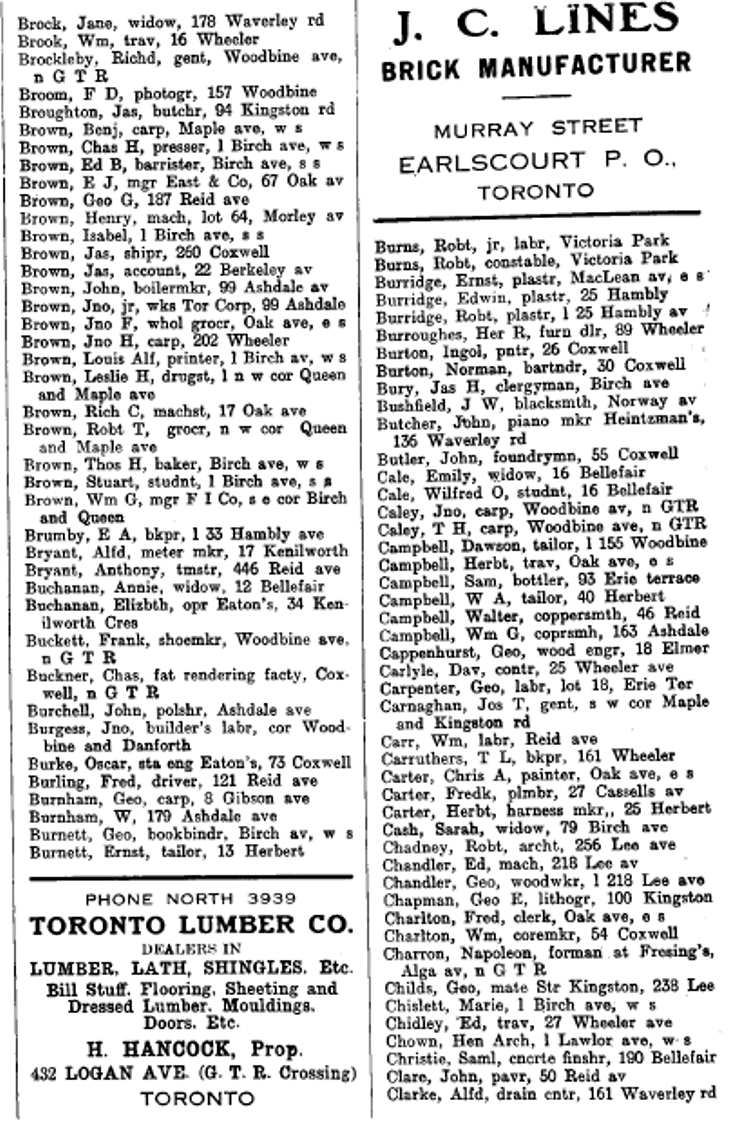
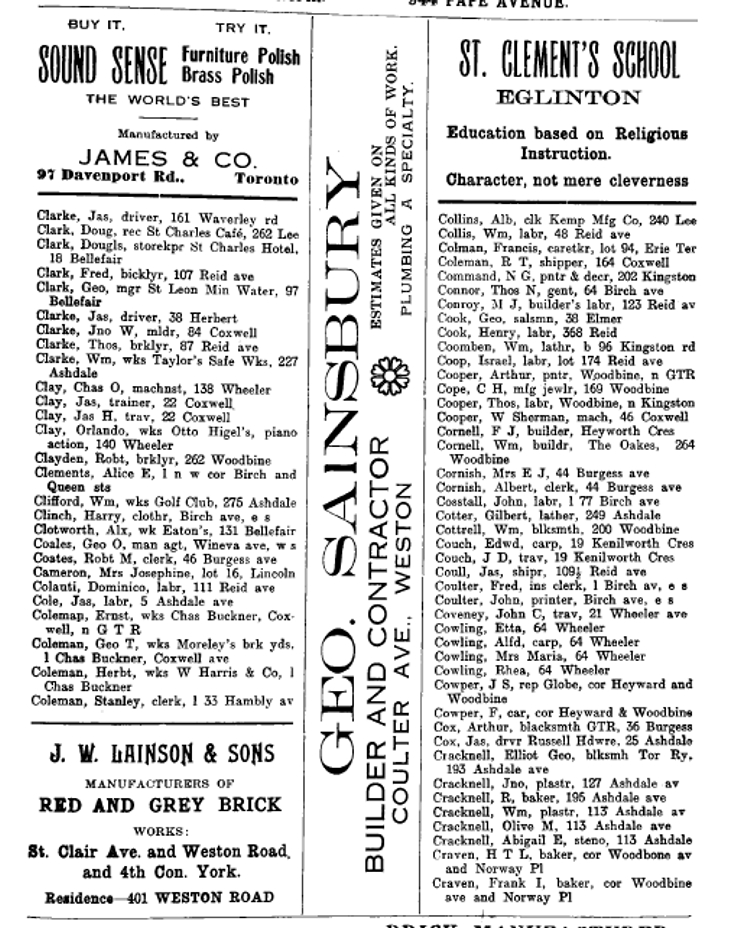
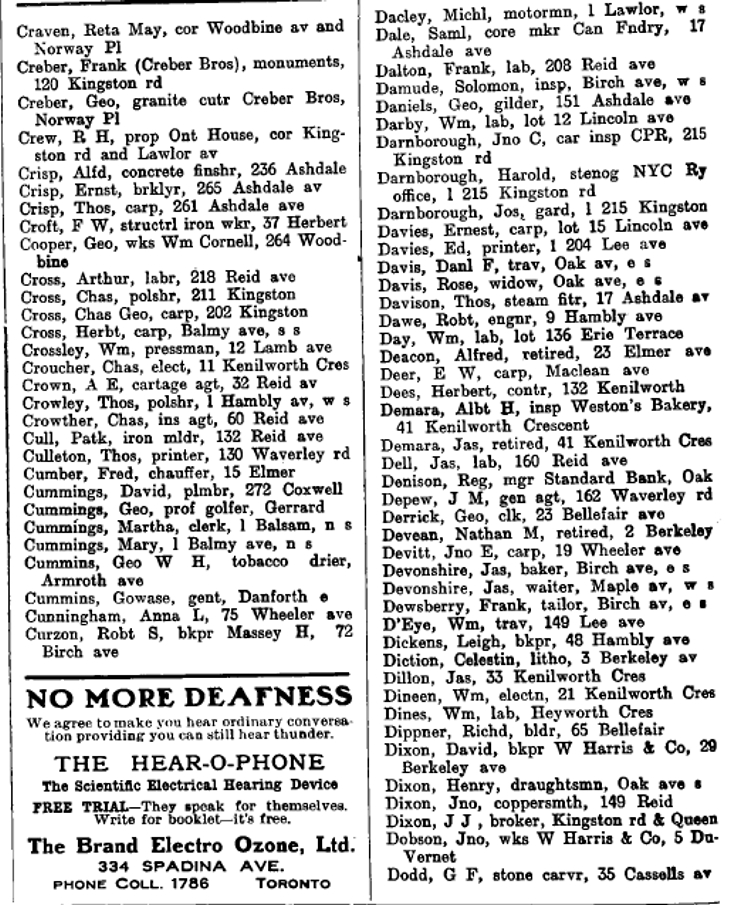
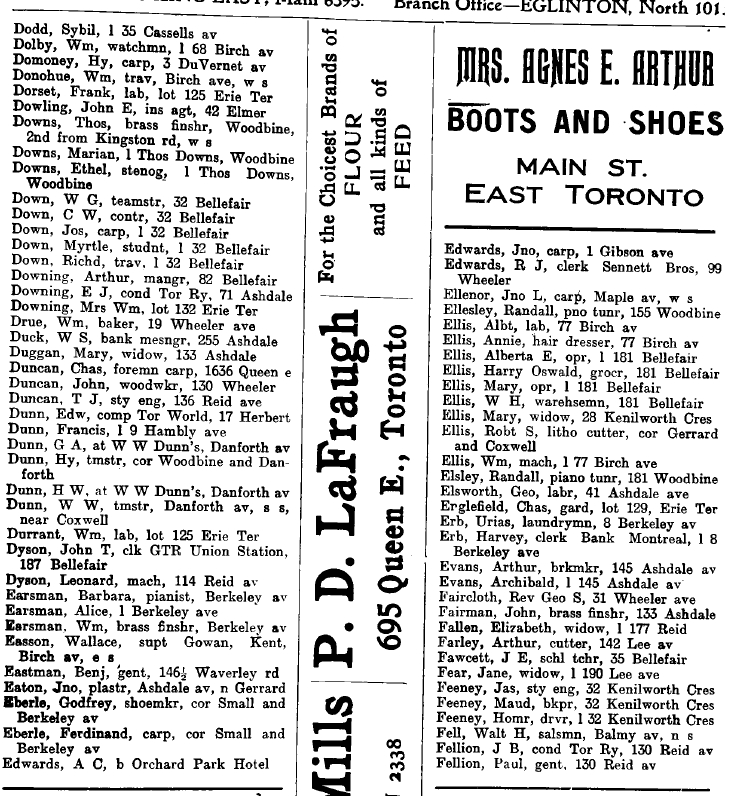


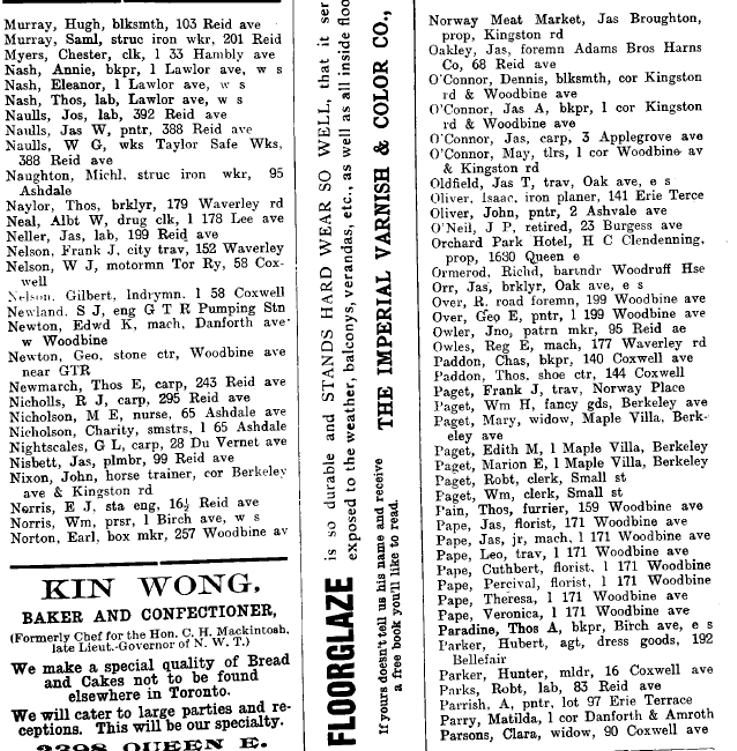


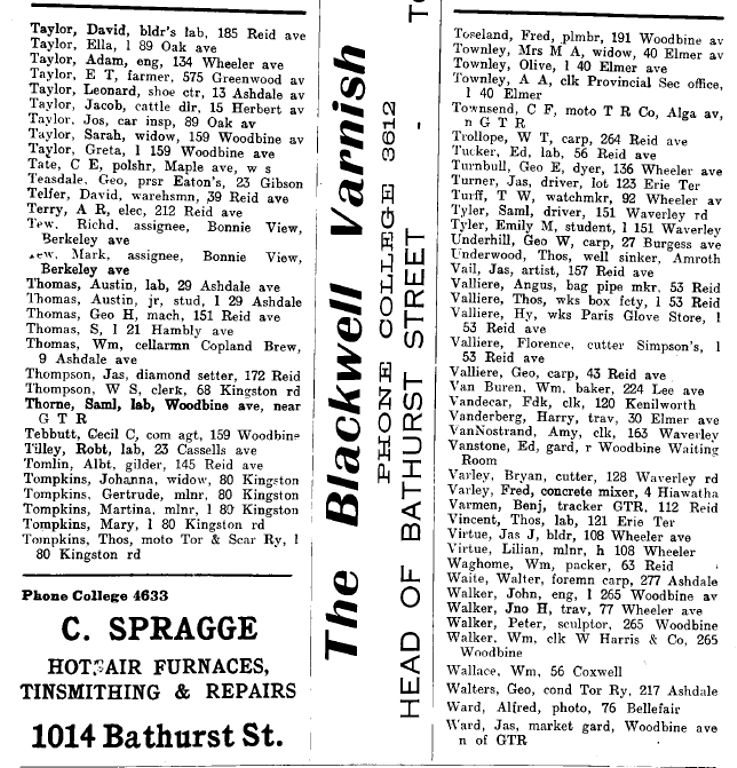


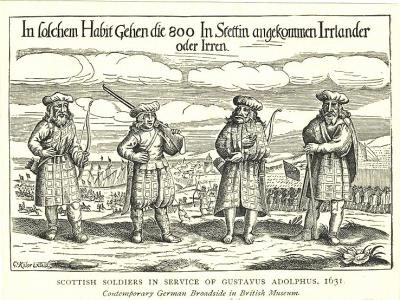


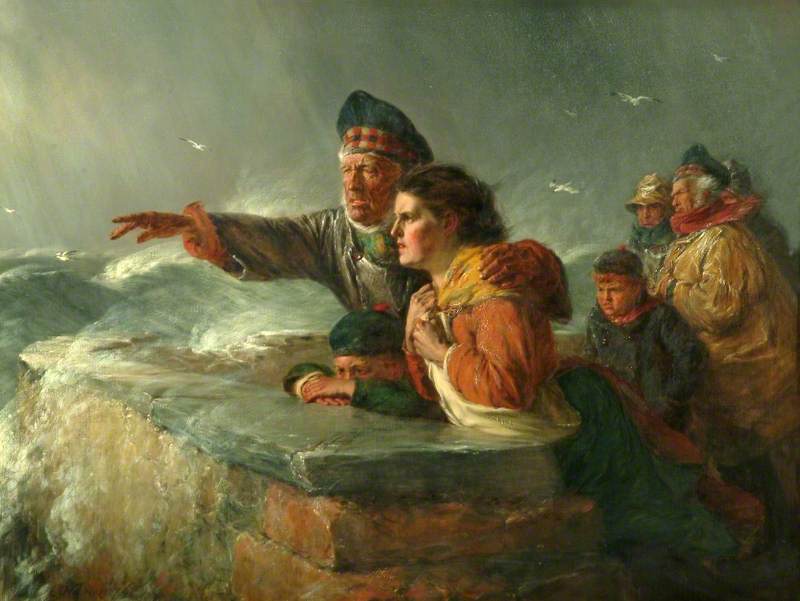
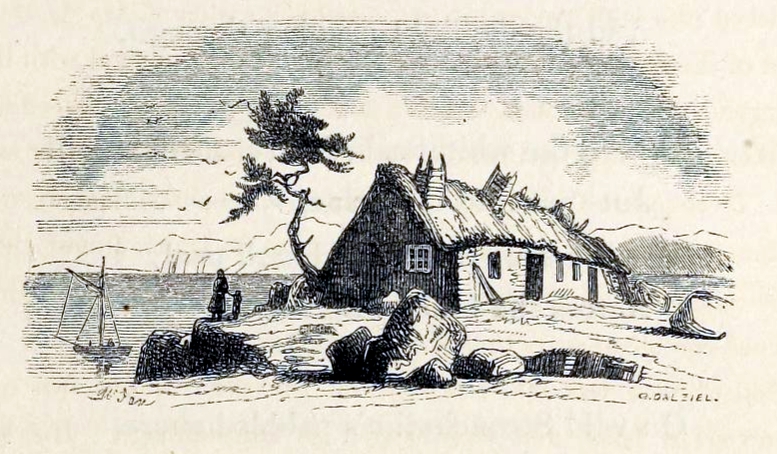


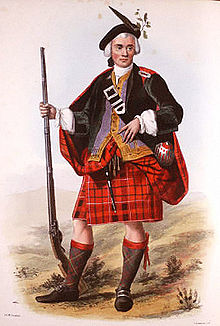
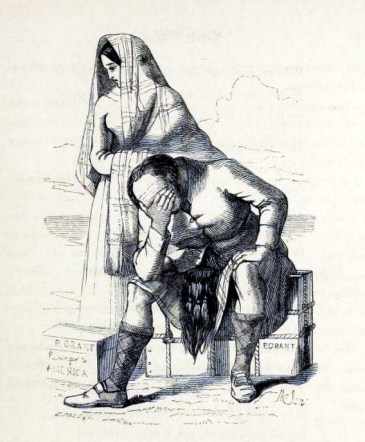
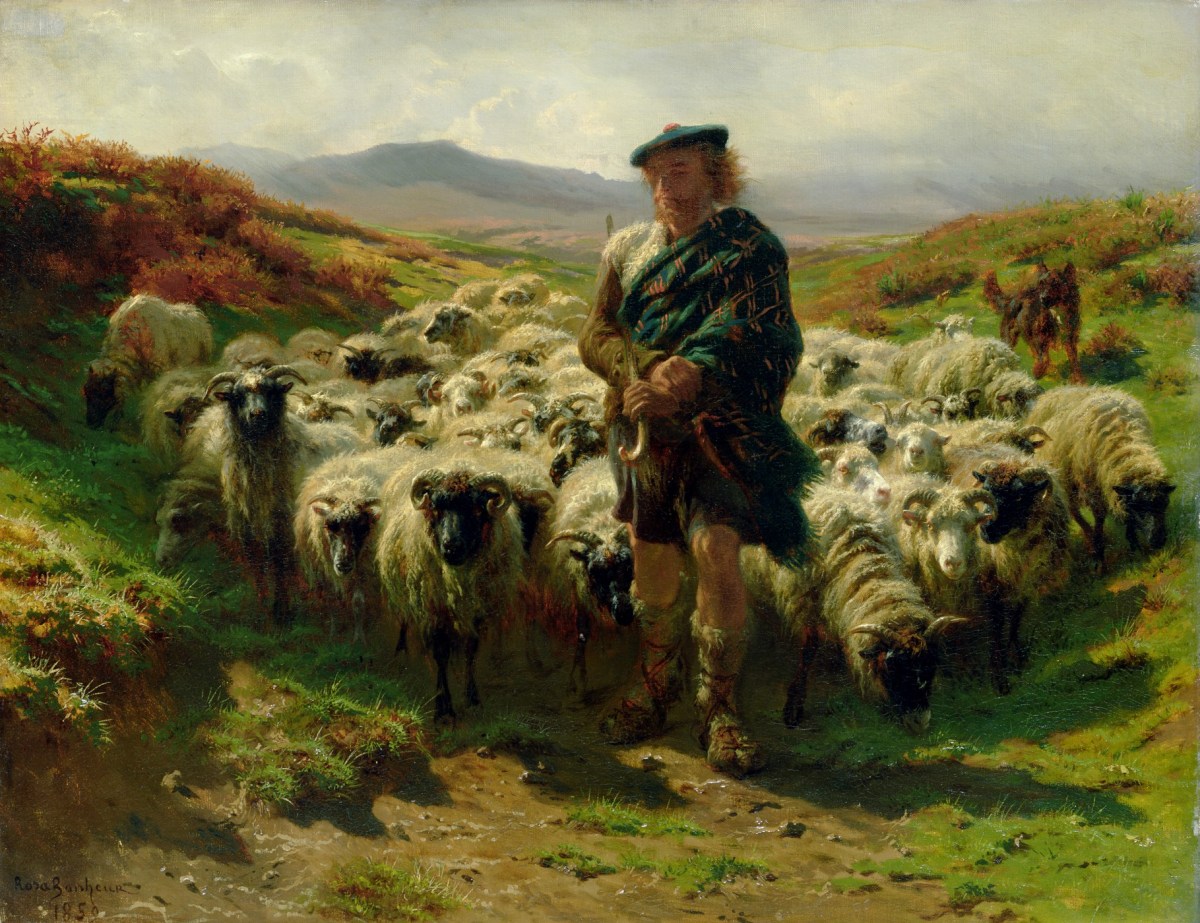
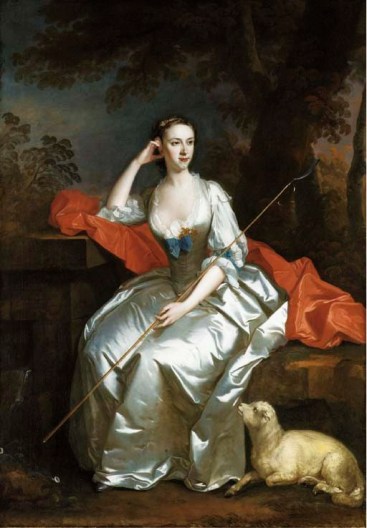
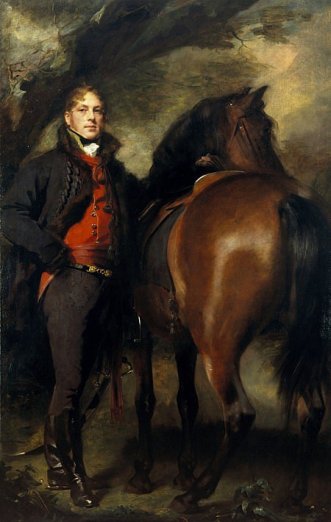


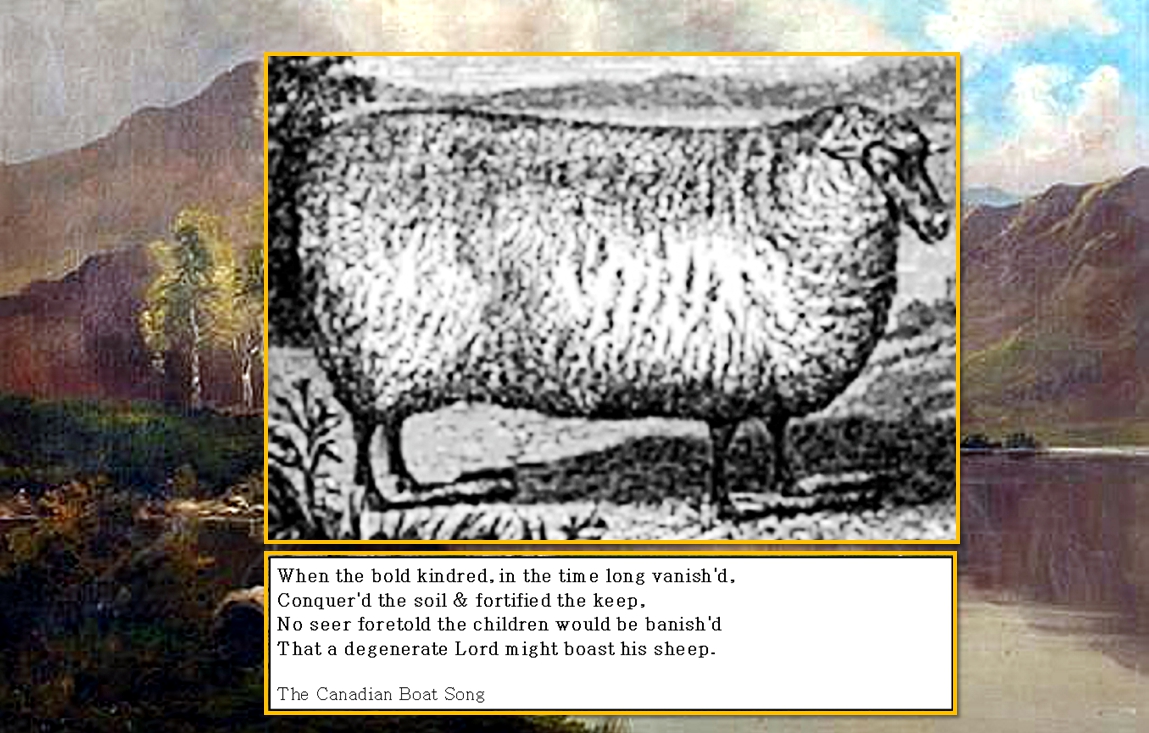


 Alexander, known as “Alastair Mhor”, Macdonell (July 17, 1762 – January 14, 1840), was the first Roman Catholic bishop in Ontario, and a leader who brought his clansmen from Glengarry, Scotland to Glengarry, Ontario.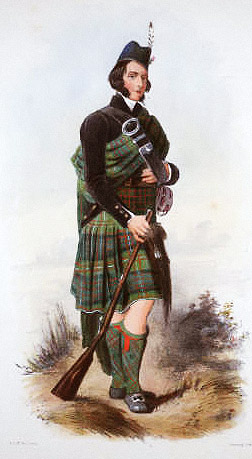


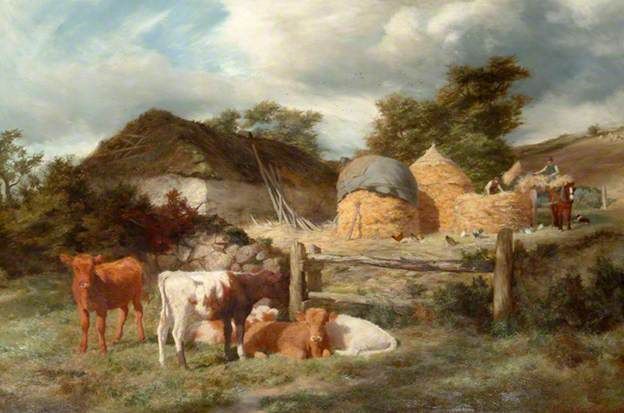

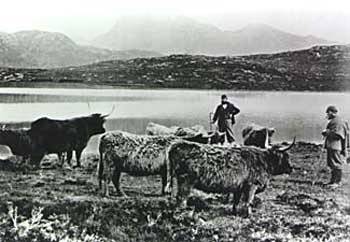
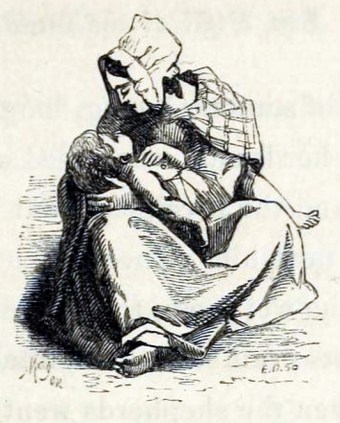
 r and forefathers had. He never wanted to be beholding to anyone and was never happy working for or in partnership with anyone. He rejected all attempts to force him to act or think against his will, living true to the Leslie motto, “Grip Fast”. He hated poverty and died as a wealthy man. Unlike those Leslies around him who were horribly maimed by their service in the Highland regiments, he never became a soldier, but was not a pacifist either.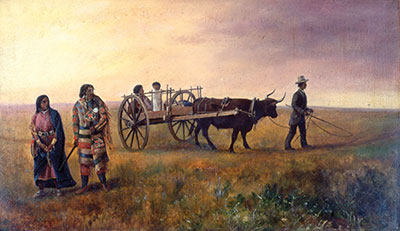


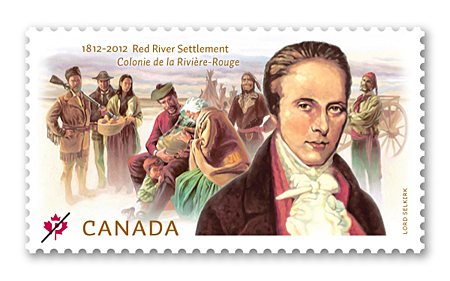


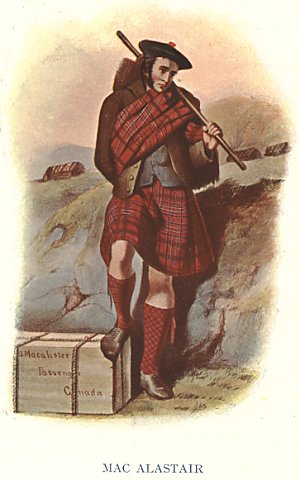
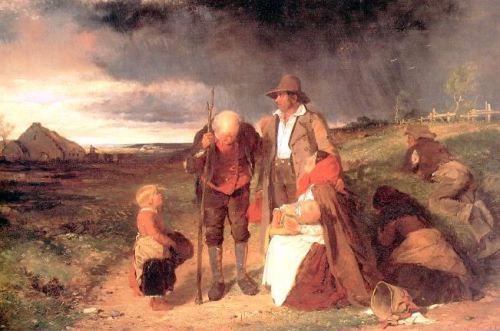


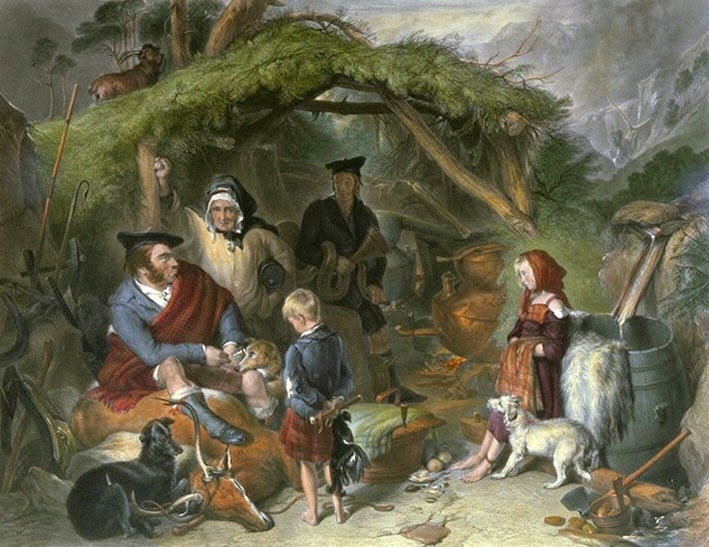


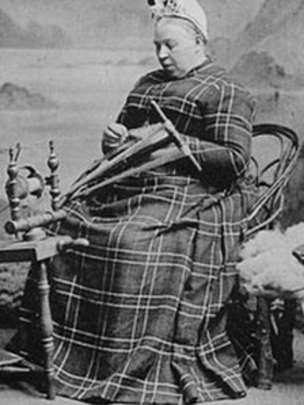


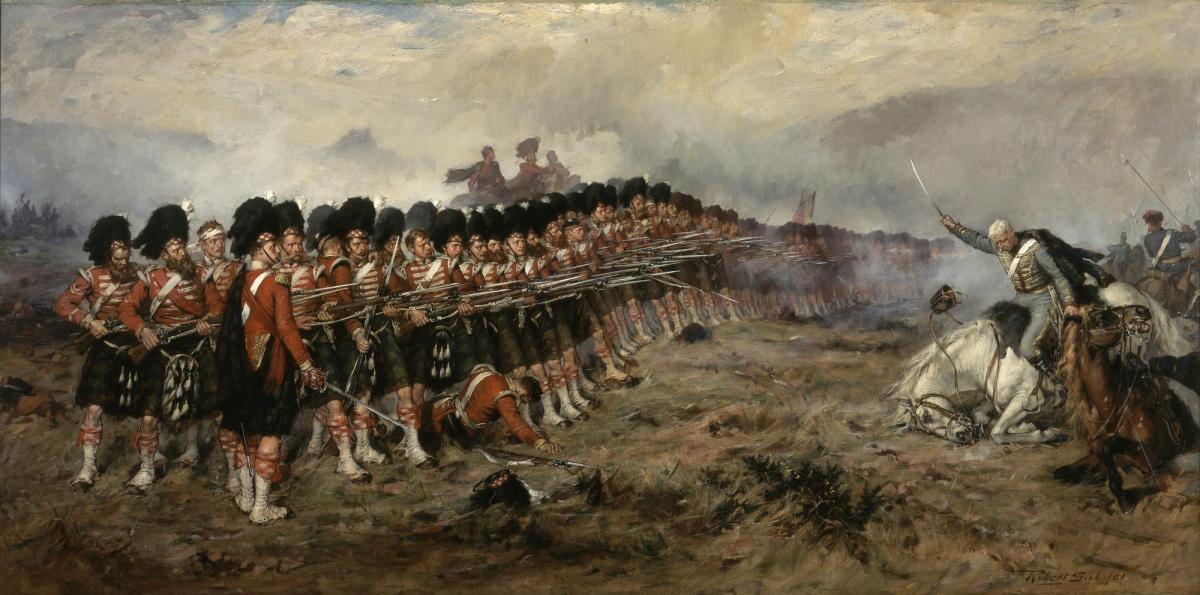
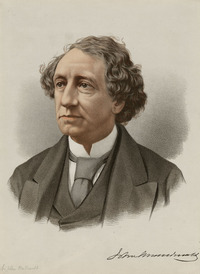 When Canada was borth with Confederation in 1867 our first Prime Minister, John A. Macdonald, was born in Glasgow, the son of Hugh Macdonald and Helen Shaw, from Kildonan, Sutherlandshire. His attitude towards adversity was one shared by other Scots:

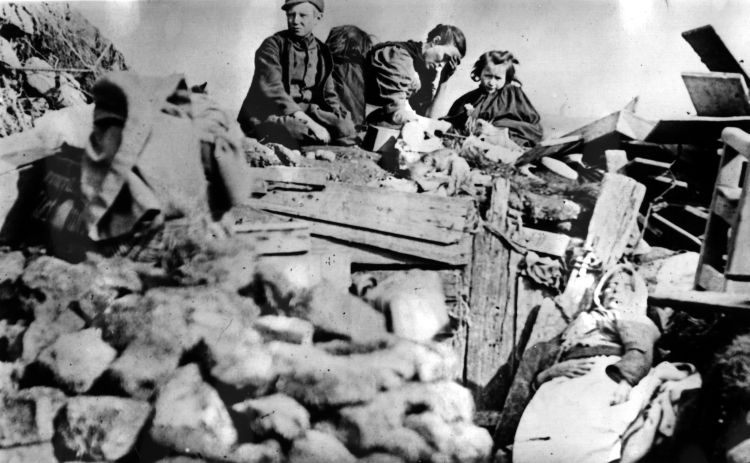
 In 1930 St. Kilda in the Outer Hebrides was evacuated because the people there were so poor. The men in this picture do not even have shoes.

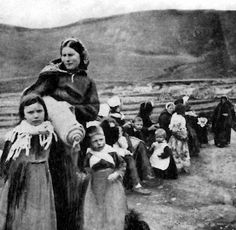

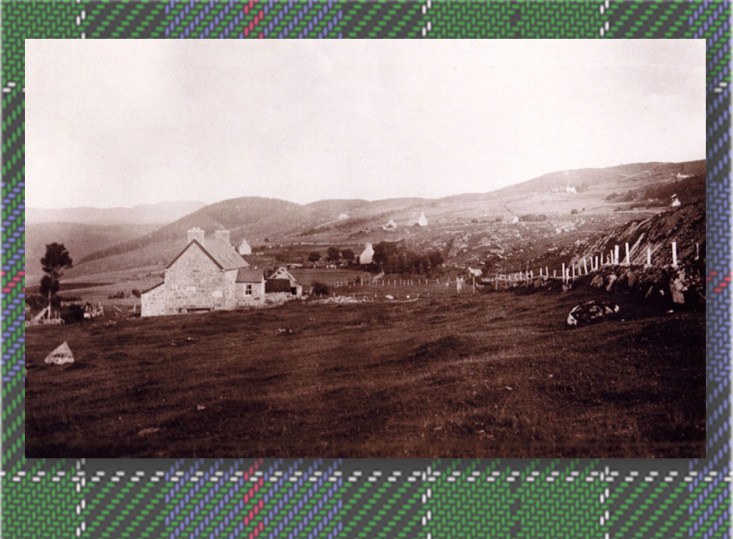


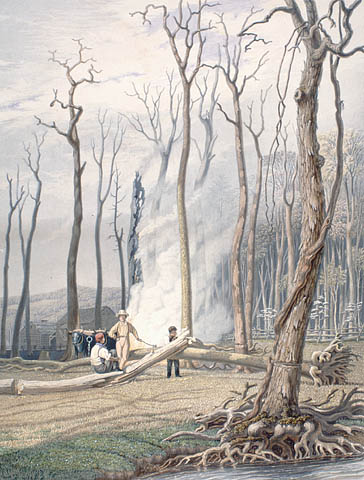

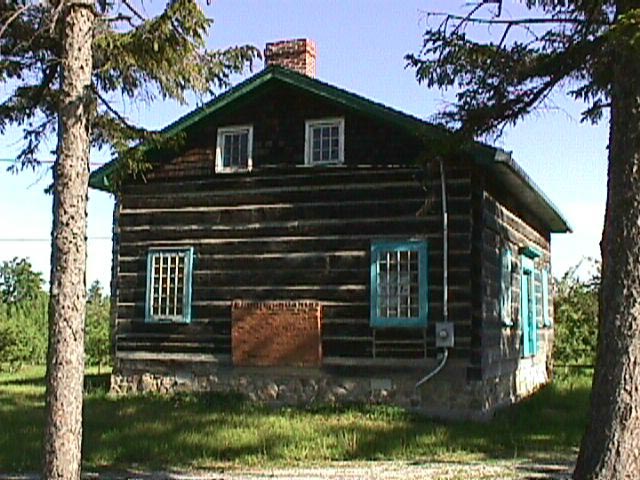 Mississauga Museum.


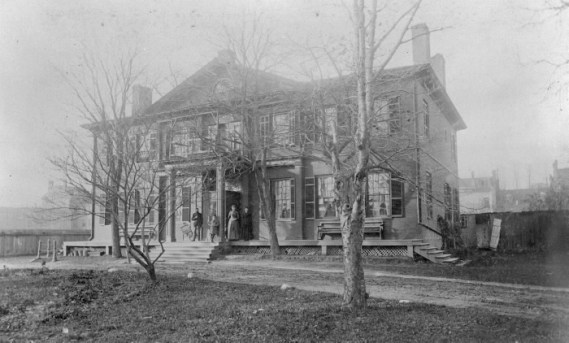

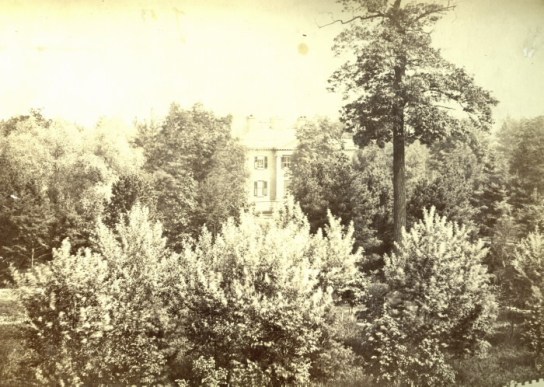


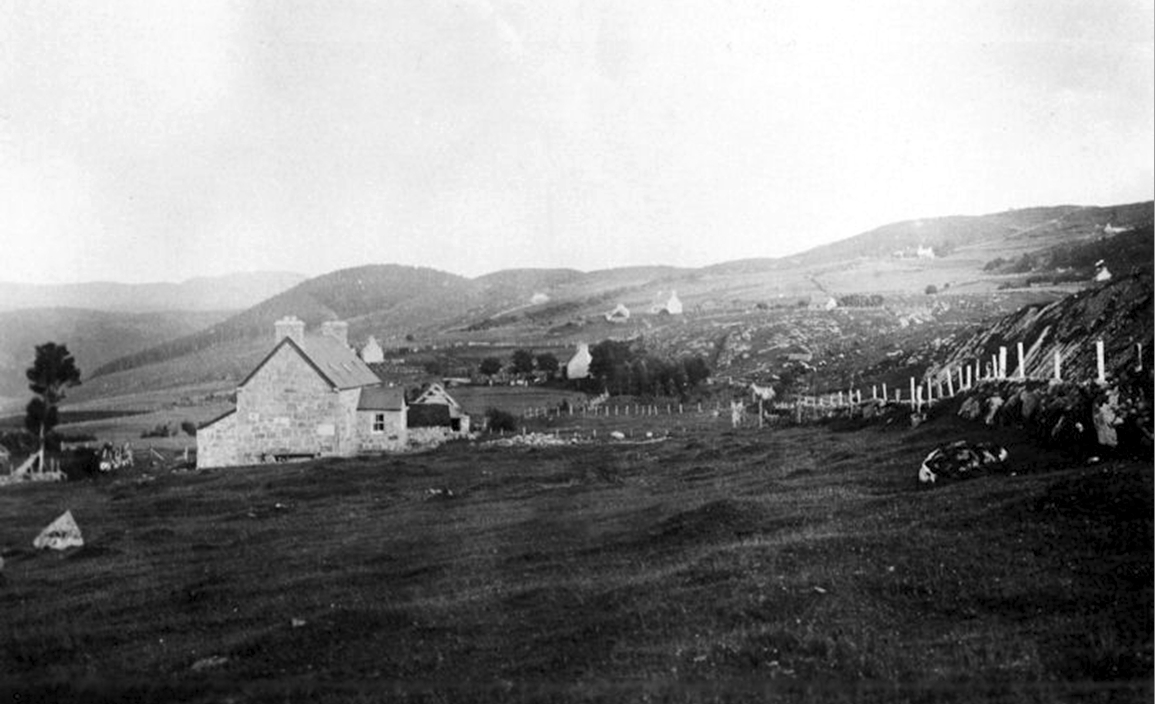


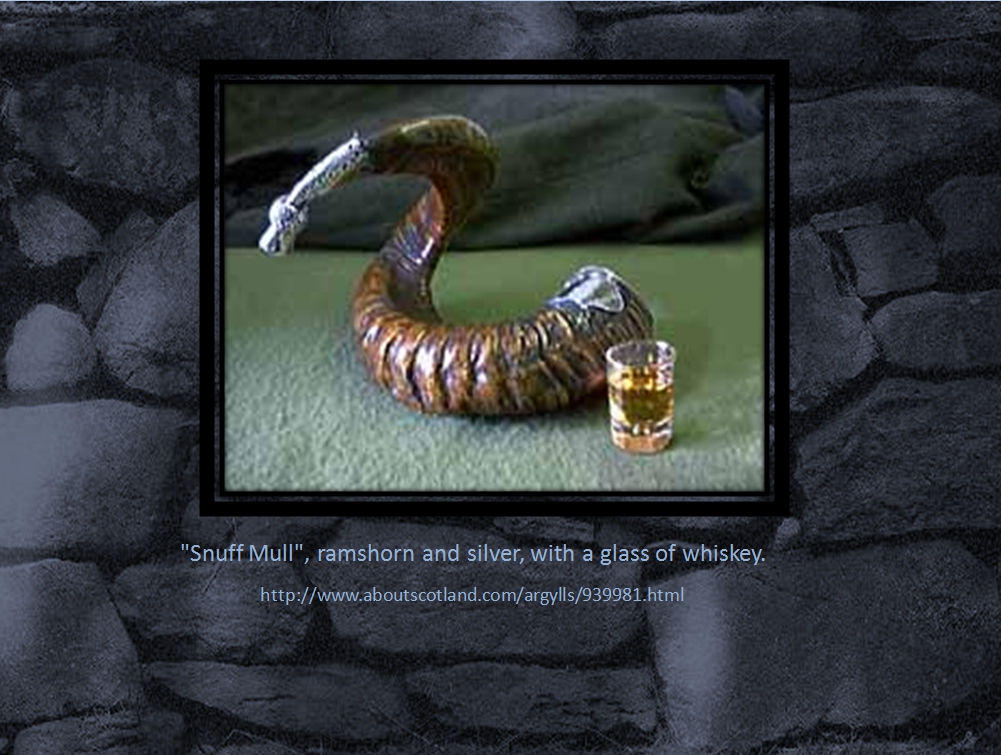
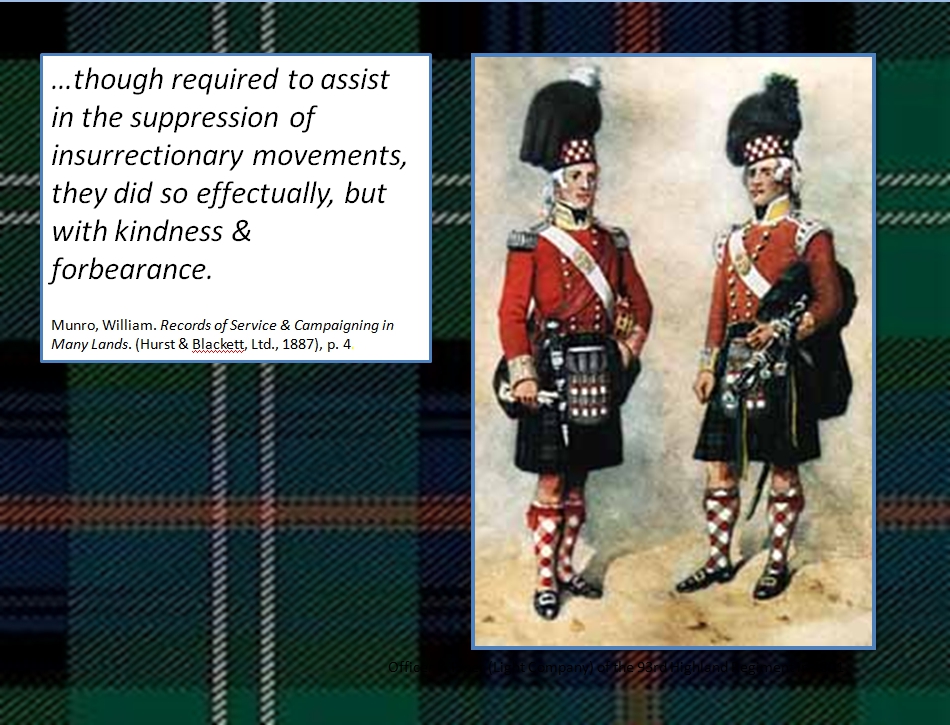


 John Leslie is listed in the records of Royal Hospital Chelsea Pensioners, 79th Cameron Highlanders. The records note that he was “severely wounded right arm” and that he was a laborer from Rogart, Sutherland. Before he fought in Spain, he served in Canada during the War of 1812. John Leslie had served in Canada as well. He is described in the “British Regimental Registers of Service, 79th Foot Soldiers, 1st Battalion, 1809-1816, as having dark complexion, a round face, brown eyes, dark hair, and as being a laborer from Rogart, Sutherlandshire.

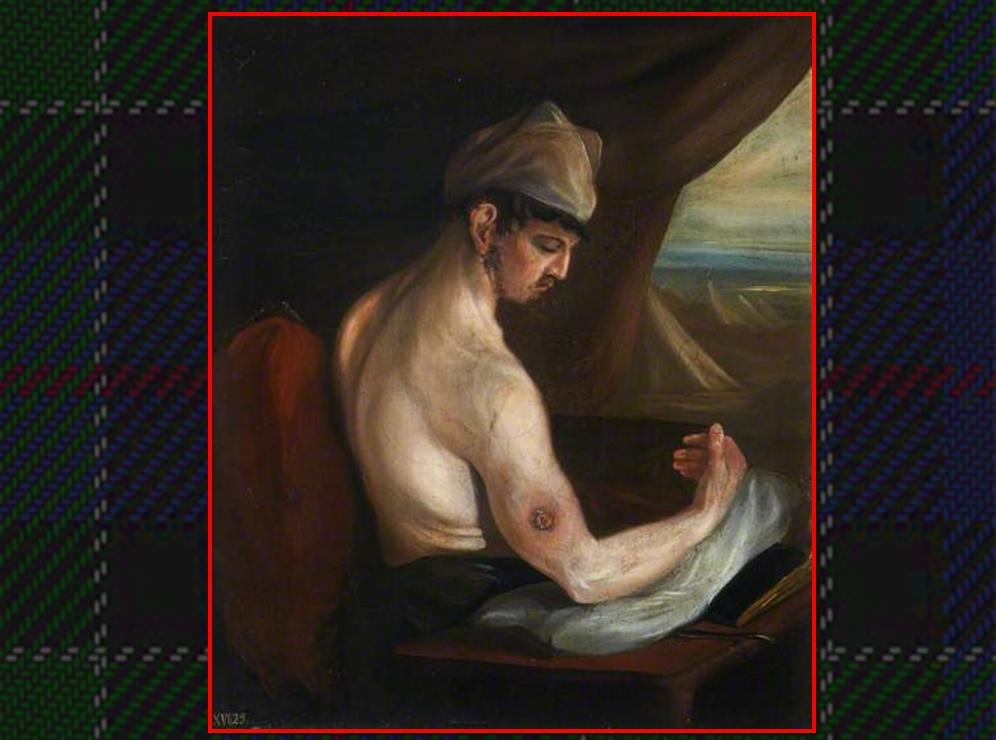


 There are differences. John Chapman’s orchard was much bigger than George Leslie’s, George had 250 acres; John Chapman, had a 1,200 acres. John Chapman was an eccentric who wore rags and died of exposure in 1845, just two years after George Leslie opened his nursery in Leslieville. George Leslie was highly respectable: an Alderman, School Trustee, Justice of the Peace and “Squire” Leslie to those who knew him.
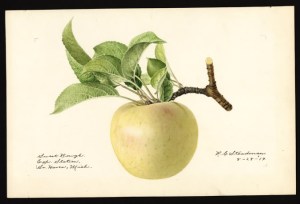 In 1832 he organized the first exhibition of fruit in Ontario.
 In 1834 George Leslie was one of the founders and first Directors of the Toronto Horticultural Society. He opened a seed and grocery store was on Front Street. Like many others George Leslie purchased his first stock of seeds from London, England. Often the seeds were not viable or the plants successful in the very different growing environment of Ontario. George Leslie secured and tested seeds and young apple saplings that were suitable for Ontario. He faced difficulties finding enough varieties of trees and plants. He was also concerned about quality. In the late 1830s he travelled to the US looking for suitable stock. In the spring he found two men in Rochester, New York, who had similar views and ambitions to his own, George Ellwanger and Patrick Barry.
 In 1841, when the Horticultural Society began holding annual exhibitions, George Leslie was an energetic participant and supporter, as were some other market gardeners. Exhibitions were an excellent opportunity to advertise their seeds, exchange information and encourage the public to plant orchards, especially of apples and pears. In an era without television, radio or Internet, there could be no better way to promote products.
 George Leslie valued that soft, rich dark muck and others recognized its worth. Orchards flourished then and now on the shores of the lower Great Lakes, especially Lake Ontario. The microclimate is ideal for fruit-growing. Though the Niagara Fruit Belt did not exist then, George Leslie’s fruit trees helped to create it.
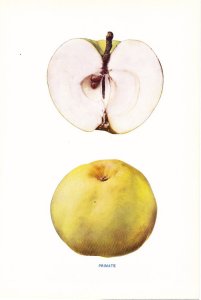 Leslie was a skilled user of the media using advertising, interviews, and stories in newspapers and journals to promote the growing of trees and his business. He became good friends with another Reformer George Brown, who, in 1844, established The Globe. The connection worked well for the nurseryman. People in southwestern Ontario could pick up the Toronto Nurseries catalogue at the Western Globe in London and buy apple trees and other fruit trees.
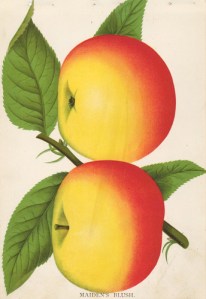 Here is an ad from a little later in the spring of 1845.
 In late 1845 the City of Toronto purchased part of George Leslie’s Yonge Street property for $5,000 in order to extend Colborne Street through to Yonge. That spring the Leslies moved to a home on the Kingston Road near the nursery.

 His reputation was growing. He began writing articles for farm and horticultural journals. In November, 1848, The Farmer and Mechanic pointed out that Leslie was a valuable resource for Canadians:
 He promoted the growing of apple and other fruit trees throughout his life – not by wandering by foot scattering seeds here and there, which the real John Chapman never did even though the American legend Johnny Appleseed did. Instead he used his shrewd business sense; his friendships with politicians, others in the trade and other Scotsmen; his ability to communicate his life of trees and his reputation as a nurseryman to promote fruit growing at every opportunity. One can sense his sadness that many Canadian farmers did not value orchards or appreciate the potential for exporting a valuable red, round cash crop to Britain and the rest of Europe. That spring George Leslie wrote another article encouraging the planting of orchards in a different publication also aimed at farmers. He recommended his catalogue, as well as his favourite fruits. (The Canadian Agriculturist, Vol. 1, no. 4, Apr. 2, 1849, 100-102) In another article for The Canadian Agriculturalist published in June, 1849, he encouraged landscaping, claiming that the planting of shrubs and shade trees was “a work of genuine patriotism, as evidencing the wealth and increasing greatness of the country.” Planting trees also should that the homeowner had both “superior intellect and a refined taste.” (The Canadian Agriculturist, Vol. 1, No. 6, June 1, 1849, 157-158)
 By the early 1850s, a wider audience was beginning to tune in to George Leslie’s crusade for trees, especially fruit trees. William Henry Smith, in his Statistical Account of Canada West, 1851, commented on the new interest in fruit growing:

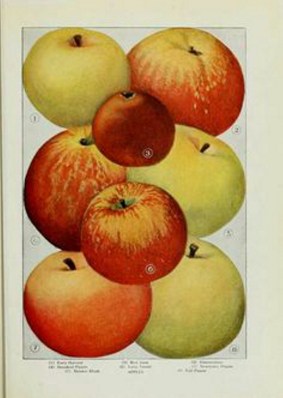 He also established his own prize and became a judge in fairs and exhibitions. The first winner of the Toronto Nursery prize was George Vear, gardener to D. Macpherson, who had the best collection of gooseberries.

 One apprentice was special: a man after George Leslie’s heart – and his youngest daughter’s. Alexander McDonald Allan trained to be a lawyer, but his heart was not in books. He gave up his studies, supposedly for his health, to do manual work as a gardener. He spent several years travelling in the U.S. learning about horticulture. After that he returned to Canada and apprenticed at the Toronto Nursery. While there he fell in love with the beautiful Essie Leslie. On June 21, 1873, they married.
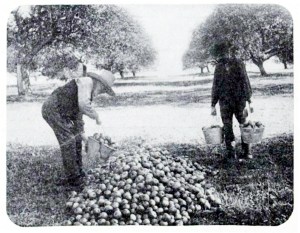 By 1877, George Leslie was 73 years old, but still involved in the Industrial Exhibition. The Exhibition moved each year from city to city around the Province, however, many groups pressed for it to be permanently held in Toronto. The first annual fair was held in Toronto during September 1879. George Leslie Junior was one of the Directors when the Exhibition incorporated. The Leslie sons stayed active in the Exhibition throughout their lives until John Knox Leslie was caught up in a financial scandal in 1908. They were also involved in the Toronto Electoral Division Society’s Agricultural Society, the Fruit Growers’ Association, the Florists’ Club and similar organization.
 In 1881 the Globe interviewed George Leslie Sr. and Alderman Boustead, City Commissioner, about the proper planting of shade trees on city streets. People often planted “bush trees” – uncultivated or wild trees that they had dug up from the forest to transplant to their city property. These trees usually did not survive because of the damage to their roots. George Leslie Sr. listed his favourite trees for city streets: European ash, Scotch and American elms, the Horse chestnut, Basswood or Linden, the Norway maple, Silver maple, Sugar maple, Walnut, birches and Lombardy poplars. The newspaper commented on the lack of municipal funding for trees:


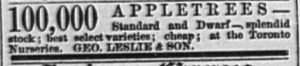

 George Leslie once more made the newspapers. The Leslies had built new barns with lumber from trees that they planted 40 years before. This was sustainable forestry at a time when most thought the giant White pines of Ontario would be there forever, waiting to be chopped down and floated to the sawmill. His colleagues admired his success, widely spoken of in the trade.
 George Leslie, though unsympathetic to thieves, was a great benefactor to Leslieville. George Leslie planted trees along Leslieville’s streets of Leslieville, including Eastern Avenue and Queen Street. According to the Globe, “Mr. Leslie did much to open up and develop the east end, planting many trees that now afford grateful shade to pedestrians.” (Globe, June 26, 1893)


 of barrels Thursday evening, is somewhat improved.” Toronto Star April 15, 1901 Many new immigrants, primarily from Britain, moved onto Morse and the nearby streets. However, many old Leslie families like the Beamish also had a continous presence early on. The Beamish had worked in George Leslie’s nurseries in the early days.
 burglars were literate.
 “The girl had not the strength to draw the victim to the wharf, but pluckily held on and shouted until assistance came.”
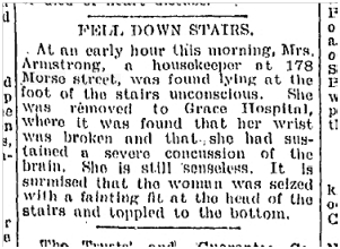

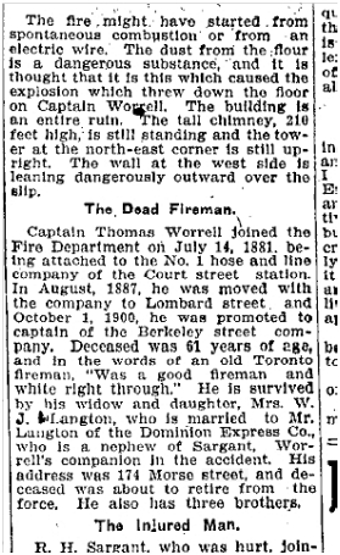


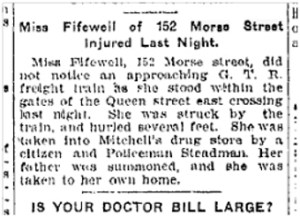


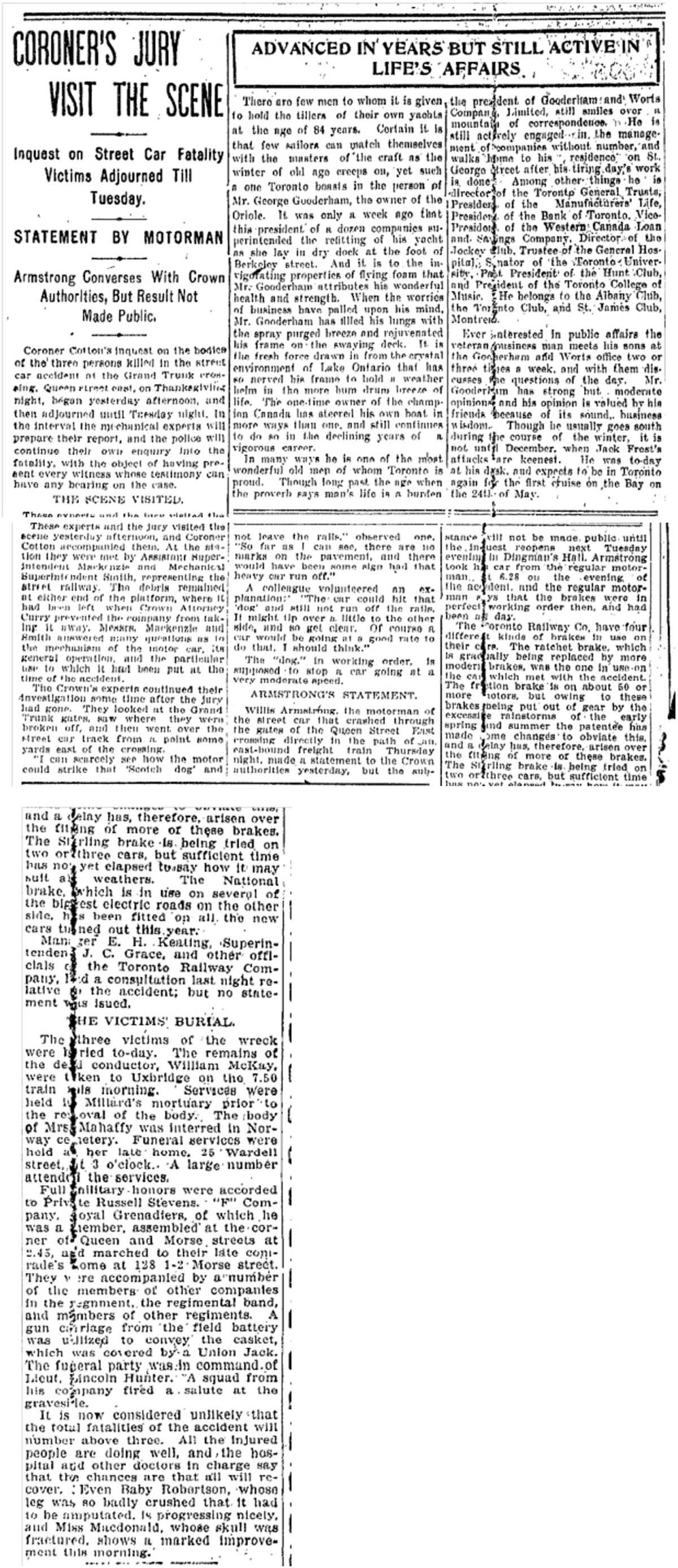


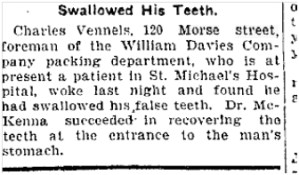
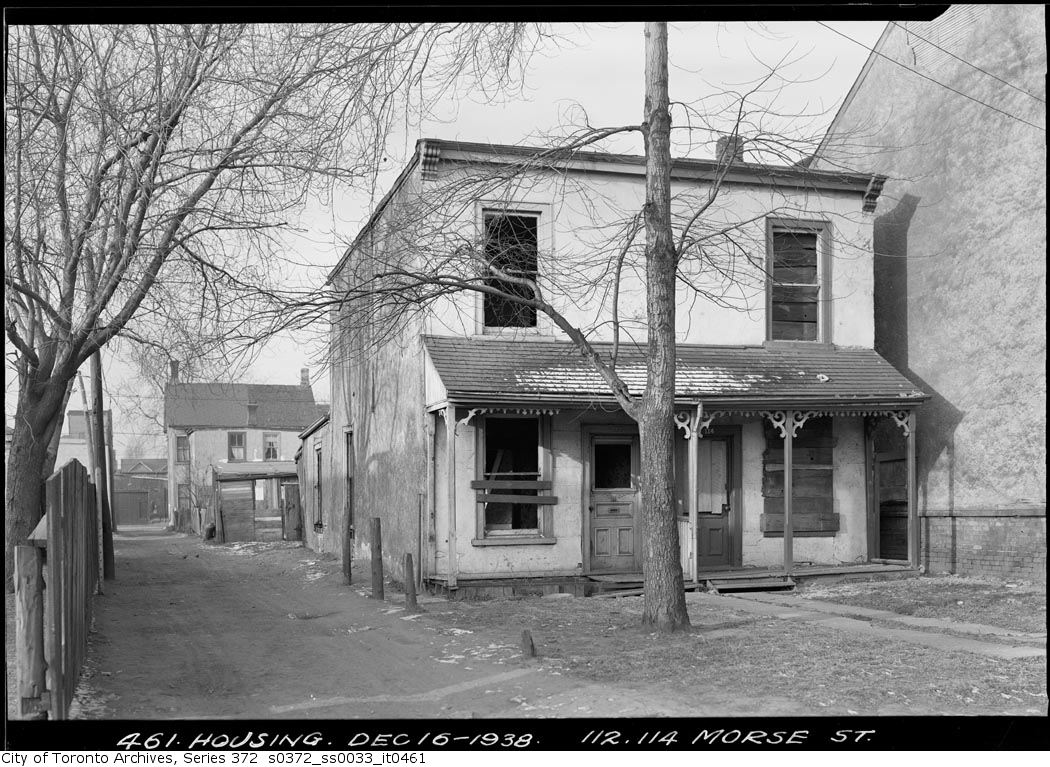
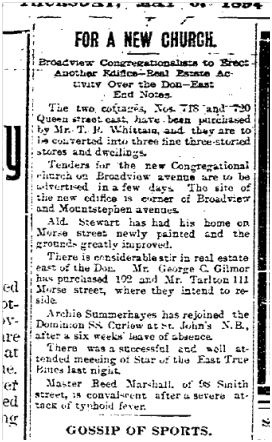


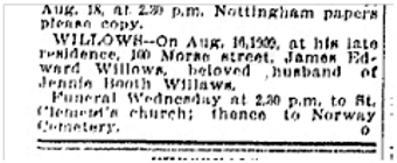






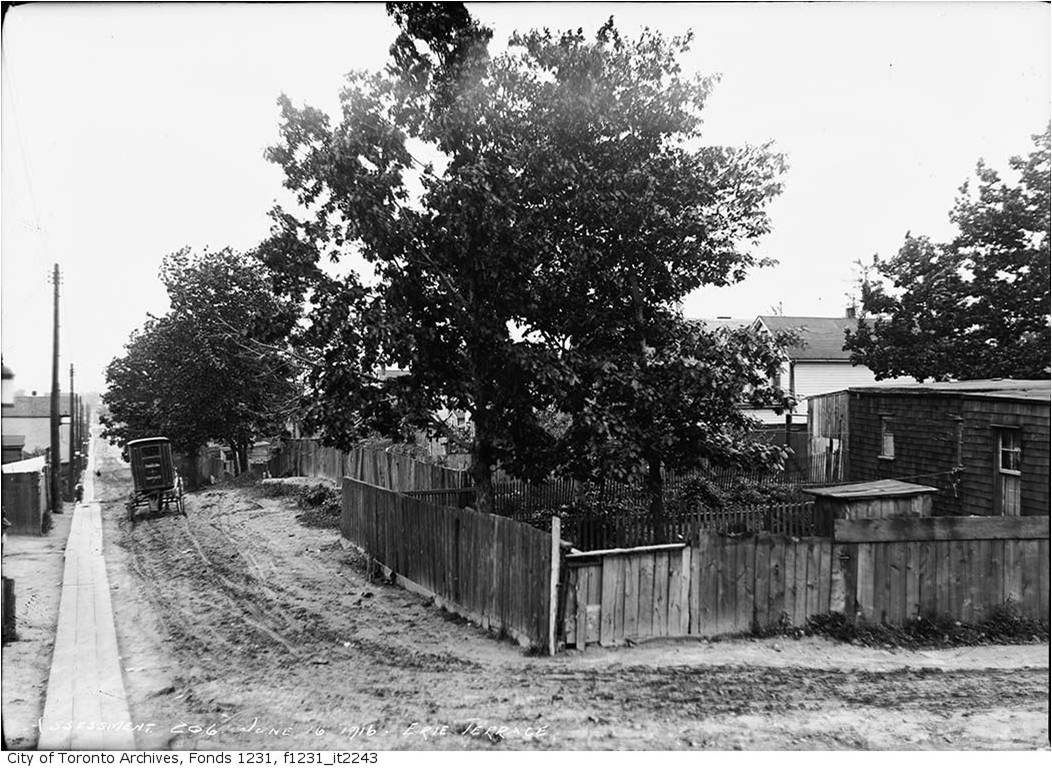


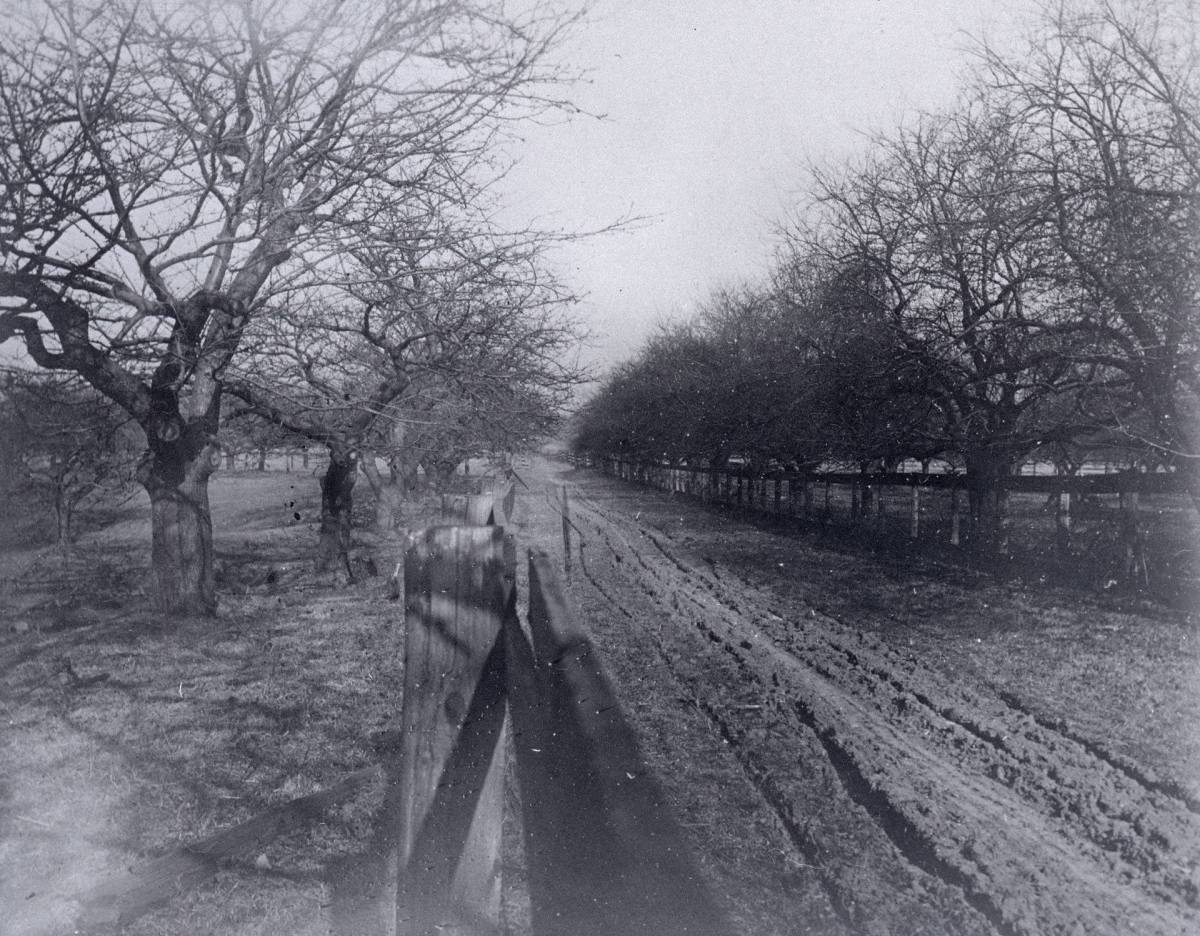


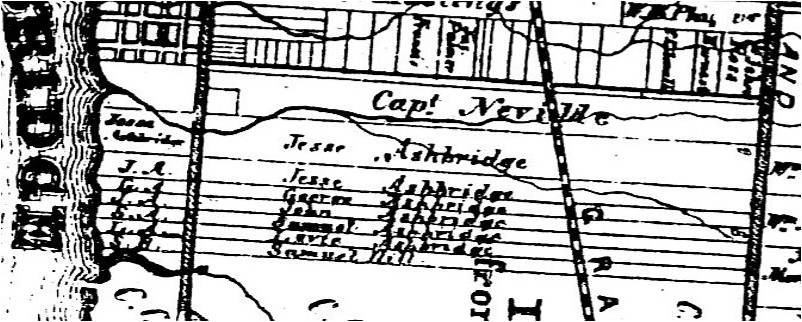


 Arcade Guide and Record, 1884
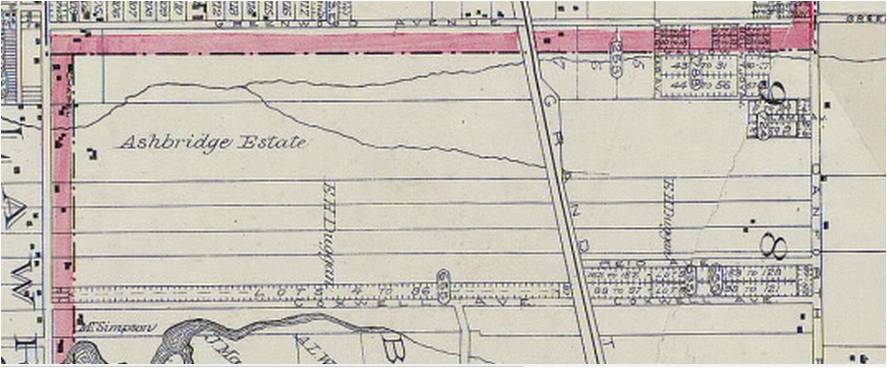
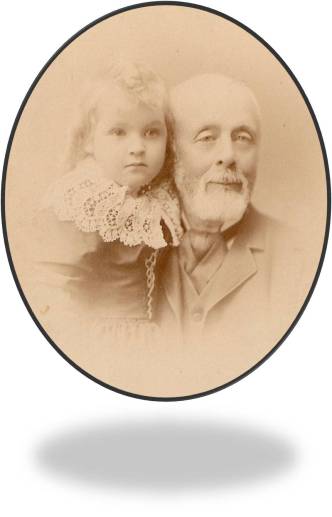


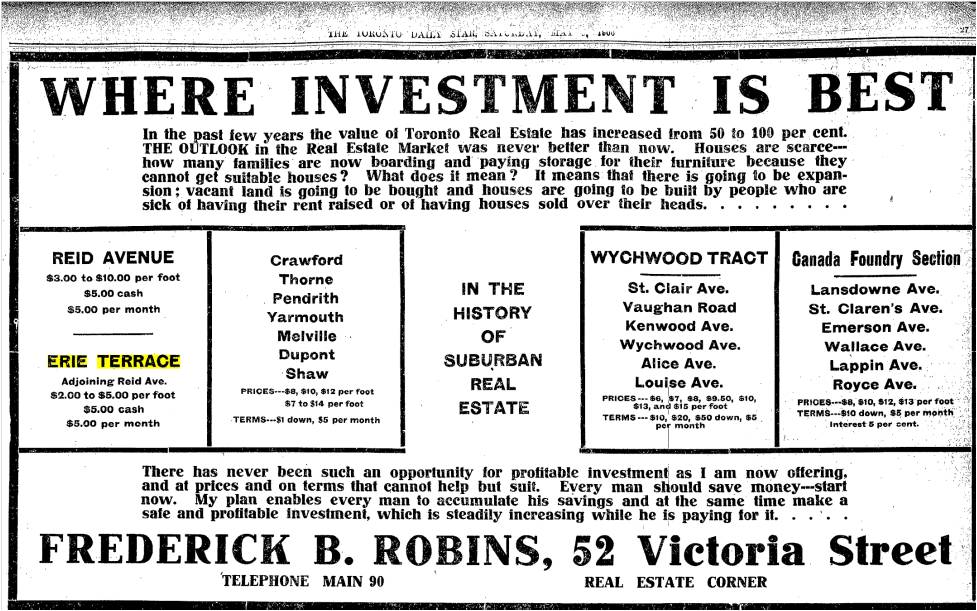
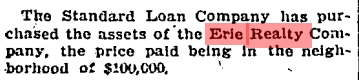
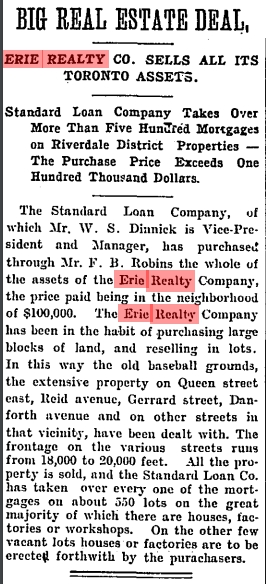


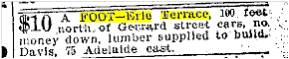
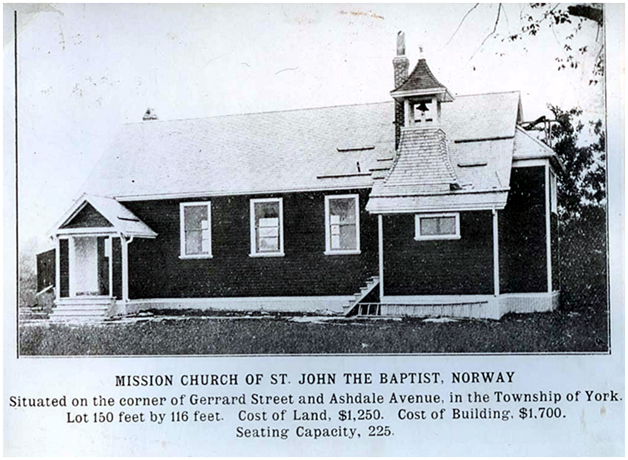


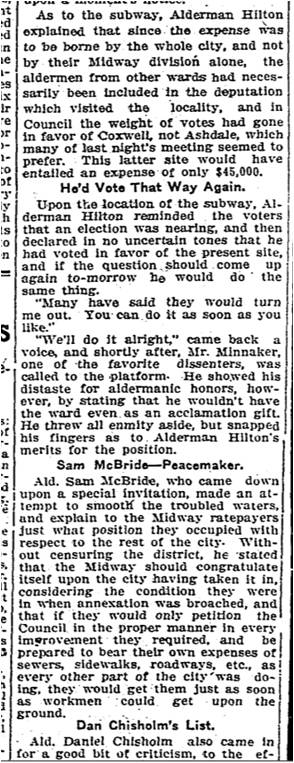


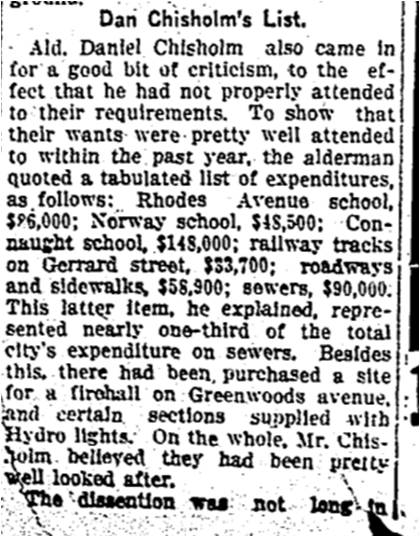


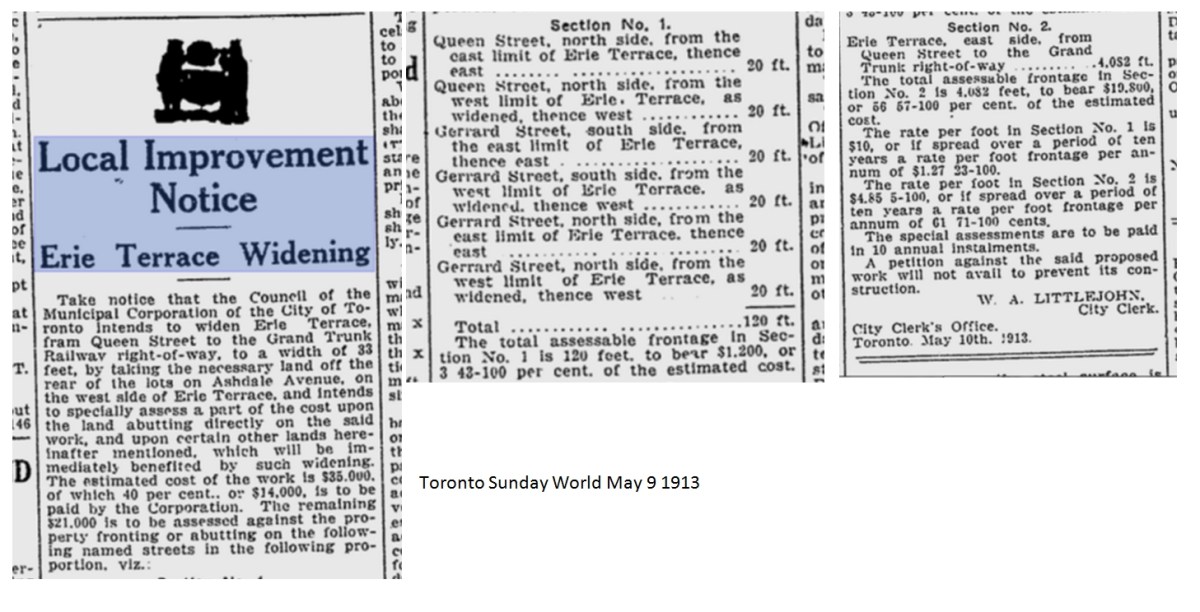

 It was until 1916 that most of the men were finally employed — as soldiers. (Toronto Star, March 1, 1913) Though army pay was low ($1.00 a day for privates — the lowest rank), many men sent most of their pay home through automatic deductions from their pay as well as through the mail. The added separation bonus of $25 a month for married men, added to their pay, added up to far more than many had earned before the Great War. Not surprisingly, after years of unemployment, the enlistment rate on Erie Terrace was incredibly high, as were the casualties. Patriotism was one motivation, economic necessity was another.
 The people on Erie Terrace did not want the Ashdale Avenue people to use the widened road because the Erie Terrace people had paid double for it and the Ashdale Avenue people had not paid anything. The people on Ashdale were only slightly more affluent than those on Erie Terrace, but Erie Terrace had a reputation for squalor, crime, prostitutes, drinking, etc. So the people on Ashdale wanted the Erie Terrace people out of their back yards. In the days before cars and the need for backyard parking spots, this solution, the Fence, suited both the Erie Terrace folks and their slightly more well-heeled neighbours on Ashdale Avenue.
 The City, meanwhile, did not want the Ashdale Avenue people using their now much smaller backyards for garages and sheds. (The dilapidated sheds were used for horses, in most cases, as few had cars in this “streetcar” suburb.) The City had expropriated part of the Ashdale Avenue backyards to widen Erie Terrace. But what was left of those backyards didn’t have enough of a setback under Toronto Bylaws for building anything. Therefore, the fence is maintained by the City of Toronto despite periodic attempts to have it removed or partially dismantled. Not everyone liked the fence then and not everyone likes it now. (Toronto Star, March 23, 1916)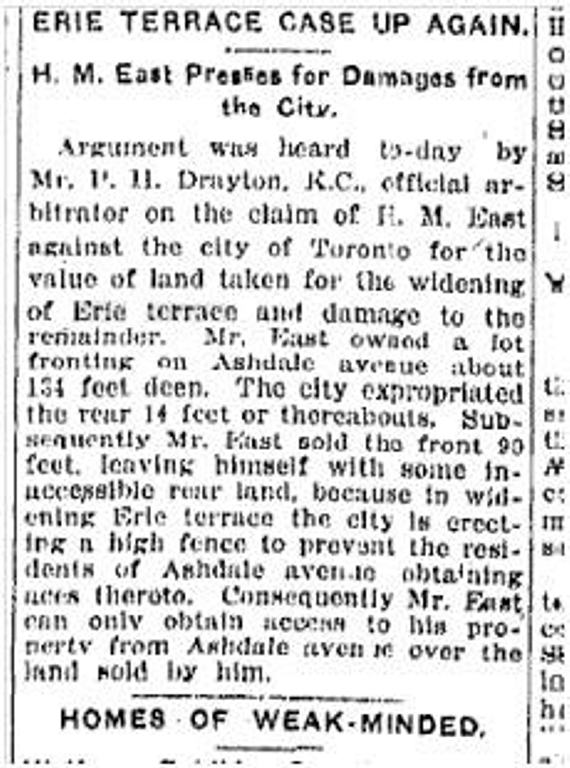
 Erie Terrace, June 16, 1916
 But he was just one of many who died on Erie Terrace during the Great War To End All Wars. The City of Toronto was now able to wring the money it wanted out of Erie Terrace and others in the East End now that virtually all of the men were working…most in the trenches. Some might say that the War built that fence.

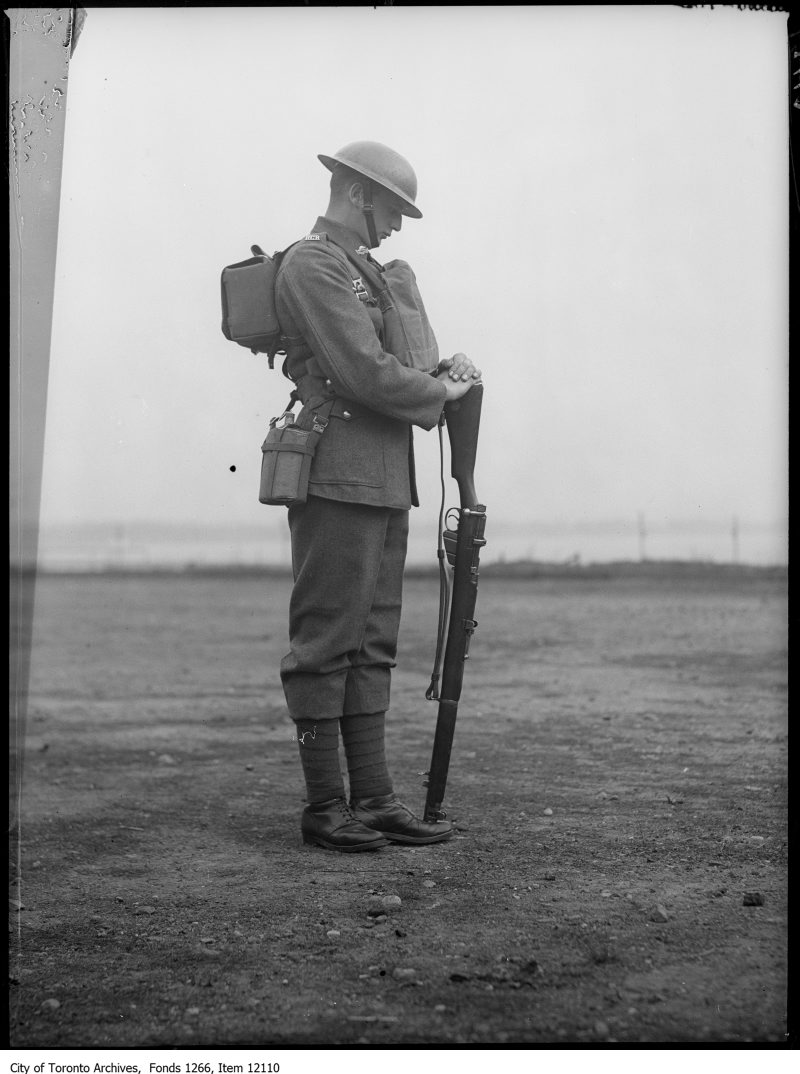 More improvements followed.
 While the War ground on, the Spanish flu hit, seemingly out of nowhere, spread from military base to military base and brought home by the returning soldiers. Older people seemed to have some resistance to it, but the young did not.
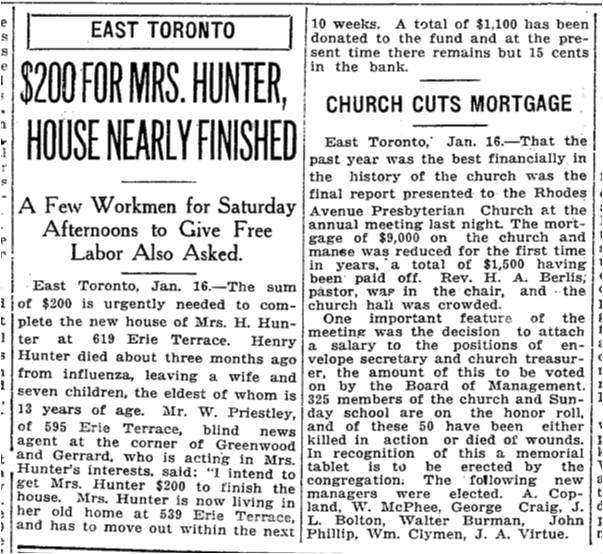


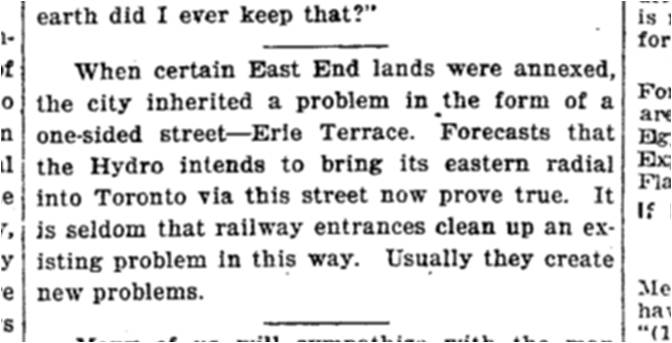
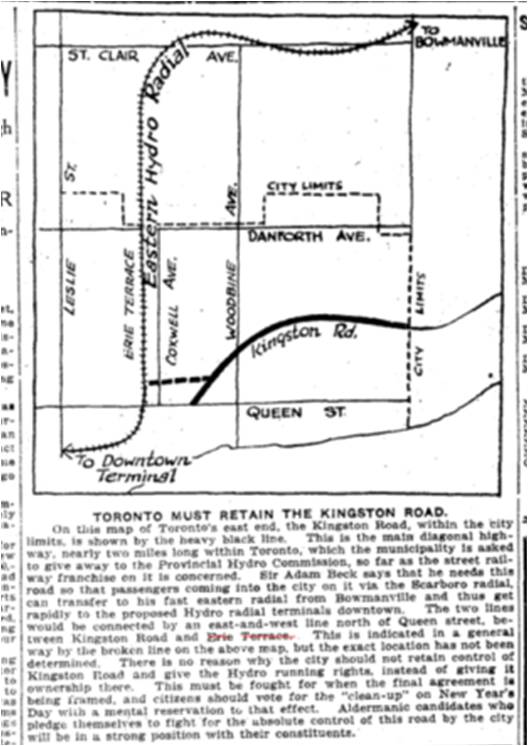


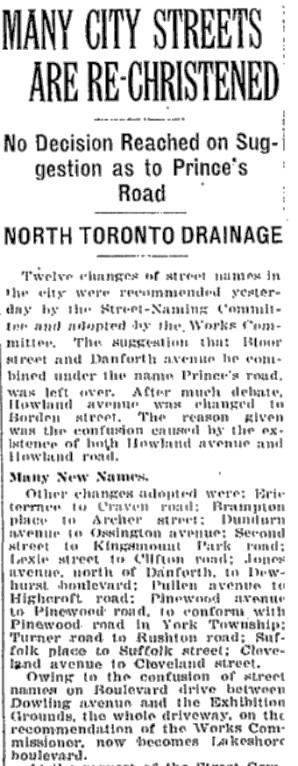
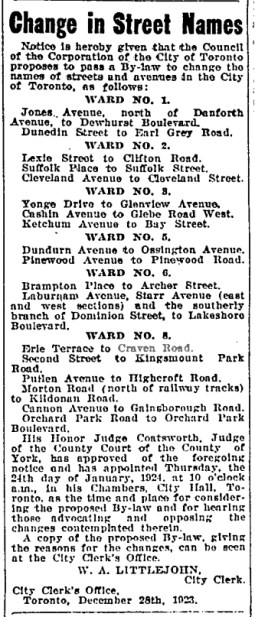

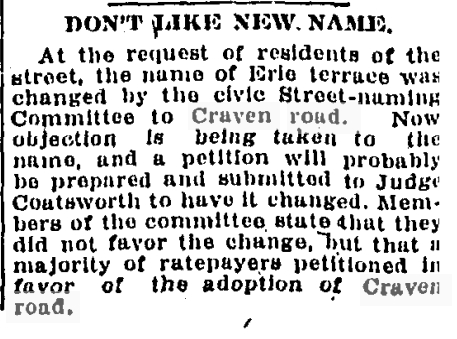


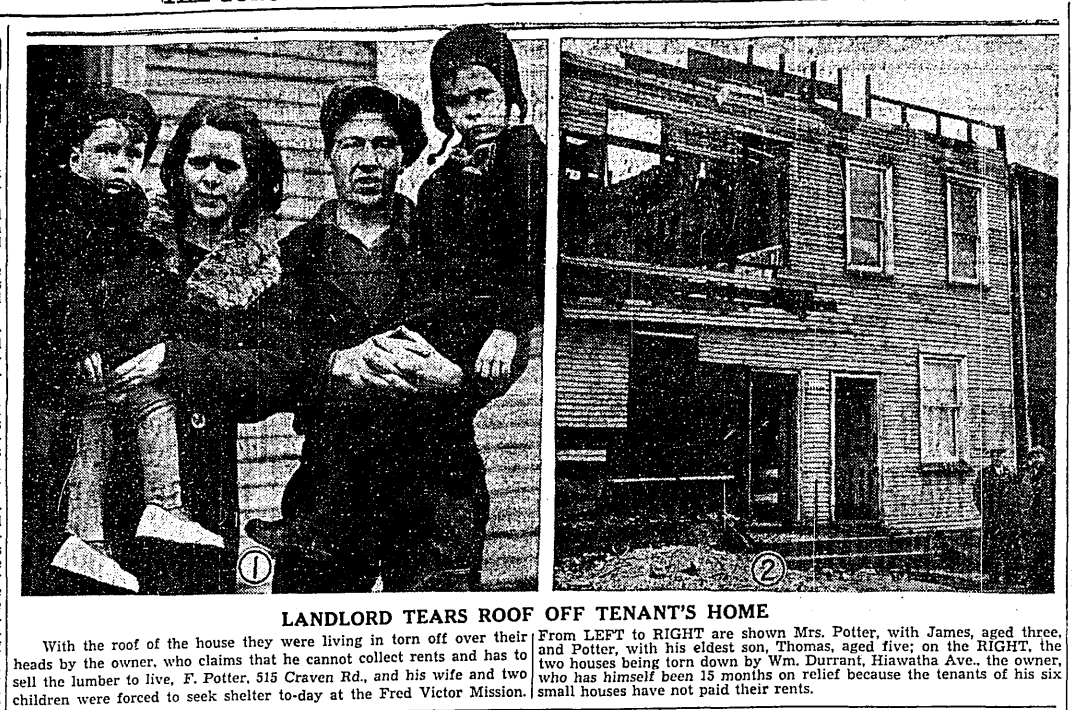
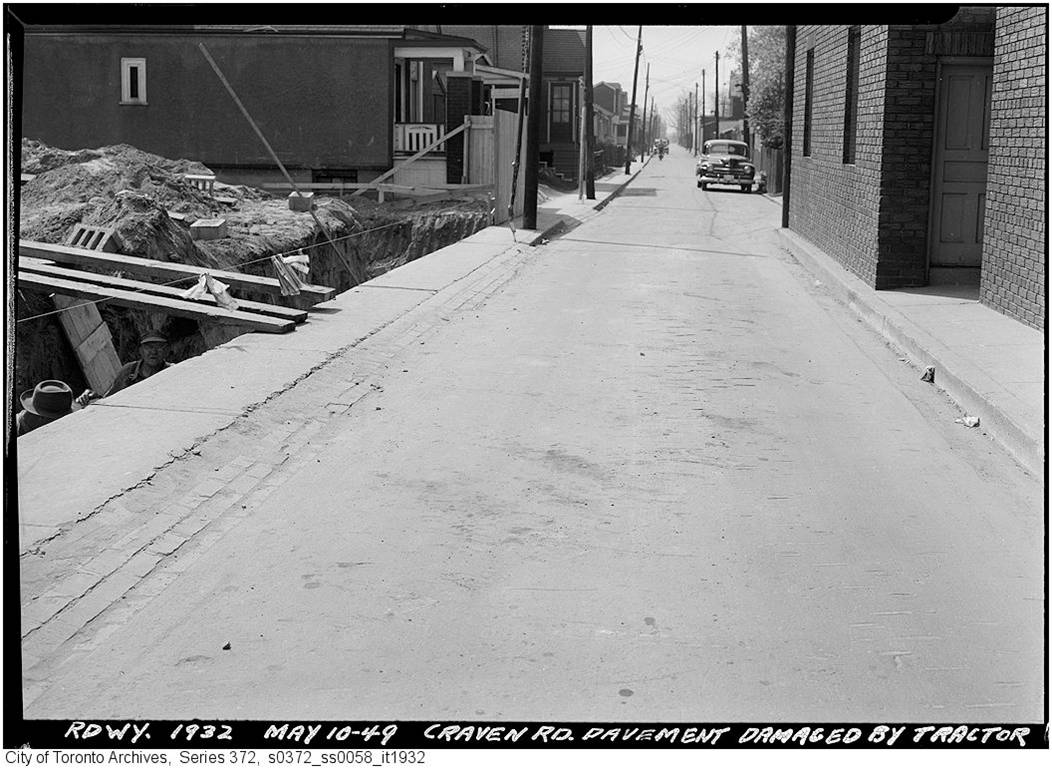
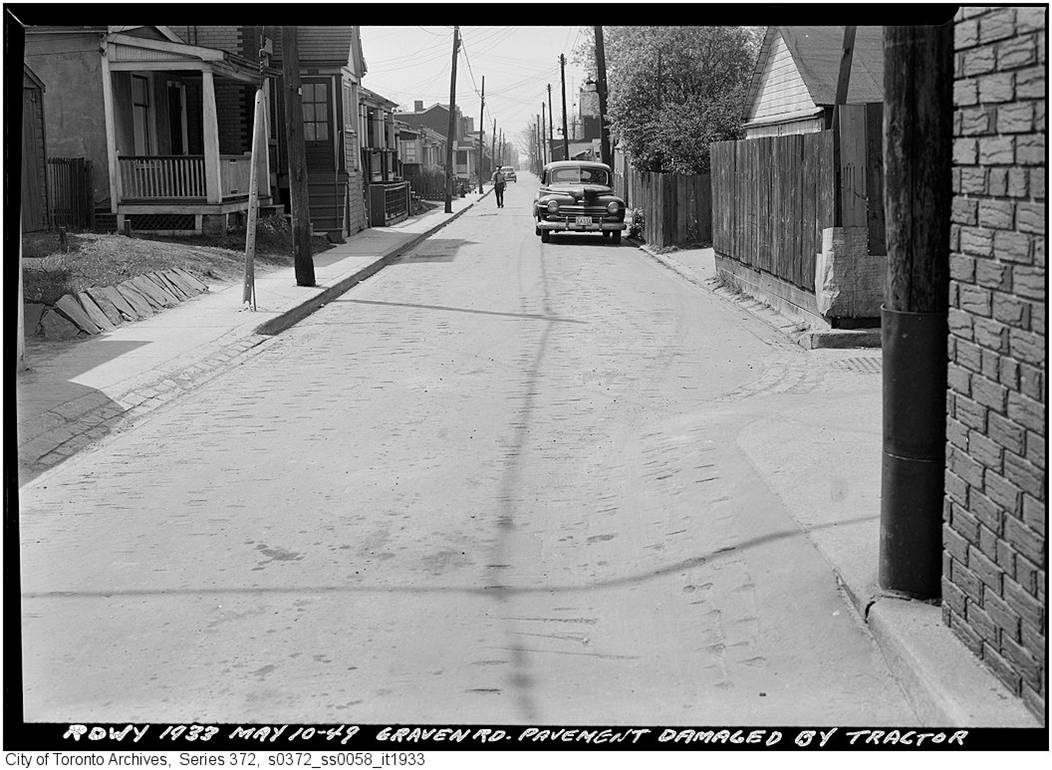


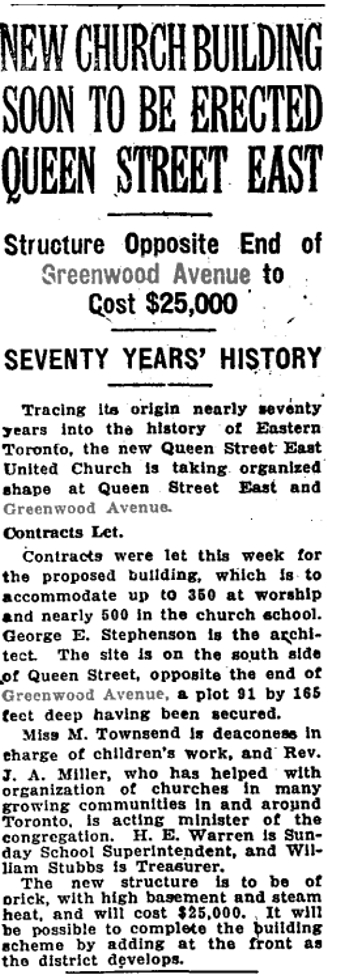

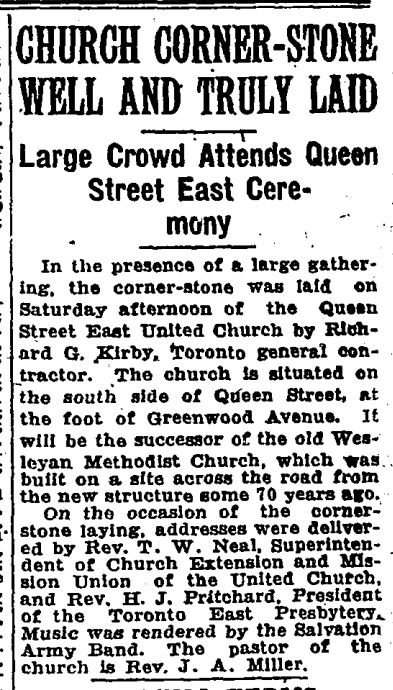


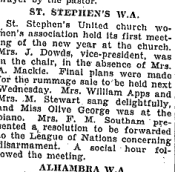


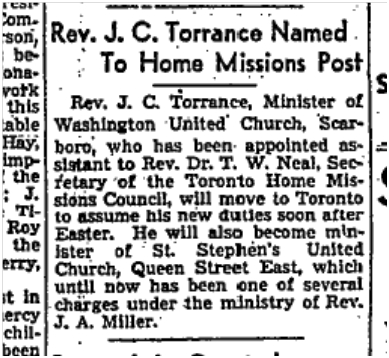


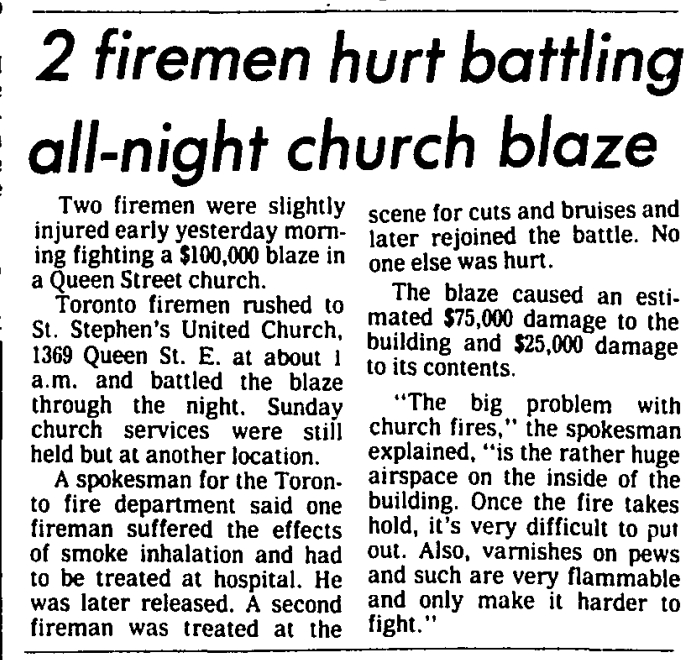


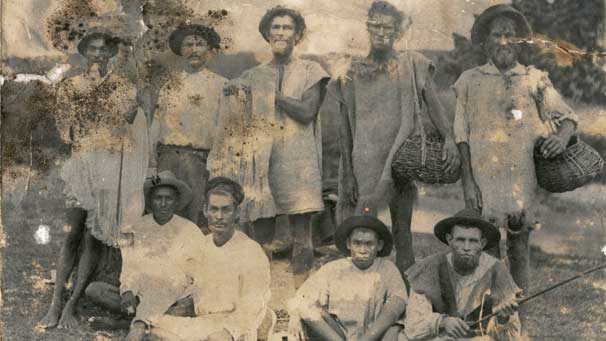


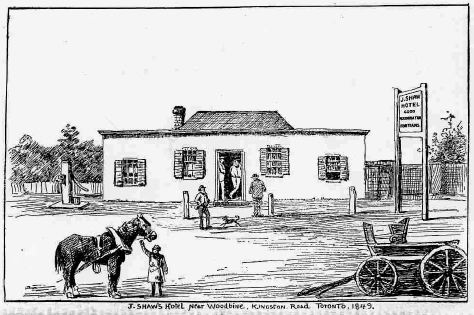



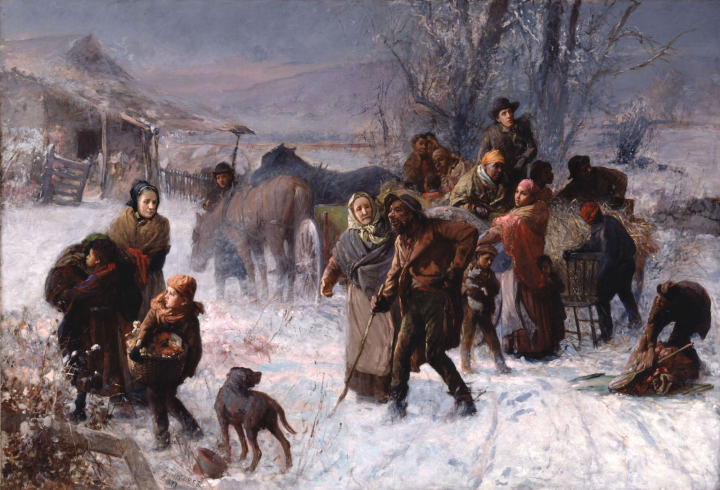
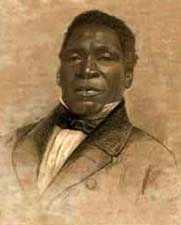




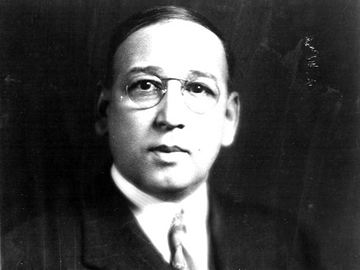

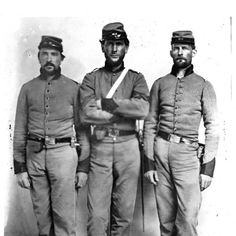



 Leslieville Historical Society
