








I wonder how many in our neighbourhood have Red Seal builders in their family trees?
There is a small clue in this rather mundane article from the Toronto Star of October 25, 1917.

Lewis Rootham was a contractor who built many of the houses on the lower of Woodfield, Connaught and neighbouring streets. But he wasn’t just any old kind of contractor: he was a Red Seal builder. (see article below)

Some years ago, I had the opportunity to speak with one of his descendants and here is a transcript of part of that conversation:
“Lewis Rootham built the house in the early 1900s. He talked about the area being like old English countryside at first with grass and creek that ran into Ashbridges Bay. His dad and uncle used to swim there. He talked about Ashbridge who were said to be United Empire Loyalists with connections to royalty. The Ashbridges were deeded a lot of land, but my dad thought Jesse Ashbridge a bit odd because he cut the grass in the rain. My dad said the whole atmosphere of the neighbourhood changed with the relentless advance of civilization. He cited three major steps in the area’s development. First, stores opening on the south side of Queen Street, bringing more people to the street. Next, came the building of the TTC car barns and yard. That changed the atmosphere from that of the English countryside to mechanical. Then, the building of the big school north of the Ashbridges place, the Duke of Connaught, started a building boom. The Ashbridges kept 200 feet of frontage [on Queen Street]. He described the houses on one side of Woodfield Road (the Rootham house is at 42 Woodfield Road) as being low-class row houses, but said the other side had pretty good houses. He said his grandfather’s house was big, but unique in design because it had multiple levels. Master, living and front hall were on one level, but you went down two steps to dining and kitchen; up to bath and two bedrooms and up again to two more bedrooms. It was a great big house with only one bathroom. He remembers the fireplace as marvellous and the wood panelling and brickwork, all in classic English styling. He said times were tough later and his grandfather replaced the backyard with garages he could rent out to people with automobiles to have some money. He said the driveway was cinder and he was always getting hurt on it.”


By Joanne Doucette



By Joanne Doucette
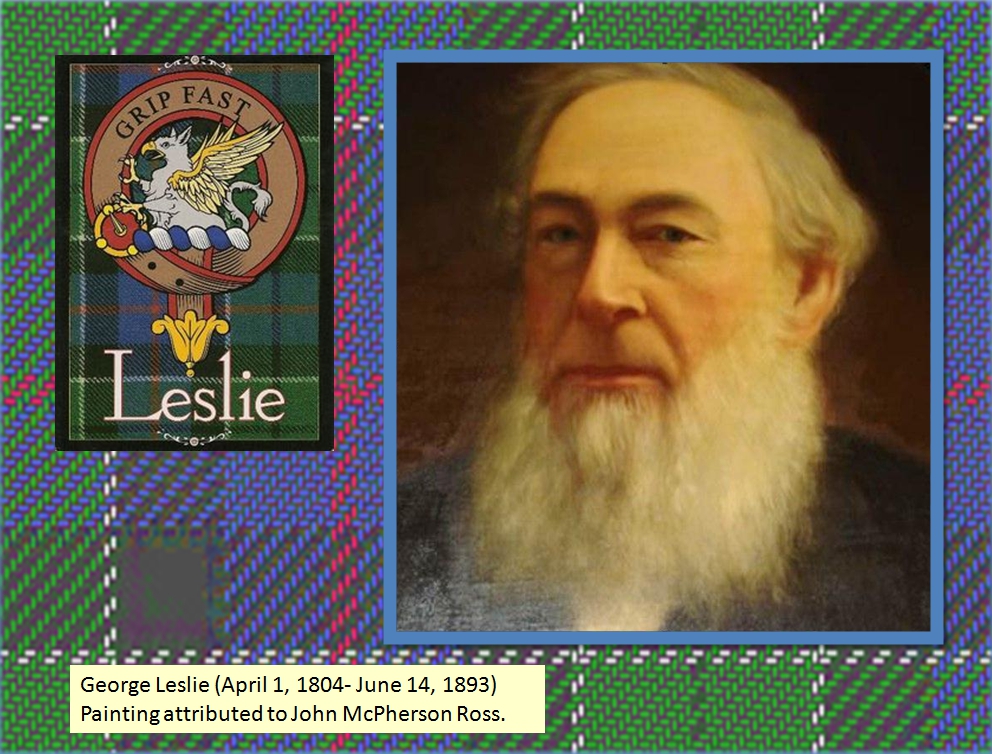
George Leslie was also one of the founders of the “Ex” – the Provincial Exhibition, forerunner of the Canadian National Exhibition (C.N.E.). He showed his seeds there in 1858 and continued to exhibit over the years, winning many prizes. When the Provincial Exhibition incorporated in 1879 George Leslie Jr. was one of the Directors. Toronto Nurseries exhibited often over the years. The Leslies stayed active in the Exhibition throughout their lives. They were also involved in the Toronto Electoral Division Society’s Agricultural Society and the Fruit Growers’ Association. The Association promoted fruit growing and was concerned that varieties selected work in Ontario’s climate, a concern that drove George Leslie. “The adaptedness of different varieties of fruit to different localities, and especially the hardiness with which they withstand the severity of our climate, are subjects of the greatest interest…” D.W. Beadle.[1] After the formation of the Fruit-Growers’ Association, fruit growing, especially that of apples, was more and more popular. Apples became a huge export crop.

[1] Globe,January 31, 1861.

In1866 George Leslie Jr. was the secretary of the Toronto Horticultural Society. That year Toronto hosted the Provincial Exhibition for the fifth time since it began in 1846. There were many more buildings as well as a Midway.[1]
[1] Guillet, Edwin C. Toronto: From Trading Post to Great City. (Toronto: The Ontario Publishing Co., Limited, 1934), 288-292.


George Leslie Jr. was Deputy Reeve, Township of York, but still very involved in the nursery.[1] By 1877, George Leslie was himself 73 years old and becoming known as “Old Man Leslie”. He was still involved in the Toronto Industrial Exhibition. The Exhibition moved each year from city to city around the Province, however, many groups pressed for the Exhibition to be permanently held in Toronto. The first annual fair was held in Toronto during the first three weeks of September in 1879.[2] George Leslie, Jr. was a Director of the Toronto Exhibition.[3] He stayed working with his father in the family business.
[1] Fisher & Taylor’s County of York Townships Directory, 1876. Township of East York, 179.
[2] Guillet, 288-292.
[3] Globe, August 19, 1880.


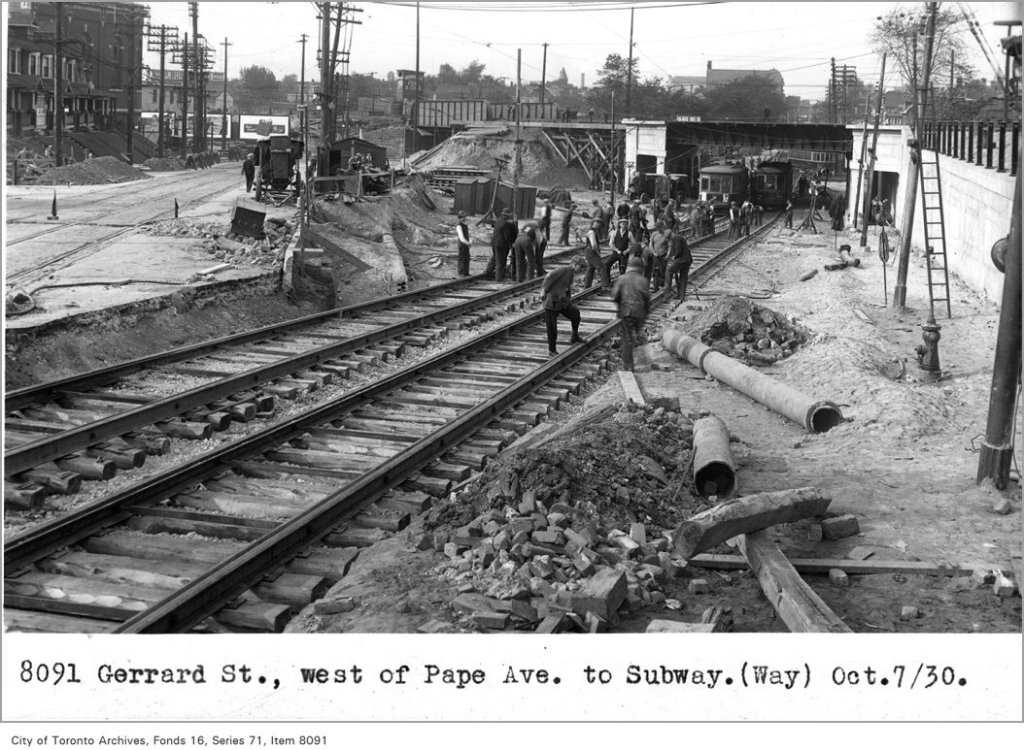


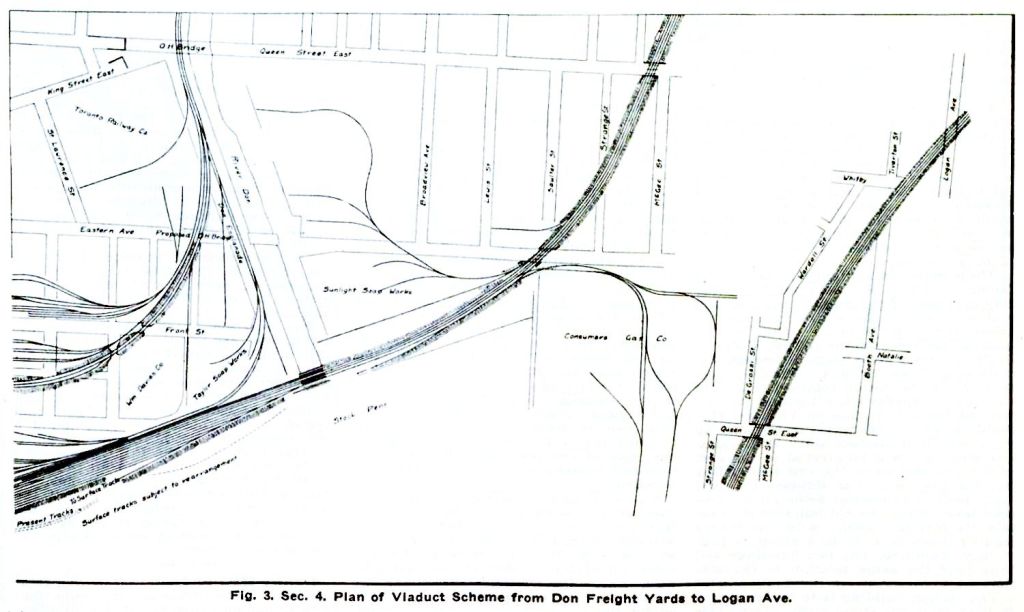
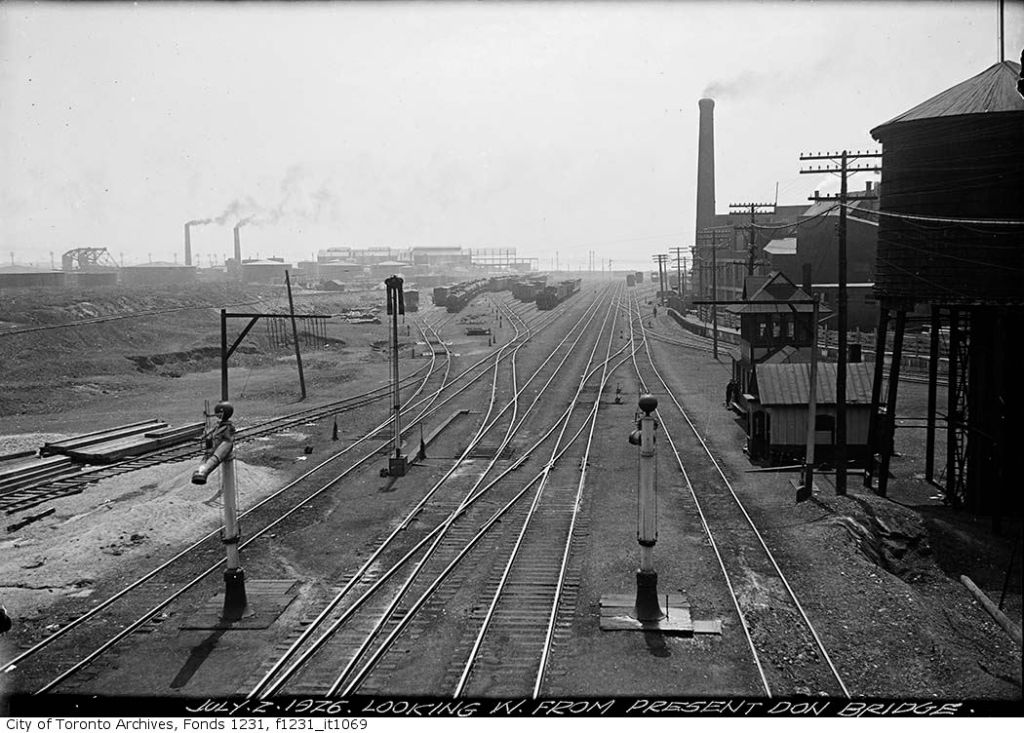
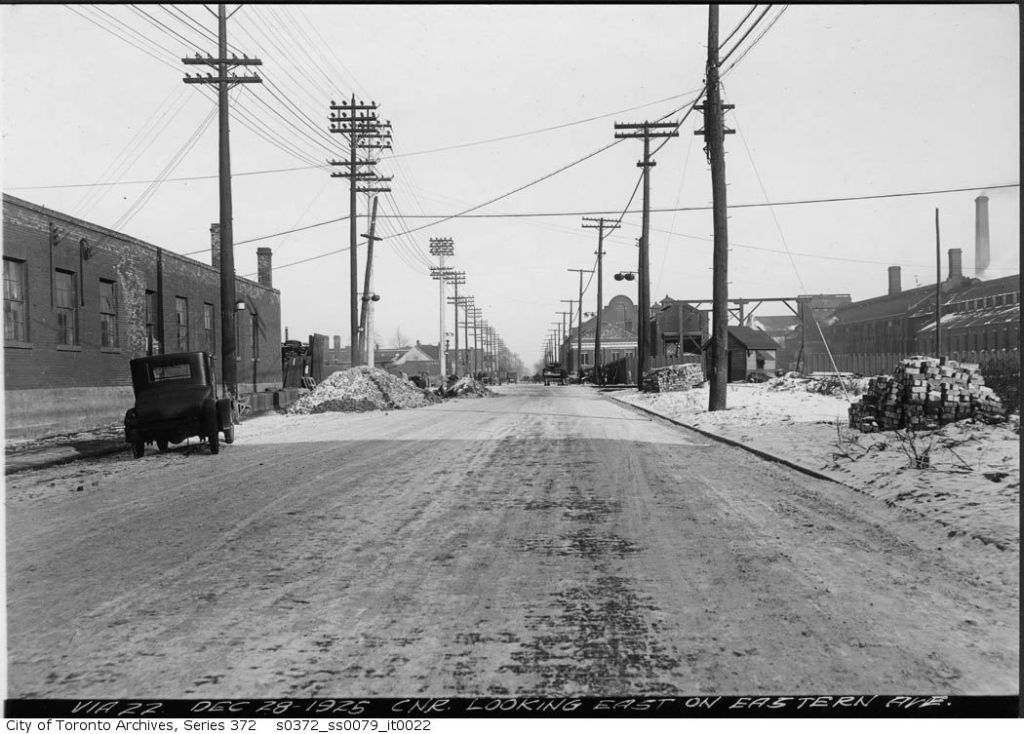
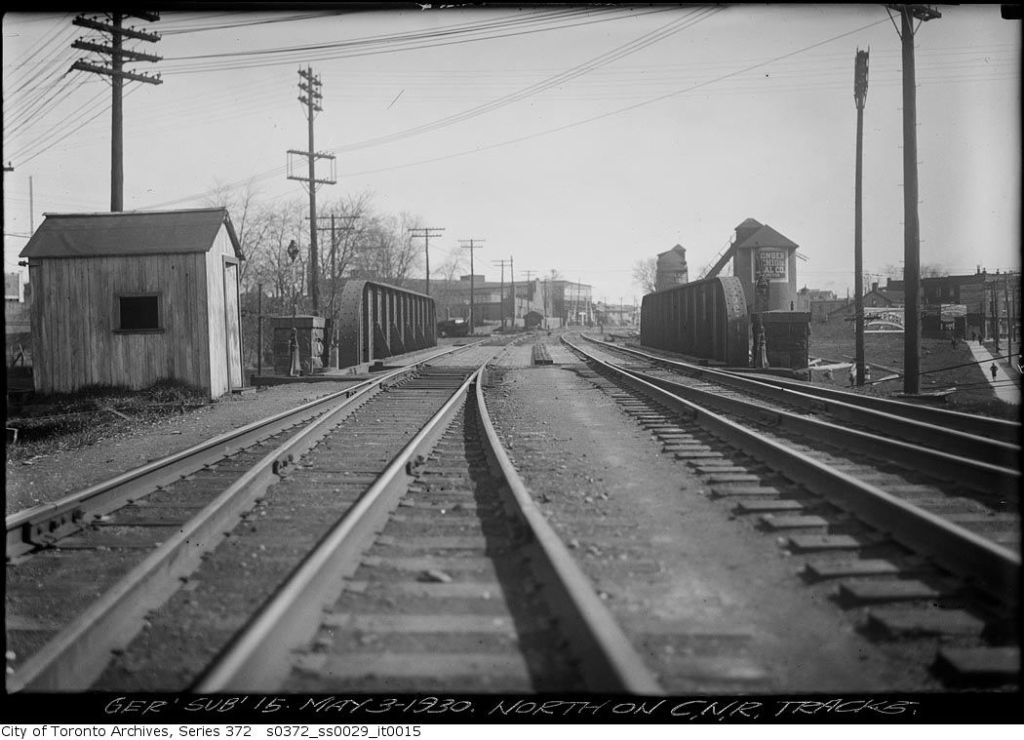
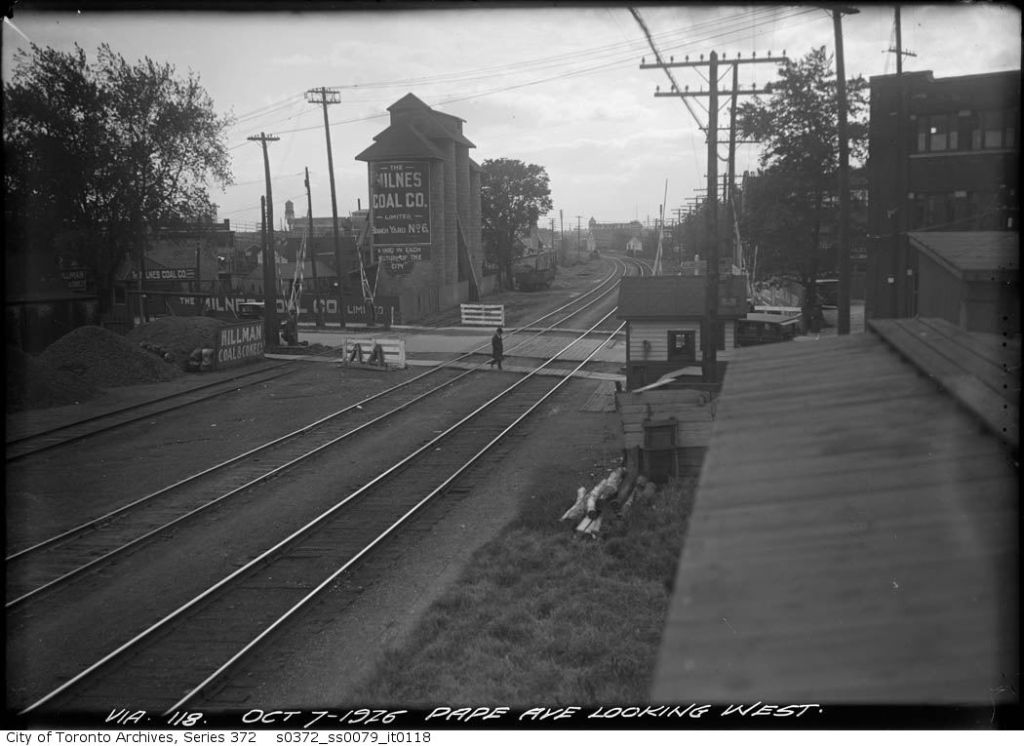
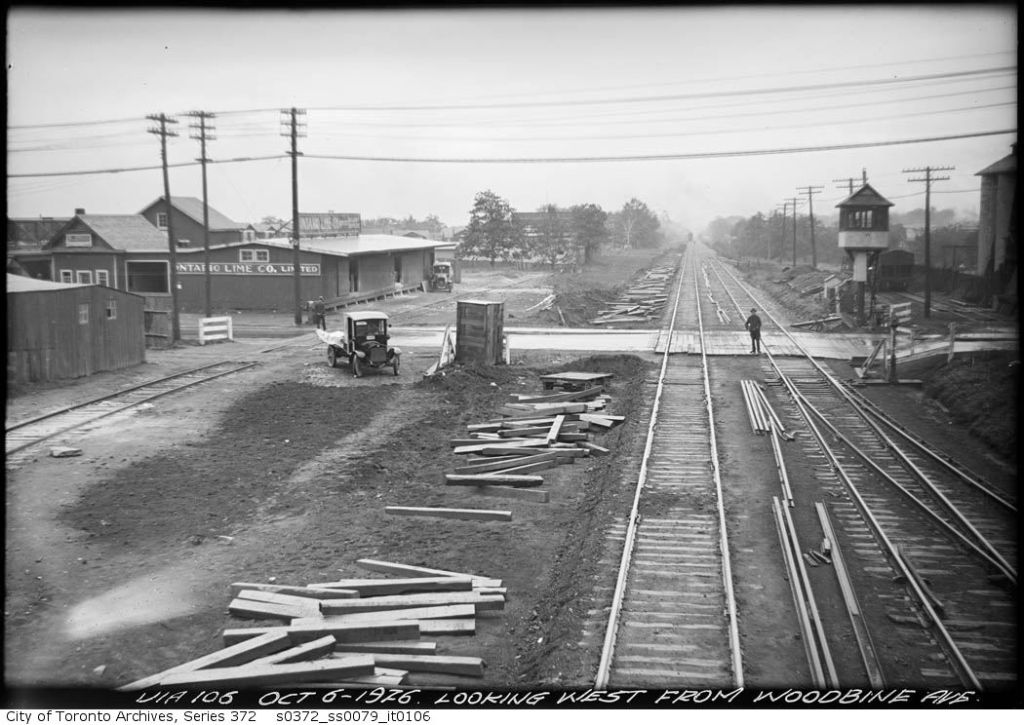
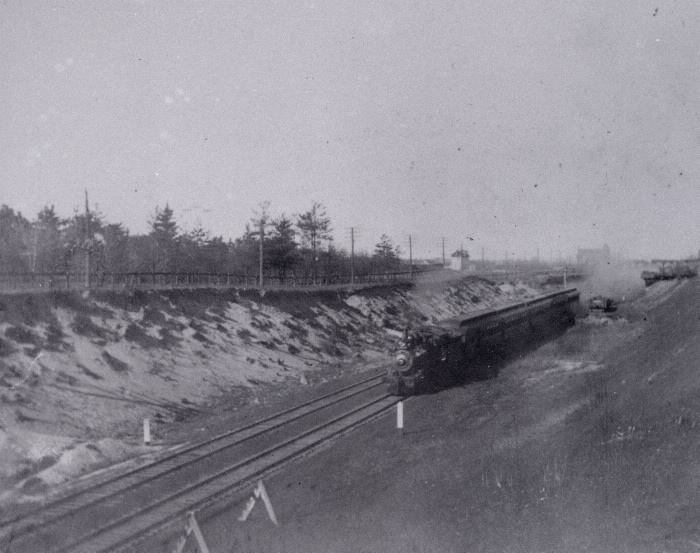
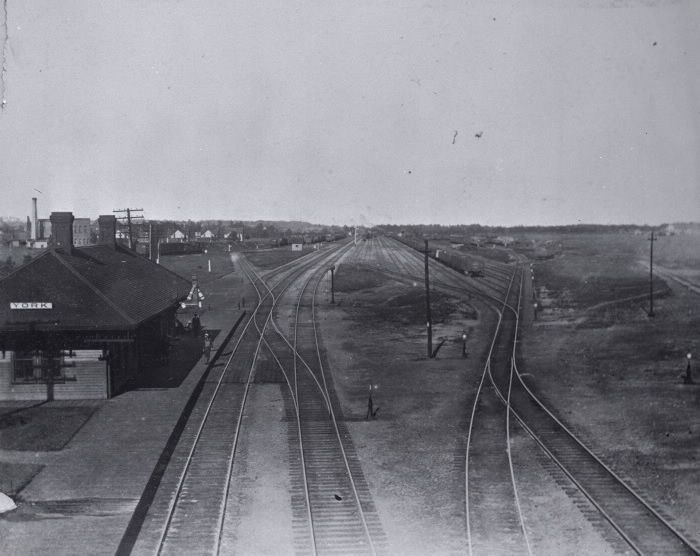
This series of photographs will take you on a trip from downtown Toronto to Main Street on the new Toronto Viaduct, a raised railbed that lifted the train high above the city streets, eliminating several of the most dangerous level crossings such as the one at Queen near DeGrassi Street.










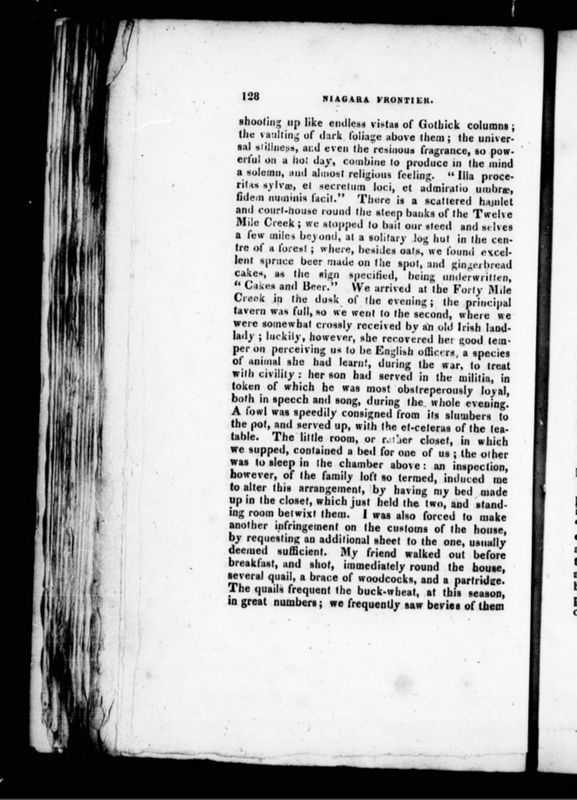
It was a fine autumnal morning (October 4th) when I put my equipage in motion from Queenston towards York, accompanied by a friend and a favourite pointer.


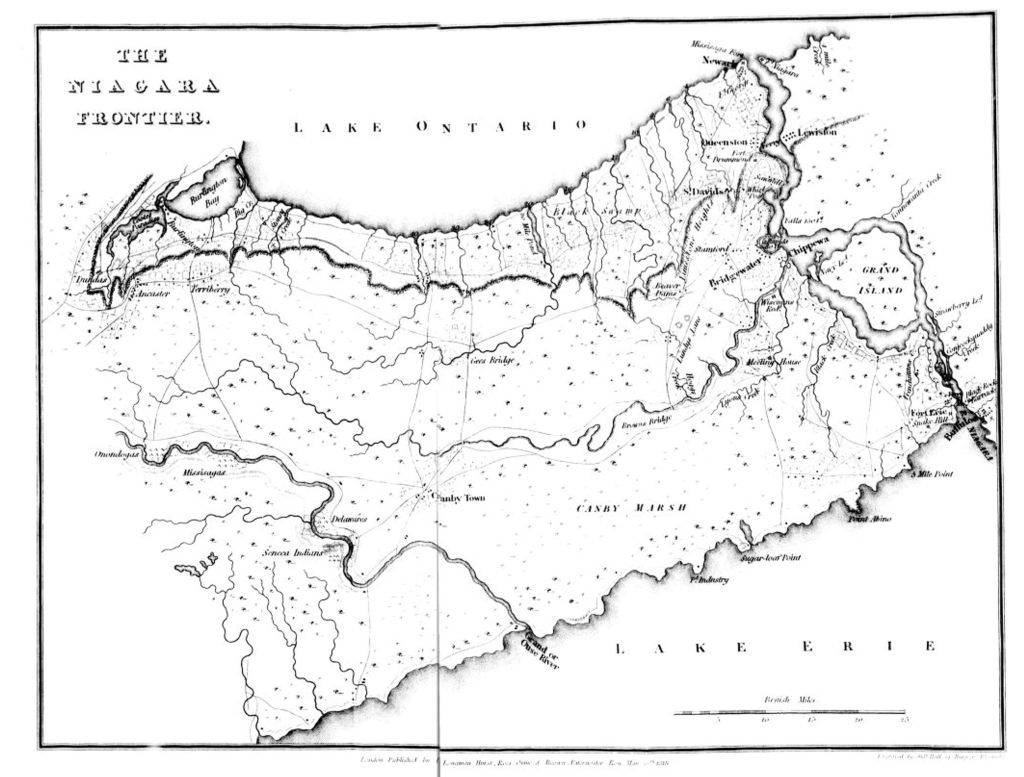
The diary of traveller Lieutenant Francis Hall as he travelled from Queenston (near Niagara-on-the-Lake) to York, published in 1818. This British army officer had served in some of the bloodiest fighting of the Napoleonic Wars with in the 14th Light Dragoons.






 Leslieville Historical Society