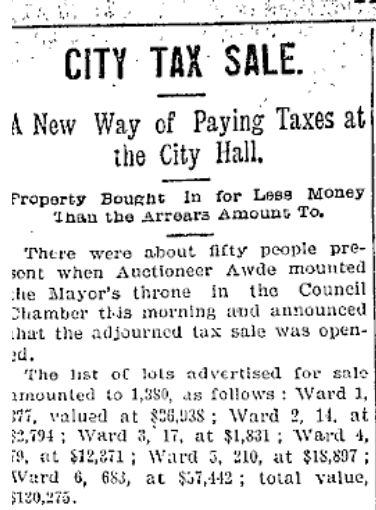
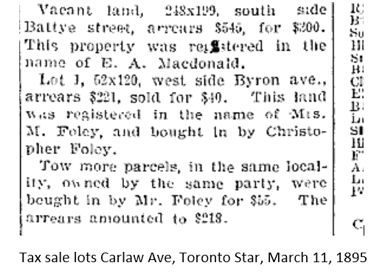
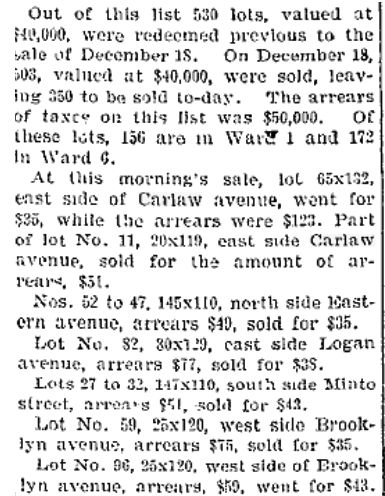
March 11th

Candidates, municipal election, Globe, March 11, 1884
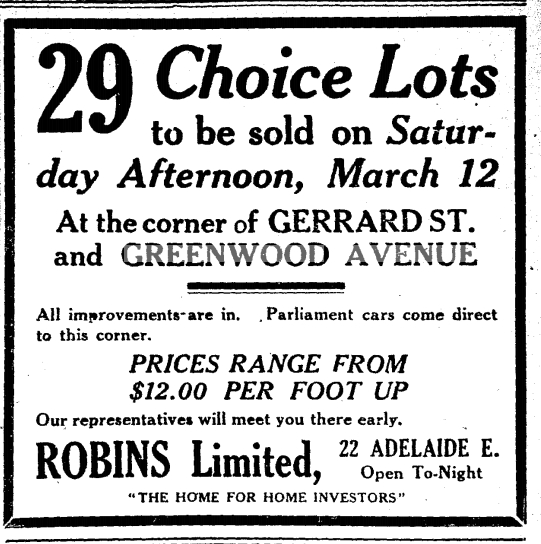
Robins real estate ad, Toronto Star, March 11, 1910
Demolition of Russell Car House Toronto Star March 11, 1924
Leslie Gardens, Toronto Star, March 11, 1926
Car hit by Train, Logan & Gerrard, Globe and Mail, March 11, 1947

March 10th

Phillips Manufacturing, baseball club, Globe, March 10, 1911
Call for tenders, Russell Carhouse, TTC, Toronto Star, March 10, 1924
Gerrard Street East Fire Hall – March 10, 1932
Phillips change of ownership, Globe and Mail, March 10, 1950

March 9th

Appointed overseer [roads], Electoral Division No. 1, Township of York, and poundkeeper, Globe, March 9, 1872
Pacific Realty, Toronto Star, March 9, 1912
Prust Ave for sale, Toronto Star March 9, 1912
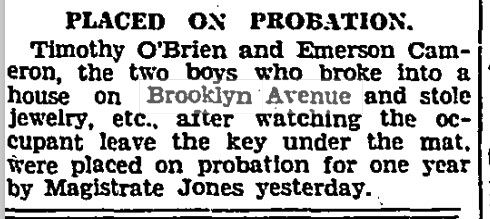
Brooklyn Ave, robbery, Globe, March 9, 1928

Stanley Minstrels, The Globe, March 9, 1855

A similar troupe, McAdoo’s Georgia Minstrels and Alabama Cakewalkers

March 7th in Leslieville’s past

Human chain saves Alton Ave man, Toronto Star, March 7, 1972

March 6 in Leslieville’s past

A selection of articles from March 6 through the years.

New houses, Over the Don, Globe, March 6, 1882
Concert For Riverside Fire Brigade, Badgerow, Globe, March 6, 1882
Vincent, market gardener, Logan’s Lane, Globe, March 6, 1882
Toronto Star, March 6, 1908 Richard Stone. The Morin House is now “The Duke” or Duke of York
Phillips Manufacturing hockey, Globe, March 6, 1913
City vs. Gas Company, Eastern & Carlaw, Globe, March 6, 1914
Pte. Almer Healey, 187 Greenwood Ave., died from illness, Toronto Star, March 6, 1918
Industrial accident, Palmolive, Carlaw Ave, Toronto Star, March 6, 1918
Ad, Browns Bread, Toronto Star, March 6, 1923

March 5 in Leslieville’s past: the Grand Trunk Railway Crossing

Miraculous Escape at Railway Crossing, Globe, March 5, 1884
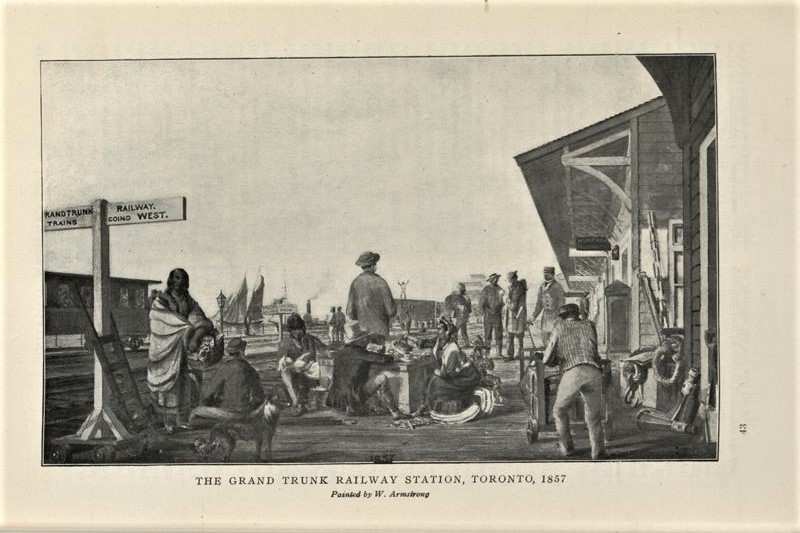
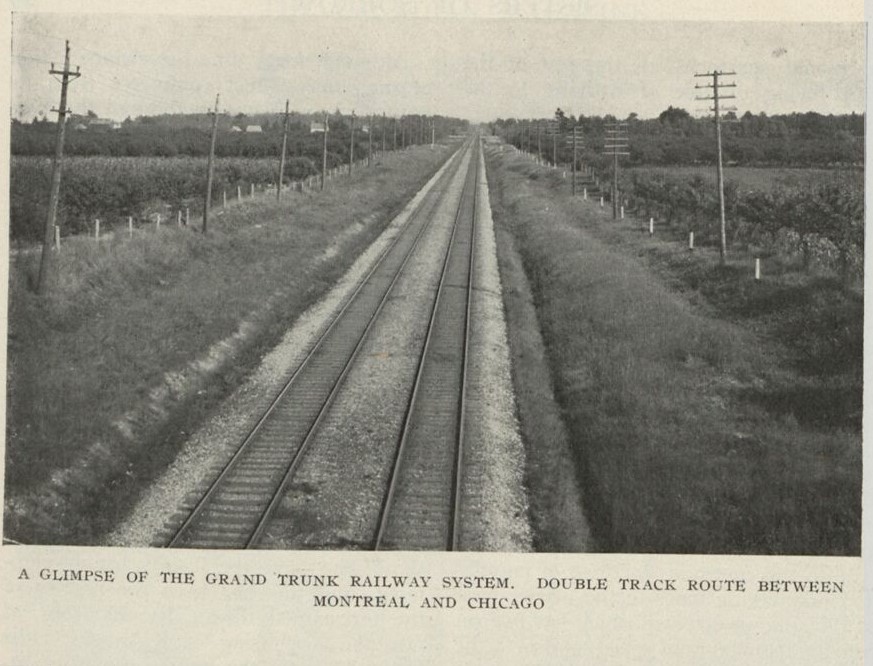
GTR Toronto to Montreal, The Canadian Magazine, Vol. 28, no. 1 (Nov. 1906)
Grand Trunk Railway Winter, Globe, December 4, 1860
Queen Street East crossing looking north – [1890s]
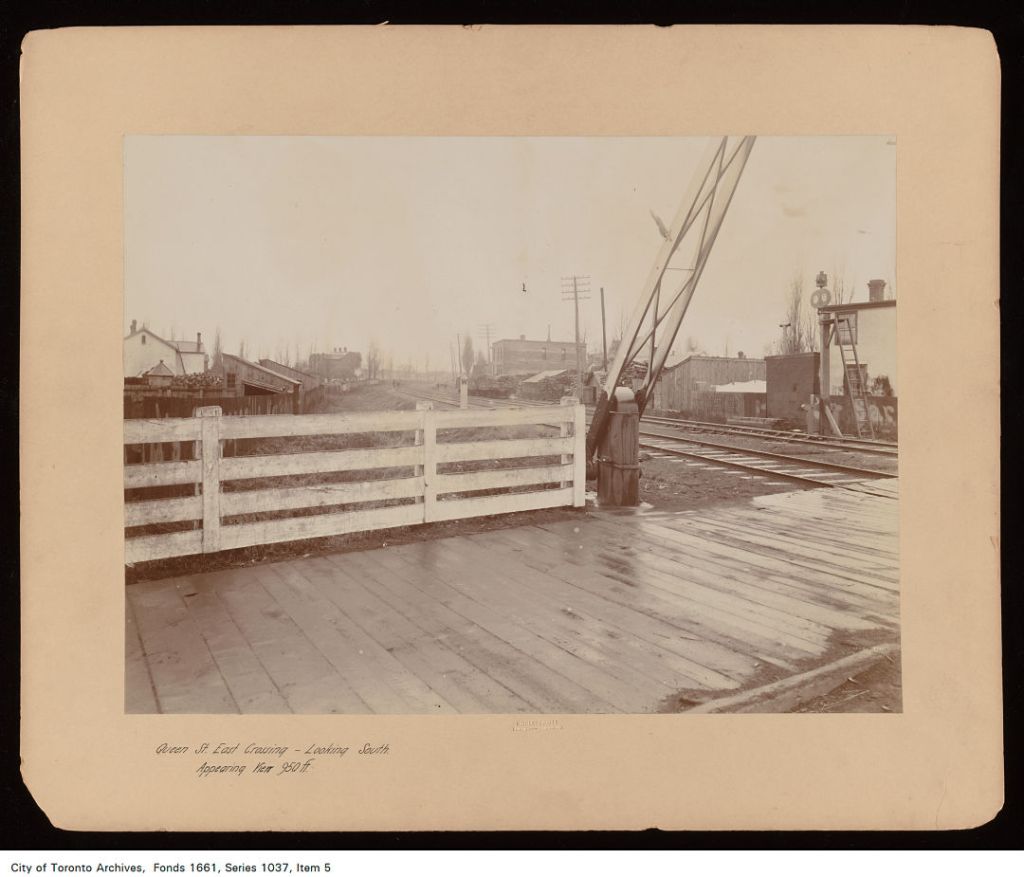
Queen Street East crossing, looking south, appearing view 950 feet 1890-1895
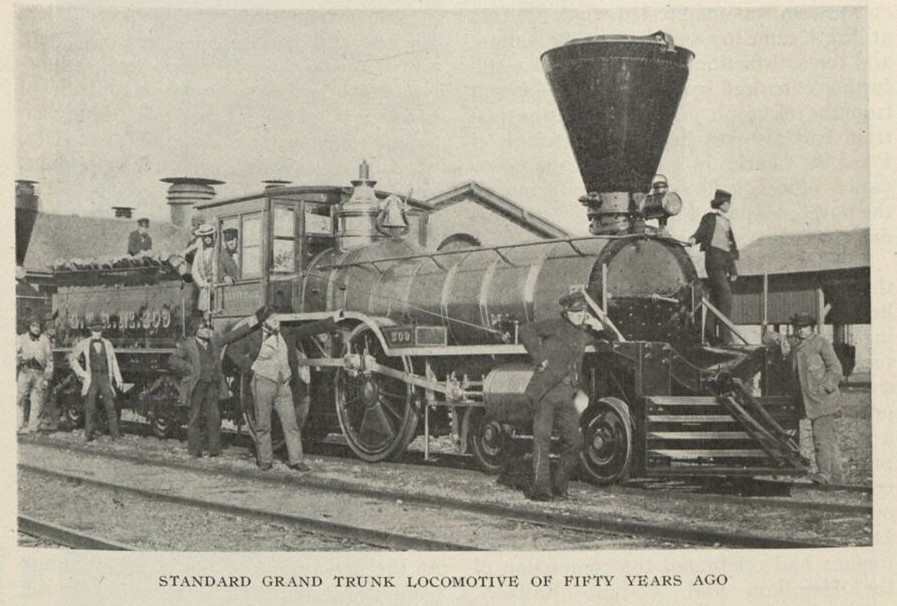
GTR Toronto to Montreal, The Canadian Magazine, Vol. 28, no. 1 (Nov. 1906)
Queen Street East and Degrassi Street. View is looking north-west between 1920 and 1926
Item is a photograph of a billboard located on the north side of Queen Street East facing McGee Street, adjacent to the Grand Trunk Railway’s Riverdale Station, visible on the left of the image.
Item is a photograph of a billboard located on the north side of Queen Street East at the Grand Trunk Railway crossing by Degrassi Street. View is looking north-west on Queen Street East.
Item is a photograph of two billboards located on the north side of Queen Street East near Degrassi Street, facing the Grand Trunk Railway’s Riverdale Station.
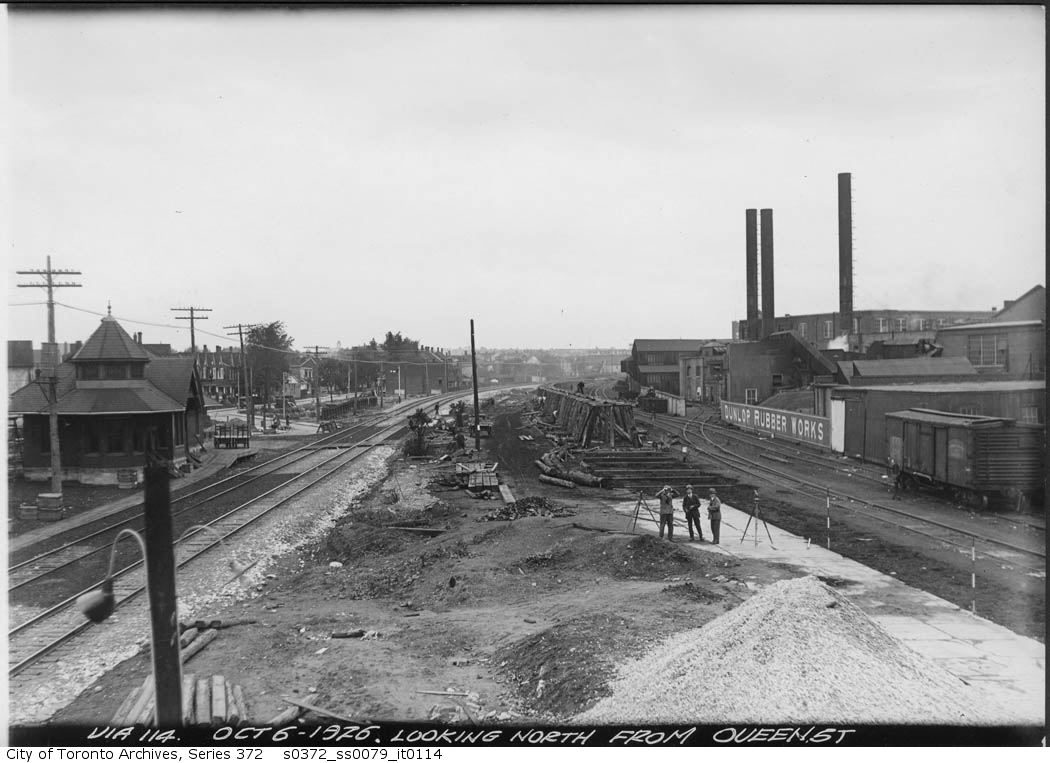
Item is a photograph of three billboards located on the north side of Queen Street East at the Grand Trunk Railway crossing by Degrassi Street. View is looking north-east on Queen Street East. Visible in the background is the Dunlop Rubber factory.

March 4 in Leslieville’s past

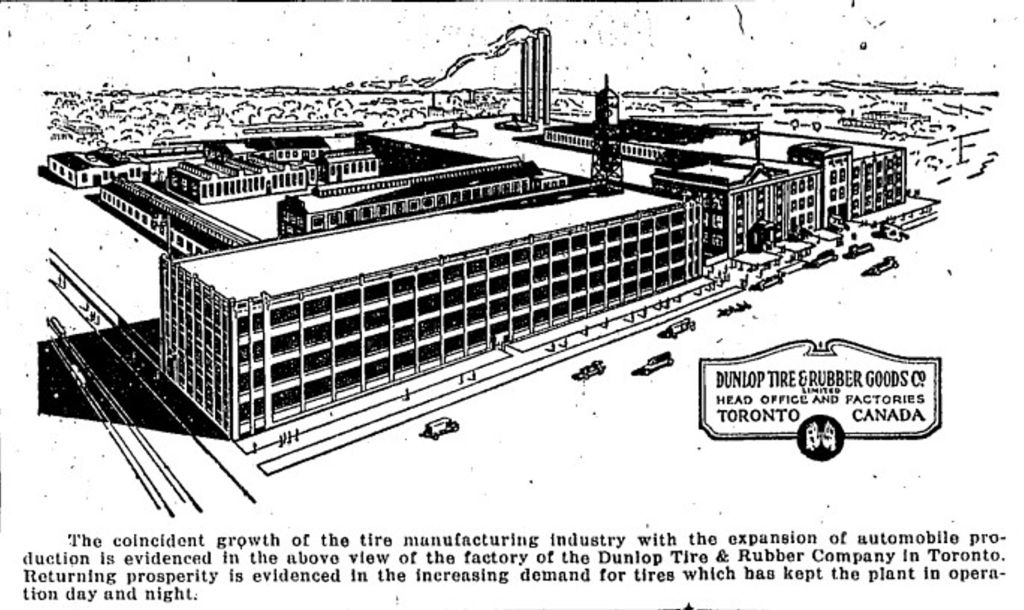
Dunlop Tire, Globe, March 4, 1922

March 2 in Leslieville’s past

Men Suffocated in a well, Globe, March 2, 1866

Natural gas, odourless and invisible, seeped into pockets in the shale and overlying gravel in Leslieville.  Joseph Russell Junior’s brickyard stretched between Leslie Street and Greenwood Avenue, south of Gerrard to what is now Dundas Street. In 1908 workers were digging clay in the bottom of a 50-foot-deep pit. One worker swung his pick down and struck a pocket of gas which rushed out, splattering clay all over. Joseph Russell had workmen bring in a three-inch auger and insert pipes into the ground.  Workers then lit the gas. It burned for three days:

This is not the first indication of the presence of natural gas, however, for some thirty years ago two men were overcome with it while digging a well on Jones avenue, near Queen street. Mr. Russell intends making tests to ascertain whether the [gas] is present in paying quantities.”[1]

Over 30 years before, on March 1, 1866, George Brockwell (1822-1866)  asked well digger and brickmaker, Charles Sear (1816-1866), to work on his well at his house at 138 Jones Avenue, just north of Dundas Street.  Sear ran a ladder down, set up a block and tackle over the well and went down to clear out the blocked well. George Brockwell and Sear’s assistants, probably younger family members, stood nearby, watching the proceedings, ready to haul up the excavated soil. Sear had only worked for a few moments when they saw him “topple over against the ladder”, unconscious. His helpers froze, but Brockwell went to Sear’s aid.

No one thought to tie a rope around Brockwell, a common safety measure among experienced well-diggers. Perhaps they thought Sear had a heart attack, or perhaps it was simple inexperience. In any case, Brockwell passed out backwards next to Sear. If the gas had not already killed them, by this time, the water was rapidly rising in the well and they were in danger of drowning.
By this time, the shouting of the lads drew the women of the family and neighbour David Wagstaff (1841-1928), George Brockwell’s brother-in-law and a seasoned brickmaker. Wagstaff tied a rope around himself and went down the ladder only to pass out. The women pulled him back to the surface as three times he tried to rescue Sear and Brockwell. Three times he failed, passing out.  After the third heroic attempt, Wagstaff was unconscious for five hours.

Bad news travels fast in rural villages and it was not long before it reached the Leslieville  School only two blocks away. Teacher Alexander Muir closed the school and sent the children home. The oldest Brockwell girl led the other Brockwell children home to the tragedy. Muir went along, willing to help in any way he could, but it was too late.[2]

Alexander Muir, Daguerrotype
Funeral Sear & Brockwell, Globe, March 3, 1866

Natural gas may be behind a mysterious explosion in 1930 in the A. H. Wagstaff brickyard at 348 Greenwood Avenue. A tool shed blew up leaving only splintered wood and pieces of stove iron. No one was in the shed which was in a deep shale pit. Employees rushed to the scene. The building, the stove and the tools were literally blown to bits.[3]

Alexander Muir Toronto Star, March 3, 1894

Someone must have dropped a cigar or pipe or perhaps one of the lanterns at the well head lit the gas. Flames spouted out of the well. The men tried to smother the blaze by covering the well, but tongues of fire erupted from the ground in other places around the property, burning until finally smothered.


[1] Toronto Star, September 18, 1908.

[2] King, George B. Fond Memory and the Light of Other Days: The Old Leslie Street School and a Last Century Tragedy “over the Don”. (Toronto: privately printed, no date), pp. 6-7. 

[3] Globe, February 6, 1930.

March 1 in Leslieville’s past: Greenwood Park Shelter under construction, March 1, 1928

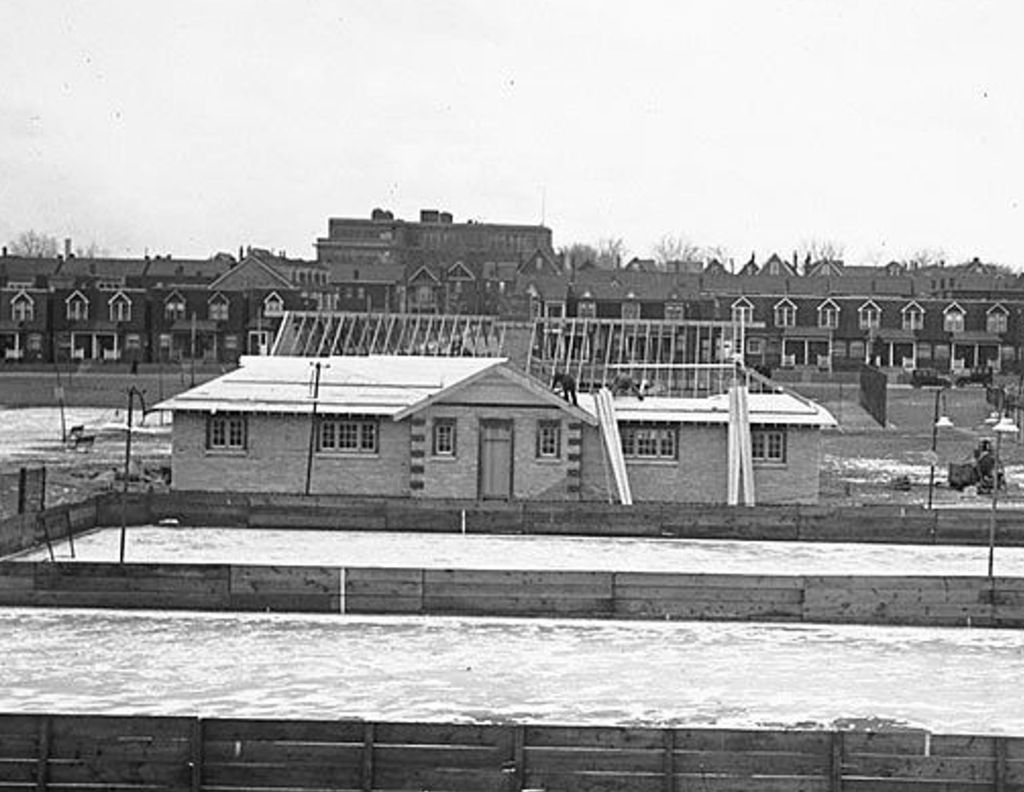
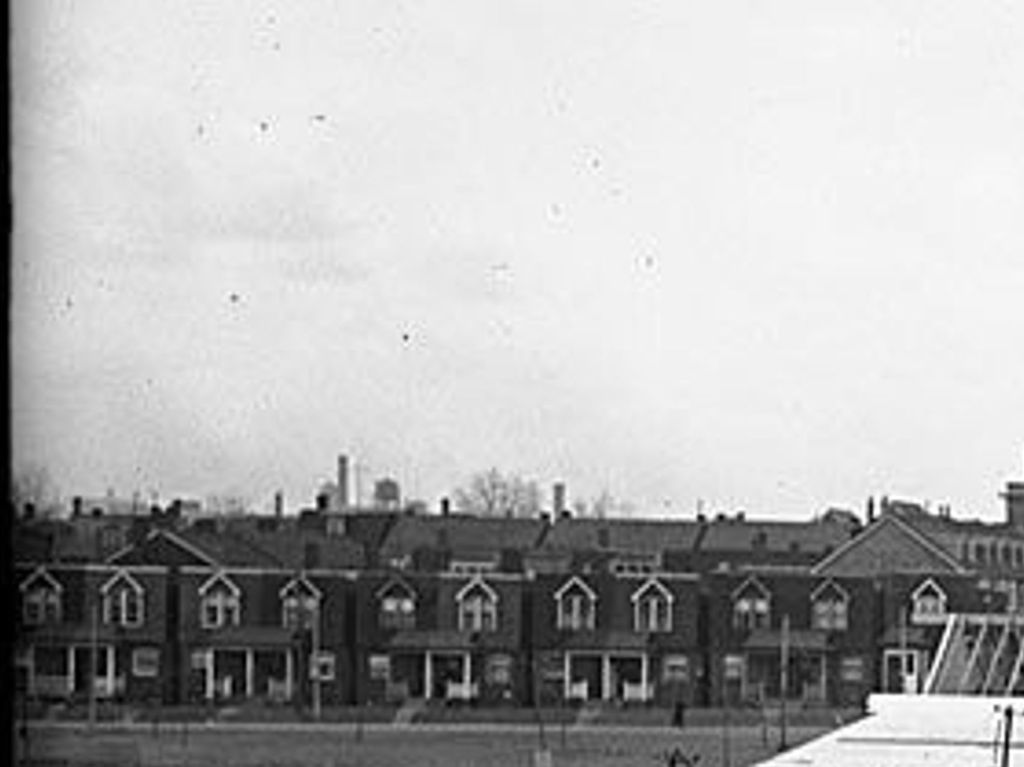
Greenwood Park Shelter under construction, March 1, 1928
Stanton & Alton, Riverdale United Church in background, Greenwood Park Shelter under construction, March 1, 1928
Detail, Alton Avenue north of Dundas, Greenwood Park Shelter under construction, March 1, 1928
Detail showing twin ice rinks, Greenwood Park Shelter under construction, March 1, 1928
Detail of Greenwood Park Shelter under construction, March 1, 1928
Detail Alton Avenue north of Parkfield, Greenwood Park Shelter under construction, March 1, 1928
Detail showing Riverdale Collegiate, Greenwood Park Shelter under construction, March 1, 1928