Tag Archives: Toronto Nurseries
Planting, Spring, 1888, The Canadian Horticulturist, Vol 11, no 4, April 1888
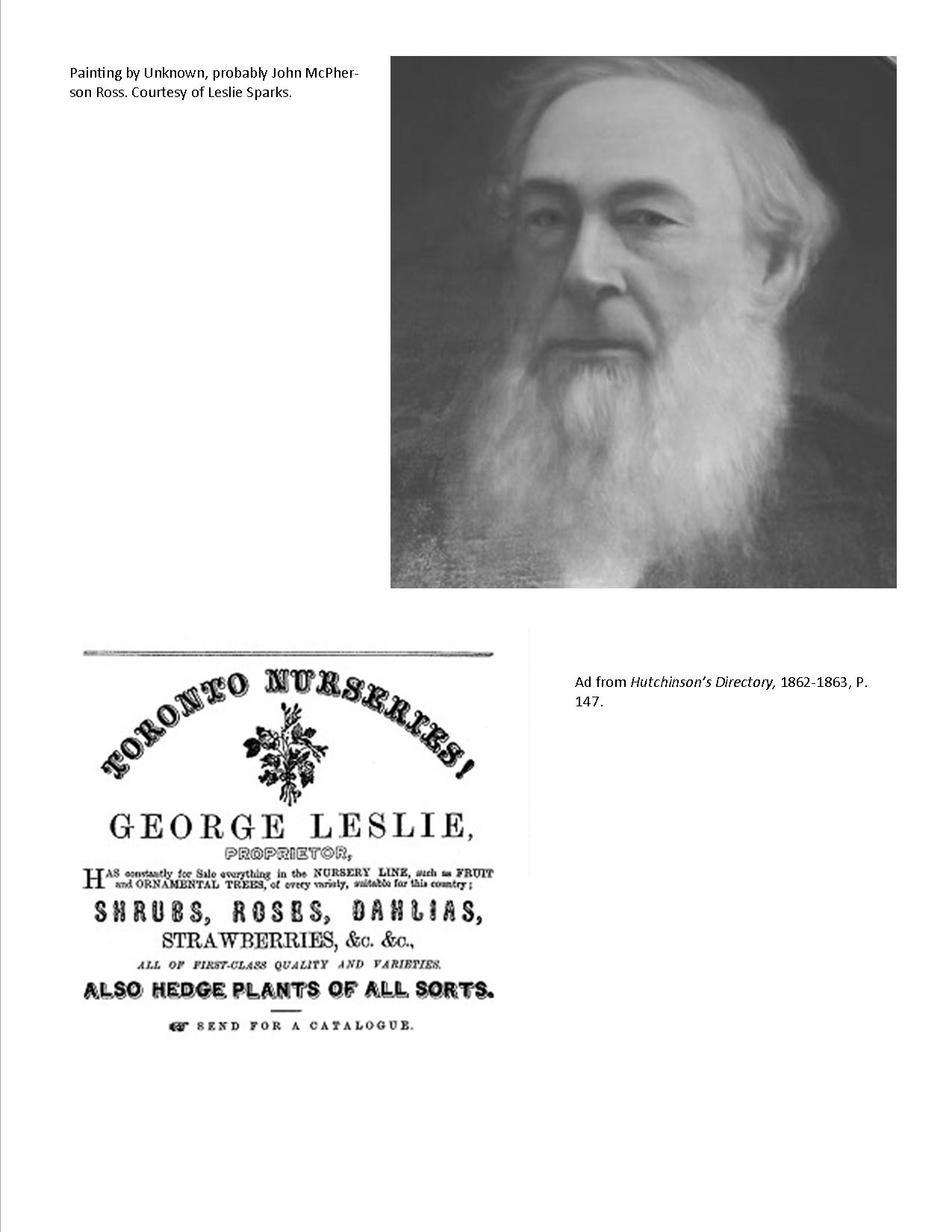
George Leslie, The Canadian Horticulturist Vol 8 no 4 April 1885

A New System of Fruit Growing, The Canadian Agriculturalist, Vol. 8, No. 4, April 1857

George Leslie, The Canadian Agriculturalist, Vol. 8, No. 4, April 1856

Leslieville History this week
Our first local “big business”, the industrialization of Leslieville, and more. This is one of the earliest ads for George Leslie’s nurseries. He had just moved his business from King and Yonge Streets out to Ashport, as it was then called. The downtown was getting too crowded for a plant nursery! He put his houseContinue reading “Leslieville History this week”
February 20th in Leslieville’s past

This week I had other things on my mind, but needed a deep distraction so I burrowed into the history of a little known builder who had a huge impact on Toronto from east to west and north to south. Meet Howard Addison Johnston and the Leslie Gardens Subdivision!
Today in Leslieville

Laing Street was not an obvious site to capture fame or attention. The street was named after William Laing. Leslieville’s “water” rats lived on Laing and nearby Lake Street (now Knox Avenue). These fishermen, icemen and others depended on Ashbridge’s Bay for a tenuous living. Their way of life came to an end when the THC filled in the bay and marsh. Some, like the Southams, were displaced from Fisherman’s Island by the Harbour Commission’s improvements. Though the Southam family claimed to be the descendants of the Boultons of the Family Compact, they were not affluent. Leslieville was a bastion of the Orange Orde. There was a living candidate available as a monument to Leslieville’s only famous man — and only famous Orangeman. The myth of Maple Cottage and its tree began to appear in the press. In 1937, in a public ceremony a plaque was placed on the tree at twilight. Mrs. Robbins, wife of Mayor William D. Robbins, a strong Orangeman, unveiled the plaque. Mayor Robbins led the July 12th Orangeman’s Parade that year. Mrs. Robbins had been a pupil of Alexander Muir at Gladstone Avenue School.
 Leslieville Historical Society